
Where to Go for Chimpanzee Trekking in Uganda? | Kibale | Kyambura
This guide explores where to go for chimpanzee trekking in Uganda, covering each of the country’s main trekking destinations, their permit costs, their chances of success, and what makes each one distinctive, along with advice on choosing the right location, understanding the habituation experience, and preparing for a memorable day in the forest. Whether you are drawn to Kibale’s exceptional density of chimpanzees or a quieter, more affordable alternative elsewhere, here is everything you need to know about tracking chimpanzees in Uganda.
Chimpanzees share an even greater proportion of their DNA with humans than gorillas do, and watching a wild community go about its day, hooting and drumming through the canopy, grooming one another with evident tenderness, and occasionally erupting into thrilling displays of dominance and drama, offers a window into behaviour that feels startlingly, movingly familiar.
Uganda is fortunate to host several excellent chimpanzee trekking destinations, each offering its own particular character, cost, and chance of success, making it possible to tailor a chimpanzee-focused adventure to almost any budget or itinerary.
Unlike gorilla trekking, which takes place in only a handful of specific locations across three countries, chimpanzee trekking in Uganda is spread across a wider and more varied range of forests, from the world-renowned Kibale Forest National Park, celebrated as the primate capital of the world, to the quieter, more budget-friendly options of Budongo Forest, Kyambura Gorge, and Kalinzu Forest.
This variety means that chimpanzee trekking can be built into almost any Ugandan itinerary, whether as the centrepiece of a dedicated primate safari or as a rewarding addition to a broader trip focused on gorillas, savannah wildlife, or the source of the Nile.
Kibale Forest National Park
Kibale Forest National Park, set amid rolling hills in western Uganda near the town of Fort Portal, is by far the most famous and most rewarding chimpanzee trekking destination in the country and, indeed, one of the finest anywhere in Africa, earning its celebrated nickname as the primate capital of the world. Kibale is home to an estimated 1,500 or more chimpanzees, the largest population found in any Ugandan park, spread across several well-habituated communities that offer visitors an exceptionally high chance of a successful and rewarding encounter.
A standard chimpanzee trek in Kibale typically costs in the region of USD 200 to 250 per person for foreign non-residents, depending on current tariffs, and involves following experienced guides through the forest in search of a chimpanzee community, an experience that can take anywhere from thirty minutes to several hours depending on where the chimpanzees happen to be feeding or resting that day.
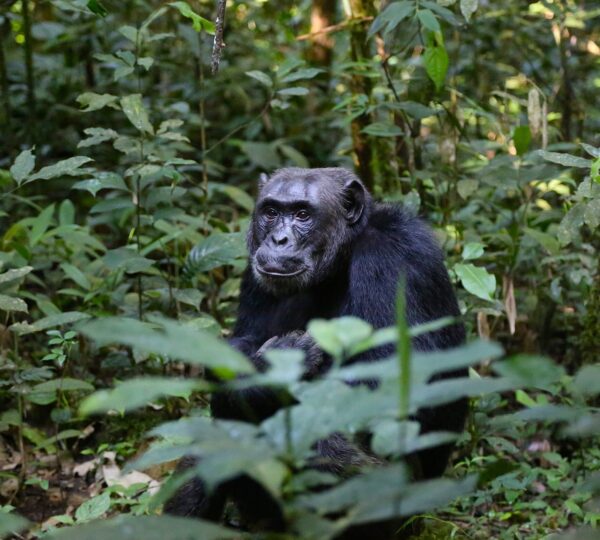
Chimpanzee in Kibale Forest
Kibale also uniquely offers the chimpanzee habituation experience, an extended, full-day activity beginning as early as six in the morning that allows visitors to accompany researchers as they continue the delicate work of habituating a wild community to human presence, offering a far deeper and more intimate insight into chimpanzee behaviour than the standard one-hour trek. Beyond chimpanzees, Kibale hosts around a dozen further primate species, including red colobus and grey-cheeked mangabeys, making it an outstanding, wide-ranging primate destination in its own right.
Budongo Forest:
Budongo Forest, part of the Murchison Falls Conservation Area in northwestern Uganda, offers a quieter, more budget-friendly, and altogether more peaceful chimpanzee trekking experience within one of East Africa’s largest and oldest natural mahogany forests.
Budongo is a wonderful choice for travellers already planning to visit Murchison Falls National Park for its dramatic waterfalls and Nile boat cruise, allowing chimpanzee trekking to be woven naturally into the same itinerary without requiring a separate detour.
A standard chimpanzee trekking permit in Budongo typically costs around USD 130 per person for foreign non-residents, considerably less than Kibale, while a chimpanzee habituation experience here, offering an extended day with the community, is available at a correspondingly higher rate.
Budongo’s ancient, towering mahogany trees and rich understorey also make it an outstanding destination for birdwatchers, with a wealth of forest bird species recorded here, adding further appeal for nature enthusiasts visiting alongside their chimpanzee trek. For travellers seeking a quieter, more affordable, and beautifully scenic chimpanzee experience combined with the drama of Murchison Falls, Budongo Forest is an excellent choice.
Kyambura Gorge:
Kyambura Gorge, tucked within the wider Queen Elizabeth National Park in southwestern Uganda, offers one of the most dramatic and unusual settings for chimpanzee trekking anywhere in the country, earning its evocative nickname, the Valley of Apes. This narrow, steep-sided rift valley forest cuts unexpectedly through the surrounding open savannah, creating a lush, hidden world of towering trees and tangled vegetation that feels worlds away from the grassland plains just above.
Chimpanzee trekking permits in Kyambura Gorge are among the most affordable in the country, typically priced at around USD 100 per person for foreign non-residents, making this an attractive, budget-conscious option, particularly for travellers already exploring Queen Elizabeth National Park for its game drives and the celebrated Kazinga Channel boat cruise.
It is worth noting that Kyambura’s chimpanzee population is smaller and somewhat more mobile than Kibale’s, meaning the chance of a successful sighting, while still good, is generally considered less reliable than in Uganda’s premier chimpanzee destination, an honest trade-off for the gorge’s lower cost, dramatic scenery, and convenient combination with a wider Queen Elizabeth safari.
Kalinzu Forest:
Kalinzu Forest, located within the Maramagambo Forest area near Queen Elizabeth National Park in southwestern Uganda, offers one of the most affordable chimpanzee trekking experiences in the entire country, making it a genuinely appealing option for budget-conscious travellers who still want a rewarding forest primate encounter.
While chimpanzee density here is somewhat lower than in Kibale, ongoing monitoring and habituation efforts have made sightings reasonably reliable, and the surrounding tropical woodland and mid-altitude rainforest offer scenic, moderately demanding walking conditions.
Permit prices in Kalinzu are generally the lowest of Uganda’s main chimpanzee destinations, often in the range of USD 65 to 130 per person for foreign non-residents depending on current tariffs, and its relative lack of crowds compared with Kibale makes it a particularly appealing choice for travellers who value a quieter, less commercial forest experience alongside meaningful savings.
Kalinzu is also a useful option for last-minute travellers, as permits here, along with those at Kyambura and Budongo, are often more readily available than the frequently fully booked Kibale, particularly during peak season.
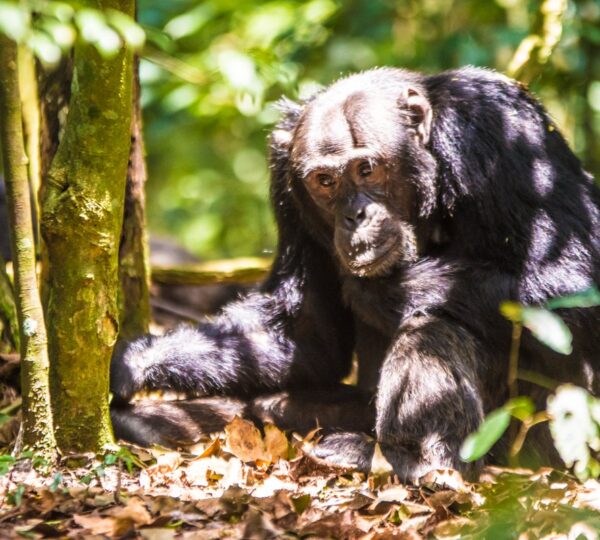
Chimpanzee Trekking in Kalinzu
Toro-Semuliki Wildlife Reserve
For adventurous travellers seeking an even more off-the-beaten-track chimpanzee experience, the Toro-Semuliki Wildlife Reserve in far western Uganda, near the border with the Democratic Republic of Congo, offers chimpanzee trekking within a remote, rarely visited landscape characterised by hot springs, dense forest, and a genuinely wild, untouched atmosphere.
This lesser-known destination appeals particularly to experienced travellers seeking solitude and a sense of genuine adventure away from Uganda’s more established chimpanzee trekking circuits.
Because Semuliki receives only a small fraction of the visitors found at Kibale or even Kyambura, the chimpanzee trekking experience here can feel wonderfully exclusive and remote, though visitors should set realistic expectations regarding the reliability of sightings compared with the more established, better-habituated communities elsewhere.
For dedicated adventurers with additional time and a taste for the truly off-the-beaten-track, combining Semuliki with the Rwenzori Mountains or Fort Portal region creates a fascinating and unusual extension to a broader Uganda safari itinerary.
Comparing Uganda’s Chimpanzee Trekking Destinations
With several destinations to choose from, comparing their key characteristics side by side helps clarify which best matches your particular priorities, whether that is the highest chance of success, the lowest cost, or the most convenient combination with other attractions on your itinerary.
| Destination | Approx. Permit Cost | Best For |
| Kibale Forest | USD 200 to 250 | Highest density, best success rate, habituation option |
| Budongo Forest | Around USD 130 | Budget option, combines with Murchison Falls, birding |
| Kyambura Gorge | Around USD 100 | Budget option, combines with Queen Elizabeth safari |
| Kalinzu Forest | USD 65 to 130 | Lowest cost, quieter, fewer crowds |
Prices for chimpanzee permits are set by the Uganda Wildlife Authority and can be adjusted periodically, so it is always worth confirming the current rate with a licensed operator at the time of booking, particularly given the general trend of gradual increases seen in recent years across all Ugandan wildlife permits.
The Chimpanzee Habituation Experience
For travellers seeking the deepest and most rewarding possible chimpanzee encounter, the habituation experience, available in both Kibale and Budongo Forests, offers a remarkable alternative to the standard one-hour trek.
This extended activity, typically beginning before dawn and continuing for much of the day, allows a small group of visitors to accompany researchers and guides as they follow a semi-habituated chimpanzee community from the moment it wakes in its night nest through its full daily routine of feeding, resting, socialising, and moving through the forest.
The habituation experience offers an unparalleled depth of insight into chimpanzee behaviour and social dynamics, far exceeding what is possible in the standard hour-long trek, and it is particularly treasured by photographers, researchers, and serious primate enthusiasts wanting to witness the full richness of chimpanzee daily life.
Because places on this extended experience are limited to a small number of participants each day, and because it requires a longer, more physically demanding day in the forest, it commands a higher permit price than standard trekking, but for many dedicated enthusiasts, the additional depth of the encounter makes it an entirely worthwhile investment.
What to Expect on a Chimpanzee Trek
A typical chimpanzee trekking day in Uganda begins early, usually with a briefing at the park headquarters around seven thirty in the morning, where guides explain the rules of the trek and divide visitors into small groups, typically of no more than eight people, each accompanied by an experienced park guide.
Because chimpanzees range widely and move quickly through the forest canopy and undergrowth in search of food, the trek itself can be considerably more physically demanding and unpredictable than a comparable gorilla trek, sometimes involving brisk, energetic walking to keep pace with a moving community.
Once located, visitors are permitted to spend up to one hour observing the chimpanzees, watching their complex social interactions, occasional dramatic displays, and evident intelligence at close quarters, an experience many describe as thrilling and dynamic in a way distinct from the calmer, gentler encounters typical of gorilla trekking.
Along the way, guides often point out the forest’s other primates, including olive baboons, vervet monkeys, L’Hoest’s monkeys, and black and white colobus monkeys, as well as a wealth of birdlife and plant life, making the trek itself a richly rewarding experience even before the chimpanzees are found.