Big Five Safaris in Uganda
When most travellers picture a classic African safari, the legendary Big Five, lion, leopard, elephant, buffalo, and rhinoceros, are usually the animals at the very top of their wish list, and while Uganda’s international reputation rests heavily on its mountain gorillas and chimpanzees, this remarkable country also offers a genuine, rewarding, and increasingly complete Big Five safari experience across its varied savannah parks.
The term Big Five originated not from any measure of size but from the historic difficulty and danger big game hunters once faced in tracking and bringing down these five formidable animals on foot, and today the same term is used to celebrate the thrill of encountering them safely, camera in hand, on modern wildlife safaris across the African continent, Uganda very much included.
What makes a Big Five safari in Uganda particularly special is the opportunity to combine this classic savannah wildlife checklist with the country’s unrivalled primate encounters, its dramatic landscapes of crater lakes, waterfalls, and the source of the Nile, and its comparatively uncrowded parks, offering a rich and varied safari experience quite different in character from the more heavily visited Big Five destinations of southern and eastern Africa.
Uganda’s Big Five story also carries a genuine conservation triumph at its heart, with rhinos, once completely eradicated from the wild in the country through poaching, gradually being reintroduced and building towards a return to full protected area status.
This guide explores everything you need to know about Big Five safaris in Uganda, covering each of the five legendary animals individually, the best parks in which to find them.
Lions
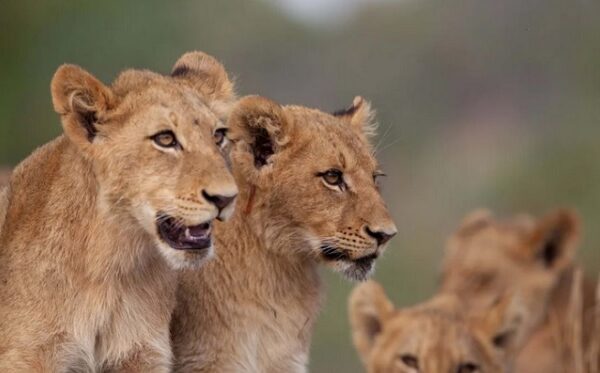
Lions remain one of the most sought after and thrilling sightings on any African safari, and Uganda offers healthy, well-established lion populations across several of its premier savannah parks, along with one particularly famous and unusual behavioural quirk found in remarkably few other places on the continent. Queen Elizabeth National Park, and specifically its remote southern Ishasha sector, is celebrated throughout Africa for its tree-climbing lions, entire prides that clamber into the branches of large fig trees during the heat of the day, an extraordinary and highly photogenic behaviour whose exact cause remains debated among researchers but which delivers one of the most memorable sightings available on any Ugandan safari.
Lions
Beyond Ishasha, healthy lion populations also roam the wider Queen Elizabeth ecosystem, particularly the open grasslands of the Kasenyi plains, where prides are frequently encountered during game drives, and Murchison Falls National Park similarly supports a strong lion population across its northern and southern sectors.
Kidepo Valley National Park, Uganda’s remote northeastern gem, offers outstanding and refreshingly uncrowded lion viewing for travellers willing to make the journey to this wilder, less visited corner of the country. Across all these parks, dawn and dusk game drives generally offer the best chances of encountering lions at their most active, whether resting in trees, patrolling territory, or hunting on the open plains.
Leopards
Leopards are widely considered the most elusive and challenging of the Big Five to spot on any African safari, owing to their solitary, largely nocturnal habits and extraordinary skill at remaining hidden even in relatively open terrain, and Uganda is no exception to this general rule, though the country does offer genuine opportunities for a rewarding leopard sighting for patient, fortunate travellers.
Queen Elizabeth National Park, Murchison Falls National Park, and Kidepo Valley National Park all support healthy leopard populations, with sightings typically occurring during early morning or evening game drives, or occasionally spotted resting in the branches of a tree during the heat of the day.
Because leopards are so effectively camouflaged and inherently secretive, an experienced local guide with sharp eyes and deep knowledge of favoured resting spots, riverine areas, and recent tracks considerably improves your chances of a successful sighting, and it is worth setting realistic expectations that a leopard encounter, while entirely possible across Uganda’s main parks, often comes down to a combination of skilled guiding, patience, and a measure of good fortune. For travellers specifically prioritising leopard sightings, spending additional time and multiple game drives in a single park, rather than moving quickly between destinations, generally improves the odds considerably.
Elephants
Elephants are among the most reliably and rewardingly encountered of the Big Five across Uganda’s savannah parks, with substantial, healthy populations offering excellent viewing opportunities throughout the country, particularly in and around its major water sources where these magnificent animals gather to drink, bathe, and socialise in impressive family herds.
Murchison Falls National Park hosts one of Uganda’s largest elephant populations, with herds frequently encountered along the Nile during both game drives and the park’s celebrated boat cruise, offering a particularly memorable perspective on these animals as they interact with the river.
Queen Elizabeth National Park similarly offers outstanding elephant viewing, particularly around the Kazinga Channel, where herds regularly gather to drink and bathe within easy view of the park’s popular boat cruise, while Kidepo Valley and Lake Mburo National Parks each support their own resident elephant populations, adding further opportunities across a wider Ugandan itinerary.
Watching a large family herd, with playful calves shadowing their mothers and older matriarchs calmly leading the group to water, ranks among the most emotionally rewarding wildlife encounters available on any Ugandan safari, and elephants are reliably among the easiest of the Big Five to observe at close and safe quarters throughout the country’s parks.
Buffaloes
Cape buffaloes, often somewhat underrated by first-time safari-goers compared with their more glamorous Big Five companions, are in fact among the most consistently and easily encountered animals across Uganda’s savannah parks, typically gathering in large, impressive herds that can number in the hundreds and offering dramatic, thundering sightings as they move across the open plains. Their formidable reputation among experienced safari guides and hunters alike, owing to their unpredictable temperament and willingness to defend themselves and their herd when threatened, adds a genuine frisson of respect to every buffalo encounter.
Queen Elizabeth National Park, Murchison Falls National Park, Lake Mburo National Park, and Kidepo Valley National Park all offer excellent, reliable buffalo viewing, with large herds frequently encountered grazing on open grassland or gathered around waterholes and rivers, particularly during the drier months when water sources become more concentrated and predictable. For many safari guides, buffaloes rank among the most genuinely dangerous animals on the African continent when encountered on foot, adding a layer of respect and caution to any walking safari that includes areas where buffalo herds are known to range.
Rhinos
The rhinoceros presents the most complex and, in many ways, the most compelling story among Uganda’s Big Five, because both black and white rhino species were completely eradicated from the wild in Uganda through poaching and civil conflict by the early 1980s, leaving the country without any wild rhino population for several decades, a devastating loss for one of Africa’s most iconic and endangered animals.
Rebuilding a rhino population from this complete local extinction has required a dedicated, patient, and carefully managed conservation effort centred on a single, purpose-built sanctuary rather than the country’s open, unfenced national parks.
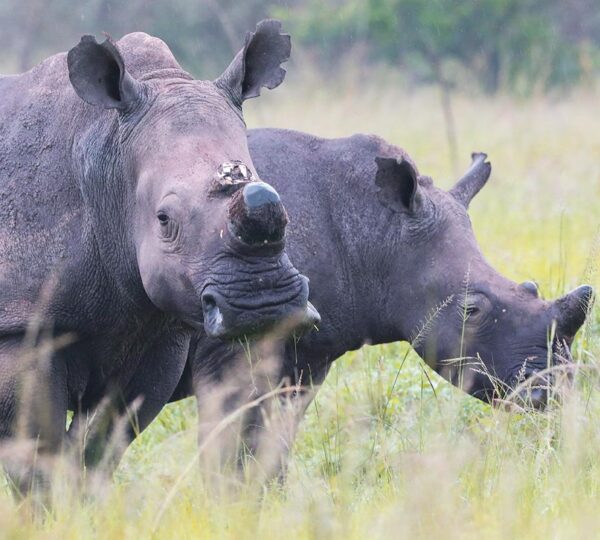
Today, rhino tracking in Uganda takes place at the Ziwa Rhino Sanctuary, a dedicated, securely protected breeding sanctuary located conveniently along the main road between Kampala and Murchison Falls National Park, where a growing population of southern white rhinos, descended from founding animals reintroduced from Kenya and elsewhere, can be tracked on foot with experienced rangers for a genuinely thrilling and unusually intimate encounter.
Ziwa Rhino Sanctuary
Because Ziwa’s rhinos live within a securely fenced sanctuary rather than roaming freely across an open national park, this represents a somewhat different experience from tracking the other four members of the Big Five, but it offers a virtually guaranteed sighting and a deeply moving insight into one of conservation’s most important ongoing recovery projects, with plans for eventual reintroduction of rhinos into Uganda’s national parks proper representing the long-term ambition behind this careful, patient breeding programme.
Where to See the Big Five in Uganda
Bringing together the individual animal profiles above, understanding which Ugandan parks offer the best overall combination of Big Five sightings helps in planning an itinerary that maximises your chances of a genuinely complete Big Five experience during your visit. Each park offers its own particular strengths across the five species.
| Park | Big Five Strengths |
| Queen Elizabeth National Park | Tree-climbing lions, elephants, buffaloes, leopards |
| Murchison Falls National Park | Elephants, lions, buffaloes, leopards |
| Kidepo Valley National Park | Lions, buffaloes, elephants, leopards, uncrowded |
| Lake Mburo National Park | Buffaloes, leopards, elephants (no lions) |
| Ziwa Rhino Sanctuary | Dedicated white rhino tracking on foot |
No single Ugandan park currently offers all five animals within its own boundaries, given that rhinos are found only at Ziwa Sanctuary rather than within the open national parks, so a genuine Big Five safari in Uganda typically requires combining a visit to Ziwa, conveniently positioned en route to Murchison Falls, with time in one or more of the country’s savannah parks to complete the remaining four species.
Best Time for a Big Five Safari in Uganda
Game viewing for the Big Five is possible in Uganda throughout the year, but the two dry seasons, from June to September and from December to February, generally offer the best conditions, as animals concentrate more predictably around remaining water sources and shorter, less obscuring vegetation makes spotting wildlife considerably easier across the open plains. These drier months are consequently the most popular time for Big Five focused safaris.
The wetter months bring lush, green landscapes and excellent conditions for birdwatching, though wildlife can be more widely dispersed and somewhat harder to locate across thicker vegetation, a trade-off worth considering when planning a trip specifically focused on completing the Big Five checklist. For the most reliable and rewarding Big Five viewing, particularly for those with limited time who want to maximise their chances across all five species, travelling during the dry season is generally recommended.