Lake Naivasha National Park
Lake Naivasha lies in Nakuru County within the Rift Valley, about 90 kilometres — roughly ninety minutes to two hours by road — northwest of Nairobi. Unlike most of the destinations on this list it isn’t a fenced national park, so there’s no single boundary or gate; instead, lodges, boat operators and Crescent Island sit along and around the freshwater lake itself.
Overview
Lake Naivasha is one of the most accessible stops on a Kenyan itinerary, and a natural first or last night before heading further afield. Unlike most of the Rift Valley’s soda lakes, Naivasha is freshwater, which supports a different — and in some ways richer — mix of wildlife, from large hippo pods to a genuinely exceptional range of birdlife.
The lake isn’t a national park in its own right, so there’s no single entrance fee or boundary; instead, activities are organised through lodges and boat operators along the shore, with Crescent Island — a private wildlife sanctuary accessible only by boat — as the main draw for travellers who want to get out and walk among game on foot.
Naivasha also sits at the heart of Kenya’s flower-growing industry, and the greenhouses visible along parts of the approach road are a genuine part of the local economy rather than an incidental backdrop, supplying a meaningful share of the cut flowers sold across Europe. This gives the area a slightly different character from Kenya’s more purely wilderness-focused destinations, a working agricultural landscape woven directly into the same lake ecosystem that draws wildlife-focused visitors.
Best Time to Visit
The dry months — June to October and December to February — give the calmest water for boating and the clearest views of Mount Longonot and the surrounding hills. April and May bring the heaviest rains and the lowest prices, a reasonable trade-off if you’re travelling on a tighter budget and don’t mind occasional showers.
Worth knowing before you go: Naivasha’s water level has risen dramatically over the past fifteen years, roughly seven metres since 2010 according to satellite measurements, submerging shoreline roads, farms and, in places, entire settlements during periods of especially heavy rain, most recently in late 2025. This is an ongoing situation affecting the whole Rift Valley lake system rather than a one-off event, so it’s worth asking your lodge about current access routes and lake conditions before finalising plans, since shoreline infrastructure has shifted meaningfully over the years.
Getting There and Where to Stay
Getting There
The drive from Nairobi is short and straightforward, generally under two hours on a sealed road, which makes Naivasha one of the easiest half-day or overnight add-ons to a Nairobi-based itinerary. A short charter flight from Wilson Airport is also possible, though given the drive time it’s rarely necessary.
The route from Nairobi climbs over the Rift Valley escarpment before descending toward the lake, and the viewpoint near the top of the descent is worth a brief stop in its own right, offering one of the more dramatic views in this part of Kenya out over the valley floor toward Longonot and the lake beyond.
Where to Stay
Options range from the colonial-era elegance of Loldia House to the modern spa facilities at Enashipai Resort, with a good spread of mid-range hotels and lakeside cottages in between. Budget travellers are well served too — Camp Carnellys, right on the water, offers everything from camping to simple cottages at a fraction of the cost of the lake’s luxury properties. Given the lake’s rising water level in recent years, it’s worth confirming directly with your chosen property that its shoreline access and grounds remain unaffected before booking.
Activities
Naivasha’s appeal is its variety — it’s one of the few places in Kenya where boating, walking safaris, and volcano hikes are all available within a short drive of each other.
Boat Safaris
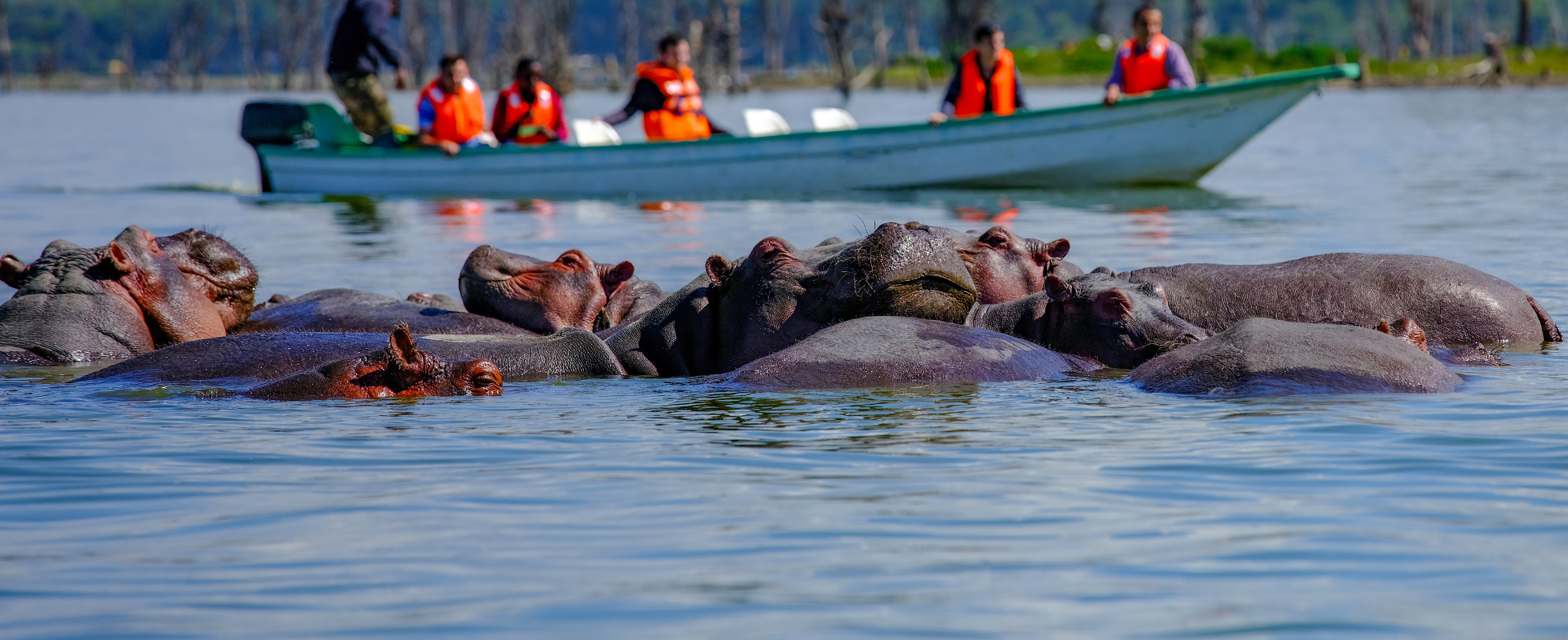
A motorised boat trip of around an hour takes you out onto the lake, close enough to hippo pods to hear them but at a respectful distance, past African fish eagles perched along the shore, and with Mount Longonot’s cone visible in the background. Most boat safaris are timed to end at Crescent Island, combining the water crossing with the walking safari on the other side.
Crescent Island Walking Safari
Crescent Island is the flooded rim of an extinct volcanic crater, and because it holds no predators, it’s one of the very few places in Kenya where you can walk on foot among giraffe, zebra, waterbuck, eland and buffalo without a vehicle. Guided walks run 90 minutes to three hours depending on how much ground you want to cover, and the lack of predators means guides can bring you genuinely close to grazing animals.
Birdwatching
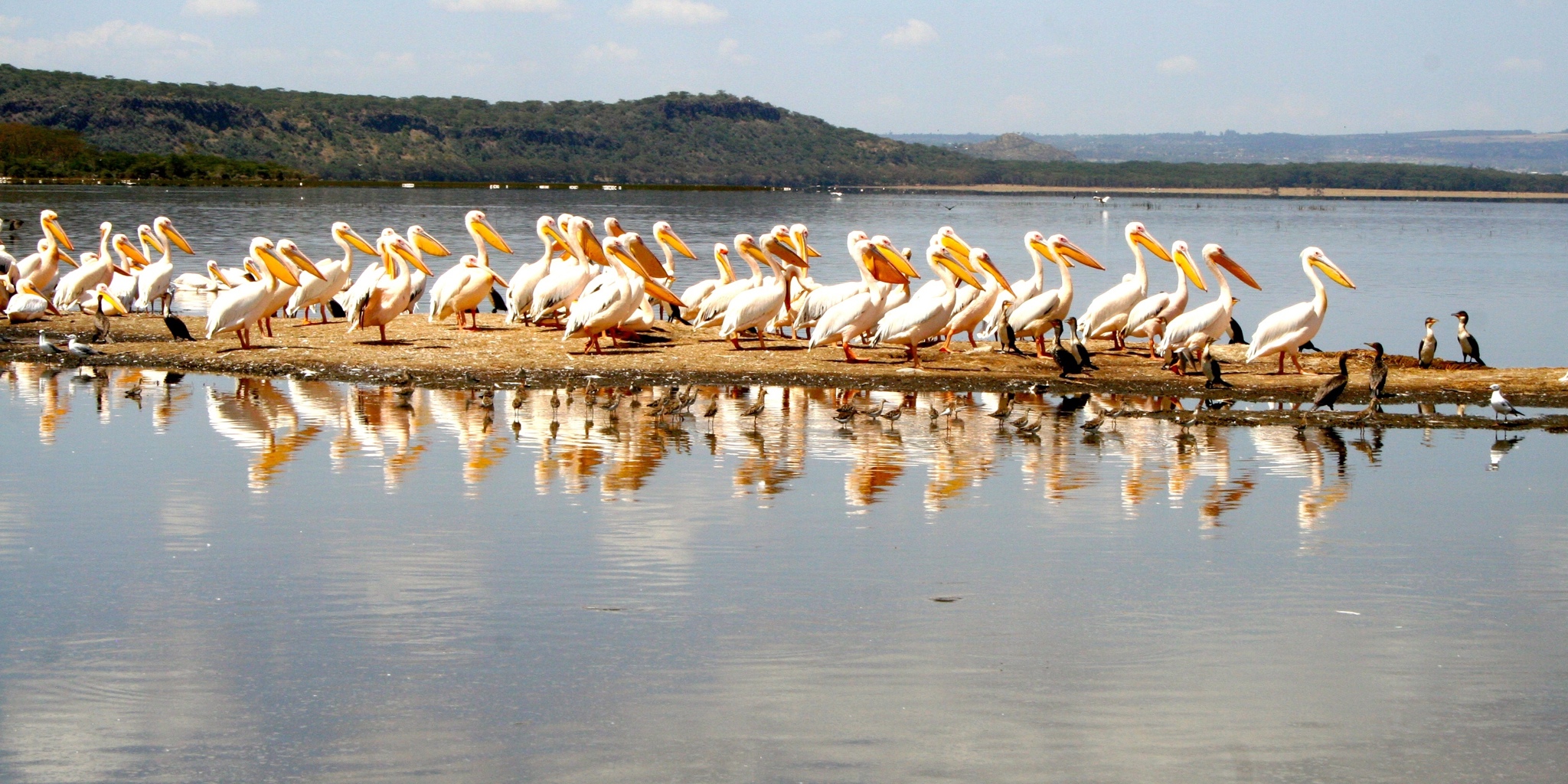
Naivasha’s papyrus swamps and open water support well over 400 recorded bird species, from fish eagles and pelicans to a wide range of waders and waterfowl. Both the boat safari and a shoreline walk offer good birding, and early morning or late afternoon light gives the best conditions for photography.
Climbing Mount Longonot
This dormant volcano rises just south of the lake and offers a half-day hike to its crater rim, with views back down over Naivasha and, on a clear day, across a wide stretch of the Rift Valley. It’s a genuine hike rather than a stroll—figure on two to three hours up — so it suits travellers who want a more active day than a standard game drive.
Cycling and Hiking
Several lodges and the nearby Hell’s Gate area offer cycling routes and walking trails through open country where wildlife roams freely alongside visitors, a rare combination of safari scenery and active outdoor recreation not found in most of Kenya’s fenced or predator-heavy parks.
Visiting Hell’s Gate National Park
A short drive from the lake, this small, dramatic park permits cycling and walking throughout, given its low density of dangerous predators, and its towering red cliffs and narrow gorge, said to have partly inspired the landscape of Disney’s The Lion King, make it a worthwhile half-day addition for travellers with the time.
Fish Eagle Feeding Demonstrations
Some boat operators include a brief fish-eagle feeding demonstration as part of the standard boat safari, tossing a fish into the water to draw a low, dramatic swoop from a nearby eagle, a popular moment for photographers, though one worth discussing with your operator if you’d prefer a purely observational experience.
Attractions
Naivasha’s attractions center on the lake itself and the landscape immediately around it.
Crescent Island
Beyond the walking safari, Crescent Island is simply a beautiful and unusual place — a slice of the African bush accessible only by boat, with open grassland, acacia woodland and lake views on every side. It’s also a genuinely good picnic spot if you want to slow the day down rather than rush through.
The Hippo Pods
Naivasha holds one of the larger hippo populations among Kenya’s freshwater lakes, and boat safaris give you the best vantage point to observe them safely — close enough to appreciate their scale, far enough to stay well clear of their territory.
Mount Longonot
Even without climbing it, Longonot’s distinctive volcanic cone is a constant and attractive backdrop to time spent on the lake, and it anchors the wider Rift Valley scenery that makes this stretch of Kenya so visually striking.
Elsamere
The former home of Joy Adamson, author of Born Free, sits on the lake’s southern shore and now operates as a small museum and conservation centre with gardens running down to the water. It’s a low-key stop, best suited to travellers interested in Kenya’s conservation history rather than those purely focused on wildlife.
The Papyrus Shoreline
Naivasha’s fringing papyrus beds are unusual for the region and support a distinct ecosystem of their own, particularly for birdlife — worth a slower pass by boat rather than treating the lake purely as a route to Crescent Island.
Hell’s Gate Gorge
This narrow gorge, walkable on foot given the park’s low predator density, cuts dramatically through towering rock walls and is one of the more visually striking landscapes within easy reach of Naivasha, offering a genuinely different scenic character from the lake itself.
Wildlife Highlights
Resident Hippo Pods
Naivasha’s freshwater supports one of the larger hippo populations among Kenya’s Rift Valley lakes, most easily observed at a safe distance during a boat safari.
African Fish Eagle
The lake’s fish eagle population is dense enough that sightings — and their distinctive call — are close to guaranteed on any boat trip, with pairs often seen hunting from the same perches day after day.
Giraffe and Plains Game on Crescent Island
Free of predators, Crescent Island supports giraffe, zebra, waterbuck and eland that graze undisturbed, making it one of the only places in Kenya to walk this close to large game on foot.
Waterbuck and Colobus of the Shoreline
Beyond Crescent Island, the wider lake shore and adjacent forest patches support healthy waterbuck populations and, in a few specific wooded areas, black-and-white colobus monkey troops, an unexpected primate sighting for a destination most visitors associate purely with hippo and birdlife.
Fun Facts
- Crescent Island’s crescent shape is the eroded rim of an extinct volcanic crater, partly flooded by the lake.
- Several scenes from the film Out of Africa were shot around Lake Naivasha, drawn by its scenery and light.
- Naivasha’s name is thought to derive from a Maasai phrase referring to ‘rough water’, a nod to the sudden winds that can whip up the lake’s surface.
- The lake has risen by roughly seven metres and expanded by around 40 percent in surface area since 2010, a trend affecting several Rift Valley lakes simultaneously and one that researchers still don’t fully understand, variously attributed to shifting rainfall patterns, sedimentation, and possible tectonic activity.
- Naivasha’s flower farms, clustered around parts of the lake, form one of Kenya’s largest export industries, and the same freshwater that supports the lake’s exceptional birdlife also irrigates a significant share of the roses sold in supermarkets and flower shops across Europe.
- Hell’s Gate National Park, a short drive from the lake, was one of the first parks in Kenya to permit cycling and walking throughout, a policy made possible by its unusually low density of dangerous predators compared with most Kenyan reserves.