
Tsavo West National Reserve
Tsavo West National Park sits on the western side of the Nairobi–Mombasa highway, directly across from Tsavo East, roughly 240 to 300 kilometres — about three to four hours by road — from Nairobi depending on your entry gate. It covers about 9,065 square kilometres of volcanic hills, lava fields and swampland, considerably more varied terrain than its larger eastern neighbour.
Overview
Tsavo West sits on the other side of the Nairobi–Mombasa highway from its larger sibling, and while it’s smaller, it’s generally considered the more scenically dramatic of the two Tsavo parks. Volcanic hills, lava flows, natural springs and swamps give it a far more varied landscape than the flatter, drier expanse of Tsavo East, and the Chyulu Hills form a striking backdrop along much of the park’s northern boundary.
This is also one of the better parks in Kenya for combining wildlife viewing with genuinely distinctive natural features — most visitors leave remembering the springs and lava fields as much as the animals.
The park’s varied topography is a direct result of relatively recent volcanic activity across this stretch of the Rift Valley system, and it’s this same geology that gives Tsavo West its two most memorable features: Mzima Springs, fed by rainfall filtering down through porous volcanic rock from the Chyulu Hills, and the Shetani lava flow, young enough in geological terms that local oral history still treats it as a living memory rather than ancient history.
Best Time to Visit
The dry months of June to October and January to March give the best game viewing, as animals gather around Mzima Springs and other permanent water sources. The wetter months bring lush scenery and quieter roads, but travel can be slower going, so factor in extra time if you’re visiting between April and May or in November.
Tsavo West sits in the same lower KWS fee bracket as Tsavo East and Nairobi National Park, with non-resident adult entry currently around 80 US dollars per day, making the two Tsavo parks together one of the better value combinations available in Kenya given their combined scale and scenic variety.
Getting There and Where to Stay
Getting There
Daily scheduled flights connect Nairobi and Mombasa to airstrips within or near the park, with flight times of around forty-five minutes to an hour. By road, the park is roughly three to four hours from Nairobi via the Mombasa highway, with Mtito Andei and Tsavo Gates as the main entry points; lodges generally arrange transfers from the nearby Voi and Mtito Andei railway stations as well.
Travellers combining both Tsavo parks in a single trip typically enter through Mtito Andei for Tsavo West and exit or enter separately through Voi for Tsavo East, since the two parks, despite facing each other across the highway, don’t have a direct internal road connection and require using the public highway to move between them.
Where to Stay
Options span a genuinely wide price range, from the mid-priced Kilaguni Serena Lodge — Kenya’s oldest safari lodge, with sweeping views toward Kilimanjaro — to the exclusive Finch Hattons tented camp, and simple self-catering cabins at Kitani Safari Lodge for budget-conscious independent travellers. Ngulia Safari Lodge is worth particular mention for its floodlit waterhole, which draws wildlife into view after dark without needing a night drive.
Activities
Tsavo West rewards a slower pace than Tsavo East, with several stops worth genuinely getting out of the vehicle for.
Game Drives
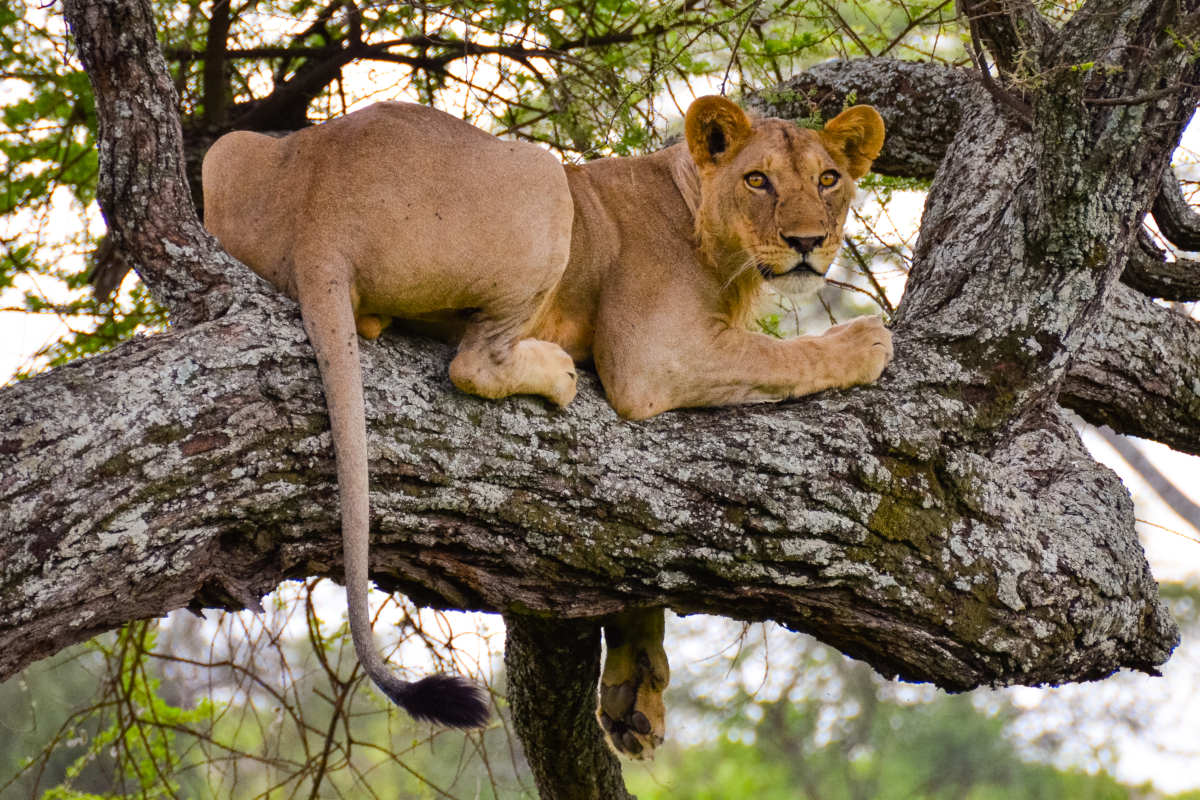
Drives here wind through more varied terrain than in Tsavo East — rocky hills, swampland and lava fields alongside open bush — and cover ground between the park’s major landmarks. Lion, elephant, buffalo, giraffe and a healthy population of both black rhino and plains game are all present, with the Ngulia hills area being particularly good for predator sightings.
Guided Nature Walks at Mzima Springs
Armed rangers lead short walks around Mzima Springs, pointing out plant life, insects and animal tracks along the way. This is one of the more rewarding walking stops in either Tsavo park precisely because the springs concentrate so much life in a small, walkable area.
Underwater Hippo and Crocodile Viewing
A submerged viewing chamber at Mzima Springs, reached by a short pier, lets you watch hippos and crocodiles moving through the crystal-clear water from below the surface — a genuinely unusual vantage point that few other parks in Kenya can offer, and a highlight for photographers.
Hiking Chaimu Crater
A short, steep climb up this volcanic cinder cone rewards you with views over the surrounding lava fields and plains. It’s a manageable outing of well under an hour and a good way to add some activity to an otherwise vehicle-based day.
Birdwatching
The mix of wetland, forest patches and rocky cliffs supports a wide range of species, with both resident and migratory birds present depending on season — the springs and Lake Jipe are the most productive spots to focus on.
Rock Climbing at Ngulia Hills
The rugged terrain around the Ngulia hills offers a handful of short scrambles and viewpoints for travellers wanting a more physical break from vehicle-based game viewing, best arranged through your lodge given the need for local knowledge of safe, wildlife-free routes.
Night Viewing at the Ngulia Waterhole
Ngulia Safari Lodge’s floodlit waterhole draws a genuinely reliable stream of nocturnal visitors after dark, letting guests watch from the safety and comfort of the lodge itself rather than needing an organised night drive, a distinctive and low-effort way to see species that rarely show themselves during the day.
Attractions
Tsavo West’s attractions are its calling card — a set of genuinely distinctive natural features rarely matched elsewhere in Kenya.
Mzima Springs
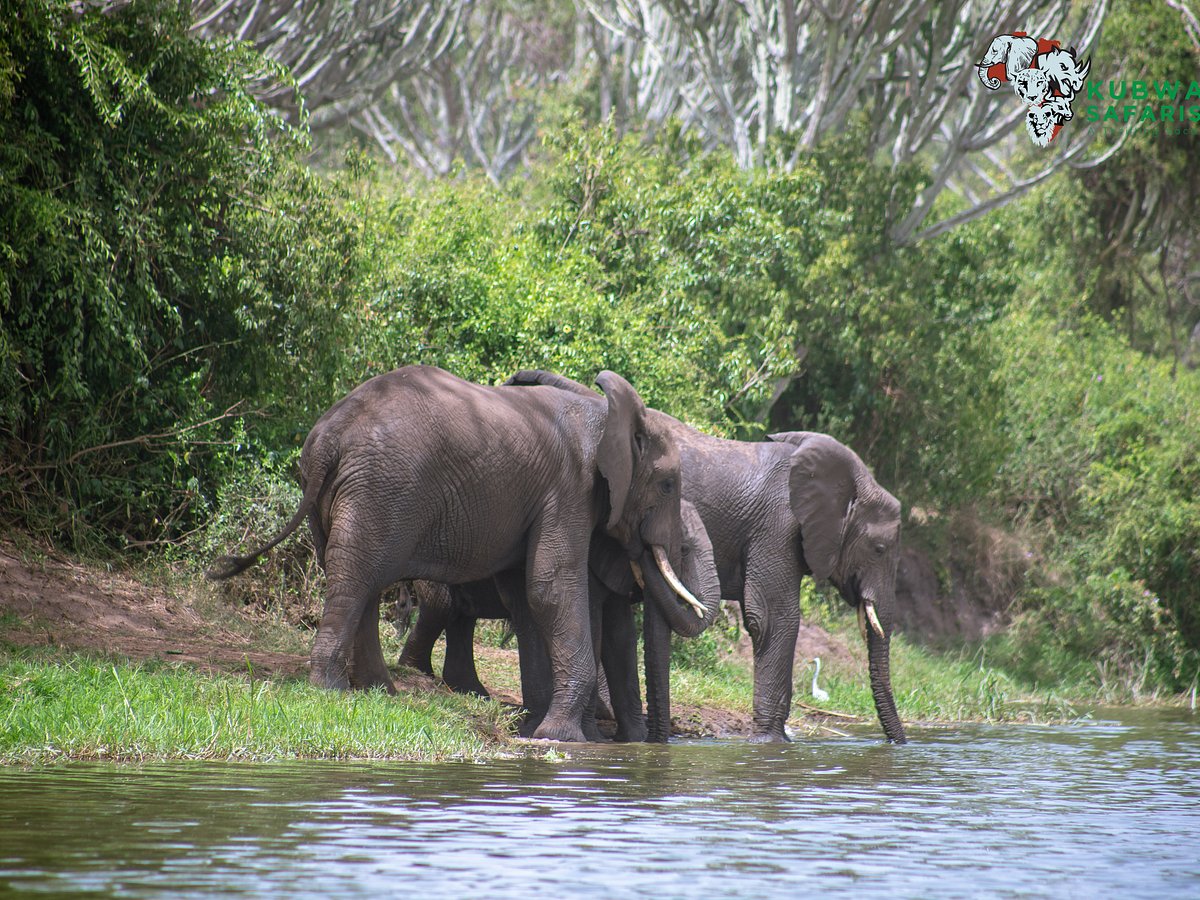
Millions of gallons of crystal-clear water emerge daily from beneath the park’s volcanic rock, filtered through the Chyulu Hills, forming pools shaded by fig and acacia trees and packed with fish, hippo and crocodile. It’s arguably the single best stop in either Tsavo park and shouldn’t be skipped on any Tsavo West itinerary.
The Shetani Lava Flow
‘Shetani’ means devil in Swahili, and this vast black field of solidified lava — the result of a volcanic eruption roughly 500 years ago — has an eerie, otherworldly quality that stands in stark contrast to the surrounding bush. A marked trail leads through the flow, with vegetation slowly reclaiming pockets of the rock as you walk.
Chaimu Crater
Beyond the hike itself, the crater’s summit gives one of the best overview vantage points in the park, taking in the lava fields, surrounding plains and distant hills in one view.
Lake Jipe
Sitting on the park’s southwestern boundary and shared with Tanzania, this shallow lake offers good birdwatching and, on a clear day, views across to Mount Kilimanjaro — a quieter, less-visited counterpart to the more famous Amboseli vantage points.
The Ngulia Rhino Sanctuary
A fenced sanctuary within the park protects a growing population of black rhino, giving visitors a considerably better chance of a sighting than in the unprotected areas of either Tsavo park, where rhino remain elusive.
The Chyulu Hills Backdrop
Rising along the park’s northern boundary, this relatively young volcanic range, still geologically active in places, forms one of the more striking scenic backdrops available on any Kenyan game drive, and the range’s own dedicated national park, reachable as a separate excursion, offers hiking for travellers with additional time.
Wildlife Highlights
Black Rhino in the Ngulia Sanctuary
The fenced Ngulia sanctuary protects a growing black rhino population, giving a considerably higher chance of a sighting than in the open, unprotected areas of either Tsavo park.
Hippo and Crocodile at Mzima Springs
The springs’ underwater viewing chamber offers a rare below-the-waterline look at hippo and crocodile behaviour, a genuinely different way to encounter these animals than from a vehicle.
Klipspringer on the Rocky Outcrops
These small, sure-footed antelope favour the park’s rocky hills and lava formations, and spotting one balanced on a boulder is a distinctive Tsavo West sighting not easily replicated elsewhere.
Fish of Mzima Springs
Beyond the hippo and crocodile that draw most attention, Mzima Springs’ crystal-clear pools support large numbers of barbel and other fish species, clearly visible from the underwater viewing chamber and a genuine part of what makes the springs such a rewarding stop for patient observers.
Fun Facts
- Mzima Springs produces tens of millions of gallons of water a day, filtered clean through volcanic rock from rainfall on the distant Chyulu Hills.
- The Shetani lava flow is young by geological standards, formed within roughly the last few hundred years, and local Kamba oral history still recalls it as a devil’s curse.
- Kilaguni Serena Lodge, opened in the early 1960s, was Kenya’s first purpose-built safari lodge and remains in operation today.
- Lake Jipe, on the park’s southwestern edge, is shared with Tanzania and offers one of the lesser-known Kilimanjaro views in the Tsavo ecosystem.
- The Chyulu Hills, forming Tsavo West’s northern backdrop, are geologically young enough that they’re sometimes described as one of the newest mountain ranges on the African continent.
- Tsavo West’s underwater viewing chamber at Mzima Springs was among the first of its kind built in East Africa, giving generations of visitors a below-the-waterline view of hippo behaviour long before such installations became more common elsewhere.