Serengeti National Park
Serengeti takes its name from the Maasai word siringet, meaning endless plains, and that name is not an exaggeration. At roughly 14,750 square kilometres, the park stretches beyond the horizon in every direction, open grassland giving way to acacia woodland, kopjes, and river valleys, all of it home to the largest overland wildlife migration left on earth.
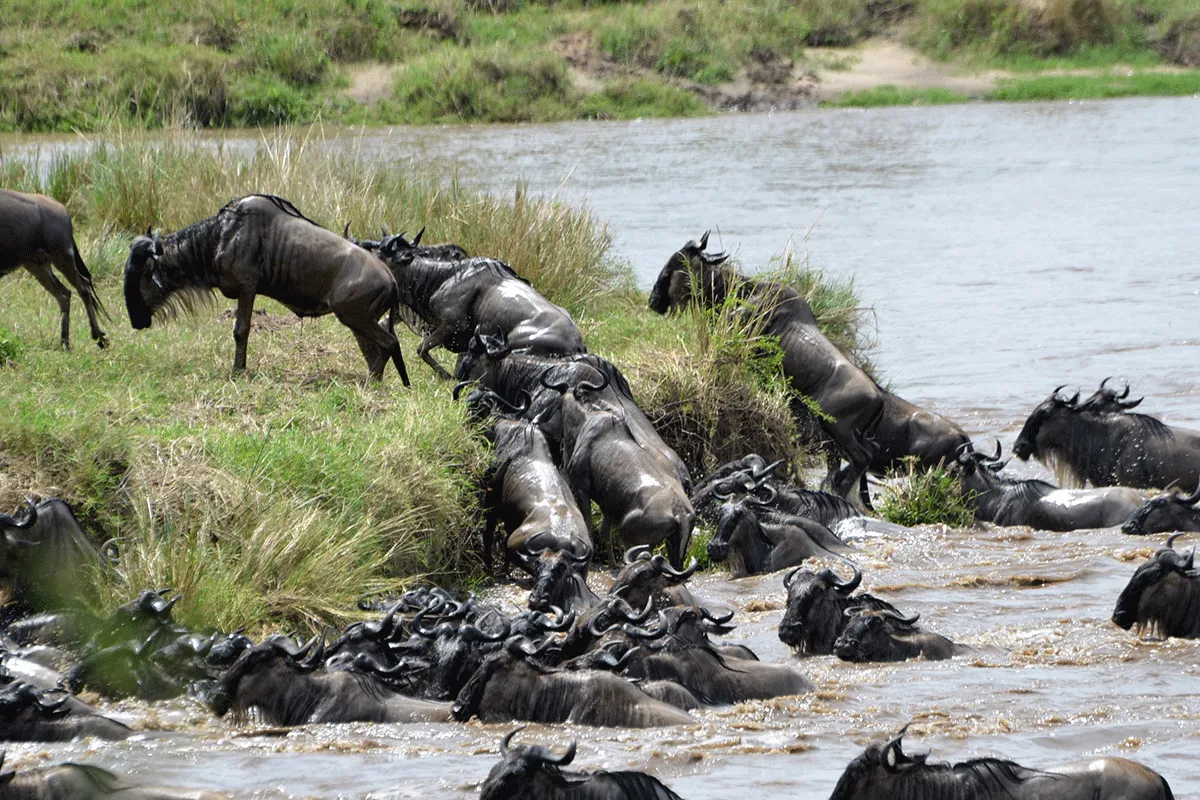
Clients researching Serengeti often arrive with one image fixed in mind, a wildebeest river crossing, and while that image is real, it only happens in specific places at specific times of year, which is why understanding the migration’s actual movement matters more here than at almost any other park we plan trips around.
What makes Serengeti worth the reputation is not just the migration itself but the park’s year-round depth. Even outside the migration’s peak crossing months, Serengeti holds resident lion prides, healthy leopard and cheetah populations, and enough permanent water around Seronera to guarantee strong game viewing in any month. We want this guide to help you plan around both realities, the migration’s seasonal choreography and the park’s dependable everyday wildlife.
Should You Visit the Serengeti?
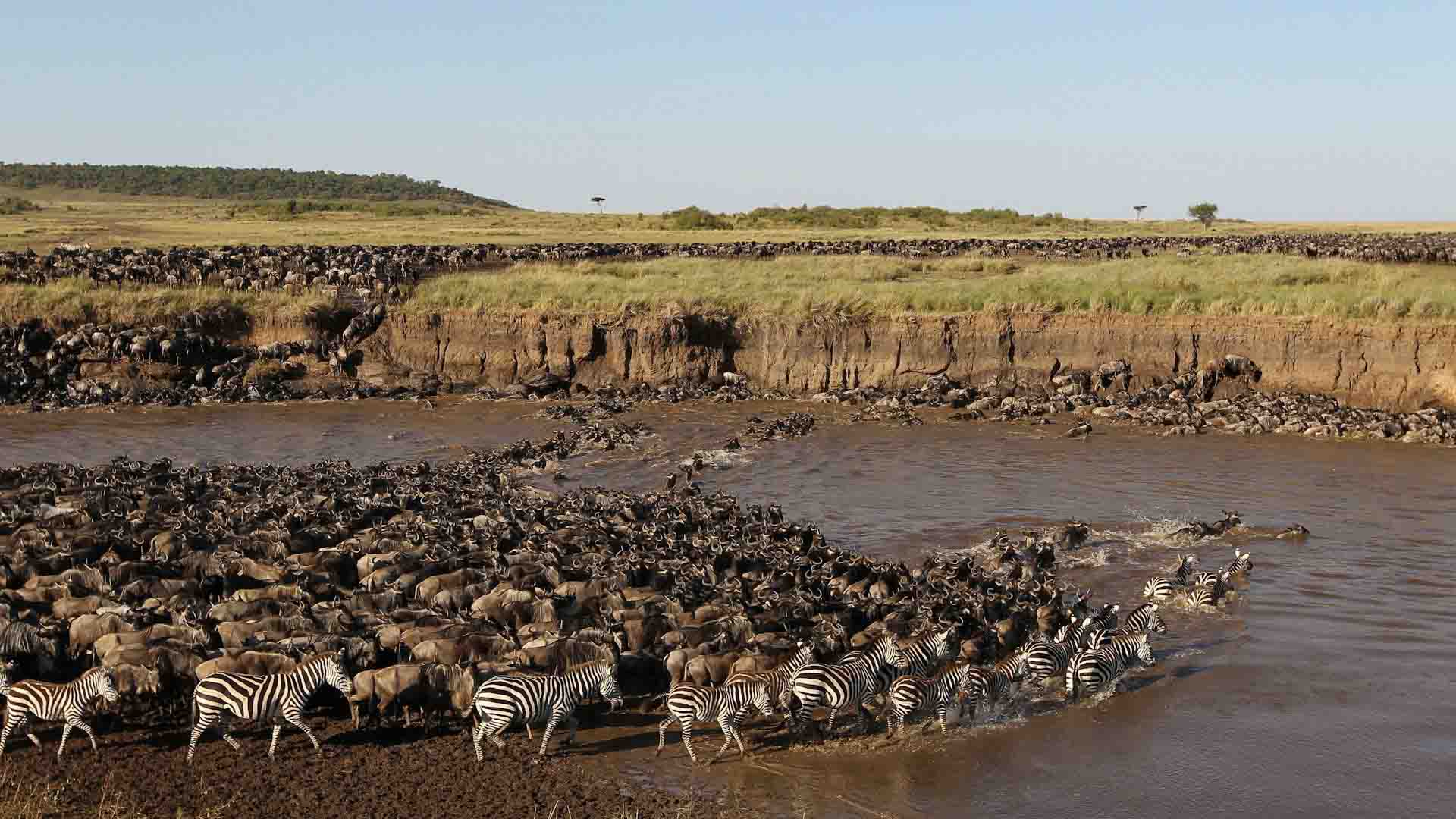
Serengeti suits nearly every safari traveller, but getting real value from a visit means understanding that the park is not a single, static destination: the migration itself, roughly 1.5 million wildebeest alongside hundreds of thousands of zebra, moves in a broadly predictable annual circuit, calving in the southern plains around January to March, then moving north and west toward the Grumeti River around May to July, before reaching the Mara River crossings in the north from July through October.
Booking the right sector for the right month is the single most important decision in planning a Serengeti trip, more consequential than which lodge you choose.
For travellers whose schedule does not align with a specific migration phase, the good news is that Serengeti’s central Seronera area holds resident wildlife year-round, strong lion and leopard populations concentrated around the permanent Seronera River, meaning a visit in any month still delivers genuine Big Cat viewing even without the migration’s added spectacle.
Why the Serengeti Matters
The Great Migration
No other single wildlife event on the continent matches the scale of the Serengeti-Mara migration, a roughly 800-kilometre annual circuit driven by rainfall and grass growth rather than any fixed calendar, meaning exact timing shifts year to year and a good operator’s real-time knowledge of herd location matters as much as the general seasonal pattern.
A Genuinely Complete Predator Ecosystem
Serengeti holds one of Africa’s healthiest lion populations, alongside cheetah thriving on the open plains where their speed advantage counts, and leopard concentrated in riverine woodland and around the park’s granite kopjes. This combination of habitat types within one park is part of why sightings here feel less like luck and more like a predictable outcome of good guiding.
The Kopjes
Scattered granite outcrops rising from the plains, kopjes serve as natural vantage points for lion and leopard and hold their own micro-ecosystems of hyrax, agama lizards, and specialised plant life. Simba Kopjes and the area around Moru Kopjes, also home to ancient Maasai rock paintings, are worth building into any Serengeti game drive itinerary specifically for this reason.
Wildlife Beyond the Migration
Even setting the wildebeest and zebra aside, Serengeti’s resident species list is genuinely deep: giraffe, topi, hartebeest, and eland populate the plains year-round, elephant move through the woodland areas particularly near the Grumeti, and the park’s bird list runs past five hundred species, including the vivid lilac-breasted roller and several vulture species that play a real ecological role scavenging migration mortality.
How Serengeti Compares to Ngorongoro and the Mara
Travellers weighing Serengeti against Kenya’s Maasai Mara, effectively the same ecosystem across an international border, should note that the Mara offers the dramatic river crossings at a smaller, more concentrated scale, while Serengeti’s far larger total area gives more room to escape vehicle congestion during peak crossing weeks.
Ngorongoro Crater, by contrast, offers a compact, walled ecosystem with extremely high predator density in a much smaller area, a genuinely different, more concentrated experience than Serengeti’s open, sprawling plains.
Serengeti’s Regions and When to Visit Them
| Region | Best Months | What’s Happening |
| Southern Plains (Ndutu area) | December – March | Wildebeest calving season, dense predator activity around vulnerable newborns |
| Western Corridor (Grumeti) | May – July | Herds crossing the Grumeti River, crocodile activity |
| Northern Serengeti (Mara River) | July – October | The famous, dramatic Mara River crossings |
| Central Seronera | Year-round | Resident lion and leopard populations, reliable regardless of migration timing |
Activities to Do in the Park
Game Drives
Game drives remain the core activity throughout Serengeti, typically run at dawn and late afternoon when temperatures are cooler and wildlife most active. A private vehicle with a pop-up roof allows unobstructed photography, and drivers with strong local knowledge and radio contact with other guides significantly improve the odds of a good predator sighting on any given day.
Hot Air Balloon Safaris
Launched before dawn from several areas of the park, balloon safaris offer a genuinely different perspective over the plains, drifting silently above grazing herds and, on fortunate mornings, predators moving in the half-light before a traditional champagne breakfast is served on landing. This activity is priced separately from standard game drives and should be booked in advance given limited daily capacity.
Walking Safaris
Available in select areas with a licensed armed ranger, walking safaris slow the pace considerably and shift attention toward smaller details, tracks, dung, insect life, and plant use, that a vehicle passes over. This is a worthwhile complement to game drives rather than a substitute, given the walking areas are more restricted than the park’s full driving network.
Olduvai Gorge
Technically within the neighbouring Ngorongoro Conservation Area but commonly combined with a Serengeti itinerary given its position along the access road, Olduvai Gorge offers a stop at one of the most significant paleoanthropological sites on earth, where early hominid fossils dating back nearly two million years were discovered.
Maasai Village Visits
Visits near the park’s boundary offer cultural context alongside the wildlife-focused activities, with guided visits typically including a walk through a traditional boma, discussion of pastoralist life, and a chance to purchase beadwork directly from local artisans.
Photography-Focused Game Drives
Distinct from a standard drive in pace and vehicle setup, these suit travellers with specific compositional goals, extended time at productive sightings, and a guide briefed on light and positioning rather than simply covering ground to maximise species count.
Budgeting for the Serengeti
Non-resident park entry runs at approximately 70.80 US dollars per person per day, VAT included, placing Serengeti alongside Nyerere (formerly Selous) at the top of Tanzania’s fee tiers. This reflects Serengeti’s premium status and the scale of conservation infrastructure the park requires. Concession fees for overnight stays inside the park add a further charge per person per night, and travellers passing through the neighbouring Ngorongoro Conservation Area en route also pay a separate transit fee.
| Fee Type | Approx. Cost | Notes |
| Park entry (non-resident adult) | ~US$70.80 per day | VAT included; valid 24 hours from entry |
| Concession fee (overnight) | ~US$70.80 per person per night | Charged for travellers sleeping inside the park |
| Ngorongoro transit fee | ~US$70.80 per adult per crossing | Applies to travellers driving through en route to Serengeti |
| Balloon safari | US$500–600 per person | Priced separately, booked in advance |
Fees are set by the Tanzania National Parks Authority (TANAPA) and reviewed periodically, so confirm the current rate with your operator before finalising a budget, particularly since published figures across different sources sometimes reflect slightly different VAT treatment.
Where to Stay
Seronera area lodges and camps, positioned for year-round central game viewing regardless of migration timing.
Ndutu area camps, essential for the December-March calving season in the southern plains.
Northern Serengeti camps near the Mara River, positioned specifically for July-October river crossing season.
Western Corridor lodges near the Grumeti River, timed for the May-July migration passage.
Frequently Asked Questions
When is the best time to see the wildebeest migration?
This depends on which phase of the migration interests you most: calving season runs December to March in the southern plains, Grumeti River crossings run roughly May to July, and the famous Mara River crossings run July to October in the north.
Is Serengeti good outside migration season?
Yes. The central Seronera area holds resident lion and leopard populations year-round, given permanent water along the Seronera River, so a visit in any month still delivers strong Big Cat viewing.
How much does Serengeti park entry cost?
Approximately 70.80 US dollars per person per day for non-residents, including VAT, among the higher entry fees in Tanzania’s park system alongside Nyerere National Park.
Is a hot air balloon safari worth the extra cost?
For travellers wanting a genuinely different perspective over the plains and comfortable with the added expense, yes. It is priced separately from game drives and should be booked well in advance given limited daily capacity.
How many days should I spend in the Serengeti?
A minimum of three nights allows a meaningful exploration of one region; four to five nights allow movement between two regions to follow migration timing more closely.
Can I combine Serengeti with Ngorongoro Crater?
Yes, and this is the standard combination for most northern Tanzania itineraries, given the two areas sit adjacent to each other with a well-established road connecting them.
Is Serengeti suitable for a self-drive safari?
It is possible with a suitable 4×4 and careful route planning, but the park’s sheer size and the value of local knowledge for tracking migration movement make a guided safari considerably more effective for most travellers, particularly first-time visitors.