
Kibale Forest National Park: The Complete Guide to Chimpanzee Trekking in Uganda
Chimpanzees share around 98% of human DNA, and that kinship is obvious within minutes of finding a group. They squabble, groom each other, throw the occasional tantrum, and generally behave in ways that feel uncomfortably familiar. Kibale’s Kanyanchu community has been under observation for over three decades, and the resulting habituation means sightings succeed more than 90% of the time on a standard trek.
The forest’s value extends well past its headline primate. Red colobus and grey-cheeked mangabeys move through the same canopy, L’Hoest’s monkeys forage in the undergrowth, and the birding here is genuinely world-class, with more than 370 recorded species. The adjoining Bigodi Wetland Sanctuary, a community-run reserve just outside the park, adds an easy afternoon of birding and primate spotting without the cost of a park permit. For travellers who want serious primate viewing without the altitude, mud and expense of Bwindi, Kibale is the natural answer.
Where Kibale Is and How to Get There
Kibale sits in western Uganda near the town of Fort Portal, roughly 300 kilometres and a five- to six-hour drive from Kampala or Entebbe. It’s commonly paired with Queen Elizabeth National Park, about two hours further south, making a Kibale-then-Queen Elizabeth routing one of the most popular combinations in the country. Domestic flights connect Entebbe to Kasese airstrip, from which Kibale is roughly a 1.5 to 2-hour drive, a useful option for travellers prioritising time over cost.
When to Go: Best Time to Visit Kibale
Chimp trekking runs year-round, and unlike gorilla permits, chimp permits are rarely fully booked out, which gives travellers considerably more flexibility on timing than at Bwindi or Mgahinga.
The long dry season, June through August, is when Kibale’s forest trails are at their firmest and most visitors choose to come, making it the safest bet if a straightforward, mud-free walk matters to you. December through February offers a shorter dry window that’s equally reliable for trekking and generally quieter on the ground.
The long rains, March through May, peak in April and turn the forest floor soft and slippery, but because Kibale’s trails are gentler than Bwindi’s steep, high-altitude paths, wet-season trekking here is far more manageable, and the payoff is a forest at its lushest, with birdlife noticeably more active. October and November bring a shorter, patchier bout of rain that rarely disrupts a full day’s activities.
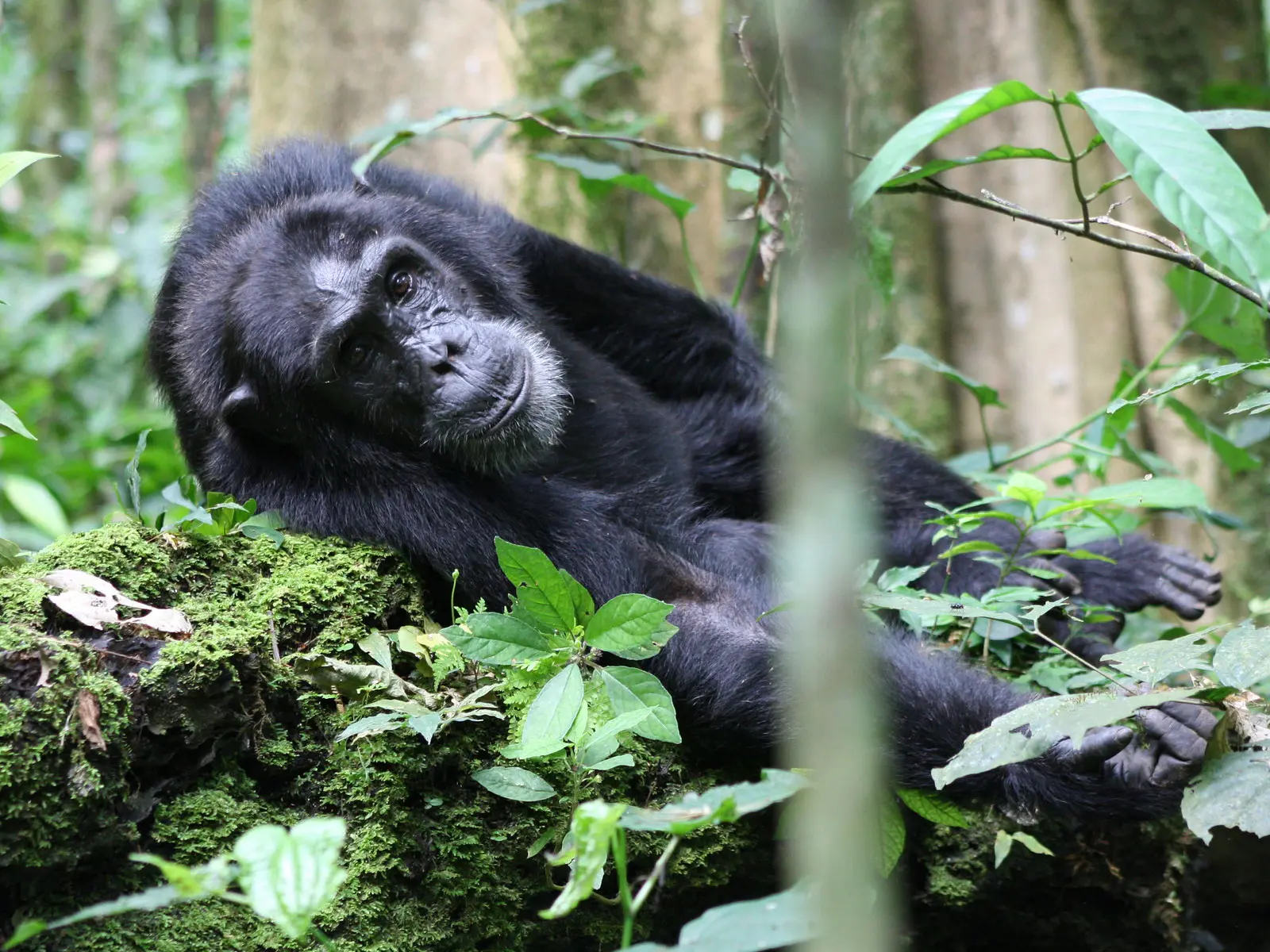
Chimpanzee in Kibale Forest National Park
| Season | Months | What to Expect |
| Long dry season | June – August | Firmest forest trails, peak booking period |
| Short dry season | December – February | Comfortable trekking conditions |
| Long rains | March – May | Heaviest rain in April; forest at its most lush and birdlife most active |
| Short rains | October – November | Intermittent showers, good value |
Because Kibale’s trails are gentler than Bwindi’s, the rainy season is a more viable option here than it is for gorilla trekking. Birders in particular should consider visiting during or just after the rains, when the forest is at its most productive.
Budget Guide: What Chimp Trekking Costs
Chimp permits are considerably cheaper than gorilla permits, which is one reason Kibale features on so many itineraries even when Bwindi is also included.
| Item | Approximate Cost (Foreign Non-Resident) | Notes |
| Standard chimp trekking permit | $250 per person | High season rate for Kanyanchu |
| Low-season chimp permit | $200 per person | Discounted rate introduced for the off-peak window |
| Chimpanzee habituation experience (CHEX) | $300 per person | Full-day immersion with researchers, capped at 4 guests |
| Bigodi Wetland walk | Around $20–30 per person | Separate from park permits; community-run |
| Park entrance fees | Included in the permit price | Ask your operator to confirm inclusions for non-trekking companions |
A day at Kibale, including accommodation, transport and permit, generally costs less than an equivalent day built around Bwindi, making it a good way to add serious primate viewing without blowing the budget. As with all Uganda Wildlife Authority fees, confirm current rates when booking, since they’re periodically revised.
Where to Stay Around Kibale
Most lodges cluster near the Kanyanchu trailhead or along the Fort Portal side of the park, with several overlooking crater lakes in the surrounding countryside.
| Tier | Example Style | Best For |
| Luxury | Crater lake-view lodges and boutique forest camps | Travellers wanting a scenic, relaxed base |
| Mid-range | Comfortable cottages close to the Kanyanchu gate | The majority of visitors |
| Budget | Simple guesthouses in Fort Portal town | Cost-conscious independent travellers |
Top Attractions in Kibale
Kibale’s chimpanzee community anchors the park’s reputation, a group that’s been under daily observation from the Kanyanchu trailhead since 1991, long enough that their behaviour around visitors feels almost unguarded. But the forest holds twelve other primate species alongside them, including red colobus troops that move through the canopy in striking rust-and-black groups, grey-cheeked mangabeys announcing themselves with loud whooping calls, and the quieter, more elusive L’Hoest’s monkey foraging near the forest floor.
Just outside the park boundary, the community-run Bigodi Wetland Sanctuary extends the wildlife interest into a different habitat entirely, drawing birders specifically for its concentration of species within a compact, walkable trail. Kibale’s overall bird list, more than 370 species, ranks it among East Africa’s premier forest birding destinations, and the limestone Amabere Caves nearby add a short, easy detour steeped in local legend.
| Attraction | Description |
| Chimpanzees | A habituated community tracked daily from Kanyanchu since 1991 |
| Thirteen primate species | Including red colobus, grey-cheeked mangabey and L’Hoest’s monkey |
| Bigodi Wetland Sanctuary | Community-run reserve bordering the park, rich in birdlife |
| Birdlife | Over 370 recorded species |
| Amabere Caves | Limestone caves near the park with local legend and scenic views |
Things to Do in Kibale
Standard chimpanzee trekking is a two- to three-hour guided walk from Kanyanchu, timed to morning or afternoon departures, with a sighting success rate above 90%. For travellers who want a deeper encounter, the chimpanzee habituation experience extends that into a full day spent alongside the researchers actively acclimatising a wild community, offering far more observation time than the standard permit allows. Neither activity requires the altitude or steep terrain that Bwindi demands, which is part of why Kibale suits a wider range of fitness levels.
The forest offers plenty beyond the chimps as well. Night forest walks, run from around 8 to 10pm, use torchlight to track bush babies, pottos and the insect life that only emerges after dark, a genuinely different experience from daytime trekking.
The Bigodi Wetland walk, a 4.5-kilometre guided trail on community land bordering the park, is one of the best value activities in the area, combining strong birding with primate sightings for a fraction of the cost of a park permit. Day hikes and general nature walks cover the forest’s flora and smaller mammals at a gentler pace, and cultural visits around Bigodi add village tours, storytelling and craft demonstrations for travellers wanting to round out the wildlife focus with a human one.
| Activity | Description |
| Chimpanzee trekking | Guided walks of roughly 2–3 hours, over 90% sighting success |
| Chimpanzee habituation experience | Full-day immersion following researchers habituating a wild community |
| Night forest walks | Torch-lit walks from 8–10pm for bush babies and nocturnal insects |
| Bigodi wetland walk | 4.5 km guided trail past over 130 bird species and primates |
| Day hikes and nature walks | General forest trails covering flora, birdlife and smaller mammals |
| Cultural visits | Village tours, storytelling and craft demonstrations near Bigodi |
Planning Advice for Kibale
Book chimp permits a few weeks ahead in high season; Kibale rarely sells out as far in advance as Bwindi does.
Wear closed shoes with good grip and long trousers; the forest floor is uneven and occasionally has biting ants.
Combine your trek with a Bigodi Wetland walk the same or following day; it’s inexpensive and consistently rewarding for birders.
If chimpanzees are your priority over gorillas, or you’re travelling with a tighter budget or timeline, Kibale alone can deliver a satisfying primate experience.
Pack a rain jacket regardless of season; forest weather changes quickly.
Who Kibale Is Best For
Kibale suits travellers who want a serious primate encounter without committing an entire trip to it, families with children over about 12 who might find Bwindi’s terrain too demanding, and birders who want a single stop that delivers both primates and an exceptional species list. It’s also the natural choice for anyone building a shorter Uganda itinerary that still wants a genuine wildlife highlight alongside the savanna parks.
Frequently Asked Questions
Is chimp trekking as physically demanding as gorilla trekking?
Generally, no. Kibale’s trails are gentler and the average trek shorter, at around two to three hours, making it accessible to a wider range of fitness levels.
Can I do chimp trekking and gorilla trekking on the same trip?
Yes, and it’s a common combination. Many travellers do Kibale early in their itinerary before continuing to Bwindi or Mgahinga.
How does the habituation experience differ from standard trekking?
Standard trekking gives you about an hour with the chimpanzees once found. The habituation experience is a full day alongside researchers working with a group still being acclimatised to human presence.
Is Bigodi Wetland Sanctuary worth adding if I’ve already done chimp trekking?
Yes. It’s a different ecosystem and experience, focused on birding and a guided nature walk, and it directly supports the local community.
What’s the chimpanzee sighting success rate?
Above 90% on a standard Kanyanchu trek, similar to Bwindi’s gorilla trekking success rate.
When is the best time for birding in Kibale?
Just after the rains, from around late May into June or in November, when the forest is lush and bird activity is high.