
Semuliki National Park
Semuliki sits in western Uganda’s Bundibugyo District, roughly 360 kilometres and a six- to seven-hour drive from Kampala or Entebbe, most commonly reached via Fort Portal, making it a feasible add-on for travellers already visiting Kibale Forest, about two hours away.
Why Visit Semuliki National Park
Semuliki’s forest is genuinely unlike anything else in Uganda, a low-altitude, humid extension of the Congo Basin rather than the higher-altitude montane forest found at Bwindi or Kibale. That distinction matters ecologically: the park holds species, particularly birds, found nowhere else in the country, and its species list of more than 410 recorded birds, roughly two-thirds of them true forest species, draws serious birders specifically for that reason. Because the forest connects directly to the Congo basin, a number of species here, including the black-wattled hornbill and the Congo serpent eagle, are otherwise associated with Central Africa rather than East Africa.
The Sempaya Hot Springs are the park’s most famous single attraction, two geothermal springs known locally as the male and female springs, both boiling above 100 degrees Celsius. Visitors can watch the female spring, Nyasimbi, spray bubbling water in dramatic bursts, and it’s common practice to boil an egg or banana in the water as a memorable, slightly novel activity. Beyond the springs, eight primate species including chimpanzees and the striking De Brazza’s monkey round out a park that rewards a slower, more specialised kind of traveller.
When to Go: Best Time to Visit Semuliki
Semuliki’s lowland forest sits at a lower altitude than Uganda’s other forest parks and stays hot and humid essentially year-round, which makes seasonal timing less critical here than at Bwindi or the Rwenzoris. June through August, the long dry season, offers the firmest forest trails and the most comfortable walking conditions, with December through February providing a similarly good, quieter alternative.
The long rains, March through May and heaviest in April, soften the trails and can make walking through the denser sections of forest more effort, but the payoff is a forest at its most lush and, for birders, its most active, since the rains coincide with heightened breeding activity for many resident species. October and November bring shorter, more intermittent showers. Because the birding here remains strong throughout the year regardless of rainfall, Semuliki is one of the more flexible parks on the calendar, and the choice of season comes down more to trail comfort than to any dramatic difference in what you’ll see.
| Season | Months | What to Expect |
| Long dry season | June – August | Firmer forest trails, comfortable walking |
| Short dry season | December – February | Good conditions, quieter park |
| Long rains | March – May | Heaviest rain in April; forest lush, birdlife active |
| Short rains | October – November | Intermittent showers, good value |
Semuliki’s lowland forest is hot and humid year-round, and rainfall changes trail conditions more than it changes the birding, which remains strong throughout the year given the park’s consistent Congo Basin species.
Budget Guide: What Semuliki Costs
| Item | Approximate Cost (Foreign Non-Resident) | Notes |
| Park entrance fee | $35 per person, per 24 hours | Category B park rate; confirm current UWA figure when booking |
| Guided nature walk (incl. hot springs) | $30 per person | Standard guided walk fee, separate from entrance |
| Batwa cultural performance | $10 per person | Arranged in Ntandi village, community-run |
| Shoebill boat search (Lake Albert) | Around $100 per person | Arranged from the park’s Lake Albert access point; ask your operator to confirm current availability |
Semuliki is one of the more affordable parks in Uganda to visit, with no primate trekking permit system comparable to the gorilla and chimp parks, making it a low-cost, high-interest add-on for travellers already in the Kibale or Fort Portal area. As with all Uganda Wildlife Authority fees, these are revised periodically, so confirm current rates with your operator before booking.
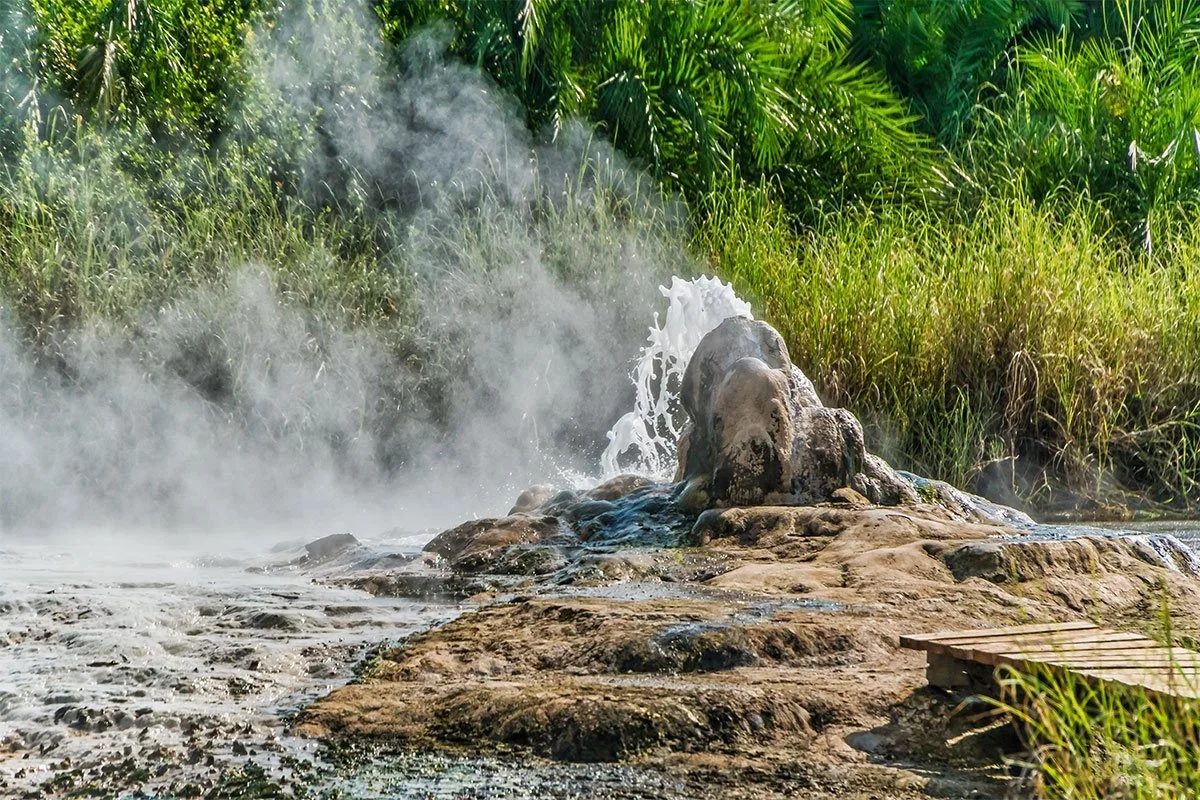
Sempaya Hotsprings in Semuliki National Park
Where to Stay Around Semuliki
| Tier | Example Style | Best For |
| Mid-range | Comfortable lodges near the park boundary | Most visitors |
| Budget | Simple guesthouses in Bundibugyo or Fort Portal | Cost-conscious travellers |
Accommodation options directly around Semuliki are limited compared with Uganda’s more visited parks; many travellers base themselves in Fort Portal and visit as a day trip or single overnight excursion.
Top Attractions in Semuliki
The Sempaya Hot Springs are Semuliki’s best-known single attraction, two geothermal springs local communities refer to as male and female, both boiling above 100 degrees Celsius and reachable via a short guided walk from the park entrance. The female spring, Nyasimbi, is the more theatrical of the two, spraying bubbling water in dramatic bursts that make it easy to understand why it’s become the park’s signature image. Around the springs, Semuliki protects the only true lowland tropical rainforest in East Africa, a low-altitude extension of the vast Congo Basin that supports an entirely different plant and animal community from the higher-altitude montane forests found at Bwindi or Kibale.
That ecological distinction is what draws serious birders here specifically, since the park’s list of more than 410 recorded species includes a number found nowhere else in Uganda, a direct result of its Congo Basin affinities, from the long-tailed hawk to the elusive Nkulengu rail. Eight primate species round out the wildlife, including chimpanzees and the visually striking De Brazza’s monkey, while the Semuliki River, forming the border with the Democratic Republic of Congo, adds hippos and crocodiles to what’s otherwise a forest-dominated park.
| Attraction | Description |
| Sempaya Hot Springs | Two geothermal springs, the male and female springs, boiling above 100°C |
| Lowland tropical rainforest | The only example of true Congo Basin lowland forest in East Africa |
| Birdlife | Over 410 species, many found nowhere else in Uganda |
| Primates | Eight species, including chimpanzees, red-tailed monkeys and De Brazza’s monkey |
| Semuliki River | Border river with DR Congo, home to hippos and crocodiles |
Things to Do in Semuliki
The hot springs walk is the activity most visitors come for, a guided route to both the male and female springs where it’s common practice, and a genuinely memorable novelty, to boil an egg or banana in the naturally scalding water. Birdwatching is the park’s other major draw, and given how many of Semuliki’s species appear nowhere else in Uganda, it’s worth arranging a specialist birding guide rather than relying solely on a general park guide, since the difference in what you’ll spot and correctly identify can be considerable.
Forest walks along the park’s lowland trail network offer a broader introduction to the ecosystem beyond the springs and birds, with a reasonable chance of encountering chimpanzees or other primates moving through the canopy. Night hikes extend the experience after dark, when a different set of nocturnal forest species becomes active, and in the nearby village of Ntandi, local Batwa communities perform traditional dances for visitors, adding a cultural component that pairs naturally with the day’s more nature-focused activities. For travellers with an extra half-day, a boat trip toward Lake Albert offers a chance at the shoebill stork, one of Africa’s most sought-after birds, though this is arranged separately from the standard park activities and worth confirming with your operator in advance.
| Activity | Description |
| Hot springs visit | Guided walk to both springs, where eggs or bananas can be boiled in the water |
| Birdwatching | Guided walks targeting Semuliki’s Congo Basin specialities |
| Primate and wildlife viewing | Forest walks in search of chimpanzees and other primates |
| Forest walks | Guided day hikes through the lowland rainforest trail network |
| Night hikes | Evening walks to spot nocturnal forest species |
| Cultural performances | Traditional dance displays by local Batwa communities in Ntandi |
| Shoebill boat search | Optional half-day excursion toward Lake Albert, arranged separately |
Planning Advice for Semuliki
Bring a dedicated birding guide if the species list is your priority; general park guides are competent, but specialist birders extract far more from a Semuliki visit.
Pack for heat and humidity; Semuliki sits at a lower altitude than most of Uganda’s other forest parks and feels noticeably warmer and stickier.
Combine Semuliki with Kibale or a broader Fort Portal-based itinerary rather than visiting it as a standalone destination, given the limited accommodation directly on site.
Allow a full day for the hot springs walk and a forest trail; rushing the visit undersells what the park offers.
Consider the Batwa cultural performance in Ntandi as a worthwhile addition alongside the natural attractions.
Who Semuliki Is Best For
Semuliki is best suited to birders, given its genuinely unique Congo Basin species list, and to travellers with a specific interest in ecosystems and geology who want to see the hot springs and a different forest type from the rest of Uganda. It’s a good, low-cost add-on for anyone already in the Fort Portal or Kibale area with an extra day, but it’s not a priority stop for travellers focused primarily on primates or big game, since Kibale and the savanna parks offer more headline experiences for those interests.
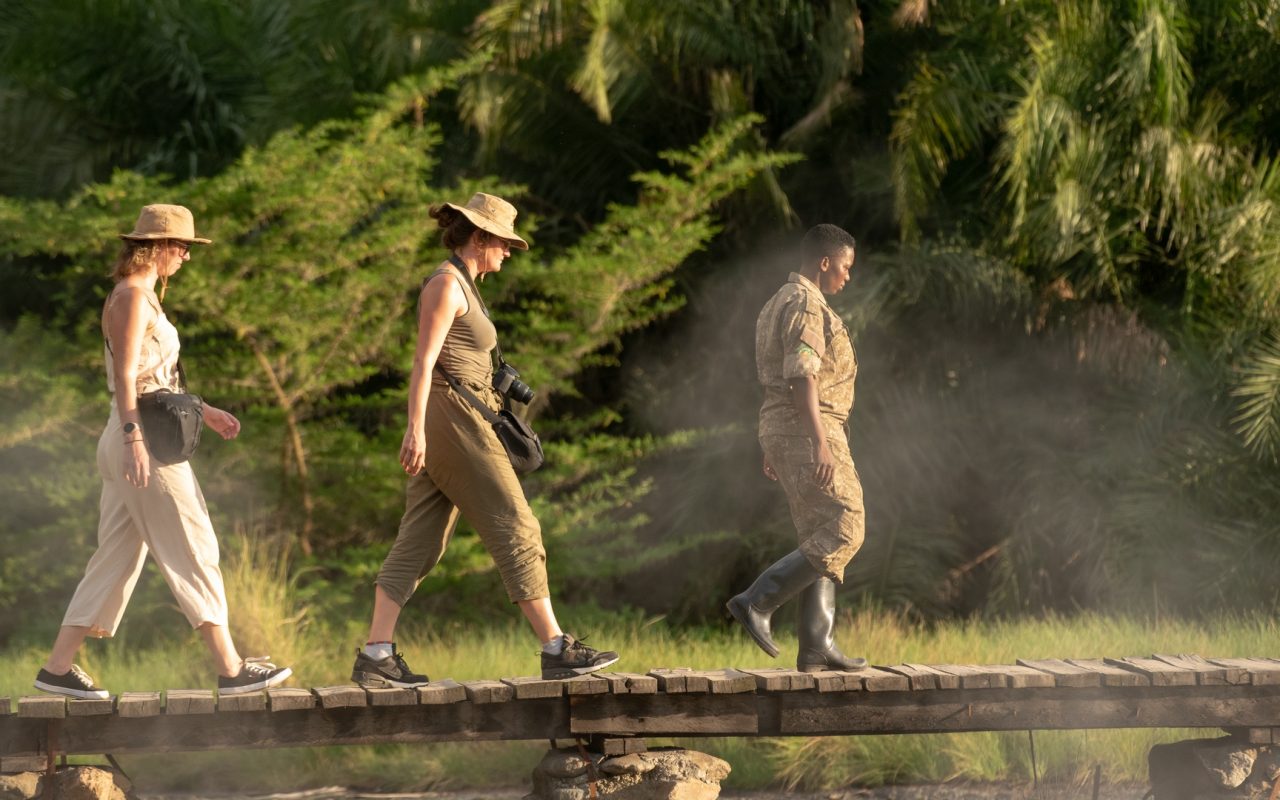
Walking Safaris in Semuliki National Park
Frequently Asked Questions
Is Semuliki worth visiting if I’m not a serious birder?
Yes, largely for the Sempaya Hot Springs, which are a genuinely memorable and unusual attraction regardless of birding interest, though the birdlife is the park’s strongest specialised draw.
How does Semuliki’s forest differ from Bwindi or Kibale?
Semuliki is low-altitude, hot and humid Congo Basin lowland forest, distinct from the higher-altitude montane forest at Bwindi and Kibale, which supports a different set of species altogether.
Can I really boil an egg in the hot springs?
Yes, it’s a common and popular activity at the Sempaya springs, where the water reliably reaches boiling temperature.
How much time should I allow for Semuliki?
A full day is sufficient for most visitors: the hot springs walk plus a forest trail or birding walk, though a second day allows more thorough birding and the option of a shoebill boat search.
Is Semuliki safe given its proximity to the DR Congo border?
Yes. The park and its tourism infrastructure are well established, with no notable security concerns for travellers on standard visits.
Should I stay overnight near Semuliki or visit as a day trip from Fort Portal?
Both are workable; a day trip from Fort Portal is common and practical, while an overnight allows an early-morning birding walk when activity is highest.