Nairobi National Park
Nairobi National Park is unusually close to a major city — its boundary sits just eight kilometres from the Nairobi central business district, along Langata Road on the capital’s southern edge. The park itself covers about 117 square kilometres, fenced on three sides but open to the south, allowing wildlife to migrate seasonally between the park and the Kitengela plains beyond.
Overview
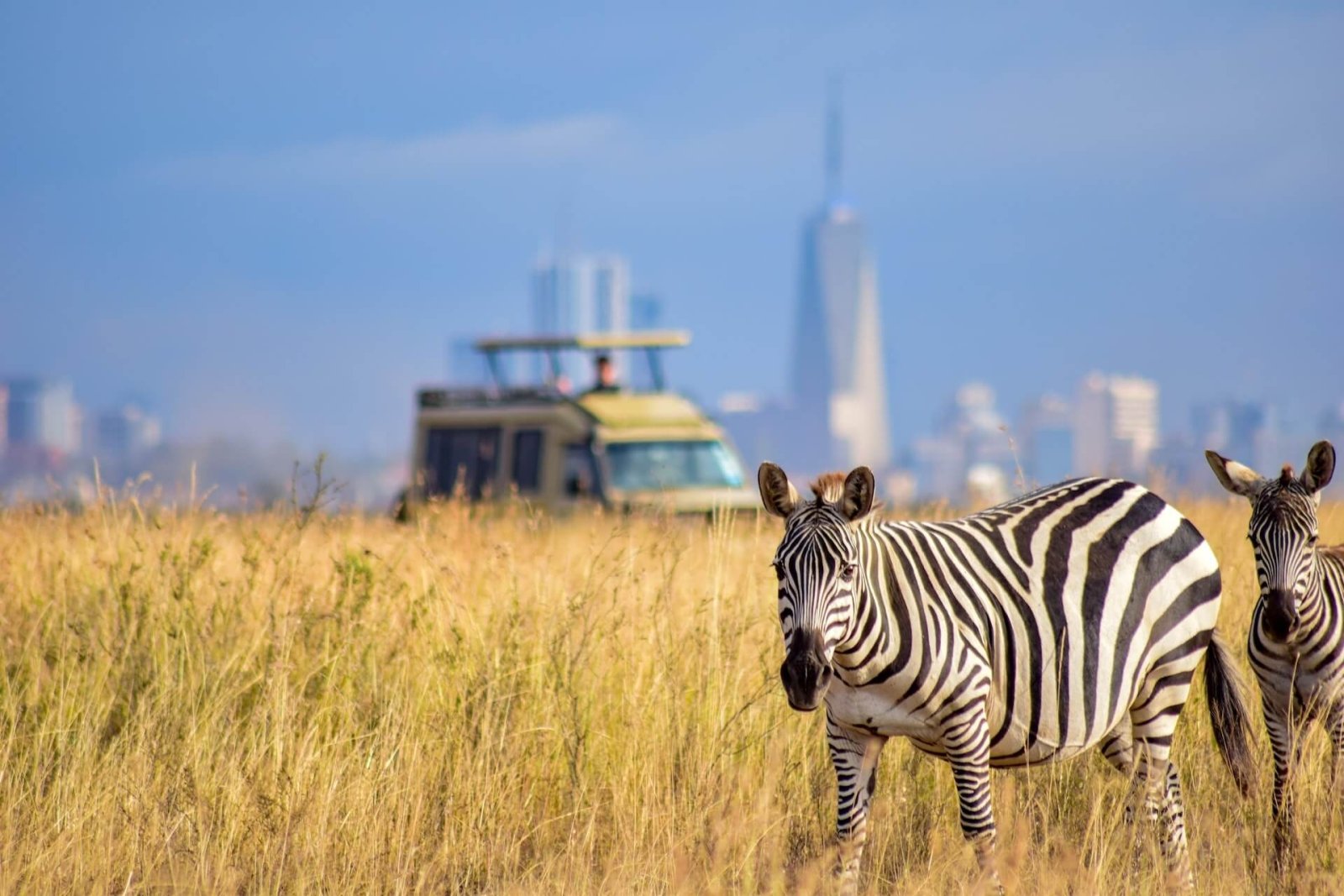
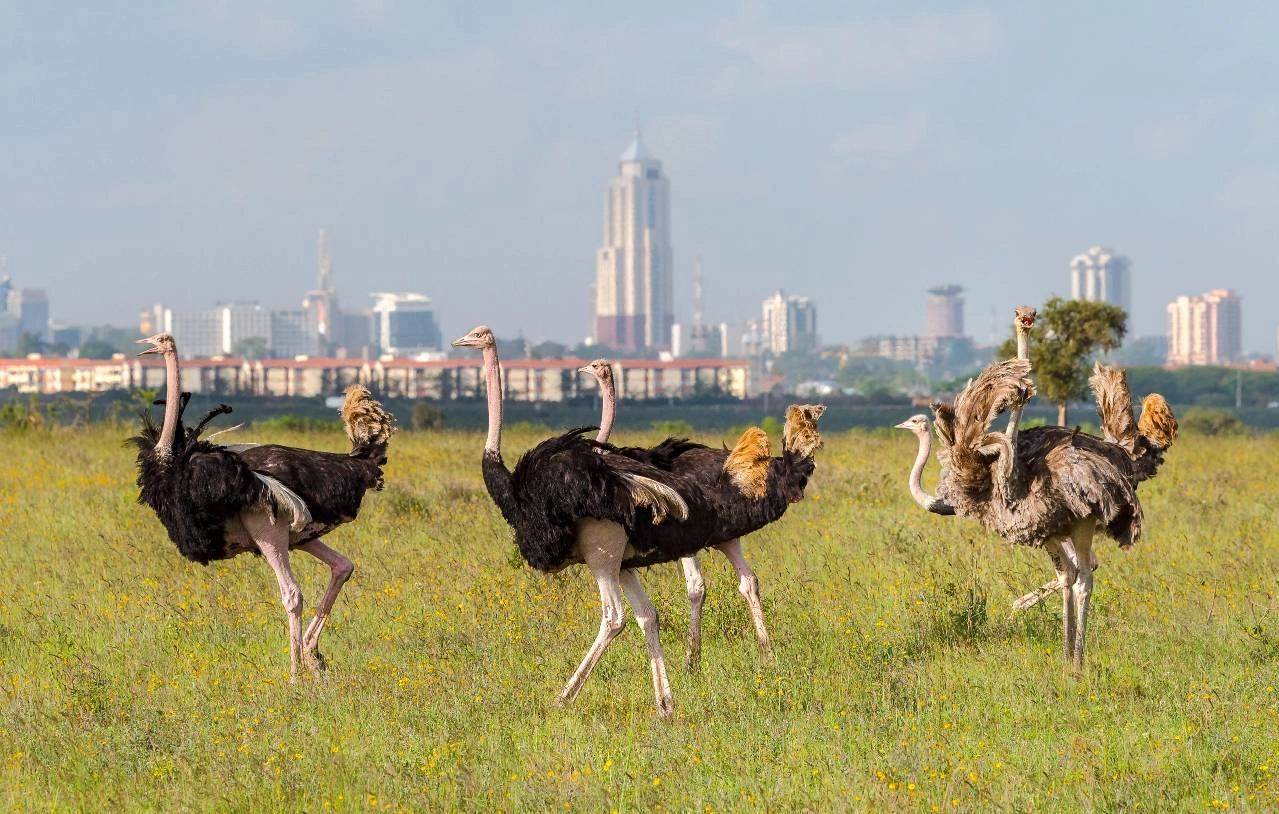
Nairobi National Park is one of the more unusual parks anywhere in Africa: a genuine wildlife reserve, home to lion, rhino, giraffe and buffalo, sitting just minutes from the centre of a capital city of over four million people. The city skyline is visible from several points inside the park—an image that’s become one of the more striking and photographed contrasts in African wildlife tourism.
Its location makes it uniquely practical: travellers with only a few hours to spare between flights, or those wanting a wildlife fix without leaving the city, can fit a genuine game drive into a half-day. It’s also the natural anchor for two of Nairobi’s best-known wildlife attractions, the David Sheldrick Wildlife Trust and the Giraffe Centre, both located just outside the park boundary.
The park’s ecosystem, while genuinely wild, operates under real pressure that’s worth understanding rather than glossing over. Because the only unfenced boundary lies to the south, toward the Kitengela plains, the park’s larger mammals depend on this specific migration corridor to access dry-season grazing land they can’t find within the park’s own limited area. Ongoing residential and industrial development along that corridor has become one of Kenya’s more closely watched conservation issues, since the park’s long-term viability as a functioning ecosystem, rather than simply a fenced wildlife enclosure, depends on that route remaining open.
Best Time to Visit
The park is open year-round from 6am to 6pm, with early morning — roughly 6am to 9am — consistently the best window for both animal activity and cooler, clearer light. Seasonally, the dry months of June to August offer the easiest driving conditions and the most reliable sightings, though the park’s proximity to the city means it’s a realistic option regardless of when else you’re travelling in Kenya.
Nairobi National Park is classified by the Kenya Wildlife Service as an urban park, its own distinct fee tier, with non-resident adult entry currently running at approximately 80 US dollars, somewhat below the premium pricing charged at Amboseli and Lake Nakuru, reflecting its shorter typical visit length rather than any difference in wildlife quality.
Nairobi National Park
Getting There and Where to Stay
Getting There
As Nairobi’s most accessible park, getting there simply means a short drive from wherever you’re staying in the city — typically fifteen to thirty minutes depending on traffic — with the Main Gate near KWS headquarters being the most practical entry point for most visitors. No flight or long transfer is needed, which is exactly what makes this park such a popular half-day option for travellers with limited time.
Traffic timing genuinely matters more here than at almost any other Kenyan park, since Nairobi’s roads can turn a fifteen-minute drive into well over an hour during rush periods. Aiming for an early morning departure, both to beat the traffic and to catch the park’s best wildlife activity window, is worth building into your plans deliberately rather than treating the short distance as a guarantee of a quick trip.
Where to Stay
Most visitors base themselves in Nairobi itself rather than inside the park, given the short drive from virtually anywhere in the city, though a handful of properties — including Nairobi Tented Camp — sit within the park boundary for those who want to wake up to wildlife sounds without leaving the capital’s reach.
For travellers combining a park visit with other Nairobi activities, staying in the Karen or Langata neighbourhoods specifically, both close to the park’s main gate and to the David Sheldrick Trust and Giraffe Centre, tends to minimise the amount of city traffic involved in stitching together a full day of these three stops.
Activities
A visit here typically combines a drive through the park itself with one or both of the nearby wildlife centres, making for an efficient and varied half-day or full-day outing.
Game Drives
The park holds a genuinely healthy population of lion, along with giraffe, zebra, buffalo, and both black and white rhino, all viewable against a backdrop of the city skyline that you won’t find anywhere else in Kenya. Drives are shorter than in the larger parks given the park’s compact size, making this an easy fit alongside other Nairobi activities in a single day.
Visiting the David Sheldrick Wildlife Trust
This elephant and rhino orphanage, located at the park’s western edge, cares for baby elephants rescued after losing their mothers to poaching, drought or other causes. Public viewing runs strictly from 11am to noon, when the young elephants are bottle-fed, play together and take a mud bath a genuinely moving stop and one of Nairobi’s most popular single attractions.
Visiting the Giraffe Centre
A short drive from the park, the Giraffe Centre focuses on conserving the endangered Rothschild’s giraffe, and has hand-reared and released around 500 orphaned giraffes back into the wild since it opened in 1979. Visitors can hand-feed giraffes from an elevated platform, putting you at eye level with the animals — a memorable and easy add-on to a park visit.
Walking the Nairobi Safari Walk
Located at the main park gate, this elevated boardwalk trail winds through forest enclosures housing species that are harder to spot on a drive, including bongo and various smaller predators, and makes a good option for visitors with limited mobility or limited time.
Picnicking Near the Hippo Pools
The Athi and Mbagathi rivers, which mark parts of the park’s southern boundary, hold resident hippo pods, and designated picnic spots nearby offer a relaxed way to end a game drive under the supervision of park rangers.
Combining a Layover Safari
Given the park’s proximity to Jomo Kenyatta International Airport, roughly a thirty to forty-five minute drive depending on traffic, a growing number of travellers with a long layover use the park for a genuine short safari between flights, an option worth discussing with your airline or a local operator if you have more than four or five hours between connections.
Attractions
The park’s attractions extend beyond its own boundary to include two of Kenya’s most visited wildlife conservation centres.
The City Skyline Backdrop
No other park in Kenya, or arguably anywhere in Africa, offers the same juxtaposition of wild animals grazing with a modern skyline rising directly behind them a genuinely unique photographic opportunity and a memorable image for first-time visitors.
The David Sheldrick Wildlife Trust
Beyond the daily public viewing, the trust runs one of the most respected elephant rescue and rehabilitation programmes in Africa, and many visitors choose to formally adopt an orphaned elephant here as a way of supporting the ongoing work after their visit.
The Giraffe Centre
As a conservation success story specifically focused on the Rothschild’s giraffe, a subspecies that was once critically endangered, the centre offers both an educational stop and one of the more interactive wildlife encounters available in Kenya.
The Athi and Mbagathi River Hippo Pools
These riverine areas along the park’s boundary support resident hippo and a good range of water birds, offering a different habitat and viewing experience from the open plains that dominate the rest of the park.
The Nairobi Animal Orphanage
Located near the main gate, this smaller facility cares for injured, orphaned or confiscated animals unable to survive in the wild, and makes a quick, easy add-on stop for visitors already at the park entrance.
The Ivory Burning Site Monument
A memorial near the park’s main gate marks the site of several large-scale ivory stockpile burnings carried out by the Kenyan government since the 1980s as a public statement against poaching, and it offers a sobering, worthwhile stop for visitors interested in the conservation politics behind the wildlife they’ve come to see.
Wildlife Highlights
Black Rhino in an Urban Setting
Nairobi National Park holds one of Kenya’s more significant black rhino populations, a striking fact given the park’s location on the doorstep of a capital city of over four million people.
Lion Against the Skyline
The park’s resident lion prides are genuinely wild and unhabituated to close vehicle contact, and a sighting with Nairobi’s skyscrapers visible in the same frame remains one of the more surreal images in African wildlife tourism.
Migratory Wildebeest and Zebra
Every dry season, wildebeest and zebra move up from the Kitengela plains south of the park through a wildlife corridor that, unlike the rest of the park’s boundary, remains unfenced though ongoing urban development increasingly threatens this route.
Giraffe and Buffalo of the Open Plains
The park’s grassland areas support healthy Maasai giraffe and buffalo populations year-round, both easily observed given the open terrain, and both a reliable sighting even on a shorter, time-constrained visit.
Fun Facts
- Nairobi National Park was established in 1946, making it Kenya’s very first national park.
- It’s one of very few national parks in the world located within a capital city’s limits.
- The park’s southern boundary is deliberately left unfenced to preserve a wildlife migration corridor, though rapid development around Kitengela has narrowed it significantly over the past two decades.
- Despite its small size, the park has recorded several hundred bird species, rivalling far larger reserves elsewhere in Kenya.
- The park has served as a rhino sanctuary since the 1960s, with animals from Nairobi National Park having been used to help restock rhino populations in other parts of Kenya over the decades.
- A section of the Nairobi-Mombasa standard gauge railway runs on a raised viaduct through part of the park, engineered specifically to allow wildlife to continue moving beneath it undisturbed.