
Tarangire National Park
Tarangire tends to get treated as a warm-up park, the stop travellers make on the drive between Arusha and the Serengeti circuit, and while that sequencing works logistically, it undersells what the park actually delivers.
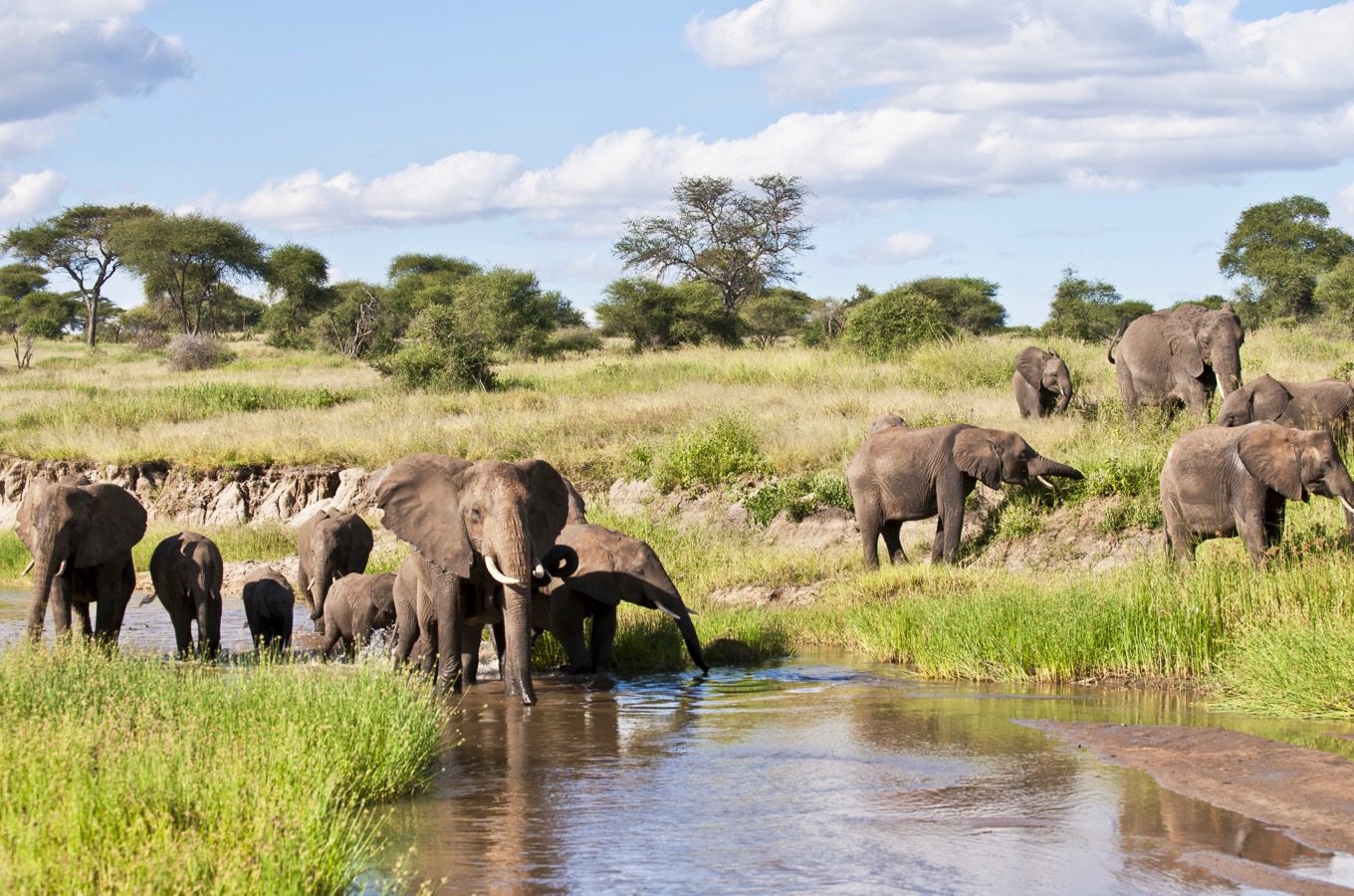
Ancient baobab trees, their swollen trunks visible for kilometers across the dry-season landscape, frame some of the highest elephant densities anywhere in Tanzania, herds numbering in the hundreds gathering along the Tarangire River when the surrounding country turns to dust.
What makes Tarangire worth a allocation of time, rather than a rushed half-day stop, is this dry-season concentration effect. As the surrounding seasonal water sources disappear between June and October, wildlife funnels toward the Tarangire River and the Silale Swamp in numbers that rival far more famous parks, all within a considerably less crowded, less visited setting.
Should You Visit Tarangire?
Tarangire suits travellers specifically visiting during the dry season, when the park’s river-and-swamp water sources concentrate wildlife dramatically, and those with a genuine interest in elephant behaviour: outside the dry season, roughly November through May, wildlife disperses across the park’s wider woodland and grassland, and sightings, while still good, lack the concentrated drama of the June-October peak.
We are direct with clients that Tarangire rewards dry-season timing more than almost any other park on a northern Tanzania circuit.
The park also works well as a complement to Serengeti and Ngorongoro rather than a mere stopover, given its distinct baobab and elephant character and its position along the standard road route between Arusha and the rest of the northern circuit, adding relatively little transfer time for a meaningfully different landscape.
Why Tarangire Matters
Elephants at Genuine Scale
Tarangire holds one of the highest elephant densities in Tanzania, with herds gathering along the river in numbers that can run into the hundreds during peak dry season, offering a scale of elephant viewing that rivals or exceeds better-known parks precisely because so few visitors know to look for it here.
The Ancient Baobabs
Tarangire’s landscape is defined by its baobab trees, some estimated at well over a thousand years old, their distinctive swollen trunks storing water through the dry months. These trees also serve as vantage points for leopard and, in some cases, python, making the baobab dotted landscape as much a wildlife feature as a scenic one.
A Genuine Off-Season Alternative
Because Tarangire’s wildlife concentration follows dry-season water scarcity rather than the wildebeest migration’s complex, harder-to-predict movement, timing a visit here is considerably more straightforward than timing a Serengeti trip around migration phases, a genuine practical advantage for travellers on a fixed schedule.
Activities to Do in the Park
Game Drives
Game drives along the Tarangire River and Silale Swamp during dry season offer some of the most reliable elephant viewing in the country, with herds gathering to drink and bathe in numbers considerably larger than most travellers expect from a park outside the main Serengeti circuit.
Walking Safaris
Permitted in select areas with an armed ranger, walking safaris allow visitors to explore the baobab landscape on foot, a genuinely different pace that reveals smaller details, animal tracks, termite mounds, and the ecology of the baobabs themselves that a vehicle passes over.
Night Game Drives
Available in the park’s specific concession areas outside the main public circuit, night drives reveal nocturnal species, including genet, civet, and bushbaby, activity patterns invisible during standard daytime drives.
Birdwatching
Tarangire rewards visitors with a strong mix of dry-country specialists and raptors, given the park’s savanna and river habitat combination, with over five hundred species recorded across the wider ecosystem.
Silale Swamp
Best combined with a broader game drive circuit, a visit to the swamp offers a wetland complement to the park’s dominant dry savanna character, with strong birdlife and, in the wetter months, genuinely different wildlife concentrations than the river itself attracts.
Cultural Visits
Nearby Maasai communities, arranged through several lodges bordering the park, offer context on pastoralist life in this part of northern Tanzania, typically as a half-day addition to a game-drive-focused stay.
Wildlife Beyond Elephants
Tarangire’s dry-season concentration effect draws in more than elephants alone: buffalo, zebra, and wildebeest gather in substantial numbers, oryx and gerenuk appear in the park’s drier southern reaches, and healthy lion and leopard populations follow the concentrated prey. The park’s tree-climbing pythons, drawn to the baobabs’ hollow trunks, are a genuine, if less predictable, highlight for patient visitors.
Where Tarangire Fits on a Northern Tanzania Circuit
Tarangire sits roughly two hours from Arusha by road, making it a natural first or last stop on a northern circuit that also includes Lake Manyara, Ngorongoro, and Serengeti. Its position along this standard route means it adds minimal extra transfer time regardless of how the rest of the circuit is sequenced.
When to Visit
| Season | Months | What to Expect |
| Dry Season | June – October | Dramatic wildlife concentration around the river and swamp, the recommended window |
| Wet Season | November – May | Wildlife disperses more widely, lush scenery, considerably fewer visitors |
Budgeting for Tarangire
Non-resident park entry runs at approximately 47.80 to 59 US dollars per person per day depending on the specific tariff schedule and season quoted, positioning Tarangire alongside Lake Manyara and Arusha National Park in Tanzania’s mid-range fee tier, below Serengeti and Ngorongoro’s premium pricing. As with all TANAPA fees, confirm the current rate with your operator, since figures are periodically revised and quoted with or without VAT depending on the source.
Where to Stay
Lodges along the Tarangire River, positioned for the strongest dry-season elephant viewing.
Properties overlooking Silale Swamp, offering a wetland-focused alternative base.
Tented camps in the park’s northern reaches, generally quieter given lower visitor density than the central river area.
Frequently Asked Questions
When is the best time to see elephants at Tarangire?
June through October, the dry season, when wildlife concentrates dramatically around the Tarangire River and Silale Swamp as surrounding water sources disappear.
How does Tarangire compare to Serengeti?
Tarangire offers a considerably smaller, more concentrated experience defined by elephants and baobabs, with far fewer visitors than Serengeti’s more famous plains, though without the wildebeest migration’s scale and drama.
Are walking safaris available at Tarangire?
Yes, in select areas with a licensed armed ranger, offering a genuinely different pace and perspective on the baobab landscape.
How many days should I spend at Tarangire?
One to two nights during the dry season is generally sufficient to experience the park’s core elephant and baobab scenery, making it an efficient addition to a wider northern circuit.
Is Tarangire worth visiting outside the dry season?
It remains a pleasant, less crowded park, but the dramatic wildlife concentration that defines Tarangire’s reputation is specifically a dry-season phenomenon, so outside that window expectations should be adjusted accordingly.
Can I combine Tarangire with Lake Manyara?
Yes, both sit along the same standard route between Arusha and the rest of the northern circuit, making this a common and efficient pairing.
What is the significance of Tarangire’s baobab trees?
Some are estimated at well over a thousand years old, storing water through the dry months and serving as vantage points for leopards and, occasionally, python, making them as much a wildlife feature as a scenic backdrop.
Is night game drive available at Tarangire?
Yes, in the park’s specific concession areas outside the main public circuit, revealing nocturnal species like genet, civet, and bushbaby not visible during standard daytime drives.