
Gombe Stream National Park
Gombe is worth a detour, beyond its historical weight, is the quality of the chimpanzee encounter itself. Small group sizes, an intimate forest setting, and guides who often know individual chimpanzees by name and family history combine to produce a considerably more personal experience than the larger, more heavily visited chimp trekking sites elsewhere in East Africa.
We are candid with clients that Gombe demands real effort and expense to reach; we are equally candid that almost everyone who makes the trip describes it as one of the most meaningful wildlife encounters of their entire trip.
Should You Visit Gombe?
Gombe suits travellers for whom chimpanzee behaviour and Jane Goodall’s research legacy are a genuine priority, not a casual add-on, and who are prepared for a remote, boat-only access route: reaching the park requires flying into Kigoma, then a further one to two hour boat transfer across Lake Tanganyika, since no roads connect Gombe to the rest of Tanzania’s park system.
This considerable logistical commitment is precisely why Gombe remains one of the least visited parks in the country despite its scientific fame.
We generally do not recommend Gombe as a first stop on someone’s first Tanzania safari, given the cost and time required relative to more accessible chimpanzee trekking options elsewhere. It earns its place specifically for travellers with a genuine, focused interest in the Goodall legacy, or those building a longer western Tanzania circuit that also includes Mahale Mountains or Katavi, where the additional effort to reach this region already fits the itinerary’s broader logic.
Why Gombe Matters
The Birthplace of Modern Primatology
Jane Goodall arrived at Gombe in 1960 under the mentorship of anthropologist Louis Leakey, and her observations here, chimpanzees using tools to fish termites from mounds, complex social hierarchies, and even documented territorial conflict between communities, fundamentally reshaped scientific understanding of the line between human and animal behaviour.
The Gombe Stream Research Centre, founded in 1967, continues that work today, producing one of the longest continuous datasets on any wild primate population anywhere in the world.
An Intimate, Small-Group Encounter
Because Gombe’s remote access naturally limits visitor numbers, chimpanzee trekking here happens in small groups guided by trackers who often know individual chimpanzees by name, personality, and family lineage, a considerably more personal dynamic than the larger group sizes common at more accessible trekking sites.
A Genuine Primate Rarity
Gombe is one of the only places on earth where red-tailed monkeys and blue monkeys are known to hybridise, producing occasional crossbred individuals alongside the park’s populations of olive baboon, red colobus, and vervet monkey, a genuinely unusual detail for primatologists and curious travellers alike.
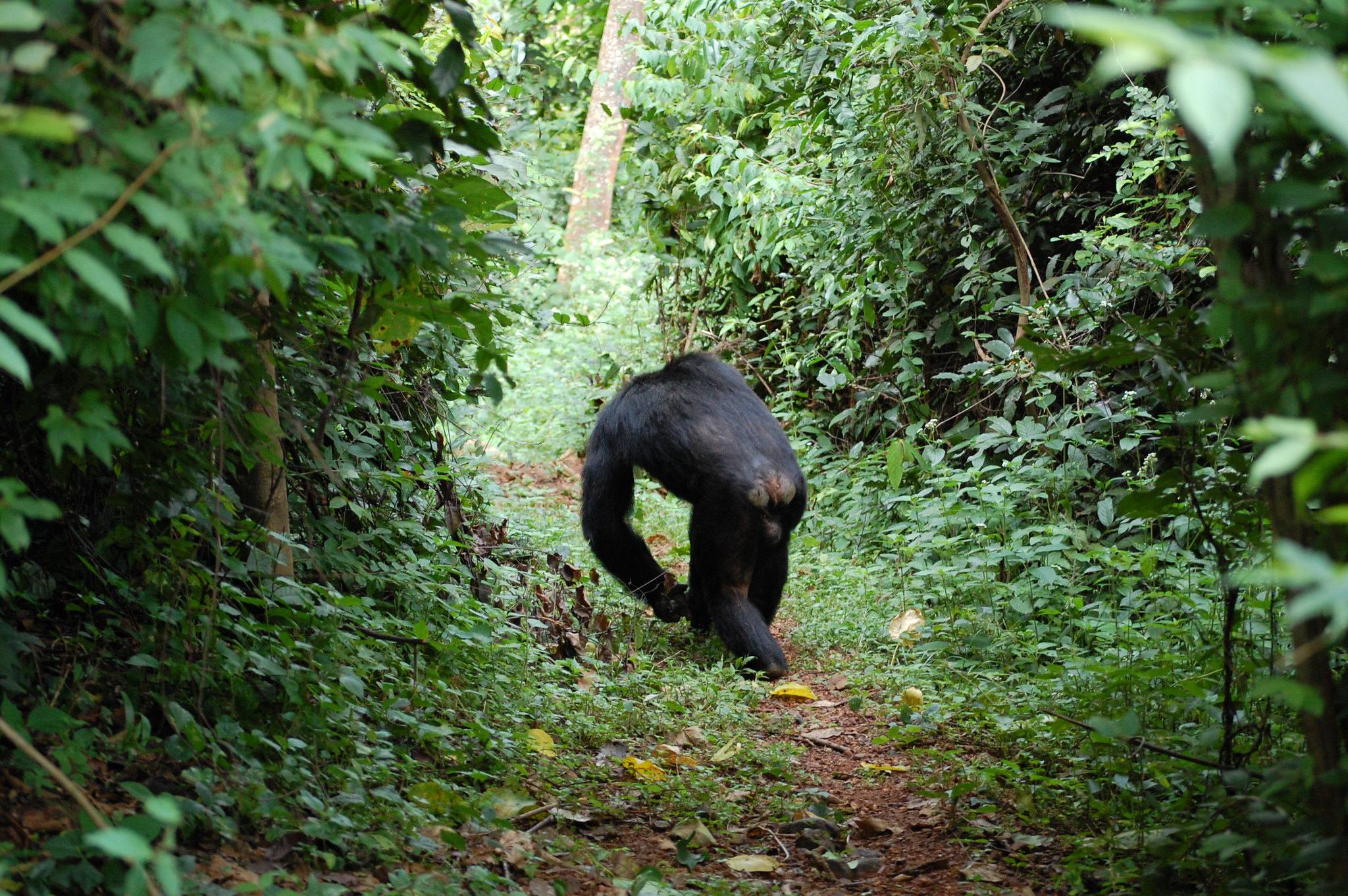
A Note on Gombe’s Chimpanzee Population
Gombe’s chimpanzee community has faced real pressure over the decades since Goodall’s arrival. The population has declined from roughly 150 individuals in 1960 to approximately 90 today, a result of habitat pressure from surrounding population growth and the deforestation that comes with it, since the park’s small size leaves the chimpanzees with limited room to range beyond its boundaries.
The Jane Goodall Institute continues to work with surrounding communities on this specifically, and travellers with an interest in conservation may find the story behind the numbers as compelling as the trekking itself.
Activities to Do in the Park
Chimpanzee Trekking
Gombe’s defining activity, a guided forest walk following known trails into the valleys where habituated communities move daily, culminating in roughly an hour of observation once a group is located, an experience considerably quieter and more intimate than trekking at larger, more heavily visited sites.
Jane Goodall’s Research Sites
Visiting the original research sites offers a reflective, historically grounded complement to the chimpanzee trek itself, walking the same forest paths where her earliest observations took place and hearing from guides trained in the research centre’s ongoing scientific work.
Lake Tanganyika Swimming
Swimming and relaxing along the shoreline provides a genuinely restful contrast to the forest’s physical demands, with the world’s second-deepest freshwater lake offering clear water and quiet, sandy coves near the park’s small lodges.
Birdwatching
Throughout Gombe’s forest, birding rewards visitors with over two hundred recorded species, a genuinely strong list for such a small park, best pursued along the same trails used for chimpanzee tracking given the overlapping habitat.
Waterfall Walks
Along the park’s forest streams, these offer scenic stops during wetter months specifically, when the park’s numerous small watercourses run fullest, adding a further dimension to a trekking day beyond the primates themselves.
Kayaking and Boat Excursions
Along the Lake Tanganyika shoreline, arranged through park-adjacent lodges, these extend the water-based activities beyond simple swimming, offering views back toward the forested hills from the water.
The Western Circuit Context
Gombe is often visited alongside Mahale Mountains National Park, a larger, similarly boat-accessed park further south on Lake Tanganyika with its own habituated chimpanzee population, and Katavi National Park, a remote savanna reserve known for large hippo and buffalo concentrations. Together these three parks form what is loosely called Tanzania’s western circuit, a genuinely different, slower-paced alternative to the northern safari route, suited to travellers with two weeks or more and a taste for remoteness.
Rules and Etiquette for Chimpanzee Trekking
| Rule | Reasoning |
| Maintain distance from the chimpanzees | Reduces disease transmission risk given genetic closeness to humans |
| No flash photography | Avoids startling the chimpanzees |
| Small group sizes enforced | Limits cumulative disturbance to habituated communities |
| Health screening before trekking | Protects chimpanzees from human respiratory illness |
Getting to Gombe
Access is exclusively by air to Kigoma, followed by a one to two hour boat transfer across Lake Tanganyika, since no roads reach the park. Kigoma itself is reachable by flight from Dar es Salaam, Arusha, or Kilimanjaro, or by a considerably longer overland or rail journey for travellers with more time and a taste for a slower approach.
When to Visit
| Season | Months | What to Expect |
| Dry Season | June – October | Firmer, less slippery trails, generally the easiest trekking conditions |
| Wet Season | November – May | Lusher forest scenery, fewer visitors, chimpanzees may range higher into the hills |
Chimpanzee sightings remain possible year-round given the trackers’ daily monitoring, though the dry season’s firmer trails generally make for a more comfortable trekking experience.
Budgeting for Gombe
Gombe carries the highest park entry fee in Tanzania’s system, currently around 100 to 118 US dollars per person depending on VAT treatment, reflecting what park authorities describe as the site’s exceptionally high conservation value given its fragile, limited ecosystem, roughly double the entry fee at Serengeti. Beyond park fees, the boat transfer from Kigoma adds a further cost, generally over 100 US dollars each way for a private charter, unless bundled into a package by your operator.
Where to Stay
Small lodges and tented camps directly along the Gombe lakeshore, offering simple comfort and close proximity to trekking trails.
Kigoma Hilltop Hotel and similar properties in Kigoma town, a practical base for travellers arriving or departing by air before the boat transfer.
Frequently Asked Questions
How do I get to Gombe Stream National Park?
By flying into Kigoma, then taking a one to two hour boat transfer across Lake Tanganyika, since no roads connect Gombe to the rest of Tanzania’s park network.
Is Gombe worth the extra effort and cost to reach?
For travellers with a genuine interest in Jane Goodall’s research legacy or chimpanzee behaviour specifically, yes. For a first-time Tanzania safari without that specific priority, more accessible options elsewhere generally deliver better value.
Why is Gombe’s entry fee the highest in Tanzania?
Park authorities attribute this to the site’s exceptionally high conservation value relative to its small, fragile forest ecosystem, and the resources required to protect a chimpanzee population that has faced real habitat pressure over the decades.
Can I see other wildlife besides chimpanzees at Gombe?
Yes, though the park’s small size limits diversity: olive baboon, red colobus, vervet and red-tailed monkeys, and over two hundred bird species, but no large savanna mammals given the forest habitat.
How many days should I spend at Gombe?
Three to four days allows time for the boat transfer, at least one full day of chimpanzee trekking, and time to enjoy Lake Tanganyika itself, given how much effort the journey requires.
Is Gombe safe to visit?
Generally yes, particularly when trekking with official park guides, though Kigoma town itself warrants the same standard urban precautions as any Tanzanian city.
Can Gombe be combined with other parks?
Yes, most naturally with Mahale Mountains National Park and Katavi National Park, together forming Tanzania’s western circuit, a considerably slower, more remote alternative to the northern safari circuit.