
Where to Go for Birding in East Africa?
Where to Go for Birding in East Africa? East Africa holds somewhere around 1,400 recorded bird species across Kenya, Tanzania, Uganda, and Rwanda, more than the whole of Europe and North America combined. For birders, that’s not just an impressive number on paper.
It translates into daily lists that can run past 100 species without much effort, and into a handful of genuinely world-class sites that belong on any serious birding itinerary. The real challenge isn’t finding birds here. It’s choosing where to spend your limited travel days among an almost overwhelming number of excellent options.
We work with a lot of dedicated birders, and the planning conversation looks different from a standard safari. It’s less about which park has the most lions and more about habitat diversity, endemics, and timing around migration windows, so this guide is built around those priorities rather than the general wildlife-viewing framework we’d use for a first-time safari client.
Should Birding Drive Your Itinerary, or Sit Alongside It?
Both approaches work well in East Africa, which is part of what makes it such a strong birding destination in the first place. You rarely have to choose between birds and mammals. Dedicated birding trips tend to prioritize habitat diversity over big-name parks, moving through forest, wetland, savanna, and rift valley lake environments in a single trip to maximize species variety.
General safari trips with a birding focus stay within classic wildlife circuits like the Mara or Serengeti but add a specialist bird guide and a slower-paced game drive that stops for birds as readily as for mammals.
If your list leans toward East African endemics and forest specials, a dedicated birding itinerary covering Uganda’s forests and Kenya’s rift valley lakes will outperform a standard safari circuit every time. If you want strong birding alongside classic Big Five game viewing, adding a specialist guide to a Kenya or Tanzania safari delivers both without meaningful compromise.
Why East Africa’s Bird Diversity Is So Exceptional
The region sits at a genuinely rare geographic crossroads. It spans equatorial rainforest in the west, the Great Rift Valley’s chain of soda and freshwater lakes running north to south, vast savanna grassland, montane forest along the Albertine Rift, and coastal habitats along the Indian Ocean.
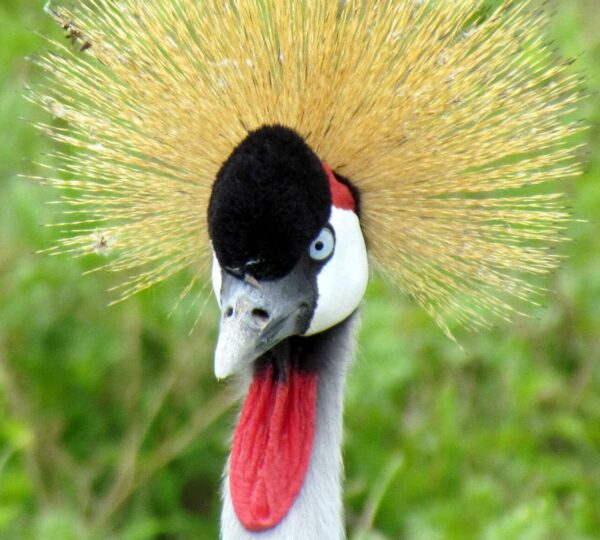
Crested Crane
Each ecosystem supports its own suite of specialist species, and because East Africa also sits on major migratory flyways, resident species are joined by huge numbers of Palearctic migrants from Europe and Asia during the northern winter, roughly November through March. Few regions on earth pack this much habitat variety into destinations practical enough to combine on a single trip.
The Region’s Standout Birding Destinations
Lake Nakuru and Lake Naivasha, Kenya
The Rift Valley soda lakes are famous for flamingo spectacles, though flamingo numbers shift year to year depending on water chemistry and levels, so it’s worth checking current conditions before building an itinerary entirely around them. Beyond flamingos, these lakes and their surrounding acacia woodland support pelicans, fish eagles, kingfishers, and a strong supporting cast of waterbirds, making them an easy, high-reward add-on to a Kenya itinerary.
Kakamega Forest, Kenya
Kenya’s only tropical rainforest fragment and a genuine specialist destination, home to species found nowhere else in the country, including several Guinea-Congo forest biome birds at the eastern edge of their range. It requires a dedicated detour from the standard safari circuit, which keeps it wonderfully uncrowded.
Bwindi Impenetrable Forest and Kibale, Uganda
Uganda’s forests are the birding highlight of the entire region for anyone chasing Albertine Rift endemics. Bwindi, better known for gorilla trekking, is also outstanding for forest birding, and Kibale’s mix of forest and wetland habitat delivers exceptional variety in a compact area. Combining gorilla trekking with serious birding is one of our favorite Uganda itineraries precisely because both priorities share the same forest habitat.
Queen Elizabeth National Park, Uganda
One of the single best birding sites in Africa, with over 600 recorded species across a mix of savanna, wetland, forest edge, and the Kazinga Channel’s dense waterbird concentrations. It’s the kind of park where a three-day stay with a specialist guide can produce 200-plus species without straining.
Serengeti and Ngorongoro Highlands, Tanzania
Best known for mammals, but the highlands around Ngorongoro and the varied habitats of the Serengeti ecosystem support excellent raptor populations, including several vulture species now of serious conservation concern, alongside strong grassland and woodland birding right alongside the Big Five game viewing most travelers come for.
Nyungwe Forest, Rwanda
A montane rainforest with a canopy walkway that puts you at eye level with the forest’s upper strata, home to Albertine Rift endemics and a strong population of forest specialists. It pairs naturally with gorilla or chimpanzee trekking as part of a Rwanda itinerary.
When to Go for the Best Birding
| Priority | Best Window | Why |
| Maximum species diversity | November–April | Palearctic migrants join resident species |
| Breeding plumage on residents | Just before and during the rains, roughly March–May | Many species display breeding colors and behavior |
| Easiest access and driest trails | June–October | Dry season makes forest and wetland sites easier to reach |
| Flamingo concentrations at Rift Valley lakes | Variable year to year | Dependent on water levels and algae blooms; check current conditions |
Unlike a mammal-focused safari, birding here doesn’t have one single dominant “best season.” The honest answer is that East Africa offers strong birding essentially year-round, with the November-through-April migrant season adding real volume to an already rich resident population.
Budget and Trip Structure
Dedicated birding itineraries typically run longer than a standard safari, often ten to fourteen days, because covering multiple habitat types across Uganda, Rwanda, and Kenya requires more ground movement than a single-country wildlife circuit.
Specialist bird guides, who carry deep knowledge of calls and identification well beyond what a general safari guide offers, are usually available as an add-on rate per day, and we’d strongly recommend the investment for anyone with a serious target list.
Accommodation on a birding-focused itinerary tends toward smaller, forest-edge, or wetland-adjacent lodges rather than the flagship savanna camps built around Big Five sightings, and rates are often more moderate as a result.
Accommodation Worth Prioritizing
Look for lodges with forest edge or wetland frontage rather than pure savanna views, since early morning and dusk birding from the lodge grounds themselves often produces some of the best sightings of the trip before you’ve even left for a guided outing. Several specialist lodges near Bwindi, Kibale, and Nyungwe maintain their own bird lists and resident guides with genuinely expert local knowledge, which is worth prioritizing over a generic luxury property carrying less habitat-specific expertise on staff.
Techniques Specific to Birding Trips
Guided forest walks at a slow, deliberate pace produce far more species than a vehicle-based game drive, since much of the best birding happens in dense canopy requiring patience and careful listening.
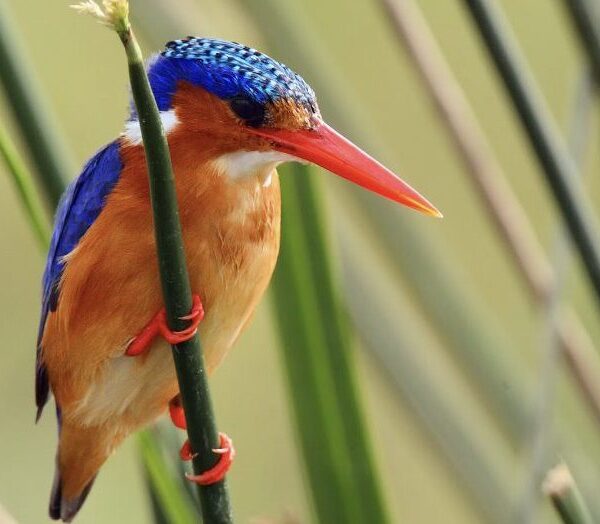
Birding in East Africa
Canopy walkways, like the one at Nyungwe, offer a rare eye-level view into forest strata that’s otherwise invisible from the ground. Boat trips along channels like Uganda’s Kazinga are exceptional for waterbirds and often combine well with hippo and elephant sightings along the same route.
And early starts matter more here than on a standard safari, since dawn chorus activity is genuinely the best birding window of the day, and serious guides will have you out before first light to catch it.
Species Worth Building an Itinerary Around
A handful of species come up repeatedly on client target lists and are worth flagging specifically. The shoebill, a prehistoric-looking stork relative found in Uganda’s papyrus swamps around Mabamba Bay and parts of southern Tanzania, is arguably the single most sought-after bird in the region and often requires an early-morning canoe excursion with a dedicated local guide who knows the current nesting areas.
The great blue turaco, with its improbable size and color, is a Kibale and Nyungwe highlight that photographs beautifully against the forest canopy. Saddle-billed storks, martial eagles, and secretary birds are savanna specialists that regularly appear on Serengeti and Mara game drives alongside the mammals most travelers come to see, so even a general safari itinerary tends to deliver a handful of memorable species without any specific detour required.
Why the Guide Matters More Than the Camp
More than almost any other type of safari, birding trips live or die on guide quality. A general safari guide can point out an eagle on a dead tree. A specialist bird guide can identify a call from deep in the canopy, know the exact stretch of trail where a target species was last seen, and read subtle habitat cues a generalist would miss entirely.
When we build a birding-focused itinerary, matching you with the right specialist guide at each location is honestly a bigger factor in trip success than the choice of lodge, and it’s worth prioritizing in your budget over a room upgrade if you have to choose one over the other.
How We’d Plan This
The biggest planning mistake we see is trying to cram too many birding destinations into too short a trip. Habitat-hopping between forest, wetland, and savanna environments takes real travel time in East Africa, and a rushed itinerary trades depth for a longer checklist that ends up feeling exhausting rather than rewarding. We’d rather build a trip around three or four well-chosen sites with enough time at each, typically two to three nights minimum, than a whistle-stop tour through six locations in ten days.
It’s also worth being specific with us about your target list if you have one. Endemic and near-endemic species often require a particular guide with specific local knowledge and sometimes a particular time of day or season, and that level of detail changes how we build your itinerary far more than a general “I like birds” brief would.
Recommendations by Traveler Type
Serious listers chasing endemics: Uganda and Rwanda’s Albertine Rift forests, paired with a specialist guide and a minimum ten-day itinerary.
General safari travelers who enjoy birds: Kenya or Tanzania’s classic circuits with a bird-knowledgeable guide added, no major itinerary changes needed.
Photographers: Rift Valley lakes for waterbird and flamingo photography, combined with Queen Elizabeth National Park’s raptor and waterbird density.
Travelers combining birding with primates: Bwindi or Nyungwe, where gorilla or chimp trekking and outstanding forest birding share the same habitat.
Frequently Asked Questions
Do I need my own binoculars, or can camps provide them?
Bring your own if you’re a serious birder. Quality and familiarity matter, and camp-provided pairs are often shared and inconsistent. Most specialist guides carry an up-to-date regional field guide, but a personal copy is a worthwhile addition if you like tracking your own list.
Is East Africa birding good for beginners, or only serious listers?
Both. The sheer density and visibility of birds, especially raptors, waterbirds, and colorful species like bee-eaters and rollers, makes East Africa a rewarding introduction even for travelers with no prior birding experience.
How many species can I realistically expect on a two-week trip?
A well-planned two-week itinerary across multiple habitat types with a specialist guide can realistically produce 400 to 500-plus species, though this depends heavily on season, sites chosen, and guide expertise.
Can I combine serious birding with a Big Five safari in one trip?
Yes, and it’s one of our most popular combinations. Pairing Uganda or Rwanda’s forest birding with a Kenya or Tanzania savanna safari gives you both forest specialists and classic game viewing without significant compromise on either.