Group Safaris in Uganda
Group Safaris in Uganda: Uganda is particularly well suited to group travel, offering an extraordinary diversity of attractions within a relatively compact country, from savannah national parks alive with lions and elephants to the misty, gorilla-filled forests of Bwindi, the chimpanzee-rich woodlands of Kibale, and the dramatic beauty of the source of the Nile at Jinja.
This variety, combined with generally good road infrastructure connecting the main attractions and a well-established network of experienced tour operators, makes Uganda an excellent destination for organized group travel of every kind, whether that is a small circle of friends, a larger scheduled group joining travelers from around the world, a corporate team-building trip, or a multi-generational family safari.
This guide explores everything you need to know about group safaris in Uganda, from the many benefits of traveling this way and the different types of group safaris available to what a typical group itinerary looks like, how to choose the right group size and operator, and practical tips for making a group trip run smoothly and happily.
Why Choose a Group Safari?
Group safaris offer a distinctive set of advantages that make them an appealing choice for many travelers, whether joining an organized departure with strangers who quickly become friends or bringing together a group of your own. Understanding these benefits helps clarify why group travel has become such a popular way to experience Uganda and whether it might be the right choice for your own safari plans.
- Cost savings: sharing the cost of a private vehicle, driver-guide, and sometimes accommodation across several travelers significantly reduces the per-person price of a safari.
- Shared experience and camaraderie: exploring the wonders of Uganda’s wildlife alongside others adds a social, communal dimension that many travelers find deeply enriching.
- Making new friends: Scheduled group departures bring together like-minded travelers from around the world, often forging friendships that last well beyond the trip itself.
- Safety in numbers: Traveling in a group can add a reassuring sense of security, particularly appealing to solo travelers or first-time visitors to Africa.
- Structured, hassle-free planning: Group safaris are typically fully organized by an experienced operator, removing the stress of independent logistics and planning.
- Access to shared expertise: a knowledgeable guide shared among a group can devote attention and answer questions for everyone, enriching the collective learning experience.
- Ideal for celebrations and reunions: group safaris are a wonderful way to mark a milestone birthday, anniversary, graduation, or family reunion with a shared adventure.
Types of Group Safaris in Uganda
Group safaris come in several distinct forms, and understanding the differences helps you choose the type that best matches your circumstances, whether you already have your own group of travel companions or are looking to join others. Each type offers its own particular character and advantages, suited to different needs and preferences.
Scheduled Group Departures
Scheduled group departures, sometimes called “join-in safaris,” are organized by tour operators on fixed dates throughout the year, bringing together individual travelers, couples, and small groups of friends or family from around the world into a single traveling party, usually with between four and twelve or so participants sharing a safari vehicle and itinerary.
These departures are an excellent option for solo travelers or small groups who want the cost savings and camaraderie of group travel without the need to organize their own group, and they run on a fixed, published schedule that makes planning straightforward.
Private Groups of Friends or Family
Many group safaris are organized privately among existing groups of friends, family members, or colleagues who wish to travel together while still enjoying the cost savings and shared logistics that group travel provides.
In this arrangement, an operator tailors an itinerary specifically to the group’s interests, pace, and budget, while the group retains full control over the composition of their travelling party, the exact dates, and the specific experiences included, offering a more personalized alternative to joining a scheduled departure.
Corporate and Incentive Group Safaris
Uganda has also become an increasingly popular destination for corporate group travel, including team-building retreats, incentive trips rewarding top performers, and conference add-on excursions, capitalizing on the country’s blend of adventure, natural beauty, and increasingly sophisticated meetings and conferencing infrastructure in Kampala and Entebbe. These corporate group safaris are often tailored with specific team-building activities, structured schedules, and a professional level of organization suited to business travelers.
Group Safaris in Uganda
Special Interest and Themed Groups
A growing category of group safari brings together travelers with a shared special interest, such as photography enthusiasts, birdwatchers, university or school groups on educational trips, or members of a particular club or society, often accompanied by a specialist guide with relevant expertise. These themed group safaris allow like-minded travelers to deepen their engagement with a particular passion while enjoying the broader benefits of group travel and shared experience.
The Best Uganda Destinations for Group Safaris
Uganda offers a wealth of destinations well suited to group exploration, and a well-planned group itinerary typically combines several of the country’s headline attractions into a single, flowing journey. Understanding the main destinations helps in planning a group itinerary that balances wildlife, adventure, and variety across the Uganda trip for everlasting memories.
- Bwindi Impenetrable Forest: Gorilla trekking is a natural highlight for many group safaris, though note that gorilla permits are allocated individually and groups are limited to eight trekkers per gorilla family.
- Queen Elizabeth National Park: outstanding game drives, the famous Kazinga Channel boat cruise, and tree-climbing lions in the Ishasha sector, all wonderfully suited to group enjoyment.
- Murchison Falls National Park: Uganda’s largest park, offering dramatic waterfalls, boat cruises on the Nile, and excellent game viewing for groups of any size.
- Kibale National Park: chimpanzee trekking and forest walks, a rewarding primate-focused addition to a group itinerary.
- Lake Mburo National Park: a compact savanna park offering game drives, boat trips, and the unique thrill of guided walking or cycling safaris among wildlife.
- Jinja and the source of the Nile: white-water rafting, bungee jumping, and river cruises offering thrilling, sociable group activities.
- Kampala and Entebbe: cultural tours, markets, and the Entebbe Botanical Gardens, ideal for group orientation at the start or end of a trip.
Choosing the Right Group Size
The ideal size for a group safari depends on a balance of cost efficiency, comfort, and the practical realities of Uganda’s parks and permit systems, and thinking through these factors carefully helps in planning a group trip that runs smoothly and enjoyably for everyone involved. There is no single perfect group size, but understanding the trade-offs at different scales is valuable for planning.
Smaller groups of around four to six people typically travel comfortably in a single safari vehicle, allowing everyone a window seat for game viewing and a more intimate, flexible group dynamic where the itinerary can be adjusted relatively easily to suit shared preferences. Medium-sized groups of around eight to twelve people often use two vehicles travelling together, maintaining a strong sense of group camaraderie while ensuring everyone has ample space and visibility during game drives, and this size is common for scheduled departures and larger family or friend groups.
Larger groups of fifteen people or more, common for corporate retreats, large family reunions, or bigger scheduled departures, require careful logistical planning, usually multiple vehicles, and often benefit from splitting into smaller sub-groups for certain activities, particularly gorilla trekking, where permits are limited to eight trekkers per gorilla family. Whatever the size of your group, working with an experienced operator who understands the practical realities of Uganda’s roads, parks, and permit systems is essential to ensuring the logistics run smoothly and that everyone in the group has a genuinely wonderful experience.
Gorilla Trekking Permits and Groups
For groups planning to include gorilla trekking, an important practical consideration deserves particular attention, because gorilla trekking permits operate under specific rules that affect how larger groups experience this headline activity. Understanding these rules in advance helps groups plan realistically and avoid any surprises or disappointment on the day.
Each habituated gorilla family can be visited by a maximum of eight trekkers per day, a limit set by the Uganda Wildlife Authority to protect the gorillas from overexposure and stress, which means that larger groups wishing to trek together will typically be divided across several different gorilla families, or in some cases across different days, depending on permit availability. This is an important point to communicate clearly to group members in advance, as it means that even members of the same traveling party may end up visiting different gorilla families and having somewhat different individual experiences on trekking day, though all will share the same profound and unforgettable core encounter.
For very large groups intending to trek together, it is wise to book permits considerably in advance, given the limited daily allocation across Bwindi’s four sectors and Mgahinga, and a good operator will help coordinate group permit bookings to keep the group as together as logistically possible, whether that means securing permits for consecutive gorilla families in the same sector or spreading the group across a manageable number of days. Planning this element carefully well ahead of the trip is one of the most important practical steps for any group intending to combine gorilla trekking with their wider safari.
Accommodation for Groups
Accommodation is another important consideration for group safaris, and Uganda’s lodges and camps vary considerably in how well they can accommodate larger traveling parties, making early planning and communication with your operator essential. Many lodges offer family or group rooms, interconnecting units, or the option to book out several rooms or cottages together, and larger properties are generally better equipped to host bigger groups comfortably.
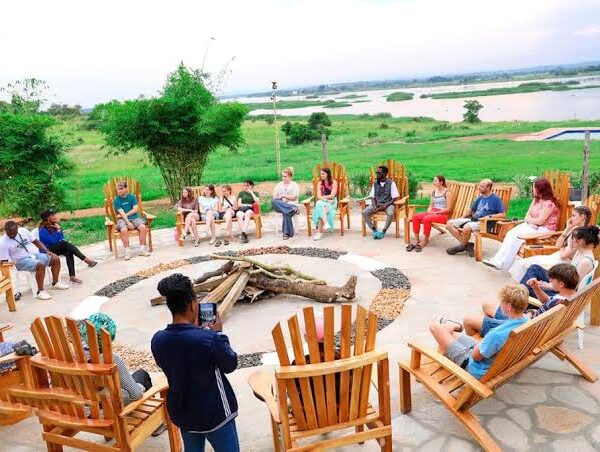
For smaller groups, most mid-range and luxury lodges can comfortably accommodate the party across standard rooms or suites, often with the option of shared common areas such as lounges, dining rooms, or campfires that naturally support the social, communal atmosphere that makes group travel so enjoyable. For larger groups, it is worth confirming in advance that a lodge can accommodate the full party or arranging accommodation across two or more nearby properties if necessary, always working closely with your operator to ensure smooth logistics and to avoid the group being unexpectedly split across widely separated locations.
Some larger group safaris, particularly camping-based trips, opt for exclusive-use campsites where the entire group can be accommodated together under one roof, so to speak, fostering an especially strong sense of shared adventure and camaraderie around a shared campfire each evening. Whatever the accommodation style chosen, prioritizing options that support the group’s togetherness and shared experience, wherever practical, tends to enhance the overall enjoyment and sense of communal adventure that draws many travelers to group safaris in the first place.
Vehicles and Transport for Groups
The choice and configuration of safari vehicles are crucial practical elements of any group safari, directly affecting comfort, game viewing quality, and the overall enjoyment of long days on Uganda’s roads. Reputable operators typically use purpose-built four-wheel-drive safari vehicles with pop-up roofs, allowing standing game viewing and photography, and it is worth confirming vehicle types and seating arrangements in advance for any group booking.
For smaller groups, a single well-equipped safari vehicle, seating perhaps six to seven passengers with a window seat each, offers an intimate and comfortable way to travel together throughout the trip, with the same driver-guide accompanying the group for its duration and building a personal rapport with the travelers. For larger groups, multiple vehicles traveling in convoy are typically required, and it is worth discussing with your operator how vehicles will be allocated, whether the same seating arrangements will be maintained throughout, and how the convoy will coordinate at parks, lodges, and activities to keep the group functioning smoothly as a unit.
It is also worth considering, for groups with members of varying mobility or fitness levels, whether particular vehicles or seating positions might better suit certain members of the party, and discussing this openly and thoughtfully with your operator in advance helps ensure that every member of the group enjoys a comfortable and satisfying journey throughout the safari.
Sustainable and Responsible Group Travel
As group travel to Uganda continues to grow in popularity, it is worth considering how larger groups can travel responsibly and sustainably, minimizing their impact on fragile ecosystems and maximizing the benefit to local communities, an increasingly important consideration for conscientious travelers of every kind. Group safaris, when well organized, can actually support responsible tourism particularly effectively, since concentrated group spending on permits, accommodation, and local services channels meaningful resources into conservation and community development.
Choosing operators who prioritize responsible practices, such as employing local guides and staff, supporting community projects, and adhering strictly to park rules and wildlife viewing guidelines, particularly around sensitive activities such as gorilla trekking, helps ensure that a group’s presence benefits rather than harms the places and people visited. Encouraging group members to be mindful of their collective impact, from noise levels around wildlife to respectful behavior in local communities, further supports Uganda’s ongoing efforts to balance the benefits of tourism with the protection of its extraordinary natural and cultural heritage for generations to come.