Complete Guide to Planning a Wildebeest Migration Safari
Guide to Planning a Wildebeest Migration Safari, Roughly 1.5 million wildebeest, joined by half a million zebra and a few hundred thousand Thomson’s gazelle, spend the entire year walking a wide, weather-driven circle through Tanzania and Kenya in search of fresh grass and water. It’s the largest overland animal migration left on the planet, and it’s also one of the most misunderstood safari experiences we plan for clients, simply because the migration isn’t one event on one date. It’s a continuous, year-round movement, and where you go depends entirely on when you’re traveling and which chapter of the story you actually want to witness.
Most travelers arrive with a single image fixed in their heads, wildebeest leaping into a crocodile-filled river, and are genuinely surprised to learn that’s only one scene in a much longer story, one that also includes calving, mating, and long grassland treks just as compelling in their own right.
Should the Migration Anchor Your Whole Trip?
If you’re drawn to drama, scale, and predator action, yes, it’s worth building your entire itinerary around it. But be honest with yourself about what “seeing the migration” actually requires of your travel dates, because the herds move through a predictable yet genuinely wide-ranging circuit, and river crossings specifically are thrilling but never guaranteed on any single day. If your heart is set on witnessing a crossing, we build in extra days and flexibility around a base camp near the river, rather than promising you a single dramatic morning that may or may not arrive.
For travelers who want strong general wildlife viewing without chasing one specific migration moment, the Serengeti and Masai Mara remain exceptional destinations on their own merits, migration or not, and that’s worth remembering if your dates simply don’t line up with peak movement.
Why the Herds Move at All
The herds move in response to rainfall and grass growth, not out of habit or pure instinct. Short-grass plains in the southern Serengeti green up after the short rains and offer the calcium-rich grazing pregnant wildebeest genuinely need, which is why calving concentrates there so reliably. As those plains dry out, the herds push north and west, chasing the rain, eventually reaching the Grumeti and then the Mara River systems, where the crossings that fill every wildlife documentary actually happen. When the rains shift again, the whole cycle reverses. It’s essentially one enormous, continuous walk toward wherever rain has just fallen, or is about to.
Where the Migration Is, Month by Month
| Month | Herd Location | What You’ll See |
| December–March | Southern Serengeti, Ndutu area | Calving season; up to 8,000 calves born daily at the February peak; dense predator activity |
| April–May | Central and Western Serengeti | The long trek north; herds moving in large columns; fewer tourists |
| June | Western Serengeti, Grumeti area | First river crossings at the Grumeti, smaller and less crowded than the Mara |
| July–August | Northern Serengeti into the Masai Mara | Peak Mara River crossings, the classic scene most travelers picture |
| September | Masai Mara, moving between Kenya and Tanzania | Continued crossings back and forth across the Mara River |
| October–November | Eastern and southern Serengeti | Herds turn south again, following the short rains |
When to Go for Each Specific Experience
Calving Season: Late January to February
Our top recommendation for travelers who prioritize predator action over crossings. Roughly 500,000 calves are born within a two-to-three-week window, with as many as 8,000 arriving in a single day at the peak, and that concentration of vulnerable newborns draws lion, cheetah, and hyena in close. The open plains around Ndutu make for exceptional photography with genuinely unobstructed sightlines, and it’s a quieter, less crowded window than peak crossing season besides.
River Crossings: July Through September
This is peak season for a reason, and it delivers exactly what most travelers picture: thousands of wildebeest gathering at the river’s edge, building nerve, and eventually plunging in while crocodiles wait below. Crossings aren’t scheduled. A good guide reads herd behavior and river conditions to position your vehicle in the right place, but even the best guides can’t guarantee a crossing on a specific morning. We recommend a minimum of three to four nights near the river to genuinely maximize your odds.
The Green Season Trek: April and May
Underrated, and considerably cheaper for it. Herds move in long, dramatic lines across a landscape gone properly green, camps offer their best rates of the year, and you’ll share the experience with far fewer other vehicles. The trade-off is a higher chance of rain and muddier roads in certain areas.
Matching Your Camp to the Herds’ Actual Position
Because the herds move throughout the year, a camp that’s perfectly positioned in August might be nowhere near the action come February. This is where mobile or seasonal camps earn their keep, since several operators run camps that physically relocate to follow the migration through the year, keeping guests genuinely close to the herds regardless of season.
December through March: look toward camps in the Ndutu and southern Serengeti area, several of which are seasonal and only operate during calving months. June and July: Western Serengeti and Grumeti-area camps put you ahead of the herds as they approach the first river crossings. July through October: northern Serengeti camps or Masai Mara conservancy camps on the Kenyan side both offer strong crossing access, with conservancies offering more exclusivity and fewer vehicles per sighting. April and May: central Serengeti camps stay open through the rains and offer genuinely excellent value.
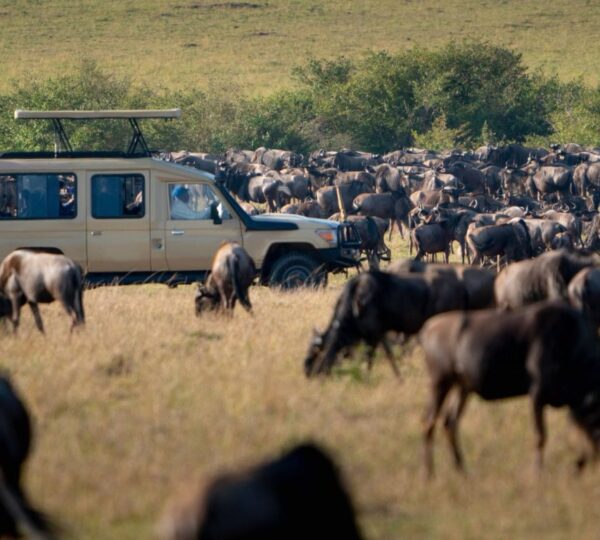
Migration Safari in Kenya
Budgeting Around Migration Timing
Peak crossing season, July through September, is also peak pricing season across the entire Serengeti-Mara ecosystem, and the best-positioned camps near known crossing points book out six to nine months in advance. Calving season in February is a close second in demand, particularly among photographers. If budget flexibility matters more than seeing one specific migration event, the April-May green season trek offers a genuinely spectacular version of the migration story at a meaningfully lower price, often 30 to 40 percent below July peak rates.
Activities That Pair Well With a Migration Safari
Hot air balloon safaris over the Serengeti offer a spectacular aerial view of herds stretching to the horizon, best booked well in advance during peak months. Cross-border itineraries combining the Serengeti and Masai Mara let you follow the herds across the border, though this requires careful routing since crossing points and road conditions vary in reliability. And extended stays with repositioning, rather than one long stay in a single camp, some of our best migration itineraries involve two or three shorter stays at different camps, timed to the herds’ actual movement that specific week, based on real-time reports from guides on the ground.
Common Mistakes We See Travelers Make
The most frequent one is booking a single camp for a full week during peak season, in a fixed location, and hoping the herds stay put. Migration timing shifts by weeks from year to year, so a camp that was perfectly positioned last August might be twenty miles from the action this year. We generally recommend either choosing a camp with a strong multi-year track record of positioning near crossings, or splitting a longer stay across two locations to hedge against herd movement.
A second common mistake is underestimating travel time between the Serengeti and Masai Mara. They’re often marketed as a pair, but moving between them typically requires a flight or a long road transfer through a border crossing, and rushing that leg to squeeze in more nights elsewhere usually backfires. If a cross-border itinerary interests you, build in a full travel day rather than treating it as incidental.
A third is arriving with unrealistic photography expectations. Crossings often happen at a distance, across a wide river, and a phone camera won’t capture much of it. If photography matters to you, a zoom lens in the 200–400mm range makes a real difference, and it’s worth discussing camp choice with us specifically around vehicle positioning and photography-friendly guiding.
Photography and Viewing Tips
Morning crossings tend to happen earlier than afternoon ones, often within the first two hours of light, so an early departure from camp meaningfully improves your odds of good light and a quieter riverbank. Guides communicate by radio across the network of vehicles in an area, so a well-connected camp with active guide communication will often reach a developing crossing faster than one operating in isolation. Patience matters more than almost anything else here. Herds can gather at a crossing point for hours, building nerve, before anything actually happens, and a rushed visit is the single most common reason travelers leave without seeing one.
What We’d Tell You Honestly
Nobody can guarantee you’ll witness a river crossing on a specific date, and any operator who promises otherwise isn’t being straight with you. What we can do is stack the odds heavily in your favor: positioning you at the right camp for the time of year, building in enough nights to allow for a quiet day or two, and staying in close contact with guides on the ground who track herd movement daily and can advise on last-minute repositioning if the herds shift. This is a trip where local, current knowledge matters far more than a static seasonal calendar, since herd movement can vary by two or three weeks from year to year depending purely on rainfall.
We also encourage clients to let go of the idea that they need to see a crossing to have a great migration safari. Some of the most memorable mornings we’ve heard about from clients involved simply watching a column of a hundred thousand wildebeest stretch across the plains for as far as they could see, with no crossing in sight. The sound and scale alone are unforgettable.
Recommendations by Traveler Type
Photographers chasing predator action: calving season, late January through February, in the Ndutu area.
First-time migration travelers wanting the classic river-crossing experience: July through September, Masai Mara or northern Serengeti, with at least four nights near the river.
Budget-conscious travelers who still want the migration story: the April–May green season trek through the central Serengeti.
Repeat visitors seeking something quieter: June crossings at the Grumeti River, which draw far fewer vehicles than the Mara later in the season.
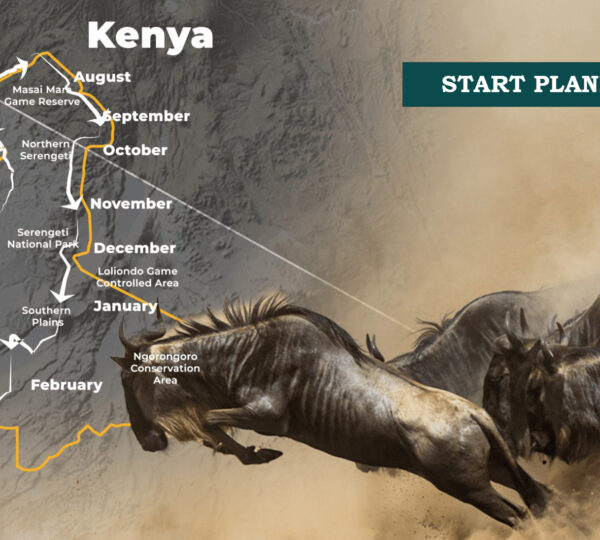
Wildebeest Migration Safari
Families: July–August in Masai Mara conservancies, which combine strong migration access with more flexible age policies than some Tanzanian park lodges.
Frequently Asked Questions
Can I guarantee I’ll see a river crossing?
No operator can guarantee a specific crossing on a specific day, since it depends on herd behavior and river conditions on the ground. Staying multiple nights near an active crossing point significantly improves your odds, and our guides monitor herd positioning daily to maximize the chance.
Is the migration only in Tanzania, or also in Kenya?
Both. The herds spend roughly nine months of the year in Tanzania’s Serengeti and about three months, typically August through October, across the border in Kenya’s Masai Mara, though exact timing shifts year to year with rainfall.
Is it safe and ethical to watch a river crossing?
Reputable guides follow strict vehicle positioning guidelines to avoid disturbing the herds or blocking their crossing paths. We only work with operators who follow these standards, since poor vehicle behavior at crossing points has become a real concern during the busiest weeks of peak season.
How many nights do I need to see the migration properly?
We recommend a minimum of four nights in a well-positioned camp during crossing season, and three to four nights during calving season, allowing for weather, herd movement, and simply having more than one attempt.
Is the migration crowded with other tourists?
At the most famous crossing points during August, yes, it can get busy. Choosing a private conservancy camp on the Kenyan side, or timing your visit for June crossings at the Grumeti River, gives you a far less crowded version of the same phenomenon.