Where to Go for Family Trips in East Africa?
Where to Go for Family Trips in East Africa? East Africa has become one of the world’s premier family travel destinations for exactly this reason: it combines genuine, unscripted wildlife encounters with a level of guided structure and safety that makes it far more manageable with kids than most parents expect going in. It does, however, demand more specific planning than an adult-only safari, particularly around age minimums, pacing, and camp choice.
This guide covers where to go, what to expect, and how to structure a family safari that works for the youngest and oldest members of your group alike.
Should You Bring Young Children on Safari?
It depends heavily on age and temperament. Most camps set a minimum age for game drives somewhere between six and twelve, driven by genuine safety considerations around sitting quietly near dangerous game for extended periods, so an under-six family trip typically requires specific family-friendly camps with private vehicles and adjusted programming rather than a standard safari itinerary. Children aged seven and up generally do very well on safari, especially with age-appropriate pacing and activities layered in alongside standard game drives.
Anecdotally, guides across the industry tend to point to the same window, roughly eight to twelve, as the age when safari clicks most powerfully for a child: old enough to sit still and follow what’s happening, young enough that the wonder is still completely unguarded.
They remember specifics afterward, the exact color of a lion’s eyes, the sound of buffalo hooves on dry ground, in a way that adults busy processing logistics sometimes miss entirely. Teenagers, for their part, tend to have some of the best safari experiences of any age group, with the attention span and curiosity to genuinely engage with tracking, ecology, and longer game drives.
Why East Africa Works Well for Family Travel
Guided safaris are structured, supervised, and built around a level of safety that suits nervous first-time family travelers well. You’re not navigating independently with children in an unfamiliar environment; you’re accompanied by an experienced guide throughout.
Many camps have decades of experience hosting families and have specifically designed programming, from junior ranger activities to shorter, kid-paced game drives, that keeps children genuinely engaged rather than restless. And the core appeal, real wildlife, dramatic landscapes, and a sense of adventure, resonates with children in a way that’s hard to replicate anywhere else in the world.
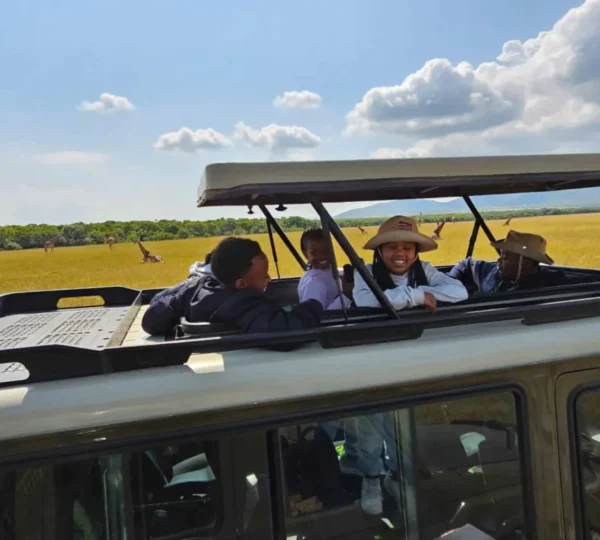
Family safari
Where to Go: Best Family-Friendly Destinations
Kenya
Kenya’s Masai Mara region has some of the most established family-safari infrastructure in East Africa, including camps with dedicated kids’ programs, family tents or interconnecting rooms, and guides experienced specifically in engaging younger travelers.
Most Kenyan operators set no formal minimum age at all for game drives, particularly with a private vehicle, which gives families more flexibility here than almost anywhere else on the continent. Combined with a beach extension in Diani, Kenya offers an excellent structure for a two-part family trip: safari followed by relaxed beach time.
Tanzania
Tanzania’s northern circuit (Serengeti, Ngorongoro, Tarangire) offers outstanding family wildlife viewing, particularly Tarangire’s elephant herds, which are consistently a highlight for younger children.
The Ngorongoro Crater in particular suits shorter attention spans well, since its compact, walled ecosystem delivers concentrated Big Five sightings without the long, wildlife-sparse stretches a bigger park can involve. Zanzibar makes a natural, easy beach add-on, similar in structure to Kenya’s Diani combination.
South Africa
Uniquely suited to families thanks to malaria-free reserves in the Eastern Cape and at Madikwe, removing a significant health consideration for parents of young children entirely.
Addo Elephant National Park, also malaria-free, permits self-driving with no age restriction of any kind, making it one of the most genuinely flexible family safari destinations anywhere on the continent. Self-drive options in parts of Kruger also give families more control over pacing than a fully guided itinerary requires.
Uganda and Rwanda
Better suited to families with older children and teenagers, given gorilla trekking’s physical demands and its strict, government-set minimum age of fifteen for permits, which applies with no exceptions. Queen Elizabeth and Akagera National Parks offer strong general wildlife viewing as a complement for families not trekking.
Malaria-Free Options for Families With Young Children
This is one of the most important and specific considerations for family safari planning, particularly for parents wary of malaria prophylaxis for very young children. The clearest rule of thumb we give clients: under roughly eight years old, choose malaria-free every time if it’s an option for your itinerary.
South Africa’s Eastern Cape reserves (Shamwari, Kwandwe, Addo among them), Madikwe Game Reserve, and the Waterberg region in Limpopo all sit within genuinely malaria-free zones and deliver the full Big Five without any need for preventive medication.
Most of East Africa’s classic safari regions do carry malaria risk, so this is a conversation worth having directly with us and with a travel medicine specialist, weighing destination choice against your children’s ages and your family’s comfort level with preventive medication.
Age Minimums and Activity Considerations
| Activity | Typical Minimum Age | Notes |
| Standard game drives | 6–8 (varies by camp) | Many Kenyan and Tanzanian operators set no minimum with a private vehicle |
| Walking safaris | 12–16 (varies by camp) | Safety-driven, given proximity to dangerous game |
| Gorilla trekking | 15 | Set by government regulation in Uganda and Rwanda, not negotiable |
| Night drives | Often same as standard drives | Some camps restrict further given extended late hours |
| Balloon safaris | Varies, often 6–7 minimum | Height and safety harness considerations |
Choosing the Right Camps for Families
Look specifically for camps that describe themselves as family-friendly rather than assuming a general luxury property will accommodate children well. Some upscale camps deliberately don’t cater to children, prioritizing an adults-only atmosphere instead, so this is worth confirming directly rather than assuming.
Family-friendly camps typically offer interconnecting rooms or family tents, private vehicles or family-only game drives, kids’ activity programs (nature walks, craft activities, junior ranger badges), and flexible meal timing that accommodates children’s schedules rather than a single fixed communal dinner seating.
Budget Considerations for Family Trips
Family safaris often benefit from a private vehicle, which allows pacing adjustments for children’s attention spans and rest needs, adding a meaningful cost above a shared group departure.
For larger families, an exclusive-use villa or camp buyout, where one nightly rate covers the whole property rather than pricing per person, can actually work out better value than it first appears, since a family of six to eight ends up dividing one all-inclusive rate rather than paying six or eight separate per-person fares.
Many family-friendly camps also offer reduced rates for children sharing a family tent or interconnecting room with parents, which helps offset some of the additional cost either way. It’s worth asking specifically about child rates and family packages when comparing quotes, since these vary significantly by property and aren’t always advertised prominently.
When to Travel With Family
School holiday periods, particularly July and August and the December holidays, are naturally the most popular window for family travel, which also means peak pricing and the earliest need to book, often nine to twelve months ahead for the most sought-after family camps. Traveling during shoulder seasons, if your family’s schedule allows, offers better rates and availability, though this requires flexibility around school calendars that not every family has.
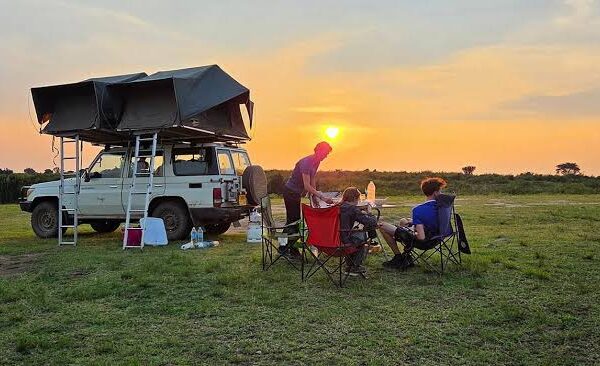
Family Trips in East Africa
Activities That Work Well for Families
Shorter, more frequent game drives rather than long single outings tend to hold children’s attention better and reduce restlessness. Junior ranger and educational programs, offered at many family-oriented camps, give children hands-on learning alongside the wildlife viewing.
Boat safaris are often a hit with children, offering a change of pace from vehicle-based drives and usually strong, close wildlife viewing.
Cultural visits to Maasai or other communities, framed appropriately for children’s ages, can be a genuinely meaningful and memorable addition to a family itinerary. And beach extensions in Zanzibar or Diani give children, and parents, a chance to decompress and play after the more structured pace of a safari itinerary.
Packing and Preparation Tips for Families
A few practical preparations make a genuine difference on a family safari. Prepare children in advance with age-appropriate books, documentaries, or a simple explanation of what to expect on a game drive, including the reality that sightings aren’t guaranteed on demand and patience is part of the experience.
Pack layers, since early morning game drives can be genuinely cold even in destinations that feel hot by midday, along with sun protection, insect repellent appropriate for children, and a basic first-aid kit with any family-specific medications.
Binoculars sized for smaller hands, a simple field notebook, or a laminated animal checklist can turn a long game drive into an engaging scavenger hunt rather than a passive viewing experience, and many family-oriented camps provide similar tools as part of their kids’ programming.
Health and Safety Preparation
Beyond malaria considerations, discuss your family’s specific travel dates with a travel medicine clinic well ahead of departure, since some destinations recommend particular vaccinations, and this is easier to plan calmly months in advance than to rush in the final weeks before travel.
Comprehensive travel insurance with medical evacuation coverage is genuinely important for family trips to remote camps, where the nearest hospital-level care may be a significant distance away.
It’s also worth packing a basic supply of any regular medications your children take, along with common remedies for travel-related stomach upset, since pharmacy access can be limited once you’re deep into a safari circuit away from major towns.
How We’d Plan This
The single biggest factor in a successful family safari is matching camp choice to your children’s specific ages, and we’d strongly encourage being candid with us about attention spans, nap schedules, and any anxieties your children might have around wildlife or new environments. A family with a curious ten-year-old and a family with a cautious five-year-old need genuinely different itineraries, even if both are visiting the same country.
We also recommend building in more downtime than you might for an adult-only trip. A pool afternoon at camp, a shorter game drive followed by free time, or a full rest day midway through a longer trip all help prevent the kind of overtiredness that can turn an amazing family adventure into a stressful one by day five.
Recommendations by Traveler Type
Families with children under eight: South Africa’s malaria-free reserves, or a Kenya or Tanzania camp with a dedicated private family vehicle and no fixed age minimum.
Families with children eight to twelve: Kenya or Tanzania’s classic circuits, choosing camps with established kids’ programs, and the Ngorongoro Crater specifically for its compact, concentrated game viewing.
Families with teenagers: Uganda or Rwanda for gorilla trekking, or a more adventurous multi-activity Kenya or Tanzania itinerary including walking safaris.
Multi-generational families: a private touring structure (see our dedicated guide) paired with family-friendly camps, allowing pacing flexibility across different generations’ needs, or an exclusive-use villa where the whole extended family shares one property.
What Kids Actually Remember Afterward
Parents often worry most about the logistics, nap schedules, flight times, malaria precautions, and understandably so, but it’s worth knowing what children actually carry home from these trips based on what families tell us afterward.
It’s rarely the five-star bathroom or the infinity pool. It’s the guide who let them hold a pair of binoculars and spot the leopard themselves, the night they heard hyenas calling from their tent and felt genuinely, safely thrilled by it, or the elephant that walked close enough to the vehicle that they could hear it breathing.
Keeping that in mind while planning, prioritizing guide quality and genuine engagement over pure luxury polish, tends to produce the trips families remember most fondly.
Frequently Asked Questions
What’s the best age to take children on their first safari?
Seven and up tends to be the sweet spot for standard game-drive-based itineraries, with eight to twelve often cited by guides as when the experience lands most powerfully. Younger children can still do very well at camps specifically set up for families with private vehicles and flexible programming.
Is malaria a serious concern for family trips?
It’s a genuine consideration worth discussing with a travel medicine professional, particularly for young children. Our general rule of thumb is malaria-free destinations for children under about eight. South Africa’s Eastern Cape, Madikwe, and the Waterberg all remove this concern entirely, while other regions require appropriate prophylaxis and preventive measures.
Will my children get bored on game drives?
Well-paced itineraries with shorter drives, engaging guides experienced with children, and activity variety beyond just driving significantly reduce this risk. It’s worth specifically requesting family-experienced guides when we build your itinerary.
Are there age limits for other activities like ballooning or walking safaris?
Yes, and they vary by activity and specific operator, generally six to seven for balloon safaris and twelve to sixteen for walking safaris, given safety considerations. Gorilla trekking in Uganda and Rwanda has a strict, non-negotiable minimum age of fifteen.
Let Us Plan Your Family Safari
Getting the details right, camp choice, pacing, age-appropriate activities makes the difference between a family trip that goes smoothly and one that doesn’t, and it’s exactly where our experience helps most. Tell us about your children’s ages and interests, and we’ll build an itinerary that works for your whole family.