When Is the Best Time to Visit Africa?
When Is the Best Time to Visit Africa? What makes this tricky is that Africa doesn’t run on one clock. Kenya’s dry season and Botswana’s dry season don’t overlap the way you’d expect from two countries on the same continent, and “green season” in the Serengeti bears almost no resemblance to the rains rolling through South Africa’s Kruger region. Treating “Africa’s dry season” as a single, portable fact is the most common planning mistake we see, and it’s entirely avoidable once you understand how each region actually behaves on its own terms.
Does Timing Actually Matter That Much?
For most first-time travelers, yes, and it matters more than almost any other decision you’ll make, budget included. Show up in the wrong park during the wrong window and you’re looking at thin sightings, flooded access roads, or a camp that’s shut for the season entirely. Get the timing right and you’re looking at daily leopard sightings, a river choked with crossing wildebeest, or a birding list that quietly climbs past 300 species before the week is out.
That said, timing matters considerably less if you’re locked into a fixed date, a honeymoon window, a milestone birthday, a school holiday that isn’t moving. In that case the real question stops being “when is best” and becomes “what should I expect, and where should I go, given the dates I’ve already got.” Both are legitimate ways into a trip. We’d just rather you land on one deliberately than by accident.
Why Rainfall Runs the Show, Not Temperature
Most of the classic safari countries sit close enough to the equator that temperature swings stay mild by the standards most travelers from colder climates are used to. What actually governs wildlife behavior, road conditions, and photography quality is rainfall, full stop.
During the dry season, vegetation thins out, water sources shrink to a handful of reliable rivers and pans, and animals concentrate around what’s left of both. That’s why June through October dominates so much of East and Southern Africa’s marketing: game viewing turns concentrated and genuinely predictable.
During the wet season, the bush turns dense and green, animals scatter across an enormous, well-watered area, and finding them takes more patience and sharper guiding. In exchange you get dramatic skies, newborn animals everywhere you look, migratory birds arriving in force, and a landscape that photographs like an entirely different country.
Neither season wins outright. They’re built for different trips, and a good consultant should be asking what you’re actually chasing before recommending one over the other.
East Africa’s Split Calendar
Kenya, Tanzania, Uganda, and Rwanda Run on Two Dry Seasons
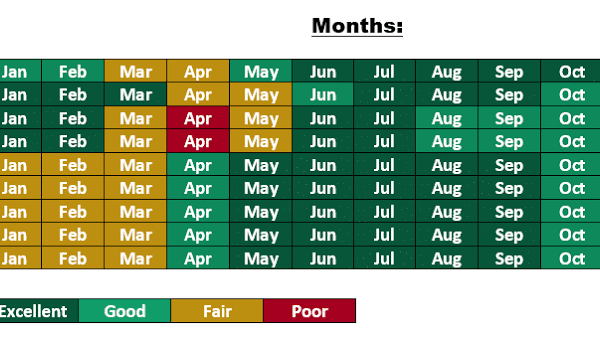
This surprises a lot of first-time planners: East Africa doesn’t have one dry season and one wet season. It has two of each. January through March is hot and largely dry, with the short rains usually wrapping up by early January, and it happens to coincide with calving season in the southern Serengeti, when hundreds of thousands of wildebeest give birth within a few compressed weeks, hauling predators in close behind them.
It’s one of our favorite windows for photography, since the light stays clean and the grass stays short. April and May bring the long rains, and many camps in the Serengeti and Masai Mara either close outright or drop their rates sharply. Roads turn difficult, and several lodges use the lull for renovation. Gorilla trekking in Uganda and Rwanda runs year-round regardless, though the trails get considerably muddier underfoot.
Best moths
The Long Dry Season Is the Headline Act
June through October is the single most popular safari window in East Africa, and for good reason. This is when the wildebeest migration pushes through the western and northern Serengeti and into the Masai Mara, and when the river crossings on the Mara and Grumeti draw the crowds you’ve seen replayed in every wildlife documentary going. Vegetation thins to almost nothing, animals gather where the water still is, and game drives deliver, day after day, with unusual consistency.
November and December Are Underrated
The short rains arrive, the landscape greens up fast, crowds thin out, and rates often drop with them. This window suits travelers who don’t need a guaranteed sighting of every species on the list and who’d genuinely rather have a quieter, greener trip than a crowded one.
Southern Africa’s Simpler Rhythm
Southern Africa runs on a single dry season and a single wet season, a considerably simpler pattern than East Africa’s split calendar, though it comes with its own wrinkle worth knowing about.
May through September is dry and, especially in Botswana and inland South Africa, increasingly cold overnight, with June and July mornings occasionally dipping close to freezing.
This is prime time in the Okavango Delta and Chobe, where shrinking water levels concentrate wildlife along the remaining channels, and in Kruger, where sparse vegetation makes for excellent viewing along the rivers. October through April brings the wet season, hot and steadily more humid as it wears on.
Victoria Falls hits peak drama roughly March through May, right after the rains upstream, while the Delta’s floodwaters actually peak later, June through September, on a schedule dictated by rainfall in distant Angola rather than anything happening locally. This lag catches more travelers out than any other single detail in Southern Africa trip planning, and it’s worth double-checking with a specialist before assuming “dry season” and “flood season” line up, because they don’t.
Matching Timing to What You Actually Want
| If Your Priority Is… | Aim For… | Because… |
| The Great Migration river crossings | July–September, northern Serengeti / Masai Mara | Herds cluster at the Mara River during peak dry months |
| Wildebeest calving season | Late January–February, southern Serengeti / Ndutu | Predator action is dense and concentrated |
| Gorilla trekking in Uganda or Rwanda | June–September or December–February | Drier trails, easier hiking, though permits run year-round |
| Lower rates and fewer crowds | November or April–May | Shoulder and green seasons carry meaningful discounts |
| Newborn animals and birdlife | November–March | Rains trigger both births and migratory bird arrivals |
| Guaranteed dry, cold-morning drives in the Delta or Kruger | June–September | Vegetation is sparse and animals gather at water |
| A honeymoon with dramatic skies over lower prices | March–May, accepting some rain | Fewer travelers, lush scenery, better lodge availability |
Rainfall Isn’t as Predictable as It Used to Be
Long-term seasonal averages remain the best planning tool available, but it’s worth knowing that rainfall timing across East Africa has grown somewhat less predictable over the past decade, with the short rains occasionally arriving early or overstaying their welcome.
This doesn’t undercut the seasonal guidance above; dry months are still meaningfully drier than wet months. It’s part of why we track conditions with our local guides and camp managers right up until departure rather than leaning purely on a historical calendar when we finalize an itinerary. If your trip falls near the edge of a seasonal transition, that kind of current, ground-level knowledge matters more than any published chart ever will.
What Timing Does to Your Budget
Peak season pricing across East and Southern Africa typically runs 20 to 40 percent above green-season rates, and the very best camps during July through September often book out six to twelve months ahead. If your dates have any give in them, shifting by even three or four weeks, mid-July into early October, say, or January into late November, can open availability at properties that would otherwise be fully booked, and often at a noticeably better rate.
We generally steer clients away from chasing the absolute cheapest week purely to save money, since a handful of shoulder-season stretches, early April, or the first two weeks of December, can bring genuinely difficult road conditions or thin game viewing in certain parks.
The smarter savings play is booking a considered shoulder period, late June before peak really lands, or November once the short rains have settled the dust, rather than diving straight into the deepest wet-season months.
Booking Around Availability, Not Just Season
High season means high demand, and the small camps that make East and Southern Africa special, plenty with fewer than fifteen rooms, sell out first. If your trip lands in July, August, or September, or over Christmas and New Year, confirm accommodation at least nine months out.
Shoulder seasons offer far more breathing room, and some camps close entirely during the heaviest rains, typically April and, in parts of Southern Africa, January, so it’s worth checking property-specific closures rather than assuming everything stays open year-round.
Activities That Shift With the Calendar
Game drives run year-round almost everywhere, but a handful of signature activities are genuinely seasonal. Hot air balloon safaris over the Serengeti and Masai Mara operate all year but book out fastest during migration months. Mokoro canoe excursions in the Okavango Delta depend entirely on water levels, so they’re at their best from June through October once the flood has properly arrived.
Walking safaris are generally more comfortable in the dry season, when the grass is short and visibility is better, though several operators run them year-round with adjusted routes. Gorilla and chimpanzee trekking happens in every month, but the trails are considerably easier underfoot when it’s dry.
How We’d Plan This
Start with what you actually want to experience, not the calendar. A traveler chasing river crossings has one clear window. A traveler who wants a quiet, affordable, photogenic safari with newborn animals everywhere has a completely different one, and it’s just as rewarding in its own right.
Once that’s settled, we work backward from availability at the specific camps and parks that deliver on that priority, because a generic “dry season” recommendation can still land you in the wrong park during the wrong week.
If your dates are fixed rather than flexible, that’s fine too. It simply changes which destinations and camps we’d steer you toward, rather than ruling a trip out altogether. A December safari in the Serengeti and a December safari in the Kalahari are both excellent. They’re just different trips.
Recommendations by Traveler Type
First-time safari-goers wanting the classic experience: June through September in the Serengeti-Mara ecosystem, accepting higher rates in exchange for higher certainty.
Photographers: January and February for calving-season light and predator action, or the green season (November, March through April) for dramatic storm-light skies.
Budget-conscious travelers: November or late April into May, keeping an eye out for property-specific closures.
Birders: November through April, when Palearctic migrants join resident species across East and Southern Africa.
Honeymooners prioritizing romance over guaranteed sightings: green season anywhere, paired with a smaller, more intimate camp.
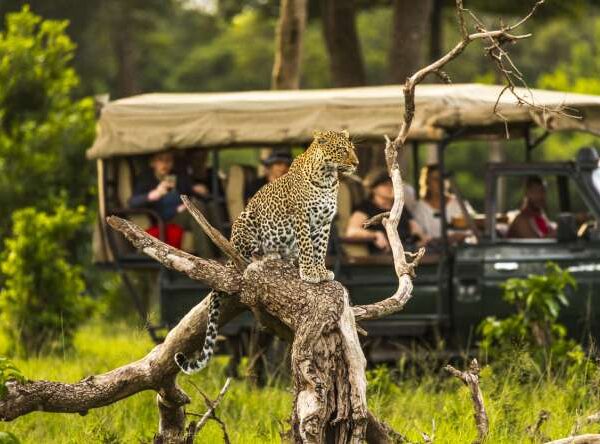
Leopard in Maasai Mara
Frequently Asked Questions
Is there a genuinely bad time to go on safari?
Not really. Every month offers something. The closest thing to a difficult window is the heart of the long rains, mid-April into May, in East Africa, when some roads turn challenging and select camps close. Even then, gorilla trekking, birding, and several southern circuits remain excellent.
Do I need to see the wildebeest migration to have a great safari?
No. The migration is spectacular, but resident wildlife, lions, elephants, leopards, and hundreds of bird species, is present in East and Southern Africa’s parks all year round. Some of our most memorable client trips happened well outside migration months.
How far in advance should I book if I want peak season dates?
Nine to twelve months for July through September and the December holidays, particularly for smaller camps with limited rooms.
Does rain ruin a safari?
Rarely, and it’s usually short and heavy rather than an all-day washout, followed by clear skies. What it genuinely affects is road access to a handful of remote camps, and the visibility of certain species in dense green vegetation.
Can I combine an East Africa dry-season safari with Southern Africa in the same trip?
It’s possible, but the logistics take care. Because the two regions run on different rainfall calendars, one travel window rarely hits peak dry conditions in both at once. We can still design a combined itinerary, Kenya in September followed by Victoria Falls, for instance, it just means being clear-eyed about which leg will be at its seasonal best and which will be good rather than exceptional.