
Kidepo Valley National Park : The Complete Guide to Uganda’s Wildest Frontier
Kidepo sits in Karamoja, Uganda’s remote northeastern region, roughly 700 kilometres and a demanding 10 to 12-hour drive from Kampala, most commonly broken into two days with an overnight stop at Kotido or Gulu. Almost no one drives this route for a standard holiday; instead, scheduled or chartered flights from Entebbe reach the park’s Apoka airstrip in about one hour 40 minutes to two hours, and this is how the vast majority of visitors arrive. Scheduled flights typically require a minimum number of passengers to run, and one-way fares generally fall somewhere between $400 and $480 per person, meaning a return flight is a genuinely significant line item in a Kidepo budget. It’s what makes the park practical to include in a standard one- to two-week Uganda itinerary, though it’s worth booking early given how few weekly flights the route runs compared with other domestic airstrips.
Why Visit Kidepo Valley
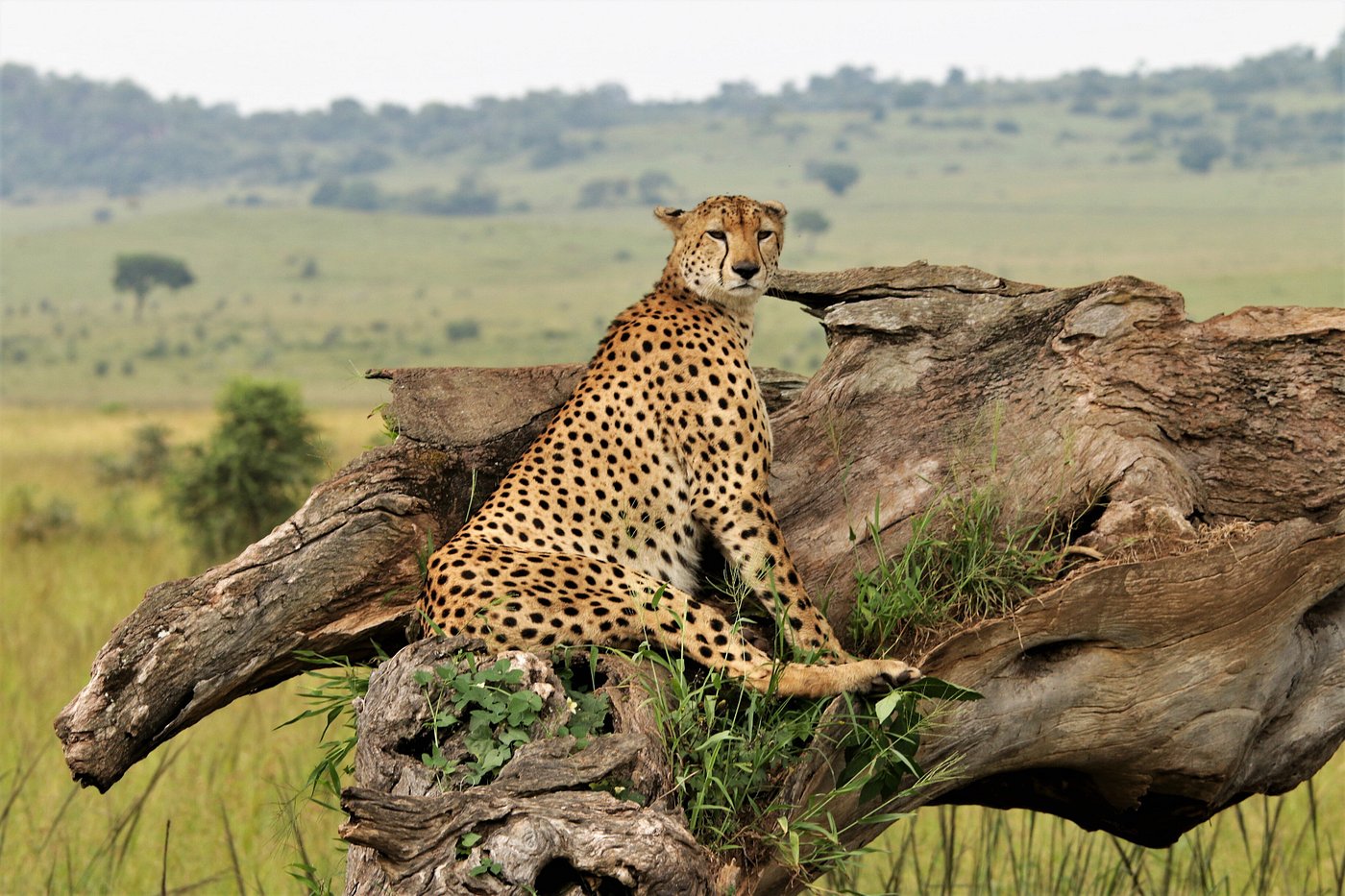
Kidepo’s landscape does a lot of the work. The Narus Valley opens into wide, golden savanna ringed by distant mountains, with a permanent water source that draws large concentrations of buffalo, giraffe, zebra and antelope even in the dry season. The park holds species found in no other Ugandan park, including cheetah, bat-eared fox, caracal and the striped hyena, alongside more than 475 recorded bird species, one of the highest counts anywhere in the country.
Beyond wildlife, Kidepo offers a cultural dimension that’s harder to find elsewhere in Uganda. The Karamojong, semi-nomadic pastoralists with a distinct culture and dress, live around the park’s edges, and guided visits to their manyattas offer a genuine, unstaged glimpse of a way of life that’s remained largely intact. For travellers who’ve done the classic Uganda circuit and want something that feels genuinely off the beaten path, Kidepo delivers that in a way few other African parks still can.
When to Go: Best Time to Visit Kidepo
Kidepo’s semi-arid landscape makes seasonal timing more consequential here than almost anywhere else in Uganda. The long dry season, running from June through September, concentrates wildlife tightly around the Narus Valley’s limited permanent water, which is when game viewing is at its most reliable and the golden, sun-baked scenery is at its most photogenic. December through February brings a second dry window with good visibility, though slightly less dramatic light than the mid-year months.
The long rains, March through May, transform the landscape quickly, turning the valley green within weeks, but they also disperse wildlife across a much wider area, making sightings less predictable and requiring more patience and driving time. October and November bring a shorter, more transitional period as the dry season approaches, with the landscape shifting from green back toward gold. Given how strongly Kidepo’s wildlife responds to water availability, June through September stands out as the clearest recommendation of any Uganda park.
| Season | Months | What to Expect |
| Long dry season | June – September | Best game viewing as wildlife concentrates around the Narus River |
| Short dry season | December – February | Good visibility, comfortable conditions |
| Long rains | March – May | Vegetation greens up quickly, harder game viewing |
| Short rains | October – November | Intermittent showers, landscape transitions to green |
The dry season, particularly July through September, is widely considered the best time for game viewing, when animals cluster around the Narus Valley’s limited water. The park is genuinely striking in the wetter months too, with dramatic skies and a green landscape, but wildlife disperses more widely and sightings take more effort.

Elephant in Kidepo
Budget Guide: What a Kidepo Trip Costs
| Item | Approximate Cost (Foreign Non-Resident) | Notes |
| Park entrance fee | $40 per person, per 24 hours | Confirm current UWA rate when booking |
| Domestic flight (Entebbe–Apoka, one way) | $400–480 per person | Scheduled flights need a minimum passenger count; charters cost more |
| Game drive | $40–60 per person if booked independently | Often bundled into lodge packages instead |
| Cultural visit to a Karamojong manyatta | $30–50 per person | Directly supports the local community |
Because of the flight cost, a Kidepo add-on typically adds well over $150 a day to an itinerary compared with driveable parks, but many travellers consider the relative isolation and landscape well worth the premium. Chartering a private flight, rather than waiting on a scheduled departure’s minimum passenger count, costs considerably more but guarantees your travel dates.
Where to Stay at Kidepo
Accommodation is limited compared with Uganda’s more visited parks, which is part of what keeps the experience feeling exclusive.
| Tier | Example Style | Best For |
| Luxury | Small, high-end camps with panoramic valley views | Travellers wanting comfort in a genuinely remote setting |
| Mid-range | Comfortable lodges near Apoka | Most visitors, balancing comfort and value |
| Budget | UWA-run bandas and a public campsite at Apoka | Independent and budget travellers |
Top Attractions in Kidepo Valley
The Narus Valley is Kidepo’s centrepiece, a broad expanse of golden savanna fed by one of the park’s only permanent water sources, which means wildlife concentrates here with a reliability that rivals far more famous East African plains. Buffalo, giraffe, zebra and a range of antelope species gather along its length, and the open terrain makes for some of the clearest, most unobstructed game viewing anywhere in Uganda.
The park’s species list includes animals found in no other Ugandan park, cheetah, bat-eared fox, caracal and striped hyena among them, a reflection of Kidepo’s ecological kinship with Kenya’s and Tanzania’s classic savanna parks rather than Uganda’s forest-dominated ones.
Beyond the wildlife, Kidepo’s remoteness has preserved a cultural landscape that’s largely vanished elsewhere. The Karamojong, semi-nomadic pastoralists with distinctive dress and social customs, live around the park’s margins, and guided visits to their manyattas offer an unusually genuine glimpse into a way of life still largely organised around cattle. For the more adventurous, Mount Morungole rises on the park’s southern edge, home to the small and isolated IK community, reachable via a guided hike.
The remote Kanangorok Hot Springs, near the South Sudan border, add a further reason to venture beyond the Narus Valley itself, and the park’s bird list, over 475 species, ranks among the highest anywhere in the country.
| Attraction | Description |
| Narus Valley | Permanent water source drawing large concentrations of wildlife |
| Kanangorok Hot Springs | Remote hot springs near the South Sudan border |
| Mount Morungole | Home to the isolated IK tribe, reached via guided hikes |
| Wildlife | Around 76 mammal species, including cheetah, caracal and bat-eared fox found nowhere else in Uganda |
| Birdlife | Over 475 species, among the highest counts in the country |
| Karamojong culture | Traditional homesteads of the semi-nomadic Karamojong people |
Things to Do at Kidepo Valley
Game drives are the primary activity, run both during the day across the Narus Valley and after dark with spotlights, when guides look for nocturnal species like caracal, leopard and the elusive aardwolf that rarely show themselves in daylight.
Nature walks and guided hikes offer a slower alternative, including the ascent of Mount Morungole for travellers wanting both a physical challenge and the chance to meet the IK community living on its slopes. Kidepo’s birding matches its game viewing for quality, with guided outings covering a species list that regularly surprises visiting birders with its depth.
Kidepo Valley National Park
Cultural encounters set Kidepo apart from Uganda’s other parks in a way that’s hard to replicate elsewhere. Visits to Karamojong manyattas are arranged through local guides and offer a direct, respectful window into pastoralist life, and trips to meet the IK community can be arranged on request for travellers with the time and interest.
A half-day excursion to the Kanangorok Hot Springs rounds out the activity list, a genuinely remote outing near the South Sudan border that few visitors to Uganda ever get to experience.
| Activity | Description |
| Game drives | Day and night drives through the Narus Valley with spotlighting |
| Nature walks and hiking | Ranger-guided walks, including the ascent of Mount Morungole |
| Birdwatching | Guided outings covering the park’s exceptional species list |
| Cultural encounters | Visits to Karamojong manyattas and, on request, the IK community |
| Hot springs excursion | Half-day trip to Kanangorok Hot Springs |
Planning Advice for Kidepo
Budget for the flight early; it’s the largest single cost and availability can be limited outside peak season, since scheduled flights typically require a minimum passenger count to depart.
Allow at least two full nights; a single-night stop doesn’t do the park’s scale or activity list justice.
Pack for genuinely remote travel, extra medication, sun protection and a torch, since services around the park are minimal.
Combine game drives with a cultural visit; the Karamojong encounter is one of Kidepo’s most distinctive offerings and shouldn’t be skipped for wildlife alone.
Confirm flight schedules well ahead, since Kidepo routes typically run fewer weekly flights than other domestic airstrips, and consider a charter if your dates are fixed.
Who Kidepo Is Best For
Kidepo suits experienced safari travellers who’ve likely already visited more accessible parks and want something that feels genuinely remote and undercrowded. It’s an excellent match for photographers drawn to dramatic, expansive landscapes, and for travellers with enough time and budget to justify the flight. It’s a less natural fit for first-time visitors on a tight budget or schedule, since the cost and travel time are harder to justify without an appreciation for what makes the park special.
Frequently Asked Questions
Is it worth flying to Kidepo instead of visiting a closer park?
For travellers who want a genuinely different, less-visited safari experience with landscape and wildlife found nowhere else in Uganda, yes. For those on a first trip with limited time and budget, the more accessible parks may deliver better value.
How many days should I spend at Kidepo?
A minimum of two nights, allowing for at least two full days of game drives and a cultural visit, though three nights allows a more relaxed pace.
Is it safe to visit Kidepo given its remote, borderland location?
Yes. The park and its tourism infrastructure are well established and regularly visited, with security arrangements suited to international travellers.
Can I drive to Kidepo instead of flying?
Yes, though the 10 to 12-hour drive from Kampala is rarely done for a standard holiday and is generally reserved for overland specialists or those combining it with other northern Uganda stops.
What makes Kidepo’s wildlife different from other Uganda parks?
It’s the only Ugandan park with cheetah, caracal, bat-eared fox and striped hyena, species associated more with East Africa’s classic savanna parks than with Uganda’s forest-and-wetland-dominated landscapes.
Is Kidepo good for birding?
Exceptionally. Its species count, over 475, rivals or exceeds most other Uganda parks, helped by its position along migratory corridors.