
Nyungwe Forest National Park
Most of the forest that once stretched across equatorial Africa disappeared and regrew multiple times as the continent’s climate shifted through repeated ice ages. Nyungwe national park, by most accounts, did not.
This roughly one-thousand-square-kilometre expanse of montane rainforest in Rwanda’s remote southwest is thought to have survived largely intact through those climatic upheavals, making it one of the oldest continuously forested areas in Africa, older in ecological terms than the savannahs most safari itineraries are built around.
That age shows up directly in what lives there now: thirteen primate species, a bird list running past three hundred, and a canopy so dense and vertically layered that Rwanda built its only aerial walkway here specifically to give visitors a way to see what is actually happening above the forest floor.
We think Nyungwe deserves to be understood on its own terms, an ancient ecosystem worth exploring in its own right, rather than purely as the place travellers go for a second, cheaper primate trek after gorillas.
The Canopy Walk
Rwanda’s only aerial forest walkway is suspended across three towers roughly fifty to seventy metres above the forest floor along the Igishigishigi Trail, stretching about a kilometre in total, and holds the distinction of being East Africa’s first canopy walkway of its kind: the experience puts visitors at eye level with canopy activity that a ground-level walk would never reveal, birds, monkeys moving through the upper branches, and an unobstructed view over the forest canopy stretching toward the Congo-Nile Divide.
At approximately 40 to 60 US dollars per person depending on residency status, it is open to visitors aged six and above, making it one of the more family-friendly headline activities anywhere in Rwanda’s park system.
Three Chimpanzee Communities, Three Different Odds
Nyungwe’s chimpanzees are split across three habituated groups, and understanding the difference between them matters more here than at almost any single-community trekking site elsewhere in the region. The Uwinka group, the largest of the three at roughly sixty individuals, ranges across dense, rugged terrain near the park’s main reception area, making sightings good but not always straightforward given how much ground the group can cover.
The Cyamudongo group, isolated in a small, detached forest fragment separated entirely from Nyungwe’s main block, holds around thirty individuals confined to a considerably smaller range, which paradoxically makes it the most reliable of the three for an actual sighting.
The Gisovu group, the newest and most remotely located near Kibuye town on Lake Kivu, remains less accustomed to visitors and can behave more skittishly as habituation continues, meaning sightings here are genuinely less predictable than at the other two communities.
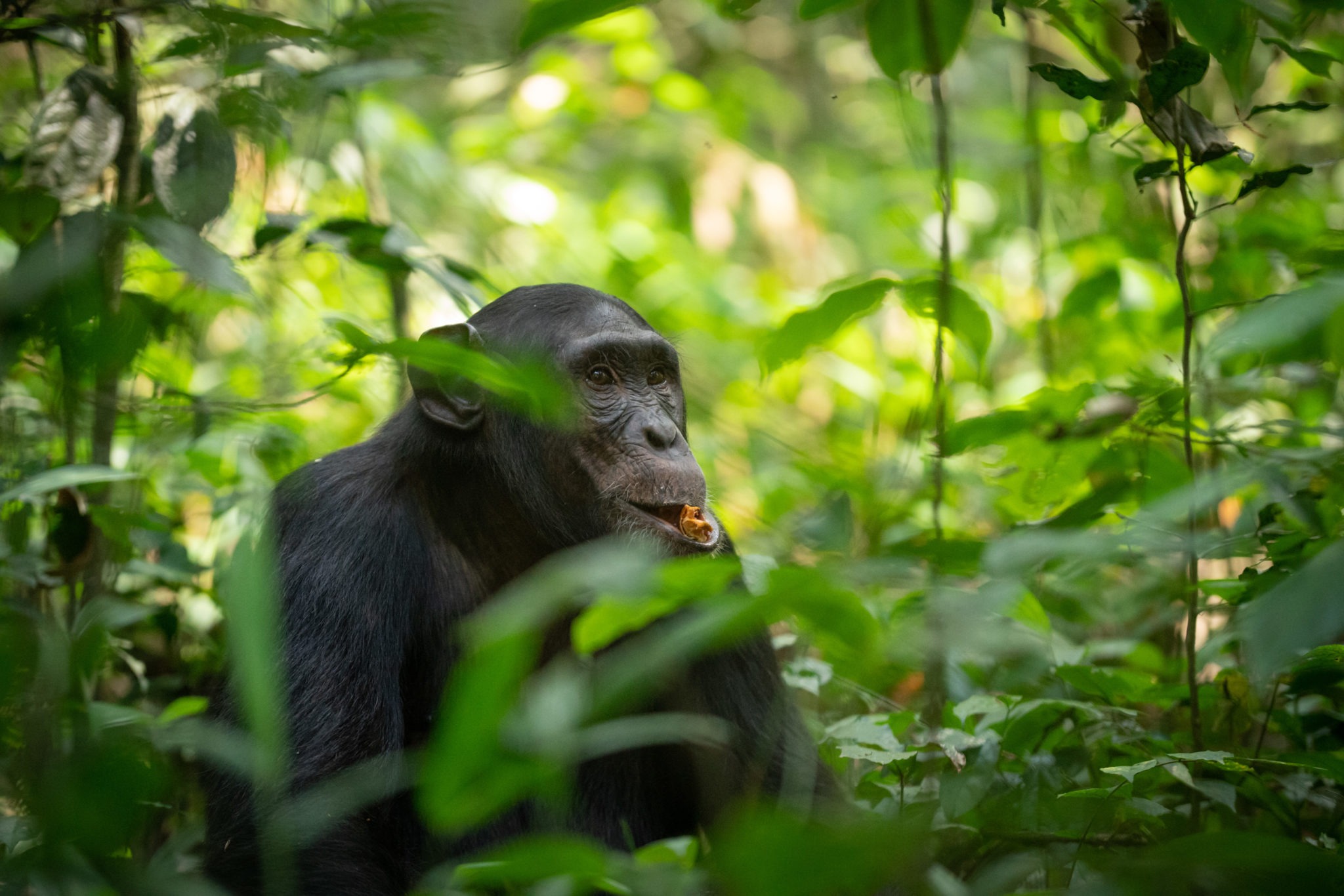
Chimpanzee in Nyungwe Forest National Park
Standard chimpanzee trekking permits at Nyungwe have risen in recent seasons and now sit somewhere in the 100 to 150 US dollar range for international visitors depending on the specific pricing period, still considerably below Uganda’s comparable Kibale fee and a small fraction of gorilla trekking’s cost, covering park entrance and the services of guides and trackers for whichever group you are assigned. Given how frequently these fees are revised, confirming the current rate directly with your operator before finalising a budget is worth doing rather than relying on any single published figure.
A Bird List Built on Isolation
Nyungwe’s status as an ancient, relatively isolated forest block has produced a genuinely strong concentration of Albertine Rift endemic species, birds found only within this specific ecological zone spanning parts of Rwanda, Uganda, Burundi, and the eastern Democratic Republic of Congo.
The Rwenzori turaco and handsome francolin are among the more sought-after sightings, and serious birders regularly extend their Nyungwe stay well beyond the single day most itineraries allocate for chimpanzee trekking alone.
Choosing a Trail Beyond the Headline Activities
| Trail | Length | Best For |
| Igishigishigi Trail | Short loop | The canopy walk itself |
| Bigugu Trail | Full day, demanding | Hikers wanting elevation and a longer day |
| Karamba Trail | Gentle, near Uwinka | A strong return on a shorter time commitment |
| Isumo Waterfall Trail | Moderate | A scenic, less strenuous forest walk |
Beyond Primates and Birds
Colobus monkey tracking, offering a chance to see troops of Rwenzori Angolan colobus that can number in the hundreds, with the park’s largest documented troop, sometimes described as a super troop, running past 400 individuals near Uwinka, and a second, smaller group of around fifty trackable from Gisakura.
Waterfall hikes and forest trails radiating from the Uwinka visitor centre, suited to travellers not trekking chimpanzees that day.
A tea factory visit at the working plantations ringing the park’s boundary, a short, low-effort cultural stop.
The Bigugu Trail, leading to the park’s highest point, for hikers wanting more elevation and a longer day.
The Habituation Experience
For travellers wanting more than the standard trek, Nyungwe offers a chimpanzee habituation experience, following researchers as they observe a community’s behaviour across an extended, full-day visit considerably less time-boxed than the standard one-hour encounter, typically capped at four visitors and centred on the Gisovu community in the park’s northern reaches. This is a specialised, higher-priced option best suited to travellers with a genuine research or behavioural interest rather than a default upgrade.
What to Pack
Sturdy, closed hiking boots, given genuinely muddy conditions on many trails regardless of season.
A rain jacket, since Nyungwe receives meaningful rainfall in every month of the year.
Binoculars, useful for both birding and canopy-level chimpanzee viewing.
Long sleeves and trousers, both for comfort against vegetation and insect protection.
Getting There and Getting Around
Nyungwe sits roughly four to five hours by road from Kigali, or a shorter flight to Kamembe airstrip followed by a brief onward transfer. The park’s three reception centres, Uwinka, Gisakura, and Kitabi, each serve different trails and, in the case of Gisakura, the Cyamudongo chimpanzee group specifically, so confirming which centre your planned activities depart from before booking accommodation is worth doing rather than assuming any single lodge covers everything conveniently.
Travellers assigned to the Gisovu community specifically should note that Kibuye, on Lake Kivu’s shore, is genuinely the most practical base, since the drive from Gisovu itself still runs close to an hour even once you’ve reached the general area.
When to Visit
| Season | Months | What to Expect |
| Dry Season | June – September, December – February | Firmer trails, the most comfortable window for the canopy walk and chimp trekking |
| Wet Season | March – May, October – November | Higher rainfall, though some guides suggest increased fig fruiting can actually improve chimpanzee sightings |
As genuine rainforest, Nyungwe receives meaningful rain in every month of the year, so no season here is truly dry in the way a savannah park’s dry season is. Pack accordingly regardless of when you travel.
Where to Stay
One&Only Nyungwe House, set directly among tea plantations at the forest edge, the park’s clear luxury standout.
Nyungwe Top View Hill Hotel, a comfortable mid-range choice with strong views over the surrounding hills.
Gisakura Guest House, a simple, budget-friendly option near the western reception area.
Activities to Do in the Park
Chimpanzee Trekking
Chimpanzee trekking is Nyungwe’s headline activity, tracking one of three habituated communities depending on which reception centre your visit is based from. Days begin early, generally by 4:30 to 5 a.m., with trackers already in the forest locating the group’s overnight nesting site before the main trekking party sets out.
Treks run two to four hours or more, with Cyamudongo adding a further hour of driving each way given its isolated location.
The Canopy Walk
Walking the canopy walk puts visitors at eye level with the forest’s upper layers, crossing a suspended steel bridge along the Igishigishigi Trail. The experience takes under an hour but offers a genuinely different vantage point than anything achievable from the forest floor, and is open to visitors as young as six.
Colobus Monkey Tracking
Colobus monkey tracking follows troops of Rwenzori Angolan colobus that can number in the hundreds, a striking sight when a large group moves together through the canopy. This activity is arranged separately from chimpanzee trekking and makes a strong addition for travellers with a second full day at the park.
Guided Forest Walks and Waterfall Hikes
Guided forest walks and waterfall hikes radiate out from the Uwinka visitor centre across a range of trail lengths and difficulties, from the gentle Karamba Trail to the considerably more demanding full-day Bigugu Trail leading to the park’s highest point.
These suit travellers not trekking chimpanzees on a given day, or those wanting a second activity beyond the headline primate encounter.
Birding
Birding throughout the park rewards visitors willing to move slowly and quietly along any of Nyungwe’s trails, with the highest concentration of Albertine Rift endemic species found near Uwinka. Serious birders often dedicate an entire extra day purely to working through the park’s list of over three hundred recorded species.
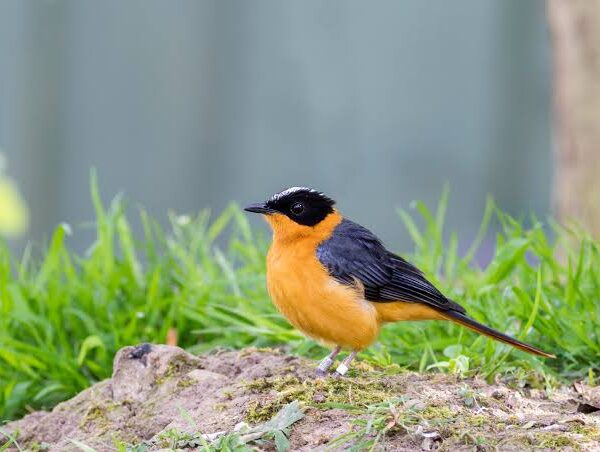
Birding in Nyungwe Forest National Park
Tea Factory Visits
A tea factory visit at one of the working plantations ringing the park’s boundary offers a low-effort, worthwhile cultural stop, explaining the processing methods behind an industry that shapes much of the local economy surrounding Nyungwe. Most lodges in the area can arrange this as a short add-on between forest activities.
Night Walks
Night walks, offered by a small number of operators, provide a chance to encounter nocturnal forest species rarely seen during standard daytime treks, though this remains a less commonly booked activity given the park’s primary focus on daytime chimpanzee tracking and the canopy walk.
Frequently Asked Questions
Is Nyungwe really one of Africa’s oldest forests?
By most scientific accounts, yes. Nyungwe is believed to have survived largely intact through the ice ages that reshaped much of the continent’s vegetation, making it one of the oldest continuously forested ecosystems in Africa.
Which chimpanzee group should I choose?
Cyamudongo offers the most reliable sighting given its small, confined forest fragment, though it requires an additional hour of driving each way. Uwinka is more central and convenient, with good but slightly less certain sightings, while Gisovu, the newest and least habituated group, carries the most uncertainty of the three.
Is the canopy walk safe for children?
Yes, it is open to visitors aged six and above, with safety harnessing and guide supervision throughout the walkway.
How does Nyungwe’s chimpanzee trekking cost compare to Uganda’s?
Current rates sit somewhere in the 100 to 150 US dollar range depending on the pricing period, still meaningfully below Uganda’s Kibale Forest National Park, which charges around 250 US dollars, though Kibale offers a somewhat higher overall sighting success rate given its larger, more established habituated community.
How many days should I spend at Nyungwe?
A minimum of two nights, given the park’s distance from Kigali, allows a chimpanzee trek and the canopy walk without feeling rushed. Serious birders often extend this further.
Can I combine Nyungwe with Lake Kivu?
Yes, easily. The lake’s southern shore sits roughly an hour to ninety minutes away, making it a natural, relaxed extension after forest-based activities.
Do I need a permit for the general forest walks, or only for chimpanzee trekking?
A general park entry fee applies even for travellers doing only the waterfall walks or shorter trails, separate from the chimpanzee trekking permit, though it is considerably more modest.