
Gishwati–Mukura National Park
Look at a map of Rwanda’s protected forests and a pattern becomes obvious: Volcanoes National Park sits in the north, Nyungwe stretches across the southwest, and between them, along the Congo-Nile Divide, was once a single, unbroken band of rainforest connecting the two.
That connecting forest, Gishwati, lost more than ninety percent of its cover to agriculture and grazing in the decades following Rwanda’s 1994 genocide, when large-scale resettlement pushed deep into land that had previously been protected. Gishwati-Mukura National Park, gazetted in 2016 and opened to tourism only in 2019, is Rwanda’s attempt to rebuild a fragment of that missing middle.
We think this framing matters more than any list of activities the park offers, because Gishwati-Mukura is genuinely different from Rwanda’s other three parks in what it represents: not a long-protected wilderness but an active, ongoing restoration project, still young enough that visiting it feels more like watching a recovery in progress than touring a finished conservation success story.
It also occupies a genuinely useful place on the map for travellers building a broader itinerary, since it sits almost exactly on the road between Volcanoes National Park in the north and Lake Kivu’s shoreline further south, making it one of the easier parks in the country to fold into an existing route rather than a destination requiring its own dedicated detour.
What Was Lost, and What Is Being Rebuilt
By the early 2000s, Gishwati Forest had shrunk from a substantial tract of rainforest, once estimated at around 250,000 acres, to a small, isolated remnant of little more than 1,500 acres, taking its resident chimpanzee population down to as few as thirteen individuals: a partnership between the Rwandan government, the Forest of Hope Association, and Wilderness Safaris has since stabilised the forest and allowed the chimpanzee population to grow to an estimated twenty to thirty-five individuals today, depending on the specific count cited, still a fraction of what the forest likely once supported, but a genuine recovery from the brink.
The park itself is split into two sections, the larger Gishwati Forest, currently the only part developed for tourism, and the smaller Mukura Forest, still in earlier stages of trail and infrastructure development and closed to general visitors for the time being. At just 34 square kilometres combined, not counting the surrounding buffer zone, this is Rwanda’s smallest national park by a considerable margin.
Setting Honest Expectations for Chimpanzee Tracking
The single most important thing to understand before booking a visit here is that Gishwati-Mukura’s chimpanzees are considerably less habituated than the well-established communities at Nyungwe or Uganda’s Kibale.
Sightings are possible, genuinely possible, but they require more patience and carry a real chance of a shorter or less certain encounter than a traveller accustomed to Nyungwe’s more predictable tracking might expect. We tell every client this directly, since arriving with accurate expectations is what makes the experience here rewarding rather than disappointing.
Interestingly, some local guides suggest the wetter months actually improve the odds, since increased food availability across the forest during the rains tends to keep chimpanzees more localised rather than ranging widely in search of fruit, a genuine exception to the usual dry-season preference that governs most wildlife tracking in the region.
There’s also a genuine upside to the lower habituation level that’s worth naming honestly: because so few visitors come here relative to Nyungwe, a successful sighting tends to feel considerably more private and unhurried, without the sense of sharing the moment with several other trekking groups that can sometimes accompany a Nyungwe or Kibale visit during busier periods.
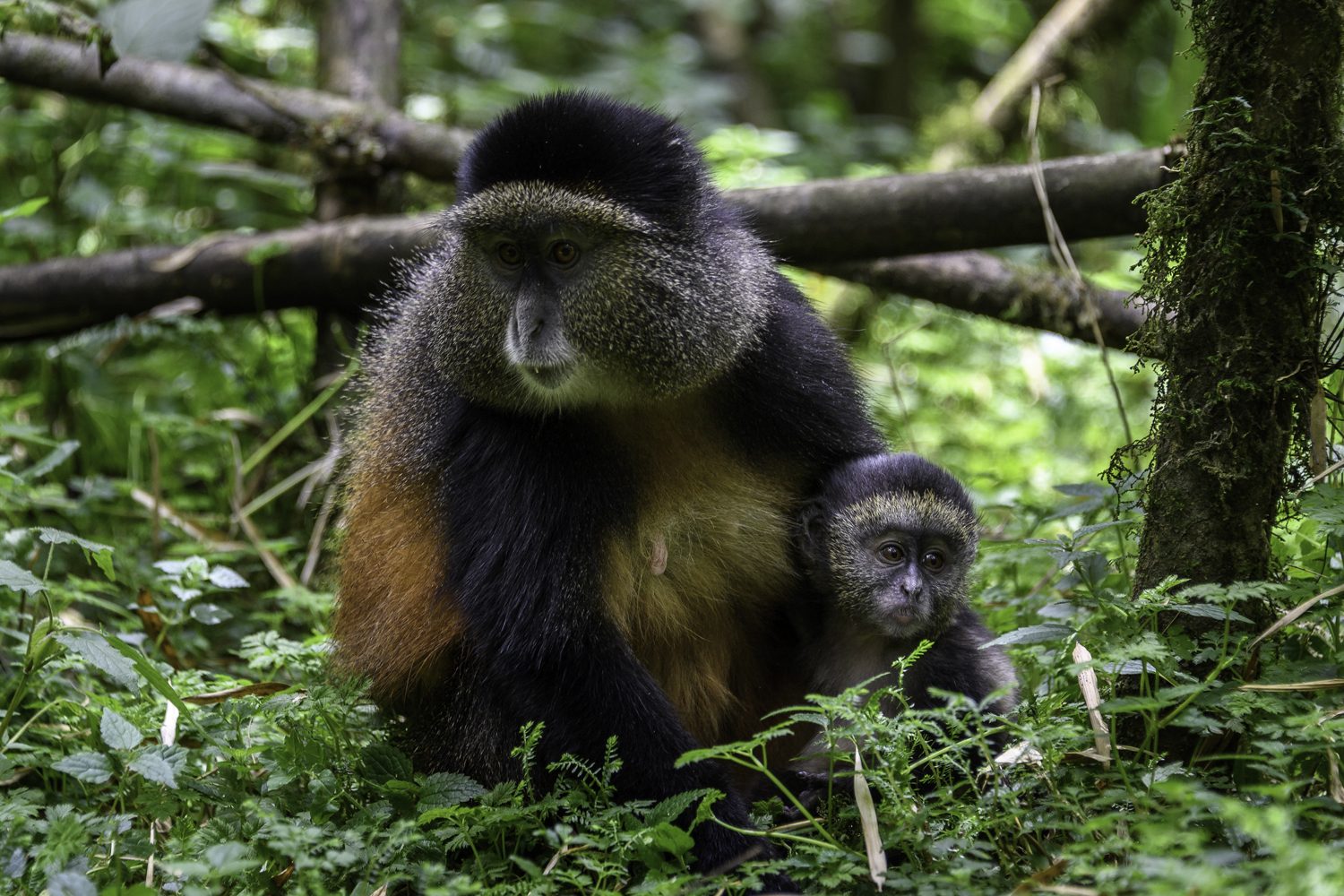
Golden Monkey in Gishwati National Park
Golden Monkeys and a Forest Still Finding Its Feet
Beyond chimpanzees, Gishwati-Mukura is one of only a handful of places on the continent offering golden monkey trekking, alongside Volcanoes National Park in Rwanda and Mgahinga in Uganda, and hosts resident L’Hoest’s monkeys, blue monkeys, and black-and-white colobus.
Despite its small size, the Gishwati section has recorded over 230 bird species, a genuinely strong list that benefits from the park’s compact scale, concentrating species within an area far smaller than Nyungwe’s considerably larger forest block. The neighbouring Mukura Forest, though not yet open to general tourism, has itself recorded over 160 bird species according to preliminary surveys, suggesting that once trail infrastructure there catches up with Gishwati’s, the park’s combined birding potential could grow meaningfully.
When to Visit
| Season | Months | What to Expect |
| Dry Season | June – August, December – February | Firmer trekking trails, generally the more comfortable window |
| Wet Season | March – May, September – November | Higher rainfall, though possibly improved chimp tracking given increased food availability |
Budgeting for a Visit
Costs here are considerably lower than Rwanda’s other primate destinations. As of recent seasons, chimpanzee tracking at Gishwati-Mukura is oriented significantly toward supporting ongoing research and carries no fixed permit price in the way Nyungwe or Volcanoes National Park does, though this should always be confirmed directly with the Rwanda Development Board or your operator given how young this park’s tourism programme remains and how frequently its pricing structure is still being refined as visitor numbers grow.
Three Trails Worth Knowing
| Trail | Length | Highlight |
| Umushwati Trail | 8 km | The main route through the heart of the forest |
| Waterfall Trail | 7 km | Starts near the Forest of Hope Guest House |
| Matyazo Hill Trail | 3 km | Leads to the park’s highest point at 2,469 metres |
Who Manages the Recovery
Gishwati-Mukura’s restoration involves a genuinely collaborative structure uncommon even by regional conservation standards: the Rwanda Development Board holds overall national park authority, the Forest of Hope Association leads replanting and ecological restoration within Gishwati Forest itself, and Wilderness Safaris manages tourism operations.
This division reflects a reality worth understanding before visiting, that this park’s recovery is as much a landscape restoration and community development project as a conventional wildlife conservation effort.
This model differs meaningfully from Akagera’s African Parks partnership or Volcanoes National Park’s more centralised government management, and it’s worth understanding why: Gishwati-Mukura’s core challenge was never poaching in the way Akagera’s was, but land conversion and deforestation driven by genuine human need in the aftermath of genocide and displacement.
Addressing that root cause required a conservation model built as much around replanting, community development and alternative livelihoods as around anti-poaching enforcement, which is precisely why the Forest of Hope Association’s ecological restoration work sits at the centre of the partnership rather than at its periphery.
A Community Rebuilding Alongside the Forest
A meaningful share of Gishwati-Mukura’s tourism revenue supports programmes helping neighbouring communities move away from the agricultural encroachment that originally devastated the forest, including craft cooperatives and small-scale ecotourism ventures.
Community-based activities, handcraft demonstrations, traditional dance, arranged alongside a forest walk, offer genuine insight into how conservation and local livelihoods are being rebuilt in tandem here, rather than one at the expense of the other.
Where the Park Sits
Gishwati-Mukura sits in western Rwanda along the Congo-Nile Divide, roughly two hours by road from Kigali and just forty minutes from Rubavu on Lake Kivu’s northern shore. Given its position roughly midway between Volcanoes National Park and Lake Kivu, it works best as an addition for travellers already driving that route rather than a dedicated standalone destination.
Accommodation Options
Forest of Hope Guest House, the primary option directly at the park, simple but well positioned for early tracking departures.
A range of guesthouses and lodges in Rubavu, roughly forty minutes away, offering considerably more choice across every budget tier.
Activities to Do in the Park
Chimpanzee Tracking
Chimpanzee tracking is the park’s signature activity, beginning early morning with a briefing at park headquarters before rangers lead the search into the Gishwati Forest section. Given the population’s lower level of habituation, treks can run four hours or more, and visitors should approach the activity with patience rather than an expectation of a quick, guaranteed sighting.
Golden Monkey Tracking
Golden monkey tracking offers a worthwhile complement, though with less certainty than the well-established troops at Volcanoes National Park. This activity is typically arranged alongside chimpanzee tracking for travellers wanting to maximise their primate encounters during a single visit.
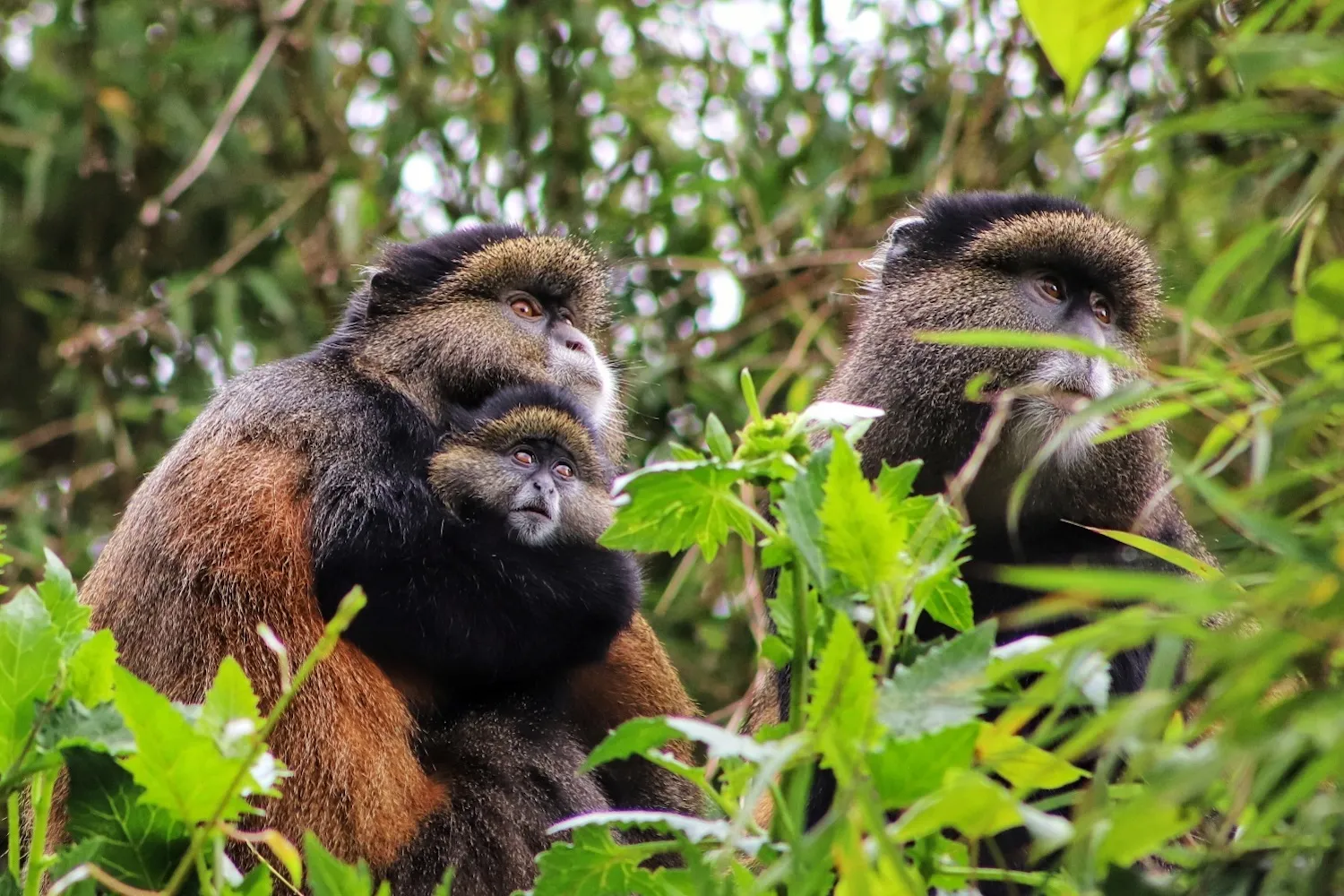
Golden Monkey Tracking
Hiking the Umushwati Trail
This eight-kilometre route through the heart of the forest gives the most complete sense of Gishwati’s recovering ecosystem, passing through varied vegetation as the trail winds toward the forest’s interior. This is generally the most popular of the park’s three established trails.
Walking the Waterfall Trail
A seven-kilometre route starting near the Forest of Hope Guest House, this trail leads to a scenic cascade within the forest, a rewarding half-day option for visitors not undertaking a full chimpanzee trek that day.
Climbing Matyazo Hill
A shorter three-kilometre trail brings visitors to the park’s highest point at 2,469 metres, with views extending across the surrounding Congo-Nile Divide landscape on clear days, a worthwhile add-on given its relatively modest time commitment.
Birding
Birding across the Gishwati section rewards visitors with a genuinely strong list for such a small park, over 230 recorded species concentrated within an area far more compact than Nyungwe’s considerably larger forest, making species easier to track down within a single day.
Community-Based Cultural Activities
These activities, including handcraft cooperative visits and traditional dance performances, are arranged in partnership with neighbouring villages and offer insight into how local livelihoods are being rebuilt alongside the forest itself, a genuine complement to the park’s wildlife-focused activities.
Guided Nature Walks
Walks focused purely on flora and forest ecology, rather than wildlife tracking specifically, are available for visitors more interested in the restoration story itself, covering the replanting efforts led by the Forest of Hope Association and the visible contrast between recovering and still-degraded sections of the forest.
Frequently Asked Questions
Why is Gishwati-Mukura Rwanda’s newest national park?
The forest lost more than ninety percent of its cover to agricultural encroachment following Rwanda’s 1994 genocide and subsequent resettlement, and was only gazetted as a national park in 2016, with tourism beginning in 2019, once restoration efforts had progressed sufficiently.
Are the chimpanzees here reliably seen?
Less reliably than at Nyungwe or Uganda’s Kibale, given the population’s considerably lower level of habituation. Sightings are genuinely possible but require more patience than at Rwanda’s more established chimpanzee trekking sites.
Is Mukura Forest open to visitors?
Not yet. Only the larger Gishwati Forest section is currently developed for tourism, with Mukura still in earlier stages of trail development, though preliminary bird surveys there have already recorded over 160 species.
Can I see golden monkeys here?
Yes, though with less certainty than at Volcanoes National Park, given the differing habituation levels between the two locations.
How does the wet season affect chimpanzee tracking here?
Somewhat counterintuitively, some guides report improved sightings during the wetter months, when increased food availability keeps chimpanzees more localised rather than ranging widely.
Should this be part of a first Rwanda itinerary?
For most first-time visitors, Volcanoes National Park, Nyungwe, and Akagera deliver more value per day spent. Gishwati-Mukura suits travellers with extra time, a genuine conservation interest, or those already travelling the Lake Kivu shoreline route.
What activities are available beyond chimpanzee and golden monkey tracking?
Three established hiking trails, birding across the compact Gishwati section, and community-based cultural activities round out the park’s offering for visitors not solely focused on primate tracking.