
Ngorongoro Conservation Area
Ngorongoro suits nearly every safari traveller, given how efficiently the crater delivers concentrated wildlife viewing within a single day’s descent: the crater floor holds one of Africa’s highest densities of lions, alongside the rare chance of seeing black rhino, one of the few reliable locations in East Africa for this species outside a dedicated sanctuary.
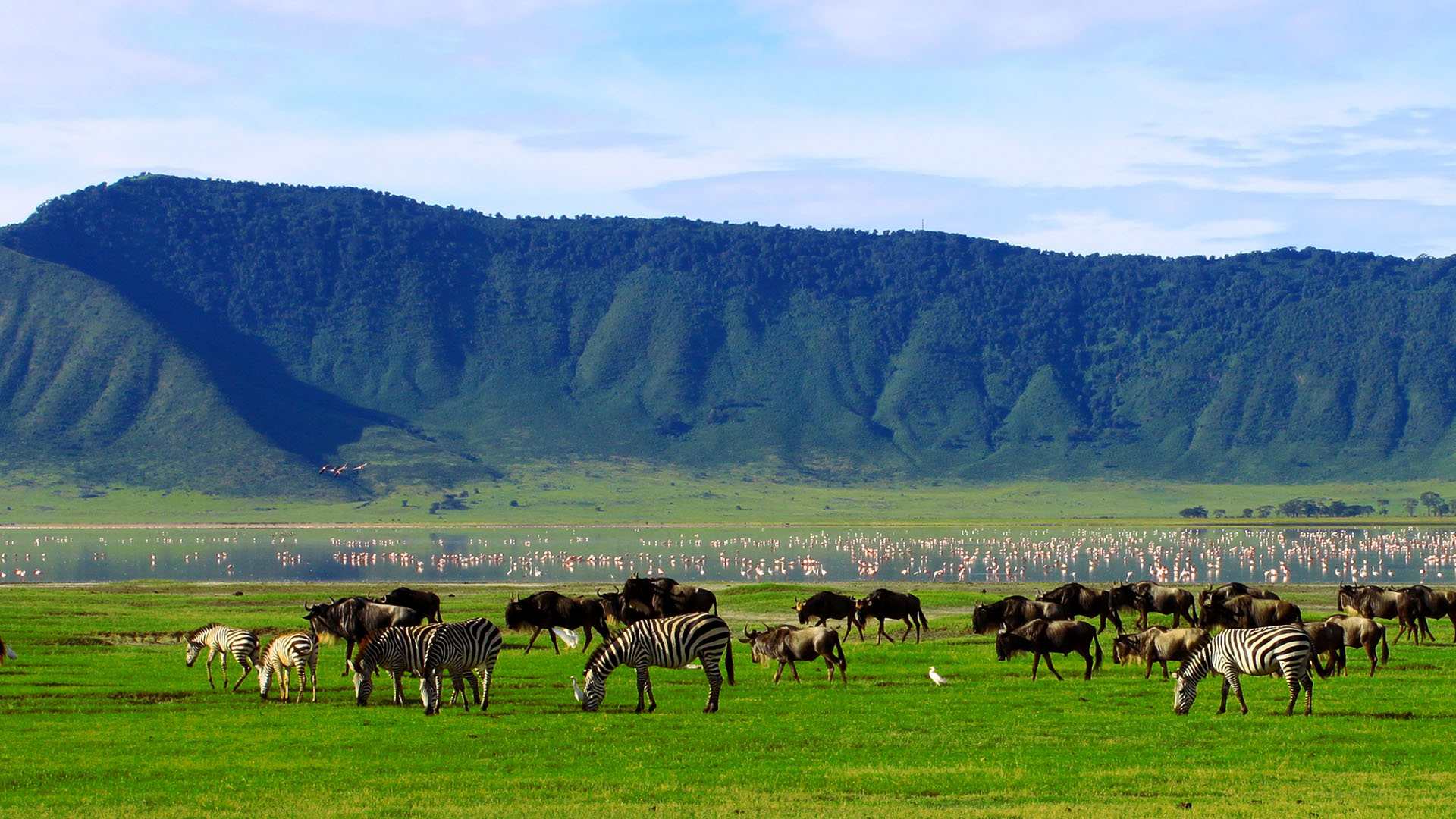
Because the crater’s steep walls contain most resident wildlife year-round, sightings here are considerably more predictable than the migration-dependent excitement of neighboring Serengeti.
The honest trade-off is crowding. The crater floor’s limited road network concentrates vehicles around major sightings, particularly during peak season, a genuine contrast to Serengeti’s vast open plains, where vehicles spread out naturally.
We are direct with clients that Ngorongoro delivers density and near-certainty rather than the sense of untouched wilderness some safari travellers specifically seek.
Why Ngorongoro Matters
The Big Five in One Bowl
Ngorongoro is one of the few places in East Africa where sighting all Big Five species in a single day is a realistic goal, given the crater’s compact size and healthy black rhino population alongside lion, elephants, buffalo, and leopards.
This concentration is precisely why the crater descent commands its own substantial vehicle fee separate from general conservation area entry.
Olduvai Gorge
Within the wider conservation area, Olduvai Gorge holds some of the most significant paleoanthropological discoveries on earth, including early hominid fossils and footprints dating back nearly two million years, unearthed by Louis and Mary Leakey.
A stop at the site museum, typically built into the road journey between Ngorongoro and Serengeti, adds a genuinely different dimension to a wildlife-focused itinerary.
A Living Maasai Landscape
Unlike a conventional national park that excludes human habitation, Ngorongoro’s highlands are home to Maasai communities continuing traditional cattle-herding life alongside the conservation area’s wildlife protections, a genuinely rare model of coexistence that shapes the cultural texture of a visit here well beyond the crater floor itself.
The Highlands Beyond the Crater
The wider conservation area extends well beyond the crater itself, encompassing the Ngorongoro Highlands, Empakaai Crater, a smaller, less-visited caldera with its own soda lake, and Olmoti Crater, both offering considerably quieter hiking and camping options for travelers with extra time and a specific interest in the area’s volcanic geology beyond the main crater floor.
A Note on the Conservation Area’s Ongoing Debates
Ngorongoro’s multiple land-use model has faced real strain in recent years as both the Maasai population and wildlife numbers have grown within a fixed area, generating genuine policy debate within Tanzania about resettlement and land allocation.
We mention this not to editorialize but because informed travelers sometimes ask about it, and the honest answer is that this remains an active, evolving conversation rather than a settled matter.
Activities to Do in the Park
The Crater Descent
Descending into the crater for a game drive is the area’s central activity, typically a full-day outing given the steep access road and the sheer density of wildlife worth stopping for once on the floor. Vehicles descend early morning to make the most of cooler temperatures and active predators before the midday heat settles over the grassland and soda lake at the crater’s center.
Olduvai Gorge
Generally built into the road transfer between Ngorongoro and Serengeti, a visit here offers a stop at the site museum covering the Leakeys’ fossil discoveries and the broader story of human evolutionary origins in this specific stretch of the Rift Valley.
Maasai Village Visits
A guided visit near the crater rim offers insight into pastoralist life within the conservation area, typically including a walk through a traditional boma, a demonstration of traditional dance, and the chance to purchase beadwork directly from the community.
Crater Rim Walks
Arranged through certain lodges, rim walks offer views down into the caldera without the vehicle descent, along with birdwatching among the highland forest species that inhabit the rim’s cooler, wetter microclimate.
Lake Magadi
The crater’s central soda lake often reveals large flamingo flocks feeding on the lake’s algae, a striking visual complement to the mammal sightings that dominate most crater game drives.
Cultural and Craft Centers
Community-run centers near the conservation area’s entrance gates offer a lower-cost, shorter alternative to a full village visit, suited to travelers with limited time before or after their crater descent.
Budgeting for Ngorongoro
Ngorongoro is managed separately from Tanzania’s other national parks by the Ngorongoro Conservation Area Authority (NCAA) rather than TANAPA, which is worth knowing since it means Ngorongoro’s fee structure and its ticketing system, is entirely distinct from parks like Serengeti or Tarangire, even though many itineraries visit both in the same trip.
| Fee Type | Approx. Cost | Notes |
| Conservation area entry (non-resident) | ~US$70.80 per person, 24 hours | Excludes crater descent fee; VAT included |
| Crater descent (service fee) | US$295 per vehicle | Charged per descent, not per person |
| Transit fee (through to Serengeti) | ~US$70.80 per adult per crossing | Applies if passing through without stopping |
When to Visit
Ngorongoro’s altitude and self-contained ecosystem make it considerably less seasonal than Serengeti’s migration-dependent excitement. The crater holds resident wildlife year-round, though the dry season, June to October, offers the clearest roads and easiest access, while the wetter months bring cooler temperatures at altitude and lush, green crater floor scenery.
Where to Stay
Crater rim lodges, offering dramatic views down into the caldera, are generally the most premium accommodation tier given the location’s exclusivity.
Highland lodges further from the rim, offering strong value with a slightly longer transfer to the descent road.
Karatu town accommodation, a more budget-friendly base roughly forty-five minutes from the conservation area gate.
Frequently Asked Questions
Can I see all of the Big Five in Ngorongoro Crater?
Yes, this is one of the few places in East Africa where a single day’s crater descent realistically offers a chance at all five species, given the crater’s compact size and resident black rhino population.
How much does the crater descent cost?
A separate service fee of approximately 295 US dollars per vehicle, charged per descent, on top of standard conservation area entry fees.
Do Maasai people really live inside the conservation area?
Yes, Ngorongoro operates under a multiple land-use model allowing Maasai pastoralist communities to continue traditional life within the conservation area’s boundaries alongside wildlife protection, a genuinely unusual arrangement in African conservation.
Is Ngorongoro crowded?
The crater floor’s limited road network does concentrate vehicles around major sightings, particularly in peak season, a real contrast to Serengeti’s more spread-out plains.
How does Ngorongoro compare to Serengeti?
Ngorongoro offers a compact, walled ecosystem with extremely high, predictable wildlife density in a single day’s visit. Serengeti offers considerably more space and the migration’s seasonal spectacle, at the cost of a less concentrated, less guaranteed daily experience.
Can I visit Olduvai Gorge on the same trip?
Yes, it sits directly on the road between Ngorongoro and Serengeti and is commonly included as a stop during that transfer.
Are Empakaai and Olmoti Craters worth visiting?
For travellers with extra time and an interest in quieter, less-visited volcanic scenery, yes. Both offer hiking options considerably less crowded than the main crater floor, though they require additional time and are not part of a standard Ngorongoro itinerary.
Why is Ngorongoro managed differently from Tanzania’s other parks?
Because it operates under a multiple land-use model permitting Maasai habitation, it falls under the separate Ngorongoro Conservation Area Authority rather than the Tanzania National Parks Authority (TANAPA), which is why its fees and permits are ticketed independently even on a combined itinerary.