Mount Kilimanjaro National Park
Kilimanjaro suits reasonably fit travellers willing to commit to a longer itinerary and genuinely follow their guide’s pacing, rather than those seeking the shortest, cheapest route to the summit: the data here is unusually clear.
The five-day Marangu route reports success rates around 27 to 50 percent depending on the operator, while the eight-day Lemosho or nine-day Northern Circuit report 90 percent or higher. An averagely fit 55-year-old on an eight-day itinerary has a meaningfully better chance of summiting than a trained athlete rushing a five-day climb, because acclimatisation time, not raw fitness, is what determines success at this altitude.
We are direct with clients that choosing the shortest, least expensive itinerary specifically to save money is usually a false economy, since a failed summit attempt wastes the cost of the climb without delivering its actual goal. Adding two or three extra days to a route meaningfully changes your odds and, for most travellers, is worth the additional expense.
Choosing a Route
| Route | Typical Duration | Approx. Success Rate | Character |
| Marangu | 5 – 6 days | 27 – 65% | Only route with hut accommodation, gentlest gradient, no climb-high-sleep-low day |
| Machame | 6 – 7 days | 65 – 90% | Most popular route, scenic, includes the Barranco Wall scramble |
| Lemosho | 7 – 8 days | 85 – 90%+ | Considered the best balance of scenery, quieter trails, and success rate |
| Rongai | 6 – 7 days | 60 – 80% | Approaches from the drier northern side, good for wetter months |
| Northern Circuit | 9 days | 90 – 98% | Longest route, best acclimatisation, circles the mountain’s northern side |
| Umbwe | 6 – 7 days | 60 – 70%, steep | Direct, technically undemanding but physically taxing, for experienced hikers |
Marangu is often marketed as the easier option given its hut accommodation, but its shorter standard itinerary and lack of a built-in acclimatisation day actually give it one of the lowest success rates on the mountain. Lemosho and the Northern Circuit consistently perform best precisely because their extra days allow the climb-high-sleep-low pattern that meaningfully improves the body’s altitude adaptation.
Mount Kilimanjaro National Park
Why Kilimanjaro Matters
Five Climate Zones in One Climb
Kilimanjaro’s routes pass through cultivated farmland, montane rainforest, heather and moorland, alpine desert, and finally an arctic summit zone, a vertical journey through climate zones that would otherwise require travelling from the equator to the poles. Few treks anywhere compress this much ecological variety into a single, continuous route.
Africa’s Highest Point, No Technical Skill Required
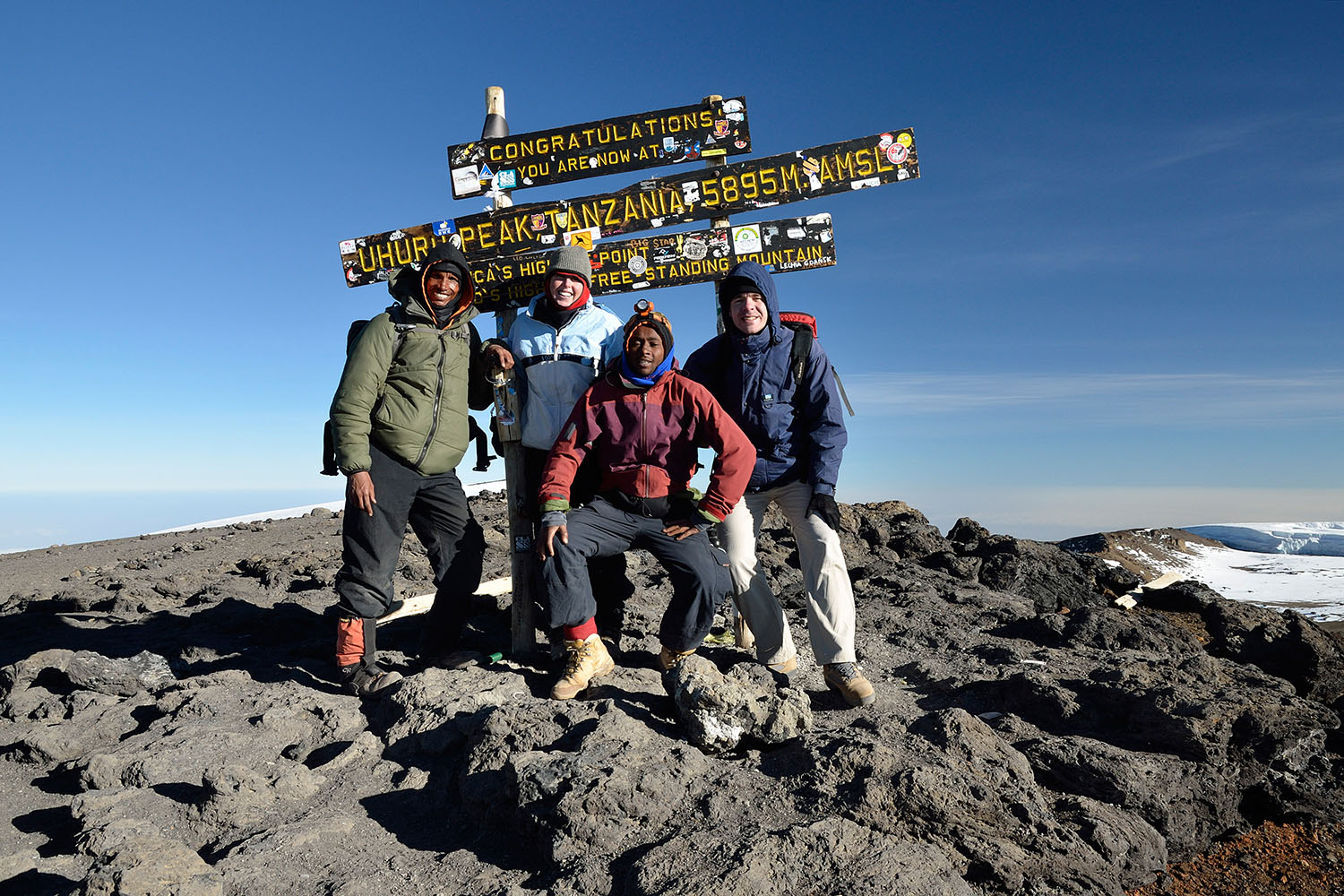
Unlike many of the world’s highest peaks, Kilimanjaro’s standard routes involve no glacier travel, no ropes, and no technical climbing, making the summit genuinely achievable for prepared hikers rather than restricted to experienced mountaineers, which is precisely why it draws climbers of such varied backgrounds and ages each year.
Activities to Do in the Park
Summit Trekking
Kilimanjaro National Park’s central and, for most visitors, only activity, a multi-day expedition along one of six or seven established routes culminating in a midnight to early morning summit push timed to reach Uhuru Peak around sunrise before the day’s heat and cloud cover set in.
Acclimatisation Day Hikes
Built into longer itineraries like Lemosho and the Northern Circuit, these send climbers to a higher elevation during the day before returning to sleep at a lower camp, the climb-high-sleep-low technique that meaningfully improves the body’s adaptation to reduced oxygen at altitude.
Lower-Slope Day Hikes
Without a summit attempt, day hikes on the mountain’s lower slopes are available for travellers wanting to experience the rainforest and lower moorland zones without committing to a multi-day expedition, typically arranged as a shorter, standalone excursion from a nearby lodge.
Wildlife Spotting
Through the lower rainforest zone, particularly on routes like Machame and Lemosho, occasional sightings of blue monkey, colobus, and a strong range of forest birds provide an unexpected complement to what most travellers assume will be a purely mountaineering-focused trip.
Photography
Throughout the climb, photography rewards travellers at every elevation, from the rainforest’s dense green canopy to the moorland’s giant lobelias and groundsels, through to the stark volcanic scree and glacial remnants near the summit itself.
Summit Night: What Actually Happens
Regardless of route, summit night follows a broadly similar pattern: climbers depart the final high camp around midnight, pushing through six to eight hours of steep, switchbacking trail in below-freezing temperatures and darkness lit only by headlamps, aiming to reach the crater rim, and then Uhuru Peak itself, around sunrise. This is universally described as the hardest single stretch of the climb, considerably more demanding than any prior day, and is where the cumulative effect of proper acclimatisation becomes most apparent.
Where the Mountain Sits
Kilimanjaro National Park sits roughly 45 kilometres from Moshi town and 75 kilometres from Arusha, with the various routes approaching from different sides of the mountain. Lemosho and the Northern Circuit begin at Londorossi Gate in the west, Machame and Umbwe at Machame Gate in the southwest, Marangu at Marangu Gate in the east, and Rongai at Nalemoru Gate in the north, near the Kenyan border.
When to Climb
| Season | Months | What to Expect |
| Dry Season | January – March, June – October | The most stable weather and clearest summit visibility, July-August is peak season |
| Wetter Months | April – May, November | Southern routes considerably wetter; Rongai’s northern rain shadow performs comparatively better |
Budgeting for a Climb
Park fees form a substantial part of any Kilimanjaro climb’s total cost. The baseline conservation fee for entering Kilimanjaro National Park runs at approximately 70 to 82.60 US dollars per person per day depending on the specific tariff schedule quoted, layered with separate camping fees, hut fees on the Marangu route, and rescue fees, on top of guide and porter costs.
Over a standard 7-day route, park fees alone typically add up to a substantial four-figure sum before guiding and equipment costs are added. Total climb costs vary considerably by route length and operator quality, generally running from around 1,600 to 2,000 US dollars for a shorter, more basic Marangu package to 2,500 to 4,000 US dollars or more for a longer, better-supported Lemosho or Northern Circuit expedition.
What to Pack
Layered clothing spanning warm-weather trekking gear through to genuinely sub-zero summit night clothing, given the climb’s dramatic temperature range.
A four-season sleeping bag rated for well below freezing, essential for the colder high-altitude camps.
Trekking poles, which meaningfully reduce strain on descent regardless of route choice.
Diamox or an equivalent altitude sickness medication, discussed in advance with a travel health provider rather than sourced last minute.
Frequently Asked Questions
Do I need climbing experience to summit Kilimanjaro?
No. The standard routes require no technical climbing skill, ropes, or prior mountaineering experience, only sustained fitness and proper acclimatisation.
Which route has the highest success rate?
The nine-day Northern Circuit and eight-day Lemosho routes report the highest success rates, generally 90 percent or above, given their longer acclimatisation schedules.
Is the five-day Marangu route a good choice for beginners?
Not necessarily. Despite its hut accommodation and gentler gradient, Marangu’s shorter standard itinerary and lack of a built-in acclimatisation day give it one of the lowest success rates of any route, around 27 to 50 percent with most operators.
What is the best time of year to climb?
January to March and June to October offer the most stable weather, with July and August representing peak season. The Rongai route’s northern rain shadow makes it a reasonable option even during the wetter April-May and November period.
How physically fit do I need to be?
Reasonable cardiovascular fitness helps, but acclimatisation time matters more than raw fitness. Data consistently shows an averagely fit climber on a longer itinerary outperforming a highly fit climber on a rushed, shorter route.
How much does it cost to climb Kilimanjaro?
Total costs generally range from around 1,600 to 2,000 US dollars for a shorter, basic Marangu package to 2,500 to 4,000 US dollars or more for a longer, well-supported Lemosho or Northern Circuit expedition, given the layered park, camping, and guiding fees involved.
Does the operator I choose actually affect my summit odds?
Yes, significantly. Experienced operators with well-trained guides, proper acclimatisation pacing, and honest turnaround protocols consistently report meaningfully higher success rates than budget operators cutting corners on itinerary length or guide-to-climber ratios.