
Arusha National Park
Arusha National Park is located close enough to Arusha town, roughly thirty minutes by road, that it gets treated by a surprising number of itineraries as barely worth a mention, a park to glance at from the plane window on the way to somewhere bigger.
That is a genuine oversight. Within a single, compact protected area, Arusha holds the Momella Lakes’ flamingo flocks, Ngurdoto Crater’s steep-walled buffalo and warthog habitat, and Mount Meru, Tanzania’s second-highest peak, all reachable within an easy day trip or a highly worthwhile pre-safari or pre-Kilimanjaro stop.
What sets Arusha apart from Tanzania’s larger, more famous parks is a single, genuinely rare permission: canoeing directly among hippo and waterbirds on the Momella Lakes, one of the only places in East Africa where paddling this close to genuine wildlife is allowed at all.
Combined with walking safaris permitted across much of the park given the low density of dangerous predators, Arusha offers an activity variety that its larger neighbours, built around vehicle-based game drives, simply cannot match.
Should You Visit Arusha National Park?
Arusha suits travellers with a spare day before or after a Kilimanjaro climb or northern safari circuit, and those specifically wanting walking and canoe-based activities rather than vehicle-only game viewing: the park’s proximity to Arusha town and Kilimanjaro International Airport makes it one of the most logistically convenient additions to a wider itinerary, requiring minimal extra transfer time for a genuinely different set of activities.
The honest trade-off is scale. Arusha’s wildlife density and species list do not match Tarangire or Serengeti, and big cat sightings here are considerably less reliable. We position it clearly to clients as a strong complementary stop, not a substitute for the larger parks further along a northern Tanzania circuit.
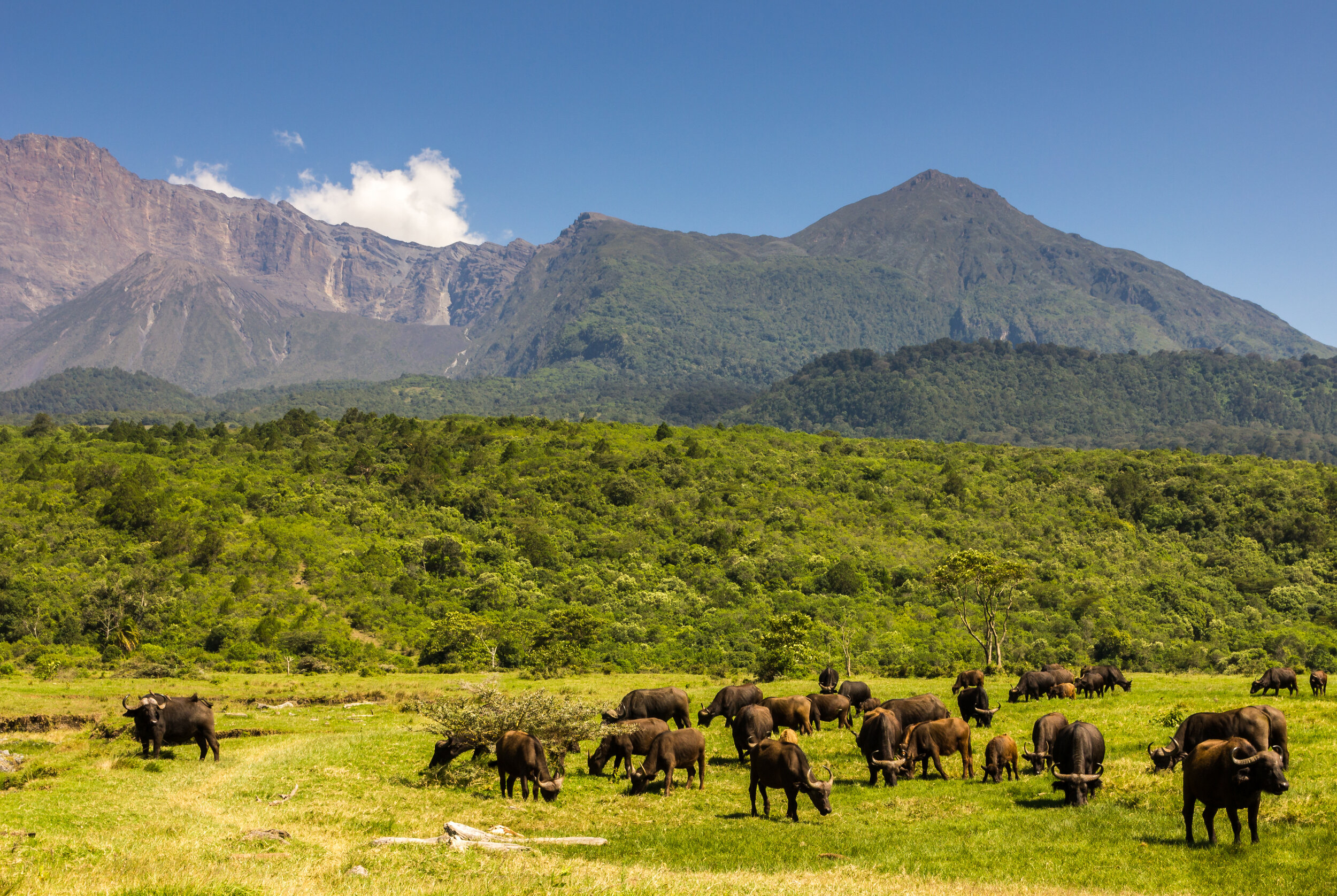
Buffalo
Why Arusha National Park Matters
The Momella Lakes
A chain of shallow alkaline lakes on the park’s eastern side regularly draws large flamingo flocks alongside pelicans, herons, and a strong wider waterbird population, all set against the dramatic backdrop of Mount Meru rising directly behind the water.
Ngurdoto Crater
Sometimes described as a miniature Ngorongoro, this steep-walled crater holds buffalo and warthog on its floor, viewable from rim vantage points rather than a vehicle descent, since the crater floor itself is closed to game drives to protect its contained ecosystem.
Mount Meru
Tanzania’s second-highest peak at 4,562 metres offers a considerably quieter, less crowded climbing alternative to Kilimanjaro, typically completed as a three to four day trek, and frequently used by climbers as deliberate altitude preparation before a subsequent Kilimanjaro attempt.
Activities to Do in the Park
Canoeing on the Momella Lakes
A genuinely rare East African activity, canoeing here means paddling within close range of hippo pods and wading birds from water level, an experience unavailable at almost any other major park in the region given the dangerous game restrictions that apply elsewhere.
Walking Safaris
Across much of the park, guided by an armed ranger, walking safaris take advantage of Arusha’s comparatively low density of dangerous predators, allowing a genuinely immersive, slower-paced exploration of the forest and grassland that a vehicle-based drive cannot replicate.
Climbing Mount Meru
Typically a three to four day round trip via Momella Gate, the climb rewards trekkers with considerably quieter trails than Kilimanjaro and views across to Kilimanjaro itself on clear days from the summit ridge.
Game Drives
Through the park’s grassland and forest areas, drives reveal giraffe, buffalo, and substantial troops of black-and-white colobus monkey, a species seen with unusual ease and frequency here relative to other northern Tanzania parks.
Ngurdoto Crater Viewpoints
Viewing the crater from its rim vantage points offers a scenic stop combining crater geology with buffalo and warthog viewing on the closed-off floor below, a short but worthwhile addition to a half-day circuit.
Birdwatching
Throughout the park’s varied habitat, montane forest, grassland, and lakeshore, birding rewards visitors with a genuinely strong list given the park’s habitat diversity packed into a relatively small area.
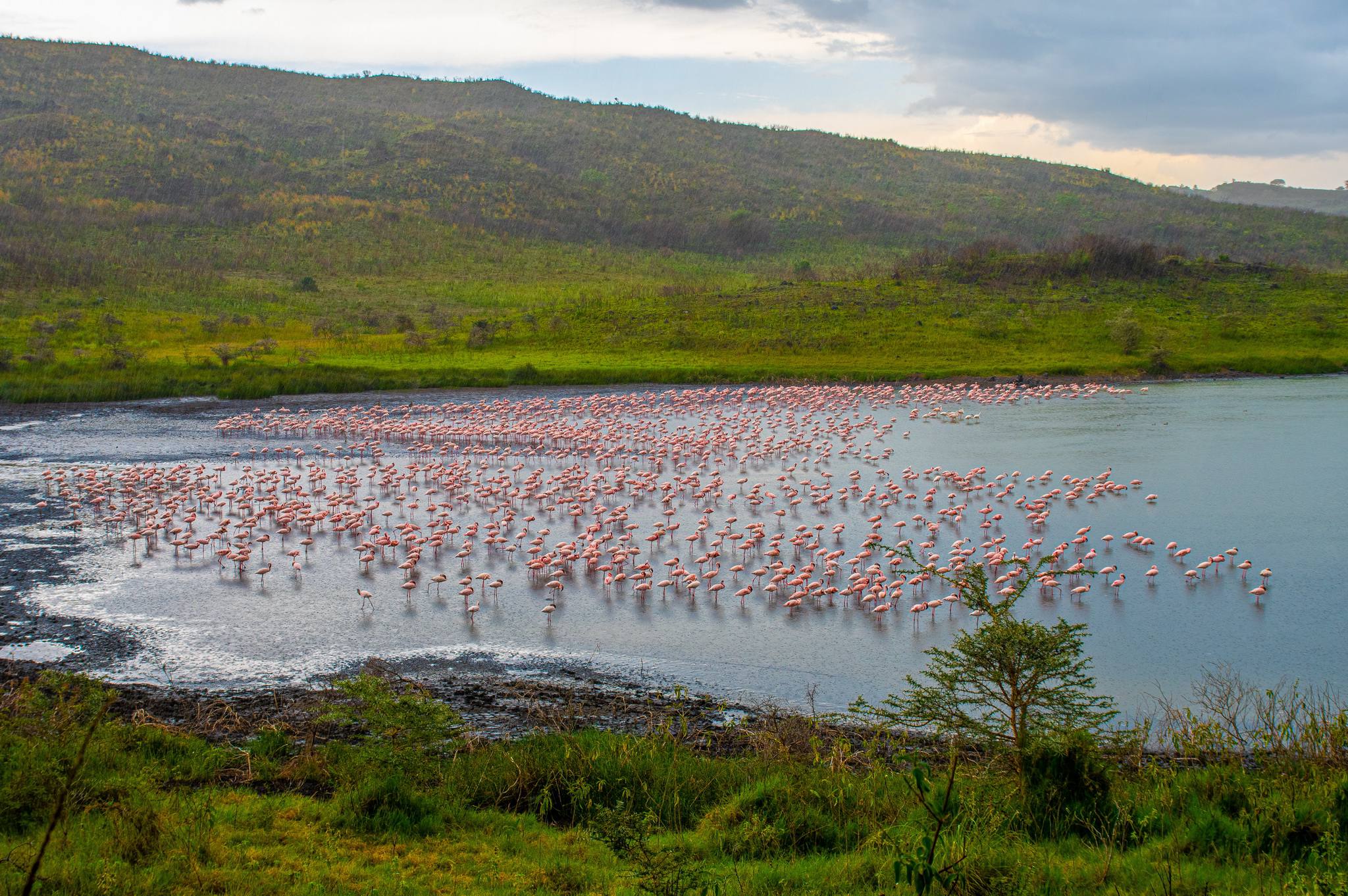
Birding in Arusha National Park
A Genuine Colobus Monkey Stronghold
Arusha’s montane forest supports one of the most reliable black-and-white colobus monkey populations anywhere in northern Tanzania, with troops regularly seen moving through the canopy along the park’s forest drives, a genuine highlight for travellers with any interest in primates beyond the country’s dedicated chimpanzee trekking sites further west.
Where Arusha National Park Fits
The park sits roughly thirty minutes from Arusha town and a similar distance from Kilimanjaro International Airport, making it one of the most convenient parks in Tanzania to add to any itinerary, whether as a first-day activity after landing or a final stop before departure.
When to Visit
| Season | Months | What to Expect |
| Dry Season | June – October | Clearer Mount Meru and Kilimanjaro views, easier walking conditions |
| Wet Season | November – May | Lush scenery, strong flamingo numbers on the Momella Lakes |
Budgeting for Arusha National Park
Non-resident park entry runs at approximately 47.80 to 59 US dollars per person per day depending on the specific tariff schedule quoted, in Tanzania’s mid-range fee tier alongside Tarangire and Lake Manyara, considerably below Serengeti or Ngorongoro’s premium pricing, making Arusha one of the more affordable parks to add to an itinerary.
Canoeing and walking safaris carry modest additional activity fees on top of standard entry.
Where to Stay
Lodges just outside the park boundary, convenient for day-trip access from Arusha town or the airport.
Momella Gate area accommodation, positioned for early departures on a Mount Meru climb.
Arusha town hotels, a practical base for travelers treating the park as a single-day excursion.
Frequently Asked Questions
Can I visit Arusha National Park as a day trip?
Yes, easily, given its proximity to Arusha town and Kilimanjaro International Airport, making it one of the most convenient parks in the country for a half-day or full-day visit.
Is canoeing on the Momella Lakes safe?
Yes, conducted with experienced guides who maintain safe distances from the hippo, though the activity’s proximity to wildlife is precisely what makes it distinctive compared to standard boat cruises elsewhere.
How does Mount Meru compare to Kilimanjaro?
Meru is shorter, considerably less crowded, and often used as altitude preparation before a Kilimanjaro attempt, though it remains a genuine, worthwhile climb in its own right at 4,562 meters.
Will I see the Big Five at Arusha National Park?
Not reliably. The park’s wildlife density and predator population do not match Tarangire or Serengeti, and it is better understood as a walking and scenery-focused destination than a Big Five safari park.
Are walking safaris genuinely safe here?
Yes, conducted with an armed ranger, and permitted across much of the park specifically because of its comparatively low density of dangerous predators relative to Tanzania’s larger savanna parks.
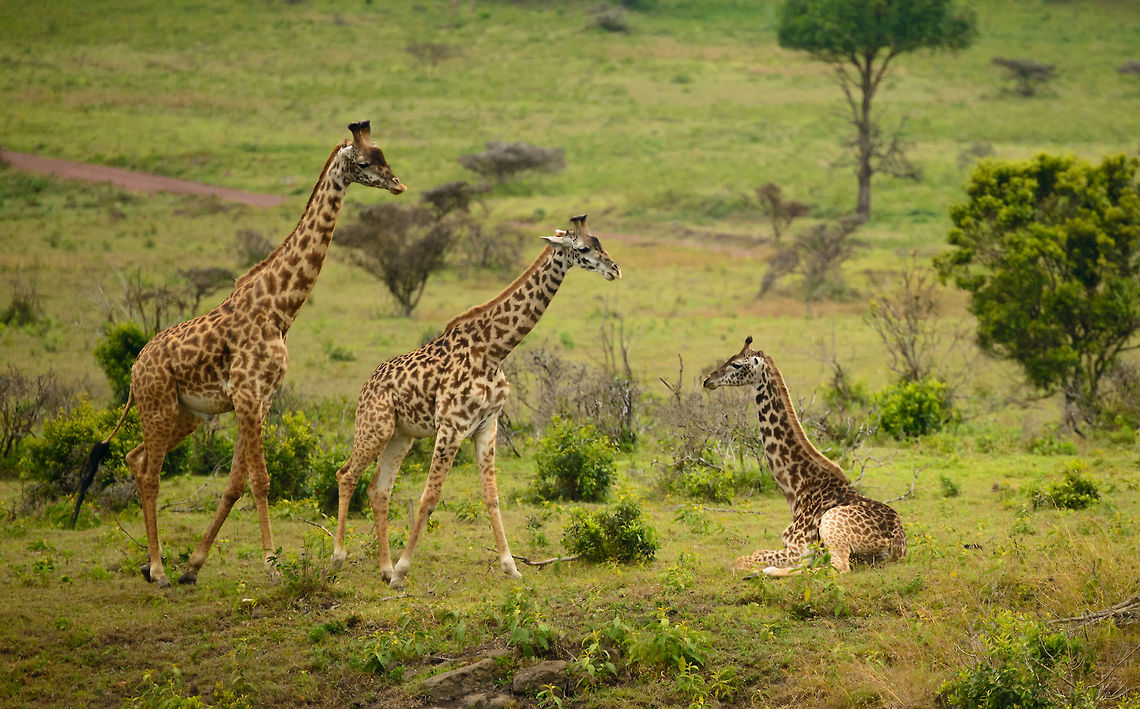
Girrafes
Can I combine Arusha National Park with Kilimanjaro?
Yes, it works well as either a pre-climb acclimatisation stop or a relaxed final day after a Kilimanjaro descent, given its short distance from both Arusha town and the airport.
Is Arusha National Park good for colobus monkey viewing?
Yes, genuinely one of the more reliable places in northern Tanzania to see black-and-white colobus, with troops regularly visible along the park’s forest drives.