Tsavo East National Park
Tsavo East National Park lies in southeastern Kenya, straddling the Nairobi–Mombasa highway roughly 333 kilometres — about five to six hours by road — from the capital. At close to 12,000 square kilometres it’s Kenya’s largest national park, though only the section south of the Galana River is generally open to visitors.
Overview
Tsavo East is Kenya’s largest national park, a rolling expanse of dry acacia bush and open plains straddling the Nairobi–Mombasa highway. Its scale means it never feels crowded, even in peak season, and it’s an easy add-on for travellers heading to or from the coast, since it sits roughly midway between Nairobi and Mombasa.
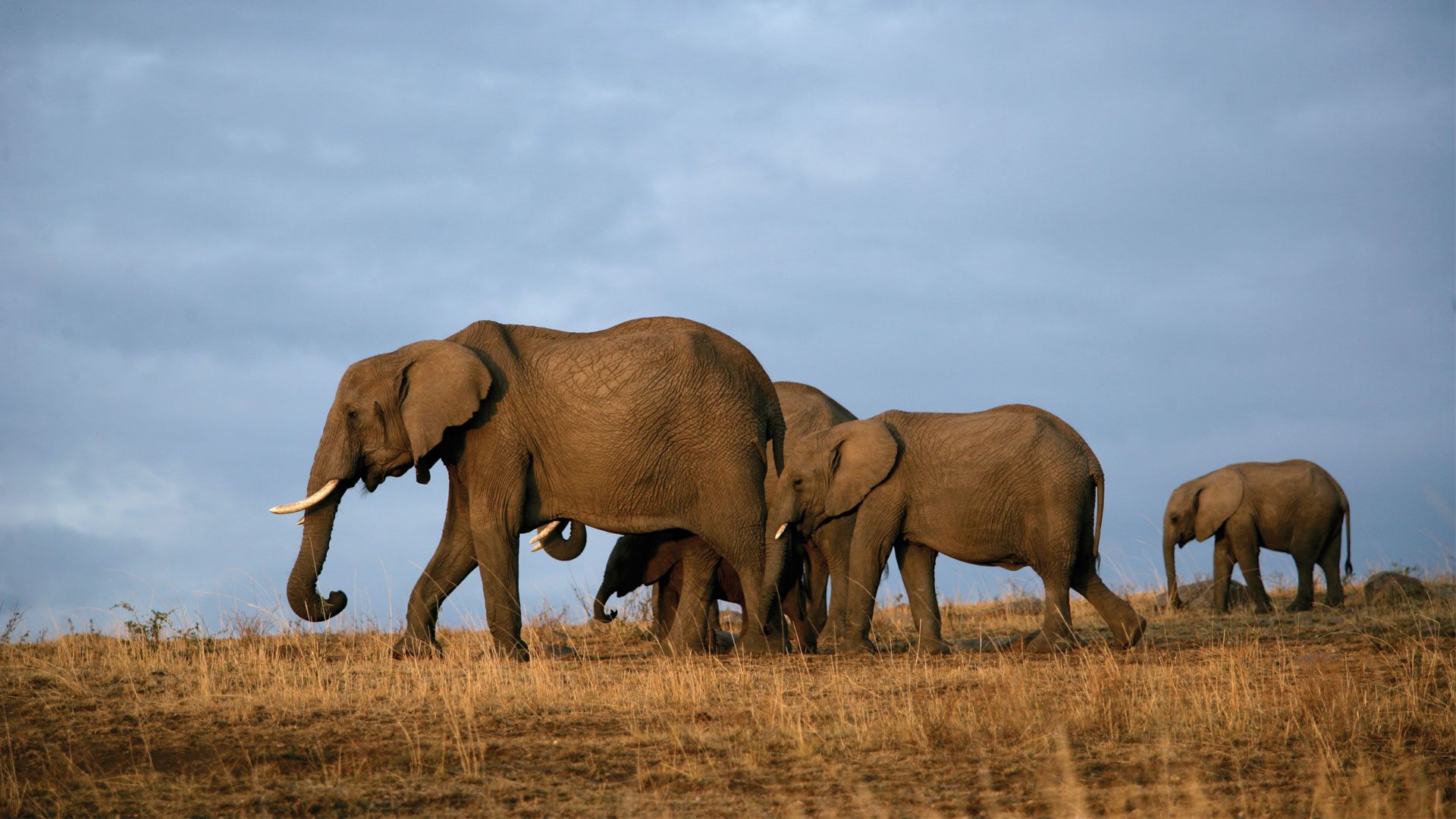
The park’s signature image is its ‘red elephants’ — the local herds take on a distinctive rust colour from dusting themselves in Tsavo’s red volcanic soil, a simple but memorable visual detail that sets Tsavo East apart from every other park on a typical Kenya itinerary.
Tsavo East forms one half of the wider Tsavo Conservation Area, which together with Tsavo West and the neighbouring Chyulu Hills makes up one of the largest continuous protected landscapes in Kenya. This scale matters practically: elephant, buffalo and other wide-ranging species move across the combined area far more freely than the individual park boundaries might suggest, and travellers spending time in both Tsavo parks are, in effect, exploring different sections of a single vast ecosystem rather than two genuinely separate destinations.
Best Time to Visit
June to October and January to February, the dry months, are best for game viewing, as wildlife concentrates around the Galana River and Aruba Dam when smaller water sources dry up elsewhere. The park stays open year-round, and the November-to-December short rains bring a burst of green scenery and fewer visitors, at some cost to game-viewing ease on muddier roads.
Tsavo East is a Kenya Wildlife Service park in the lower fee bracket alongside Tsavo West and Nairobi National Park, with non-resident adult entry currently around 80 US dollars, a genuinely good-value option given the park’s scale relative to its cost, particularly following a 2025 revision to KWS fees, the first significant update to the national parks fee structure in nearly two decades.
Getting There and Where to Stay
Getting There
Most road travellers reach Tsavo East via the Nairobi–Mombasa highway, entering through Voi Gate after a five-to-six-hour drive — a distance many combine with a coastal trip, breaking the Nairobi-to-Mombasa journey in half. Charter flights from Nairobi’s Wilson Airport reach one of several airstrips scattered through the park in about an hour, a useful option if you’d rather not spend most of a day on the road.
Voi town, immediately outside the park’s main gate, sits directly on the modern standard gauge railway linking Nairobi and Mombasa, and some travellers combine a Tsavo stop with a rail journey on either leg, breaking what would otherwise be a long road transfer into a more varied trip. It’s worth checking current rail schedules with your operator, since timetables and service frequency have shifted periodically since the line’s completion.
Where to Stay
Lodges and camps are spread along the Galana River and around Aruba Dam, from the well-established Voi Wildlife Lodge and Ashnil Aruba Lodge to smaller tented camps like Satao Camp, positioned at a waterhole for wildlife viewing without even leaving your seat. Because the park is so large, choosing accommodation close to the specific landmarks — Aruba Dam, Lugard Falls, Yatta Plateau — you most want to see is worth more thought here than in smaller parks.
Activities
Tsavo East’s activities are built around its scale — long drives that cover genuinely varied terrain, from riverbanks to open plains to rock outcrops.
Game Drives
Because the park is so large, game drives here often cover considerably more distance than in smaller parks, moving between the Galana River, the plains around Aruba Dam, and the acacia bush further from the road network. Large elephant herds, lion, buffalo and increasingly healthy rhino numbers are all realistic sightings, alongside good numbers of plains game.
Guided Walks
Short walks are available in specific areas with an armed ranger, generally near lodges or along the Aruba Dam trail, giving a change of pace from vehicle-based viewing and a chance to focus on smaller details — tracks, insects, plants — that drives move past too quickly to notice.
Birdwatching
Over 500 recorded species make Tsavo East a serious birding destination, with the riverine habitat along the Galana River and the wetland areas around Aruba Dam being particularly productive. This is a good park to slow down in if birding is a real interest rather than a secondary activity.
Village and Cultural Visits
Communities living around the park’s boundaries, including Kamba and Taita groups, welcome visitors for cultural stops that can be arranged through most lodges — a useful way to add local context to a trip focused mainly on wildlife.
Sundowners on the Yatta Plateau
Several lodges and mobile safari operators arrange evening drinks at elevated points along the plateau’s edge, taking advantage of the sweeping views and dramatic sunset light over the surrounding plains, a simple but memorable way to close out a day’s game drive.
Attractions
Tsavo East’s attractions are largely geological and hydrological — dramatic natural features shaped by the park’s volcanic past and its rivers.
The Yatta Plateau
Believed to be one of the longest lava flows on earth, the Yatta Plateau runs along the park’s northern edge and is visible for miles as a distinctive flat-topped ridge. It’s less a single stop than a constant backdrop to game drives in that part of the park, and worth pointing out to your guide if you want the geology explained in more detail.
Aruba Dam
Built across the Voi River in 1952, this man-made waterhole draws large numbers of animals during the dry season, when it becomes one of the most reliable wildlife-viewing spots in the entire park. The walking trail here is a good way to combine a short hike with genuinely productive game viewing.
Lugard Falls
Not a waterfall in the dramatic sense, but a stretch where the Galana River is forced through narrow, sculpted rock channels and rapids — a striking and photogenic feature, and a good stop to get out of the vehicle and stretch your legs under guide supervision.
Mudanda Rock
This large rock outcrop offers a moderate climb rewarded with panoramic views across the surrounding plains, and it overlooks a natural dam that draws elephant herds in large numbers during the dry season — worth timing a visit for that period if elephant sightings are a priority.
The Galana River and Its Red Elephants
The river is the park’s main water source and a magnet for wildlife along its length, but it’s also where you’re most likely to encounter Tsavo’s famous red-dust elephants at close range, particularly where they come down to drink or wallow in the reddish mud along the banks.
The Northern Wilderness Zone
The area north of the Galana River, closed to general tourism, remains one of the least disturbed wilderness areas in Kenya, managed primarily for conservation and research rather than visitor access, a reminder that the park visitors experience is genuinely only half of Tsavo East’s total protected area.
Wildlife Highlights
The Red Elephants
Tsavo’s elephants dust themselves in the park’s red volcanic soil so thoroughly that they take on a distinctive rust colour, one of the most recognisable sights of a Tsavo East safari.
Lion of the Voi Region
Tsavo’s lions carry a fearsome historical reputation dating back to the man-eating pride that halted construction of the Kenya-Uganda railway in 1898, and while today’s prides behave no differently from lions elsewhere, the story adds real texture to sightings in this part of the park.
Hirola and Other Rarities
Tsavo East is one of only two places on earth to see the hirola, one of the world’s most endangered antelope species, following a translocation of a small founding population here from northeastern Kenya in 1963, topped up with further individuals in 1996. Sightings are genuinely rare given a population that still numbers only in the low hundreds, but they’re a real possibility alongside more common gerenuk and lesser kudu.
Buffalo and Plains Game of the Galana
Large buffalo herds gather along the Galana River during the dry season, alongside substantial numbers of zebra, impala and other plains species, giving the riverbank a genuinely dense concentration of wildlife that contrasts with the more dispersed sightings typical of the park’s drier bush interior.
Fun Facts
- Tsavo East is bisected by the Galana River, and only the area south of it is open to general tourism — the northern section remains a wilderness zone with very limited access.
- The Yatta Plateau, visible from much of the park, is thought to be one of the longest single lava flows on Earth.
- Tsavo’s man-eating lions of 1898 killed dozens of railway workers before being hunted down, a story later dramatised in the film The Ghost and the Darkness.
- Aruba Dam, built in 1952, was originally designed for irrigation before becoming one of the park’s most productive wildlife-viewing sites.
- Tsavo East’s translocated hirola population, now numbering roughly one hundred animals, exists nowhere else in the world outside a single community conservancy in northeastern Kenya.
- Together, Tsavo East and Tsavo West cover an area larger than some entire African countries, making the combined Tsavo Conservation Area one of the largest protected wildlife landscapes on the continent.
- The park’s name comes from the Tsavo River, itself derived from a Kikamba word associated with the slaughter that occurred here during the 1898 man-eating lion incidents, a somewhat grim etymological footnote to an otherwise straightforwardly geographic name.