Samburu National Reserve
Samburu National Reserve lies in Kenya’s arid north, in Samburu County, roughly 345 kilometers—about five to six hours by road—north of Nairobi. The reserve itself is relatively small at around 165 square kilometers, bordered by the sister reserves of Buffalo Springs and Shaba, with which it shares the Ewaso Nyiro River.
Overview
Samburu National Reserve lies in Kenya’s arid north, and it offers a genuinely different safari experience from the greener parks further south. Dry, rugged terrain, scattered doum palms, and the Ewaso Nyiro River running through its center give the reserve a striking, almost desert-like character, and it supports a distinct set of wildlife species adapted to arid conditions that you simply won’t find in the Mara or Amboseli.
This is also Samburu land in a cultural sense—the reserve takes its name from the Samburu people, close relatives of the Maasai, whose traditional pastoralist way of life continues in the communities surrounding the park.
Samburu is best understood as one part of a larger, interconnected trio of reserves sharing the same river system: Samburu itself on the northern bank and Buffalo Springs directly across the water to the south, with the more remote Shaba further east. A single entry ticket generally allows movement between Samburu and Buffalo Springs on the same day, giving visitors effectively two reserves’ worth of terrain to explore without an additional fee, a detail worth confirming with your specific lodge since access arrangements can vary.
Best Time to Visit
June to September and January to February, the driest months, bring wildlife concentrating along the Ewaso Nyiro River and give the most comfortable travelling conditions. April to mid-June, excluding the Easter holiday period, is the cheapest and quietest time to visit, with the trade-off of occasional heavy rain and muddier roads.
Like the Masai Mara, Samburu is managed by its county government rather than the Kenya Wildlife Service, with non-resident adult entry currently running at approximately 85 US dollars per 24 hours, in a similar bracket to Kenya’s premium KWS parks rather than the lower-fee tier that applies at Tsavo or Nairobi National Park.
Getting There and Where to Stay
Getting There
Scheduled flights from Nairobi’s Wilson Airport reach Samburu’s airstrips—Oryx, Buffalo Springs, and Kalama, among them—in about an hour, with most lodges arranging a short road transfer on arrival. By road, the journey takes five to six hours via the A2 highway, a long enough drive that most travellers either fly or combine it with an overnight stop en route.
Travellers driving up tend to break the journey at Nanyuki or Isiolo, both offering a reasonable lunch stop and, in Nanyuki’s case, the option of visiting Ol Pejeta Conservancy en route, making a combined central Kenya and Samburu itinerary logistically straightforward for travellers with the time to link the two destinations by road rather than flying between them separately.
Where to Stay
Lodges sit mainly along the Ewaso Nyiro River for reliable water access and wildlife views, ranging from the luxury tented Elephant Bedroom Camp and exclusive Saruni Samburu perched in the hills to the more moderately priced Samburu Sopa Lodge and Ashnil Samburu Camp. Staying in one of the community conservancies bordering the reserve — Kalama or West Gate, for instance — opens up walking safaris and cultural visits that the reserve itself doesn’t offer.
Activities
Samburu’s activities lean into its remoteness and its river, offering a more varied mix than a typical game-drive-only itinerary.
Game Drives
Morning drives typically run from around 6am to 10am and afternoon drives from 3:30pm to 6:30pm, timed around the cooler hours when wildlife is most active. Drives follow the Ewaso Nyiro River and the surrounding scrubland, where sightings include elephant, lion, leopard and the reserve’s distinctive arid-adapted species.
Guided Nature Walks
While walking isn’t generally permitted inside the reserve itself, the adjacent community conservancies — Kalama, West Gate and Namunyak among others — offer guided walks that let you experience the bush at a slower pace, with a Samburu guide often able to explain traditional uses of local plants and tracking techniques alongside the wildlife.
Camel Trekking
A genuinely distinctive activity for this part of Kenya, camel trekking safaris in the conservancies bordering Samburu offer a slower, quieter way to cover ground and are often combined with a walking component—well suited to travellers who want something different from a standard vehicle safari.
Bush Meals and Sundowners
Many camps set up meals or drinks out in the bush, away from the lodge itself, timed around sunset over the river or surrounding hills—a simple addition to a day’s activities but one that adds real atmosphere to a Samburu stay.
Cultural Visits to Samburu Manyattas
Villages near Archer’s Post welcome visitors to learn about initiation ceremonies, moran warrior culture, and women’s beadwork traditions, offering meaningful cultural context alongside the reserve’s wildlife focus.
Crossing to Buffalo Springs
A single reserve entry ticket generally permits a same-day crossing to Buffalo Springs across the river, giving visitors access to its own network of springs and slightly different terrain within the same broader ecosystem, effectively doubling the ground covered on a full-day visit without an additional fee.
Fishing on the Ewaso Nyiro
Some camps arrange catch-and-release fishing along quieter stretches of the river, a low-key activity that suits travellers wanting a genuinely relaxed break from the standard game-drive rhythm, though it’s worth confirming with your specific lodge since not all properties offer this.
Attractions
Samburu’s attractions are built around species and features you won’t encounter on a typical southern Kenya safari.
The Samburu Special Five
Grevy’s zebra, reticulated giraffe, Somali ostrich, Beisa oryx, and gerenuk are collectively known as the Samburu Special Five—species adapted to arid environments that are rarely, if ever, seen in the Mara or Amboseli. Seeking out all five is a genuinely engaging focus for a Samburu visit and a good reason to add this reserve to a wider Kenya itinerary rather than treating it as optional.
The Ewaso Nyiro River
This river is the reserve’s lifeline, drawing wildlife from the surrounding dry country to drink along its banks, and its riverine forest corridor supports baboons, vervet monkeys, bushbuck, and leopards, along with a rich mix of birdlife distinct from the open scrubland further from the water.
The Riverine Forest
Running along the Ewaso Nyiro, this lush, shaded belt stands in sharp visual contrast to the surrounding arid landscape, and it’s consistently one of the most productive areas in the reserve for both mammal and bird sightings.
The Singing Wells
At certain times, Samburu herders gather at hand-dug wells to draw water for their livestock, chanting rhythmically as they pass buckets hand to hand up out of the well—a genuinely striking cultural tradition that visitors can sometimes witness with the right local guide and timing.
Samburu Manyattas
Traditional homesteads near Archer’s Post offer insight into a pastoralist culture that has adapted over generations to one of Kenya’s harshest environments, giving depth to a visit that might otherwise focus purely on the reserve’s arid-adapted wildlife.
Buffalo Springs and Shaba
Samburu’s two sister reserves add genuine variety to a stay in this ecosystem. Buffalo Springs takes its name from the natural springs feeding its own section of the Ewaso Nyiro, while Shaba, further east and considerably less visited, offers a quieter, more rugged alternative for travellers who’ve already spent time in Samburu itself and want a genuinely different pace.
Wildlife Highlights
The Samburu Special Five
Grevy’s zebra, reticulated giraffe, Somali ostrich, Beisa oryx, and gerenuk are all arid-adapted species found here and rarely, if ever, seen on a Mara or Amboseli safari, making Samburu a genuinely different wildlife checklist rather than a repeat of southern Kenya’s usual sightings.
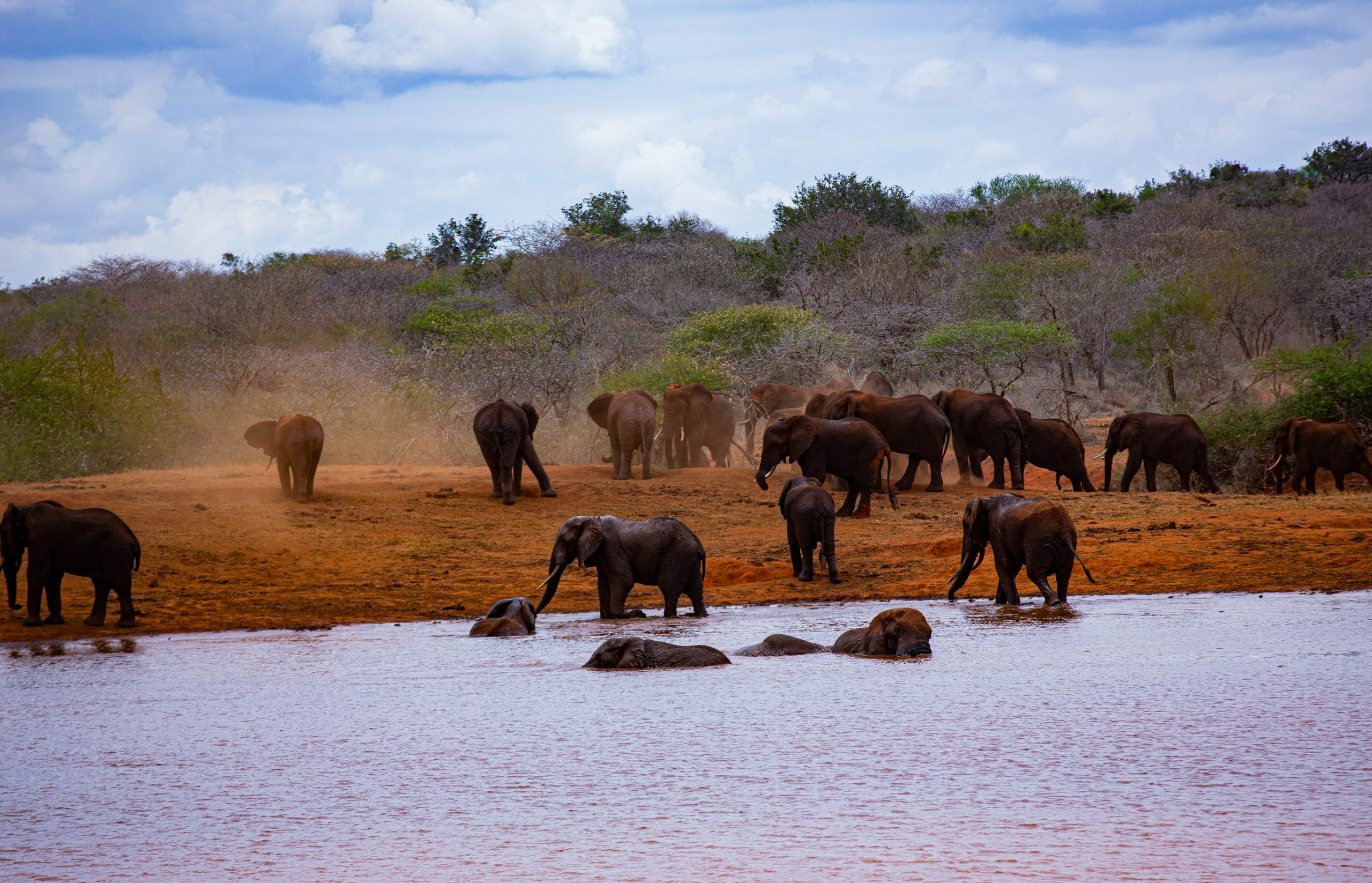
Elephant Families of the River
Samburu’s elephants depend heavily on the Ewaso Nyiro for both water and shade, and long-running research by Save the Elephants, headquartered within the reserve, has tracked individual family groups here for decades.
Leopard of the Riverine Forest
The dense forest corridor along the river provides ideal leopard habitat, and Samburu is considered one of the more reliable Kenyan reserves for a daytime leopard sighting, aided by the cover the riverine trees give.
Crocodile and Hippo Along the River
The Ewaso Nyiro’s slower stretches hold resident crocodile and hippo populations, easily seen from a game drive along the riverbank and offering a genuine water-based counterpart to the reserve’s otherwise dry, scrubland character.
Fun Facts
- Samburu is the headquarters of Save the Elephants, a research organization responsible for much of what’s known globally about elephant movement and family structure.
- The gerenuk, one of the Special Five, is nicknamed the ‘giraffe gazelle’ for its habit of standing on its hind legs to browse leaves too high for other antelope.
- The Ewaso Nyiro River’s name translates roughly to ‘river of brown water,’ a reference to the sediment it carries down from the central highlands.
- Samburu shares its name with the Samburu people, semi-nomadic pastoralists closely related to the Maasai but with a distinct language and customs.
- The reticulated giraffe, one of the Special Five, is distinguished by its sharply defined, net-like coat pattern, genuinely different at a glance from the more jagged spot pattern of the Maasai giraffe found further south.
- Samburu, Buffalo Springs, and Shaba together cover a combined area of roughly 300 square kilometers, making the trio, taken as a whole, a genuinely substantial ecosystem despite each individual reserve being relatively compact.