Ol Pejeta Conservancy
Ol Pejeta Conservancy sits on the Laikipia plateau in central Kenya, north of the equator and roughly 220 kilometres — about four hours by road — from Nairobi, with Mount Kenya visible to the south on clear days. The conservancy covers around 360 square kilometres of savannah and is privately run as a non-profit rather than managed as a government national park.
Overview
Unlike the national parks and reserves elsewhere on this list, Ol Pejeta is a privately run, non-profit conservancy — which gives it more flexibility in the activities it offers and a sharper focus on active conservation work. It’s compact enough to cover thoroughly in a couple of days, and it holds the Big Five alongside two claims that make it genuinely unique in East Africa.
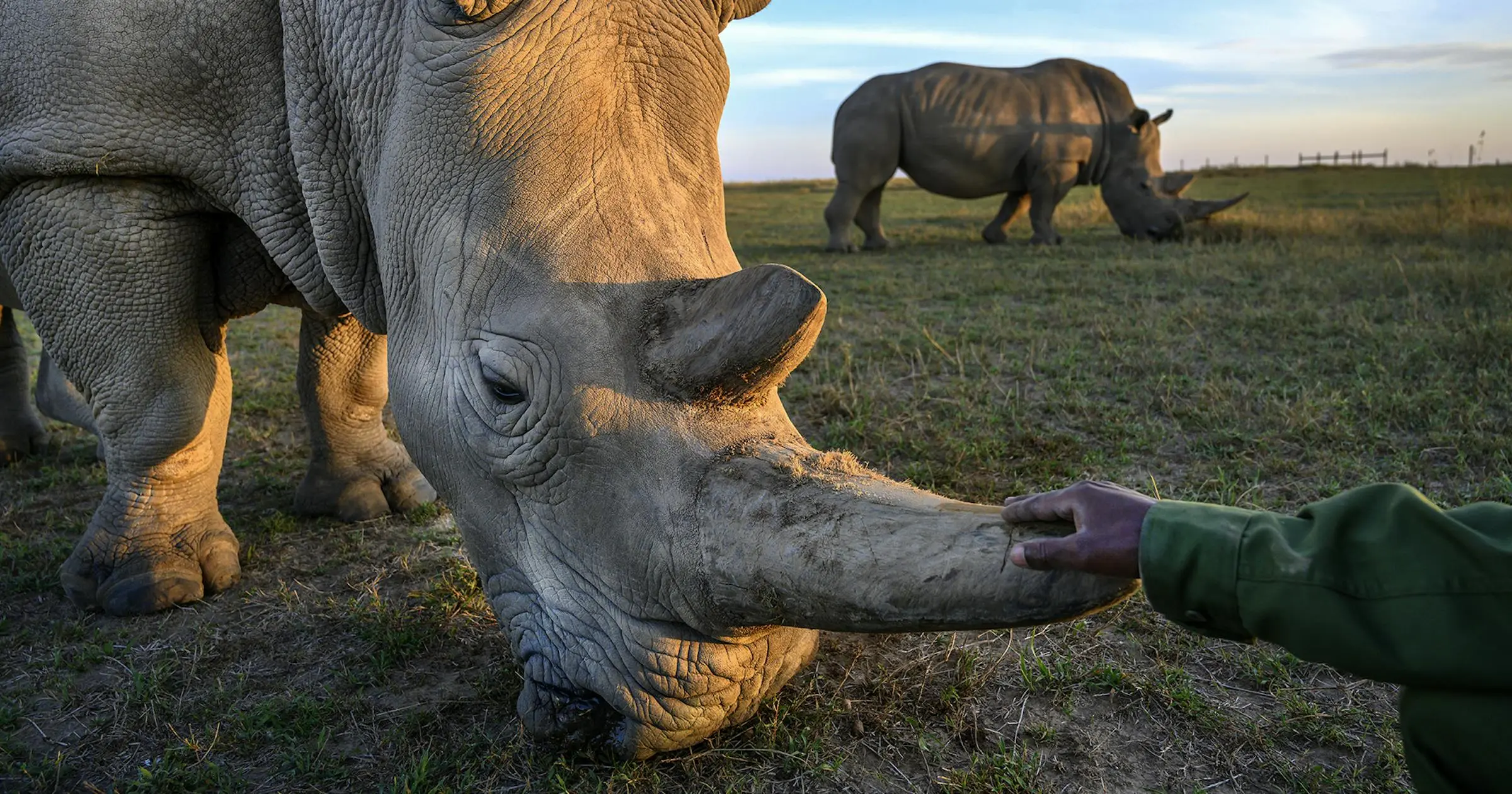
It’s the only place in the region where you can see both black and white rhino together, and it’s globally known as home to the world’s last two northern white rhinos, Najin and Fatu, under permanent armed protection. Ol Pejeta also runs one of Africa’s largest chimpanzee sanctuaries, a species not native to Kenya but rescued here from illegal trade elsewhere on the continent.
The conservancy’s governance model is worth understanding, since it shapes almost everything about a visit here. Ol Pejeta operates as a not-for-profit trust, meaning every dollar of tourism revenue beyond operating costs is reinvested directly into conservation and the surrounding community, rather than distributed to private shareholders as it might be at a commercially run lodge or reserve. That structure is also what allows the conservancy the flexibility to run genuinely research-driven programmes, radio-collar tracking, rhino monitoring, the BioRescue partnership, that a government park’s more standardised regulatory framework doesn’t always accommodate as readily.
Best Time to Visit
June to September and January to February, the driest months, offer the easiest game viewing and the most comfortable temperatures, though Ol Pejeta’s water sources are reliable enough to make it a genuinely good year-round destination. October brings occasional rain but noticeably lower rates, a reasonable trade for budget-conscious travellers.
Rhinos in Ol Pejeta Conservancy
Ol Pejeta requires all visitors to book entry online in advance through its own booking platform rather than paying at the gate, a system it pioneered among Kenyan conservancies specifically to reduce delays. Non-resident adult entry currently runs at approximately 110 US dollars, somewhat above the fee charged at most Kenya Wildlife Service parks, reflecting the conservancy’s self-funded conservation and anti-poaching operations.
Getting There and Where to Stay
Getting There
Daily scheduled flights from Nairobi’s Wilson Airport reach nearby Nanyuki airstrip in about 35 to 45 minutes, followed by a roughly 45-minute road transfer into the conservancy. Driving from Nairobi takes about four hours via Nyeri and Nanyuki, a manageable option if you’re combining Ol Pejeta with other central Kenya stops along the way.
Nanyuki itself sits almost exactly on the equator, and travellers driving up from Nairobi often stop briefly at one of the roadside equator markers along the way, a small but popular photo opportunity that adds only a few minutes to the journey. The town also serves as a practical staging point for climbers heading to Mount Kenya, meaning Ol Pejeta pairs naturally with a wider central Kenya itinerary beyond the conservancy itself.
Where to Stay
Accommodation ranges from the family-friendly Sweetwaters Serena Camp, built around a busy waterhole, to smaller, more exclusive options like Porini Rhino Camp and Ol Pejeta Bush Camp. Because the conservancy is privately managed, most properties can arrange rhino tracking, night drives and other specialist activities directly, without the separate permits sometimes required in government parks.
A number of properties here also position themselves specifically around research access rather than pure luxury, offering guests the chance to join conservancy staff on active monitoring work as a standard part of the stay rather than a paid add-on. It’s worth asking directly what’s included when comparing camps, since two properties at a similar price point can offer meaningfully different levels of access to the conservancy’s actual conservation programmes.
Activities
Because it operates outside the national park system, Ol Pejeta offers a wider range of activities than most Kenyan reserves, including several not permitted in government-run parks.
Rhino Tracking
Guests join the conservancy’s rhino monitoring team on foot to track individual rhinos, whom rangers know by name along with their typical home ranges and habits. This is a genuinely educational experience as much as a wildlife encounter, with rangers explaining the conservancy’s protection efforts as you go.
Visiting the Northern White Rhinos
A visit to see Najin and Fatu, the last two northern white rhinos on earth, is one of the more moving wildlife experiences available anywhere — a chance to witness, up close, the tail end of a subspecies and the intensive scientific effort going into preserving its genetic line. That effort has moved from theoretical to genuinely promising in recent years: the international BioRescue consortium working with Ol Pejeta has successfully created and implanted northern white rhino embryos into southern white rhino surrogates, using Fatu’s harvested eggs and preserved sperm from northern white males who have since died, the first procedure of its kind ever attempted in rhinos. Guides on-site can generally speak to the latest progress, since this remains an active, ongoing programme rather than a finished chapter.
Night Game Drives
Ol Pejeta is one of the few places in the region where night drives are permitted, using spotlights to find nocturnal species — leopard, aardvark, genet and other animals rarely seen during the day. This activity alone is a good reason to choose Ol Pejeta over a government-run park if nocturnal wildlife interests you.
Lion Tracking
Similar to the rhino tracking programme, guests can join researchers using radio-collar data to locate and observe lion prides, learning about the conservancy’s predator research alongside the sighting itself.
Sweetwaters Chimpanzee Sanctuary Visits
Established in 1993 with the Kenya Wildlife Service and the Jane Goodall Institute, the sanctuary is currently home to around 35 chimpanzees rescued from the illegal pet trade and other exploitative situations. It’s open daily from 8:30am to 12:30pm and 2:00pm to 4:30pm, and visitors can observe the chimps from a viewing platform at no extra cost beyond conservancy entry.
Guided Bush Walks and Cycling
Several areas of the conservancy permit walking and mountain biking with an armed guide, activities not available in most fenced national parks — a good option for travellers who want a more active safari experience.
Visiting the Endangered Species Enclosure
Beyond the flagship rhinos, Ol Pejeta maintains a dedicated enclosure supporting other threatened species reintroduction and protection work, giving visitors a broader sense of the conservancy’s mission beyond its two most famous residents.
K9 Anti-Poaching Unit Demonstrations
Select stays can include a visit to see the conservancy’s tracker dog unit in action, part of the coordinated anti-poaching effort that combines dogs, aerial surveillance and ranger patrols, offering genuine insight into the practical, day-to-day work of protecting the rhino population rather than just the wildlife-viewing result of that work.
Attractions
Ol Pejeta’s attractions are inseparable from its conservation mission — most of what draws visitors here is directly tied to a specific protection programme.
Najin and Fatu, the Last Northern White Rhinos
Under round-the-clock armed guard, these two rhinos represent the functional end of their subspecies in the wild, and Ol Pejeta’s ongoing work with the international BioRescue consortium on IVF and embryo transfer makes a visit here feel like witnessing active conservation history rather than a static wildlife sighting.
Ol Pejeta Conservancy
Sweetwaters Chimpanzee Sanctuary
As the only place in Kenya to see chimpanzees, the sanctuary is a distinctive addition to a Kenyan safari that otherwise focuses on native wildlife, and the rescue stories behind individual chimps add real depth to a visit.
The Black and White Rhino Population
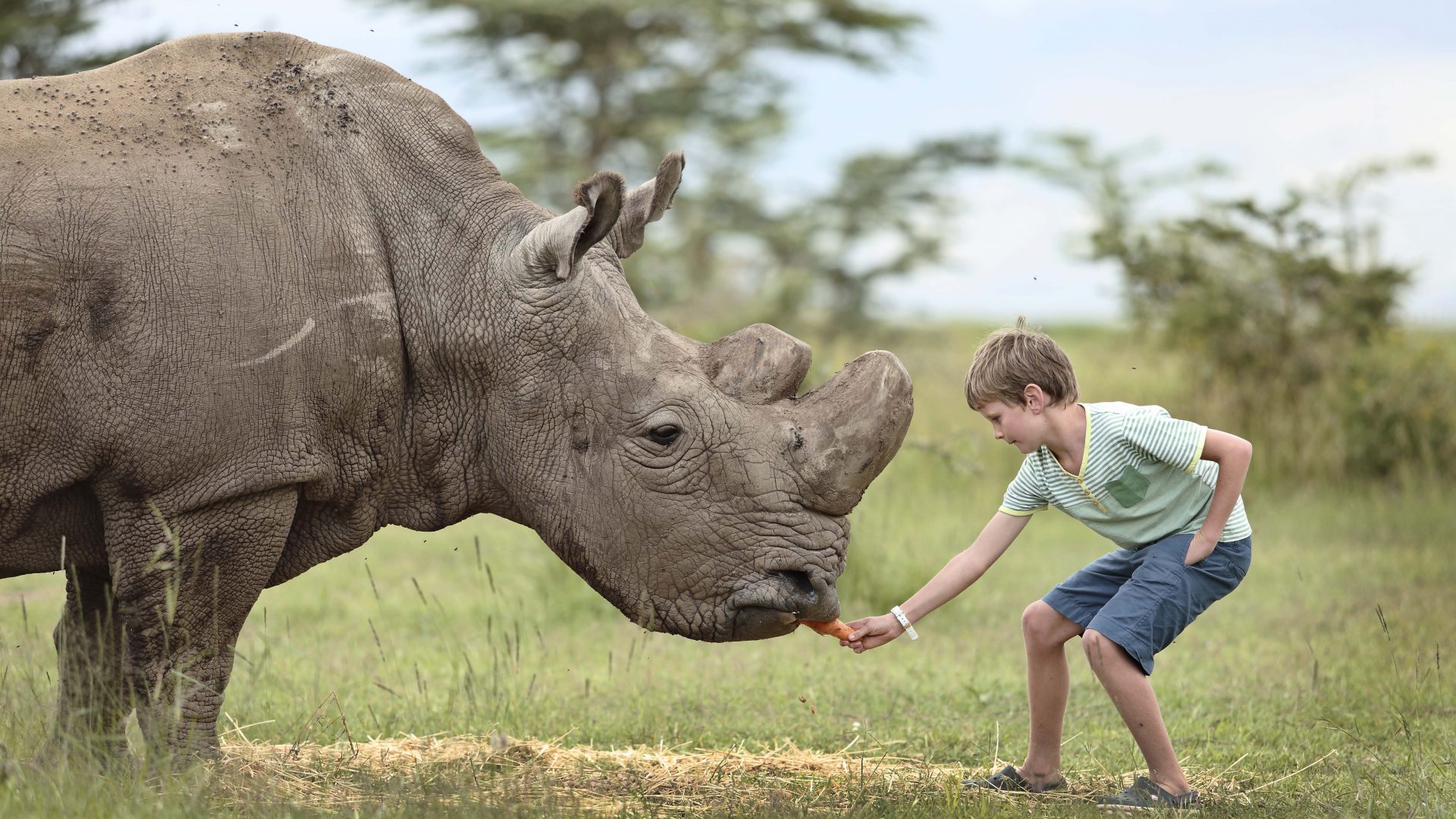
Ol Pejeta holds one of the largest black rhino populations in East Africa alongside a healthy white rhino population, making rhino sightings considerably more likely here than almost anywhere else in the region.
Views of Mount Kenya
On clear days, particularly early morning, the conservancy offers good views of Mount Kenya’s peak to the south — a scenic bonus alongside the wildlife-focused activities.
The Big Five and Predator Density
Beyond its specialist conservation programmes, Ol Pejeta holds a strong resident population of lion, leopard, elephant, buffalo and rhino, meaning it functions as a complete Big Five safari destination in its own right, not just a specialist rhino and chimp stop.
The Ewaso Nyiro River Boundary
Ol Pejeta’s northern edge borders the same Ewaso Nyiro River system that runs through Samburu further north, giving the conservancy its own share of riverine habitat and drawing wildlife to its banks during the drier months, a genuinely different landscape from the open savannah that dominates most of the property.
Wildlife Highlights
Najin and Fatu
The world’s last two northern white rhinos live under constant protection at Ol Pejeta, and a visit here is as close as anyone will likely come to witnessing a subspecies at the edge of extinction, alongside a genuinely active scientific effort, now at the embryo-transfer stage, to preserve its genetic line through a closely related surrogate species.
Rescued Chimpanzees of Sweetwaters
None of the chimpanzees at the sanctuary are native to Kenya — all were rescued from illegal trade or exploitation elsewhere in Africa — and their individual rescue stories, shared by guides, add real weight to what would otherwise be a straightforward wildlife-viewing stop.
Big Cats of Laikipia
Ol Pejeta’s ongoing predator research programme tracks resident lion prides and a healthy leopard population by radio collar, giving guides unusually detailed, real-time knowledge of where sightings are likely on any given day.
Elephant Herds of the Plateau
Ol Pejeta’s elephant population benefits from the conservancy’s coordinated anti-poaching operation, and herds move relatively freely across the property’s open grassland, offering reliable sightings that complement the more specialised rhino and chimpanzee programmes.
Fun Facts
- Ol Pejeta was originally a cattle ranch before converting to a wildlife conservancy, and it still runs a working cattle programme alongside its conservation work today.
- Profits from tourism at Ol Pejeta are reinvested directly into rhino protection and community development programmes in the surrounding area.
- The conservancy’s anti-poaching efforts combine tracker dogs, aerial surveillance and ranger patrols in a coordinated operation that has kept Ol Pejeta free of successful rhino poaching for several consecutive years.
- Sudan, the last known male northern white rhino, lived at Ol Pejeta until his death in 2018, after which his daughter Najin and granddaughter Fatu became the subspecies’ final survivors.
- In 2025, scientists working with Ol Pejeta announced the world’s first successful embryo transfer in a rhino, implanting a lab-created northern white rhino embryo into a southern white rhino surrogate, a genuine scientific first with hopes of producing a calf while Najin and Fatu are still alive to guide it.
- Ol Pejeta was the first place in Kenya to introduce chimpanzees, a species with no natural range in the country, specifically to provide sanctuary for animals confiscated from illegal trafficking elsewhere on the continent, a role it has played since the sanctuary’s founding in 1993.
- The conservancy covers roughly 360 square kilometres, small enough that a genuinely thorough visit, covering rhino tracking, the chimpanzee sanctuary and a night drive, can realistically be done within two to three days.