Best Places to Stay for Rwanda Family Safaris
July 21, 2026
How to Plan a Uganda Safari?
July 21, 2026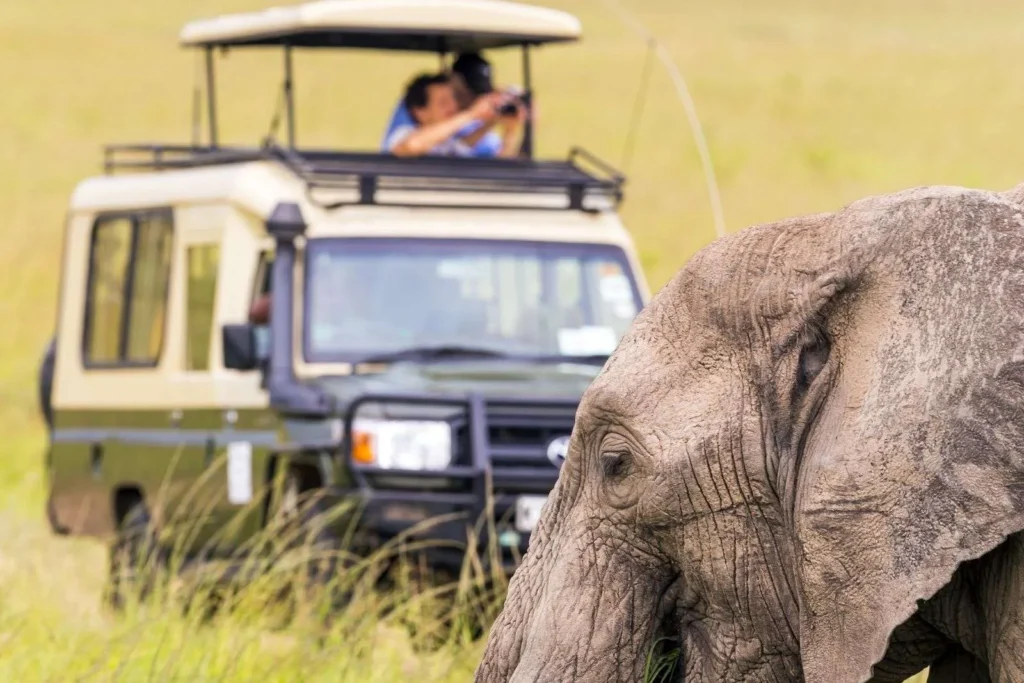
Best Family Friendly Safaris in Uganda
This guide covers the best national parks in Uganda for family friendly sfaris, the specific activities each park offers and their age requirements, the accommodation options best suited to travelling with children, the planning considerations that make a Uganda family safari work, and sample itineraries for different family compositions.
Uganda is one of the most genuinely suitable safari destinations in the world for families travelling with children of different ages. It does not have the malaria-free private reserves of South Africa, but it has something those reserves cannot offer: the sheer variety of wildlife experience types within a compact geography.
A family spending ten days in Uganda can take a Nile boat cruise past hippos and crocodiles at Murchison Falls, watch tree-climbing lions in the Ishasha sector of Queen Elizabeth National Park, walk among zebras and impalas on foot at Lake Mburo, visit the rescued chimpanzees at the Uganda Wildlife Education Centre in Entebbe, and, for family members aged fifteen and above, track mountain gorillas in Bwindi Impenetrable Forest. No comparable range of wildlife experiences is available in any other country in the same trip duration.
Uganda’s parks are also physically compact relative to the wildlife they contain. The distance between the gate and the first good game viewing area on the Kasenyi Plains in Queen Elizabeth is twenty minutes by vehicle. The Murchison Falls boat cruise starts from the jetty at Paraa and the hippos appear within the first few minutes.
Lake Mburo, the closest national park to Kampala, is small enough that a child who runs out of attention after two hours does not feel that the entire morning has been wasted. The combination of short vehicle times, reliable wildlife encounters, and the variety of non-vehicle activities, boats, walks, boat rides, horseback, and cultural visits, gives families options at every point in the day rather than a single long game drive that some children will find manageable and others will not.
Uganda is also genuinely warm toward children and families. Ugandan hospitality is a real characteristic rather than a hospitality industry talking point, and the lodge staff, rangers, and guides across the country consistently receive feedback from families about how welcome and engaged they felt. Many lodges near the main parks have swimming pools, family rooms with interconnecting doors, children’s menus, and guides who are experienced at adjusting the tone and pace of a game drive for younger passengers. The parks are not designed around the family market the way some private South African reserves are, but the culture of hospitality that runs through Ugandan tourism makes up for a large part of that difference.
Best Uganda National Parks for Family Safaris
Lake Mburo National Park — Best for Families with Young Children
Lake Mburo National Park is the single most family-friendly park in Uganda for children of all ages, including the very young. It sits three and a half hours from Kampala on the main western highway, making it the closest national park to the capital and the most practical first or last stop on any Uganda family safari circuit.
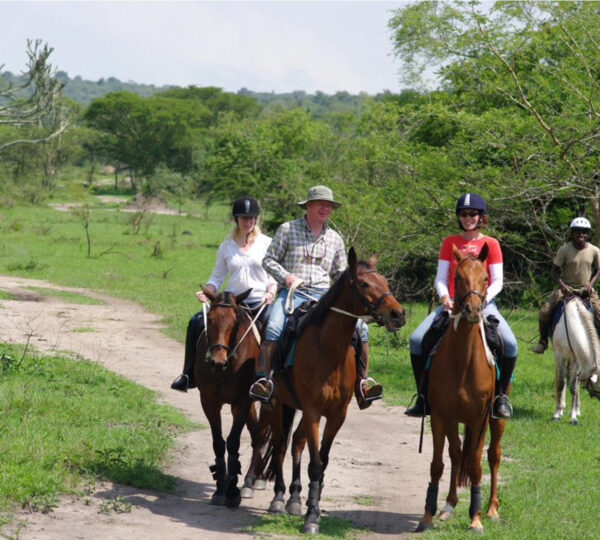
Horseback Rides
The park covers 370 square kilometres with no lions and no elephants in significant numbers, which creates a safety profile that allows walking safaris and horseback rides that are not available in the larger savannah parks. Children who might be too young or too nervous for close encounters with large predators in a vehicle can walk among zebras, impalas, topi, and buffaloes on foot with a ranger guide.
The lake boat trip at Lake Mburo is one of the most gentle and accessible wildlife experiences in Uganda for families: a quiet morning on the water watching hippos in the shallows, crocodiles on exposed bank edges, and waterbirds in the reeds.
The boat moves slowly, there is no rush, and even children who are not naturally patient on a game drive tend to find the lake cruise engaging because the animals appear at close range without the vehicle distancing them. The horseback safari operated by Mihingo Lodge since 2009 is available for riders with some experience, and the specific encounter between horses and zebras, where the zebras respond to horses very differently from vehicles, is one of the most distinctive wildlife moments available anywhere in Uganda.
Queen Elizabeth National Park — Best for Wildlife Variety and All Ages
Queen Elizabeth National Park is Uganda’s most visited park and provides the widest range of wildlife activities for families covering the most age groups. The Kazinga Channel boat cruise, accessible to all ages, is one of Africa’s finest wildlife boat experiences: a 32-kilometre waterway connecting Lake George to Lake Edward with hippo pods in the hundreds, elephants and buffaloes coming to drink at the banks, Nile crocodiles on the exposed mud flats, and a waterbird community of over 600 species. The boat moves slowly along the channel for approximately two hours, and children of almost any age find the proximity of large animals from a stable, comfortable boat reliably engaging.
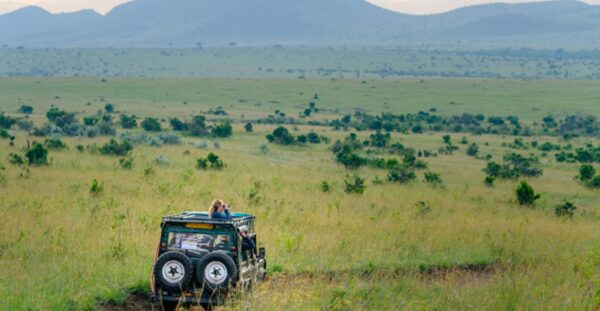
The Kasenyi Plains game drive in the northern sector produces lions, elephants, Uganda kob, and buffaloes on consistently open terrain where animals are visible at distance, making spotting easier for younger eyes.
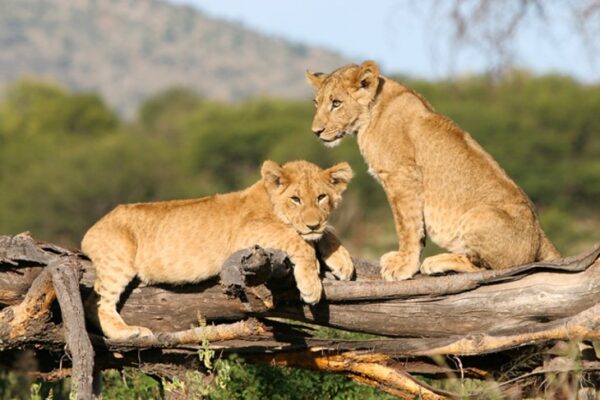
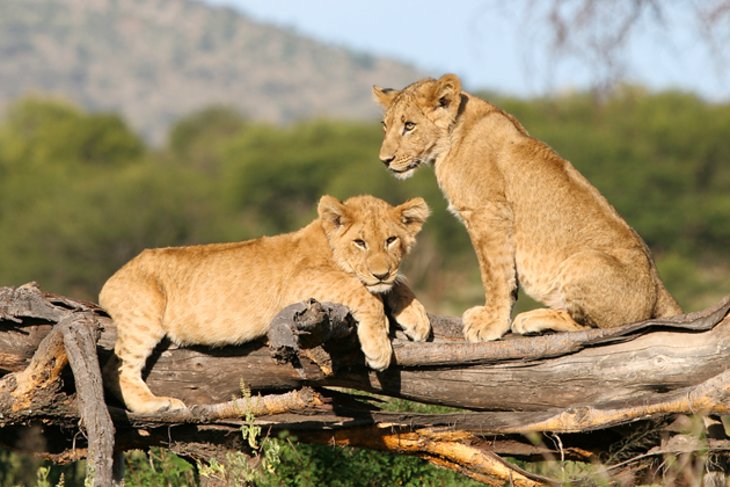
The Ishasha sector in the southern part of the park holds the famous tree-climbing lions, one of the most reliably child-captivating wildlife sightings in Uganda: prides of lions distributed through the branches of large sycamore fig trees, looking down at the vehicle from above. The combination of the channel cruise, the Kasenyi game drive, and the Ishasha tree-climbing lions means that Queen Elizabeth covers three fundamentally different wildlife experiences within the boundaries of a single park.
Murchison Falls National Park — Best for the Waterfall Experience
Murchison Falls National Park is Uganda’s largest park and holds the waterfall that most impresses children: the entire Victoria Nile forces its full volume through a seven-metre gap in the rock and drops forty-three metres into the pool below. Arriving at the base of the falls by the Nile boat cruise, with the spray reaching the boat and the sound of the water audible from a kilometre upstream, is one of those moments in a Uganda safari that makes the whole trip feel exactly as the photographs promised.
The Nile boat cruise from Paraa upstream to the base of the falls takes approximately two hours and is open to all ages. The route passes through the park’s hippo-dense stretch of the Nile, where the animals surface alongside the boat on both sides throughout the journey. Nile crocodiles lie on every exposed bank. Elephants and buffaloes come to the waterside to drink.
African fish eagles call from the riverine trees and can be close enough to photograph without a long telephoto. For children who grow impatient on game drives but engage well with being on the water, this boat cruise is often the highlight of the Uganda family safari.
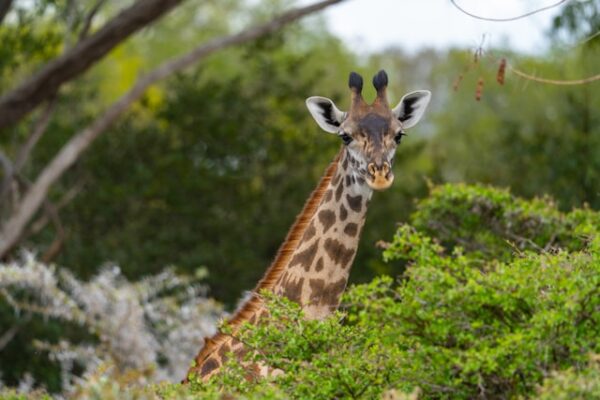
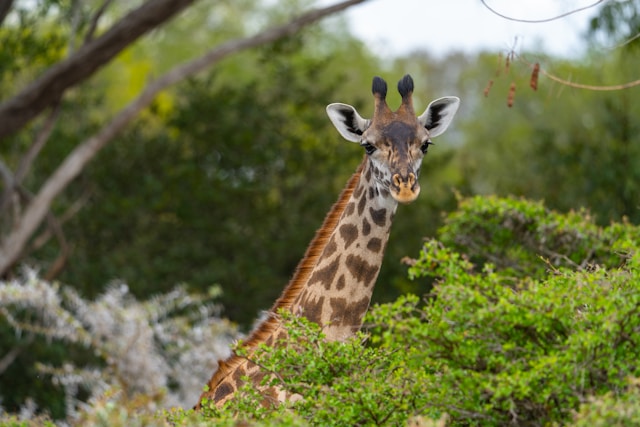
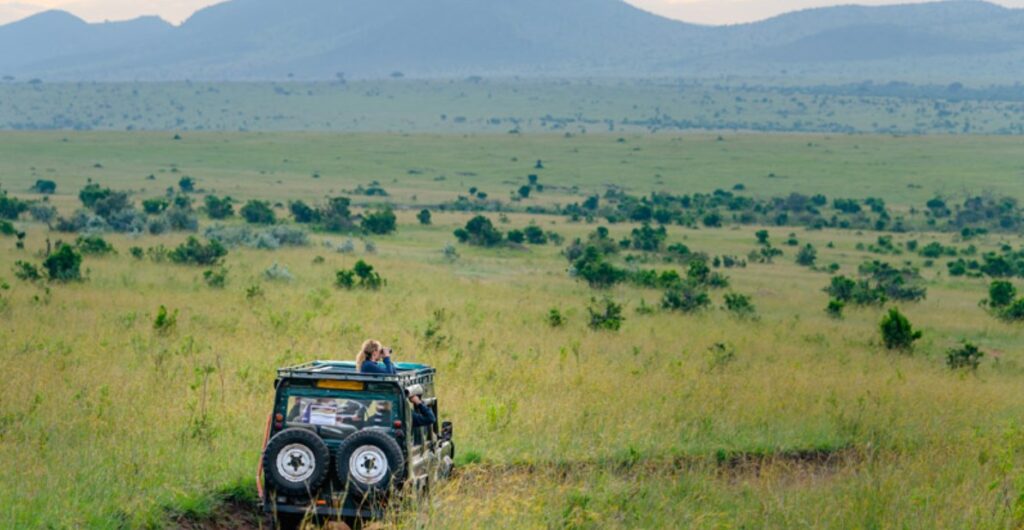
The Buligi game drive circuit on the north bank of the Victoria Nile gives the most accessible open-savannah game drive in Uganda: long views across grassland dotted with Borassus palm trees, with giraffes visible at distance, elephants moving in family groups, lion prides active in the early morning, and Uganda kob in large herds across the open plains. The drives are most productive in the first two hours after dawn, when the light is low and the animals are active before the heat builds.
Ziwa Rhino Sanctuary, on the drive between Kampala and Murchison Falls, is a natural stop that adds white rhino tracking on foot to the family itinerary. For children aged 6 and above, walking alongside a ranger within fifty metres of a white rhino is an experience that produces a very different level of engagement from seeing the same animal through a vehicle window. The size and calm of the white rhino at close range on foot is consistently described by families as the most unexpectedly affecting wildlife moment of the trip.
Kibale Forest National Park — Best for Primate Encounters
Kibale Forest National Park near Fort Portal is Uganda’s primary chimpanzee trekking destination, with the highest chimpanzee density of any forest in East Africa. For family members who meet the minimum age requirement, the chimpanzee trekking experience at Kibale’s Kanyanchu Visitor Centre is one of the most energetic and memorable wildlife encounters in Uganda: chimpanzees are loud, fast, and move through the canopy above the trekking group in a way that produces genuine excitement rather than quiet observation.
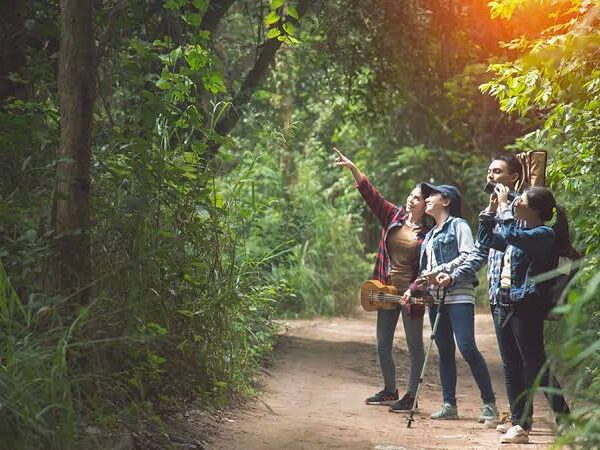
Kibale Forest
For younger children who do not meet the trekking age requirement, Kibale offers genuine alternatives. The Bigodi Wetland Sanctuary, adjacent to the park and managed by the local community, holds eight primate species on an accessible boardwalk trail through papyrus swamp and forest edge. Red and white colobus monkeys, red-tailed monkeys, grey-cheeked mangabeys, and various bird species are commonly seen at close range on the Bigodi walk, which takes two to three hours and is easy enough for most children. The entry fee is approximately USD 10 and goes directly to the community.
Uganda Wildlife Education Centre, Entebbe — Best for Young Children and First-Day Arrivals
The Uganda Wildlife Education Centre in Entebbe, often called UWEC or Entebbe Zoo, is not a national park but belongs in any Uganda family safari guide as the best first wildlife experience for young children and for families arriving at Entebbe International Airport with time before heading into the parks. The centre covers 72 acres of natural forest and lakeside grounds, holds over 350 animals across roughly 120 species, and gives a close, unhurried introduction to Uganda’s wildlife before the family encounters the same species in the wild.
The Chimpanzee Close-Up Experience at UWEC gives families with young children a direct encounter with young chimpanzees in a forest area within the centre grounds, including the possibility of physical contact with the animals.
This experience is not available in any of the national parks, where regulations prohibit touching primates, and it is one of the most specifically child-appropriate activities in Uganda’s tourism offer. The Behind the Scenes tour at UWEC takes families through the food preparation kitchens, veterinary areas, and daily routines of the centre, which is a genuine education for children with an interest in animal care and conservation.
Choosing Family-Friendly Accommodation in Uganda
Not all safari lodges in Uganda are set up for families, and some specifically do not accept young children or require a private vehicle for families with children on game drives.
Before booking any accommodation, confirm the minimum guest age, whether children are allowed on all game drive vehicles or require a private vehicle, what family room configurations are available, whether the pool or any water features are safe for children, what food options are available for younger or fussy eaters, and whether babysitting or childminding services are offered on gorilla or chimpanzee trekking days when younger family members cannot participate.