
5 Reasons to Visit Rwanda for a Holiday in 2027
August 17, 2026
Best Lodges and Where to Stay in Kidepo Valley National Park
August 17, 2026
Guide to Tipping on Safari in East Africa
Guide to Tipping on Safari in East Africa; Tipping is one of the most common sources of quiet anxiety for first-time safari travelers, not because it’s complicated in principle, it’s simply a gesture of gratitude for excellent service, but because the specifics genuinely vary by country, role, and activity in ways that aren’t always obvious. Guides, trackers, porters, camp staff, and rangers all play different roles across a safari, and each is typically tipped separately, in cash, and often in US dollars.
As a travel consultant, I always send clients a specific, written tipping breakdown before departure, because guessing on the ground tends to produce either awkward under-tipping or unnecessarily generous over-tipping, neither of which serves anyone well. This guide walks through exactly who to tip, how much, and the practical logistics of actually doing it across Kenya, Tanzania, Uganda, and Rwanda.
Your Safari Guide or Driver-Guide
In most East African safari settings, your guide and driver are the same person, handling wildlife spotting, route planning, vehicle maintenance, and your overall experience for the duration of the trip. This is the single most important tip of your safari, and the general guideline across Kenya, Tanzania, Uganda, and Rwanda runs $10 to $20 per guest per day, typically given directly to the guide in a labelled envelope at the end of the safari, or, on a longer multi-day trip, distributed at natural breakpoints if you’re changing guides between destinations.
Camp and Lodge Staff
Beyond your guide, a safari camp employs a genuinely large behind-the-scenes team, chefs preparing your bush breakfasts, housekeeping keeping your room spotless, and general camp staff supporting the entire operation. Most lodges maintain a communal tip box, typically found near reception, the dining area, or the departure lounge, and contributions here are pooled and distributed equally among the full team, which genuinely simplifies things for guests who’d rather not work out individual amounts for staff they may not interact with directly.
A reasonable guideline for the communal tip box runs $10 to $20 per guest per stay, or roughly $2 to $5 per guest per night for housekeeping specifically if a property doesn’t use a pooled box system. If you have a dedicated private butler at a higher-end property, a separate tip of $5 to $10 per person per day is standard practice.
Gorilla and Primate Trekking Teams
Gorilla, chimpanzee, and golden monkey trekking in Uganda and Rwanda involves a genuinely larger support team than a standard game drive, typically including a lead trekking guide, additional guides or trackers who locate the gorilla family in advance and clear space for viewing, and armed rangers for safety. Because of this larger team, and the genuinely physically demanding nature of trekking, tipping here runs somewhat higher and is more specifically itemized than standard game-drive tipping.
A commonly used breakdown allocates roughly $10 to $15 per person per trek to the lead trekking guide, and around $5 per person per trek to each additional guide, tracker, or ranger involved. Rwanda’s gorilla trekking industry, positioned toward a more luxury market than Uganda’s, tends to see somewhat higher tips in practice, often $20 to $25 per group for the guide compared with roughly $15 to $20 per group in Uganda, though both remain genuinely appropriate depending on your budget and satisfaction with the experience.
Porters on Trekking and Climbing Trips
Porters, available for hire at gorilla trekking parks and on mountain climbs like Kilimanjaro or Mount Kenya, carry your daypack and help navigate difficult sections of trail, and hiring one is widely regarded as one of the most direct ways your money reaches a local household near the park. Porter fees themselves, typically around $15 to $20 per trek or per day, are usually paid directly as a wage, with tipping guidelines suggesting a further $5 to $10 on top if you’re happy with their service.
On multi-day mountain climbs specifically, the Kilimanjaro Porters Assistance Project (KPAP) publishes recommended rates that many reputable operators follow: roughly $20 per day for the lead guide, $12 per day for assistant guides and cooks, and $5 to $7 per day for porters, with the guidance to tip each crew member individually during a group tipping ceremony rather than handing a lump sum to the head guide alone, ensuring fair, transparent distribution across the full team.
Quick-Reference Tipping Table
| Role | Typical Tip |
| Safari guide/driver | $10-$20 per guest per day |
| Camp/lodge staff (pooled) | $10-$20 per guest per stay |
| Private butler | $5-$10 per person per day |
| Lead gorilla/primate trekking guide | $10-$25 per person per trek (higher in Rwanda) |
| Additional trekking guides/rangers/trackers | $5 per person per trek, each |
| Porters (trekking/climbing) | $5-$10 tip on top of the $15-$20 daily fee |
| Kilimanjaro/Mt. Kenya lead guide | ~$20/day |
| Kilimanjaro/Mt. Kenya assistant guides/cooks | ~$12/day |
| Airport/hotel porters | $1-$2 per bag |
| Restaurant staff (standalone meals) | 10-15% of the bill if not already included |
What Currency to Use
US dollars remain the most widely accepted and practical tipping currency across Kenya, Tanzania, Uganda, and Rwanda, and cash is genuinely preferred over card for tips even at lodges that process card payments for general bills, since most remote camps simply don’t have the ability to route gratuities through a card system. Local currency, Kenyan shillings, Tanzanian shillings, Ugandan shillings, or Rwandan francs, is also perfectly acceptable and sometimes genuinely appreciated for smaller tips, since exchanging foreign currency isn’t always straightforward for individual staff members handling small amounts.
Tipping on Safari in East Africa
One important, easily overlooked detail: bring newer US dollar bills. Notes printed before 2013, or those that are torn, marked, or excessively worn, are frequently refused by banks and currency exchanges across all four countries, meaning your guide or camp staff may not actually be able to deposit or spend older bills even if you hand them over in good faith. Check your bills before departure and request newer notes from your bank if needed.
Practical Tips for Managing Your Tipping Cash
Before your trip, work out roughly how many tipping instances you’ll encounter, airport and hotel porters, restaurant meals outside your all-inclusive package, your safari guide, camp staff, and any trekking-specific tips, and budget accordingly. Splitting your tipping cash into labelled envelopes by day or by property, rather than carrying one large undifferentiated stack of notes, makes the whole process considerably easier to manage once you’re actually on the ground and moving between camps.
Bring smaller denominations wherever possible; very few properties or individual staff members will be able to break a $50 or $100 note, and requesting change on the spot puts both you and the recipient in an awkward position. If you’re ever uncertain who to tip, how much, or how to hand it over appropriately, your camp manager or safari consultant is always the right person to ask rather than guessing.
A Final Note on Balance
Tipping is a genuine, meaningful gesture of appreciation, and for many workers across East Africa’s tourism industry, it provides real, direct income supporting school fees and daily living costs for their families.
At the same time, most experienced operators advise against dramatically over-tipping beyond the guidelines above, since doing so can distort local pay expectations and social dynamics over time. Following the ranges outlined here strikes a fair, respectful balance, genuine appreciation for excellent service without disrupting the broader tipping culture that local communities and workers rely on.
Tipping for Specialty Activities
Beyond the core roles covered above, a few specialty situations come up often enough to be worth addressing directly. Bush pilots operating small charter flights between camps are salaried professionals, and tipping them is generally not customary or expected.
Traditional Maasai dancers who perform at lodges in Kenya and Tanzania, boat skippers and diving staff in Zanzibar, and transfer drivers moving you between the airport and your hotel all fall into a more discretionary category, worth a modest tip if their service genuinely added to your experience, but not governed by the same firm guidelines as your primary guide or trekking team.
For transfer drivers specifically, a discretionary tip of around $10 per group per day is a reasonable benchmark, acknowledging friendliness and assistance with luggage or logistics along the way, without needing to match the more substantial tipping expected of your main safari guide.
How to Actually Hand Over the Tip
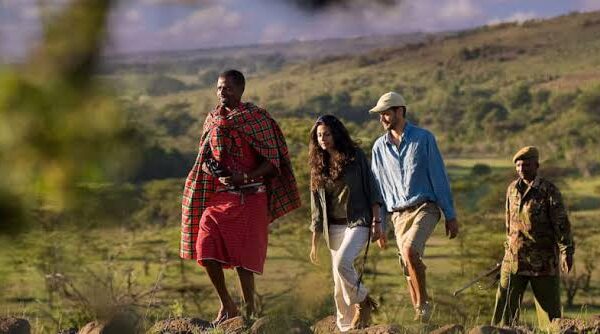
Timing and method both matter more than first-time travelers often expect. Tipping is usually done on departure from a camp or at the end of your full safari, rather than daily, and the most common, low-friction methods include leaving cash in a labelled envelope in your room (informing the camp manager so it’s properly collected and shared), placing a contribution in a communal tip box in the camp’s public area, or handing a tip directly to your guide in person as you say goodbye.
For gorilla and primate trekking specifically, it’s considered good practice to tip the lead guide directly, within sight of the other trackers and rangers present, so he can visibly share the distribution among the full team rather than the tip disappearing into an opaque, unclear allocation. If you’re ever unsure about the appropriate method at a specific property, simply ask your lodge manager, who will be genuinely happy to guide you through their specific system.
Frequently Asked Questions
Is tipping mandatory on an East Africa safari?
No, tipping is customary rather than compulsory across Kenya, Tanzania, Uganda, and Rwanda, but it’s genuinely expected and appreciated as a meaningful part of local tourism income. Budgeting for it in advance is strongly recommended.
How much should I tip my safari guide?
A general guideline of $10 to $20 per guest per day is standard across East Africa, typically given directly to the guide at the end of the safari in a labelled envelope.
Do I need to bring cash, or can I tip by card?
Cash is strongly preferred, and often the only practical option, since most remote camps and individual staff members can’t process tips via card even when general payments are handled electronically.
Why do gorilla trekking tips cost more than standard game drive tips?
Gorilla and primate trekking involves a larger support team, lead guides, additional trackers, and rangers, and the physically demanding nature of the activity, which together typically push total trekking tips to $20-$40 per person once all roles are accounted for.
What if my old US dollar bills get rejected?
This is a genuinely common issue. Banks and exchanges across East Africa frequently refuse bills printed before 2013 or those that are torn or heavily worn. Request newer, crisp bills from your bank before departure to avoid this problem.