The Best African Safari
September 1, 2026
Tips for Women Travelers in Uganda
September 1, 2026
Ultimate Guide to Your Dream Uganda Safari; Uganda offers one of the most genuinely varied safari experiences anywhere in Africa: mountain gorillas in misty rainforest, classic savanna game drives, the source of the Nile, snow-capped equatorial mountains, and a level of biodiversity that punches far above the country’s modest size. Planning a trip that does this variety justice takes real thought, and this guide brings together everything covered across our full Uganda planning series into a single, practical roadmap.
As a travel consultant, my goal with any Uganda itinerary is the same: help you build a trip that genuinely reflects what you want to experience, rather than a generic template stitched together from a handful of famous names. Here’s how to think through every stage of planning your dream Uganda safari.
Step 1: Decide What Kind of Trip You Actually Want
Before choosing a single park or lodge, get clear on your genuine priorities. Are you chasing the profound, once-in-a-lifetime experience of mountain gorilla trekking? Do you want classic Big Five game drives across open savanna? Are you traveling with young children, requiring careful attention to age policies and pacing? Or are you drawn to Uganda’s genuinely adventurous side, white-water rafting on the Nile, mountain hiking in the Rwenzoris, or remote wilderness exploration in Kidepo Valley?
Most exceptional Uganda itineraries combine two or three of these priorities rather than trying to include everything, and being honest about what matters most from the outset makes every subsequent decision, destinations, trip length, budget, considerably easier.
Step 2: Choose Your Core Destinations
Bwindi Impenetrable National Park remains Uganda’s headline destination, home to roughly half the world’s mountain gorilla population across four distinct trekking sectors, Buhoma, Ruhija, Rushaga, and Nkuringo, each with its own character and accommodation options. Queen Elizabeth National Park offers Uganda’s strongest all-around savanna safari experience, with the Kazinga Channel boat cruise, tree-climbing lions in the Ishasha sector, and genuinely excellent walking safaris at Kyambura Gorge.
Murchison Falls National Park delivers the dramatic power of the Nile forced through a narrow gorge, alongside strong game drives and chimpanzee trekking in adjacent Budongo Forest. Kibale National Park offers Uganda’s premier chimpanzee trekking experience, and for travelers with the time and appetite for genuine remoteness, Kidepo Valley National Park in the far northeast rewards the journey with rare wildlife and profound solitude found nowhere else in the country.
Step 3: Understand the Age Rules Before You Plan Further
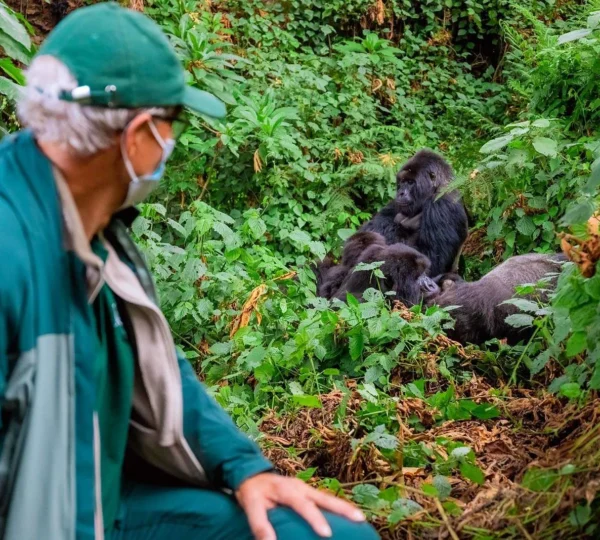
Gorilla safari
Mountain gorilla trekking requires all trekkers to be at least 15 years old, a strict, universally enforced rule with no exceptions. Chimpanzee trekking is generally accessible from age 12, and golden monkey trekking in Mgahinga typically carries no strict minimum age at all, giving families with younger teenagers genuine primate experiences even when gorilla trekking isn’t yet an option. Understanding this framework early shapes which parks and activities genuinely suit your specific travel party.
Step 4: Decide on Trip Length and Pacing
A focused seven-to-ten-day trip allows a genuinely satisfying combination of two or three destinations, gorilla trekking in Bwindi paired with savanna game drives in Queen Elizabeth or Murchison Falls, for instance, without feeling rushed. Two weeks or more opens up a genuinely comprehensive circuit spanning primate trekking, classic savanna, and either a Rwenzori extension or a Kidepo Valley detour for travelers seeking real adventure.
Resist the temptation to overpack your itinerary with too many destinations in too little time; two or three well-chosen locations with adequate time at each consistently produce a more satisfying trip than a rushed, six-stop circuit covering the same number of days.
Step 5: Time Your Trip Around Your Priorities
Uganda’s dry seasons, roughly June through September and December through February, offer the most comfortable trekking and game-drive conditions across the country. Because gorilla trekking happens year-round given the habituated families’ daily presence, Uganda doesn’t carry the same rigid seasonal planning pressure that a migration-focused Kenya or Tanzania safari does, giving genuinely more flexibility in choosing your travel dates.
That said, the wetter months bring meaningfully lower rates and considerably fewer crowds, a worthwhile trade-off for budget-conscious travelers willing to accept muddier trekking conditions and the possibility of afternoon rain.
Step 6: Set a Realistic Budget
Uganda remains one of the more affordable safari destinations in East Africa, with gorilla permits at $700 per person, considerably less than Rwanda’s $1,500, alongside generally reasonable accommodation across every tier. Budget for permits, accommodation, park entrance fees, a private or shared vehicle and guide, gratuities, and, if your itinerary includes multiple remote parks, potential internal flights to save on long road transfer days.
Booking six to twelve months ahead is genuinely advisable for peak season travel, particularly for gorilla permits, given Uganda’s limited daily allocation of 160 permits across all four Bwindi sectors combined.
Step 7: Choose Accommodation That Matches Your Priorities
For gorilla trekking specifically, match your lodge to your assigned trekking sector, since Bwindi’s four sectors each have their own briefing point and driving between them can take hours. For families, confirm specific age policies and family room configurations directly with each lodge rather than assuming. For luxury travelers, Uganda’s top-tier properties, including Sanctuary Gorilla Forest Camp, Clouds Mountain Gorilla Lodge, and Mahogany Springs Lodge, deliver genuinely exceptional design and service at generally more accessible pricing than comparable properties in Rwanda.
Step 8: Layer in Cultural and Culinary Experiences
A wildlife-only itinerary leaves out an entire dimension of what makes Uganda distinctive. Building in a day at Ewaffe Cultural Village near Kampala, a Batwa cultural walk near Bwindi, or simply a genuine local meal, matoke, luwombo, or a street-side rolex, rather than relying entirely on lodge dining, adds real depth and memory to a trip that could otherwise become a blur of game drives and treks.
Step 9: Plan Your Practical Logistics
Confirm visa requirements well in advance; Uganda offers an e-visa system, and East African Tourist Visa options exist for travelers combining Uganda with Kenya and Rwanda. Visit a travel clinic four to six weeks before departure for vaccination and malaria prophylaxis guidance specific to your itinerary, and secure comprehensive travel insurance with medical evacuation coverage, genuinely essential given how remote many of Uganda’s lodges are from hospital-level care.
Pack in soft-sided duffel bags rather than hard-shell suitcases if your itinerary includes any internal flights, check specific luggage weight limits well ahead of departure, and bring layered clothing capable of handling everything from warm savanna afternoons to genuinely cold early-morning game drives and higher-altitude trekking.
Step 10: Budget for Tipping
Set aside cash, US dollars in newer, undamaged bills, for tipping your safari guide ($10-20 per guest per day), gorilla trekking guides and support staff ($20-40 per person per trek combined across the team), and camp staff (typically via a communal tip box). Planning this in advance avoids scrambling for appropriate cash once you’re already on the ground.
A Sample 12-Day Uganda Dream Itinerary
| Days | Destination | Focus |
| 1-2 | Entebbe/Kampala | Arrival, Ewaffe Cultural Village |
| 3-4 | Murchison Falls National Park | Nile boat cruise, top of the falls, game drives |
| 5-6 | Kibale National Park | Chimpanzee trekking, Bigodi Wetland walk |
| 7-8 | Queen Elizabeth National Park | Kazinga Channel cruise, Ishasha lions, Kyambura Gorge walk |
| 9-10 | Bwindi Impenetrable National Park | Gorilla trekking, Batwa cultural experience |
| 11-12 | Lake Bunyonyi/Departure | Relaxation, return to Entebbe |
Final Advice
The single best thing you can do to ensure your dream Uganda safari genuinely lives up to that description is work with an experienced consultant who can match every decision, destinations, pacing, accommodation, activities, to your specific priorities rather than a generic template. Uganda rewards genuine curiosity and patience, and a well-planned trip here consistently ranks among travelers’ most profound and memorable life experiences, gorillas, savanna, and everything in between.
Frequently Asked Questions
How many days do I need for a proper Uganda safari?
A minimum of seven to ten days allows a satisfying combination of gorilla trekking and at least one savanna park. Two weeks or more allows a genuinely comprehensive circuit including adventure activities or remote parks like Kidepo Valley.
What’s the single most important thing to book first?
Gorilla trekking permits, given Uganda’s limited daily allocation of 160 permits across all four Bwindi sectors. Book these six to twelve months ahead for peak season travel.
Is Uganda a good destination for a first African safari?
Yes, particularly for travelers drawn to primate trekking alongside classic game viewing. Its combination of gorillas, chimpanzees, savanna wildlife, and genuine landscape diversity within one country makes for a well-rounded introduction to African safari travel.
How much should I budget for a Uganda safari?
Uganda is generally more affordable than Kenya, Tanzania, or Rwanda, with gorilla permits at $700 (versus Rwanda’s $1,500) and reasonable accommodation across every tier, though total costs vary considerably based on trip length and luxury level chosen.
Can I combine Uganda with Rwanda or Kenya on the same trip?
Yes, and this is a popular combination, particularly pairing Uganda’s gorilla trekking with Rwanda’s Volcanoes National Park or a classic Kenya savanna safari, using the East African Tourist Visa to simplify border crossings.