5 Interesting Facts About Kenyan Cultures
October 30, 2026
Bird Watching at Lake Naivasha
October 30, 2026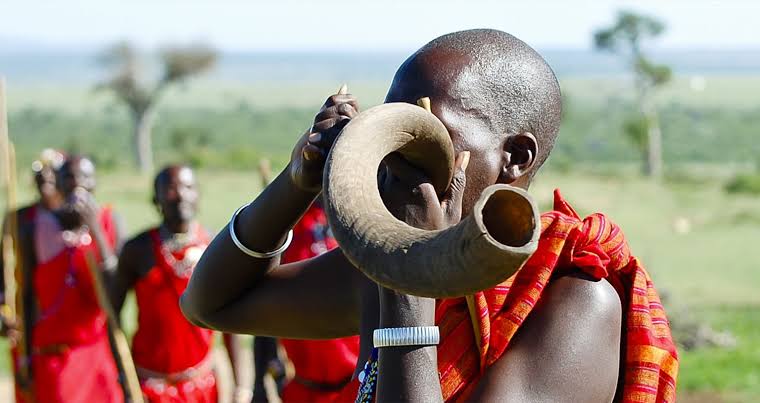
10 Interesting Facts About the Maasai Tribe
10 Interesting Facts About the Maasai Tribe : This guide sets out ten facts about the Maasai, each with a short explanation of what lies behind it, followed by practical advice on how to meet Maasai communities respectfully, where to go, how to get there, where to stay and when to travel. The facts are drawn from several sources, and where figures differ, the article says so.
Fact 1: Maa Is the Language That Binds Them, and Most Maasai Speak Several
The Maasai speak Maa, an Eastern Nilotic language, and it is the mother tongue of communities across southern Kenya and northern Tanzania.
Most Maasai today also speak Swahili and English, particularly younger people who have been to school, which is why you can talk with a guide in English at a camp and hear Maa among family members moments later.
In Kenya, the 2019 census recorded 1,189,522 Maasai, up from 377,089 in 1989. That jump reflects population growth as well as changes in how people identify, and it is a reminder that the Maasai are a large and varied people, not a small group frozen in time.
Fact 2: Cattle Are a Sacred Gift, and Wealth Is Counted in Cattle and Children
In Maasai belief, the god Enkai gave cattle to the Maasai as a sacred gift, and cattle hold a central place in religion, social life and the economy. Traditionally, a man’s wealth was judged by the number of cattle and children he had, and herds are used for bride wealth, gifts and ceremonies as well as food.
The traditional diet centred on meat, milk, fat and, on some occasions, blood drawn carefully from living cattle, supplemented by honey and plant infusions. Today, many families also grow maize and buy food, but the cultural weight of cattle remains.
Ask your guide how many cattle a family needs, and you will learn a great deal about how people think about security and status.
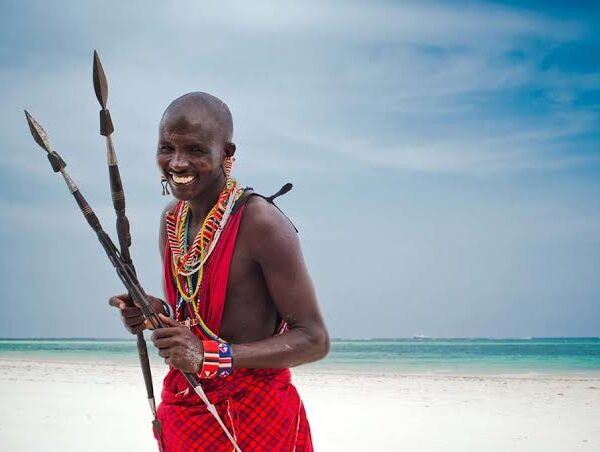
Maasai People
Fact 3: The Red Shuka Is Younger Than You Think
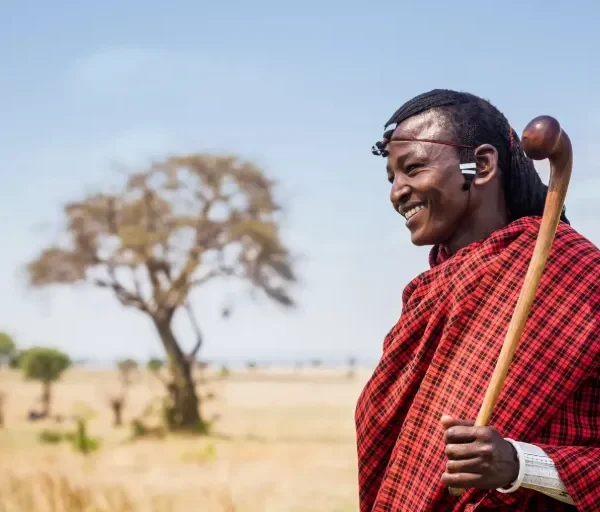
The red or plaid cloth that now defines the Maasai look became common only in the 1960s, when trade cloth began to replace earlier clothing made from sheepskin and cattle hide. The colour is often said to help ward off wild animals, and red is widely associated with Maasai identity, but the cloth itself is a modern adoption, which shows that dress changes even in strong traditions.
Wrapped and tied in different ways, the shuka can be a cloak, a skirt or a blanket, and plaid versions are also common. Many Maasai wear Western clothes in town and traditional dress at ceremonies, so seeing a shuka is more a sign of occasion than of a fixed lifestyle.
Fact 4: Beadwork Is a Language, Not Just Decoration
Maasai beadwork is among the most recognised crafts in Africa, and every piece carries information. Colours and patterns communicate age, social status, marital stage and achievement, and more elaborate pieces were traditionally reserved for people of higher standing. Brides, warriors and elders wear different designs, and necklaces, bracelets, earrings and headbands all follow patterns that insiders can read.
Since glass beads arrived through colonial-era trade, beadwork has also become an important income source for women, who make and sell jewellery to visitors. Buying directly from the makers puts money where it matters, and asking what the colours mean is a good way to start a conversation.
Fact 5: Women Build the Houses
In a traditional Maasai homestead, called an enkang, the houses are low, loaf-shaped structures built by women from wood, grass, mud and cattle dung. The houses are arranged in a circle and enclosed by a thorn fence, with a central space where cattle are kept at night. The design is efficient, protective and closely tied to the herding way of life.
Women also milk the cattle, manage the household and play important roles in family decisions, and they have their own ceremonies and life stages. The image of Maasai life as purely male and warrior-focused misses the central role women play in the home and the economy.
Fact 6: Society Is Organised by Age-Sets
Maasai society is structured around age-sets, groups of boys who are initiated together and then move through life stages as a cohort. The stages run from junior warrior to senior warrior to junior elder and senior elder, and each stage brings different responsibilities and privileges. The age-set shapes friendships, leadership and decision-making for life.
Moran, the warriors, traditionally lived apart from the main community, protecting people and cattle and learning the customs of adulthood. The system gives young men a defined path and the community a clear structure of authority, and it remains important even as schooling and work change daily life.
Fact 7: Eunoto Marks the End of the Warrior Years
The ceremony of Eunoto marks a warrior’s transition to junior elder. During it, the long braided hair that warriors have worn is shaved, symbolising a change in status and responsibilities. It is a major event, bringing together families and age-mates for celebration, blessings and music, and it ends the warrior phase and opens the door to marriage and leadership.
Visitors rarely witness the full ceremony, which is a community event rather than a tourist performance, but guides may explain it and describe how different age-sets mark transitions. It is a good example of how a ritual can reinforce social structure.
Fact 8: The Jumping Dance Has a Practical History
The adumu, also called enkipaata, is the Maasai jumping dance. Young men stand in a circle, and one at a time they leap high into the air, keeping their bodies straight and their heels apart from the ground, while the group sings in rhythmic chants. Height and grace are admired, and the dance is performed at ceremonies and for visitors.
Maasai tradition links the dance to the training of young warriors, who needed strong leaping skills for hunting and defence. Today it is a symbol of strength and identity, and it is also one of the best-known cultural performances in East Africa. If you join in during a visit, expect to be gently teased by the experts.
Fact 9: A Catastrophe in the 1880s and 1890s Reshaped Maasai Society
From about 1883 to 1902, a period known as Emutai, the Maasai suffered a devastating combination of rinderpest, smallpox and drought. Rinderpest killed a large share of their cattle, and disease and hunger killed many people, with deep effects on social structures. It left communities vulnerable at the very moment that colonial powers were expanding into the region.
Land treaties and policies in the early twentieth century then reduced Maasai territory and restricted grazing, which still affects land rights and livelihoods today. Understanding Emutai and the colonial period helps explain why land is such an emotional and political issue in southern Kenya.
Fact 10: Maasai Landowners Helped Invent the Mara Conservancy Model
Many of the best-known wildlife areas in Kenya, including the Maasai Mara and Amboseli, were historically Maasai lands. Today, Maasai landowners are partners in conservancies around the Mara, leasing their land to limit farming and settlement in exchange for regular payments, with tourism supporting wages, schools and health care.
Naboisho Conservancy takes its name from the Maa word for coming together, and Nashulai Maasai Conservancy is described as the first community-owned and community-run conservancy in the Mara.
These arrangements show that conservation can work when local people lead and benefit, but they also depend on fair agreements and transparent governance. When you stay in a conservancy, you are taking part in that experiment.
Maasai
How to Meet Maasai Communities Respectfully
- Choose visits arranged through a lodge, conservancy or community group, and ask how income is shared.
- Greet people properly, and take time for conversation instead of rushing to the dance.
- Ask before photographing people, homes and ceremonies, and accept a refusal.
- Dress modestly and follow your guide’s advice on customs.
- Buy beadwork directly from makers at fair prices, and avoid bargaining aggressively.
- Do not hand out sweets or money, which can create dependency.
Where to Go, Getting There and Where to Stay
The best places to meet Maasai communities are around the Maasai Mara, Amboseli and Kajiado County, with conservancies such as Naboisho, Olare Motorogi, Mara North and Selenkay offering guided walks and cultural visits. The Mara is about five to six hours from Nairobi by road or 45 minutes by air, and Amboseli is four to five hours by road. In Nairobi, the Bomas of Kenya presents dances and homes from many communities.
Choose lodges and camps that employ Maasai staff and share revenue with the community, and ask about cultural activities when you book. Community-owned camps and conservancy stays often offer the most thoughtful experiences.
Best Time to Go
Cultural visits are possible year-round. The dry seasons, June to October and January to February, are comfortable for travel and easier on the roads, while the wetter seasons, March to May and November, bring green landscapes and fewer visitors. If you want to see a specific ceremony or event, ask your operator for current dates, since they are community-led and not scheduled for tourists.
How to Use These Facts on a Visit
Facts are most useful when they become questions. If you learn that cattle are central, ask a guide how many animals a family needs and how herds are shared. If you notice beadwork, ask what the colours mean and who made the piece. If you hear about age-sets, ask which one your guide belongs to and what responsibilities came with it.
Ask about change as well as tradition. Many Maasai are teachers, drivers, guides, conservancy staff and business owners, and their answers will often combine old and new. Listen without judging, accept that different people will tell the story differently and thank them for sharing it. A good conversation is worth more than any photograph.