Marine Parks in Kenya
October 30, 2026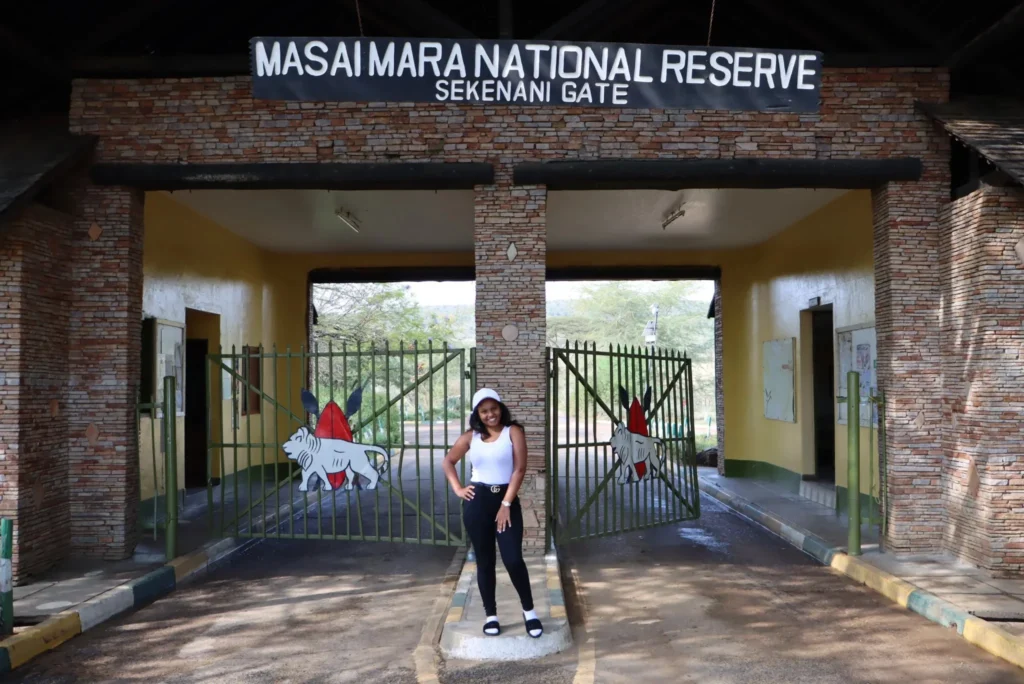
Maasai Mara National Reserve Gates
Maasai Mara National Reserve Gates : Most visitors do not think about gates until they are in a queue at one. The Maasai Mara National Reserve is large, covering about 1,510 square kilometres, and the gate you choose decides how long you spend on the road, how long you wait at the barrier and which part of the reserve you see first. Choose well and you save an hour. Choose badly and you add a long drive on rough tracks before your first game drive has even started.
This guide explains each gate, which camps and regions it serves, how the fee system and ticketing work, when gates open and close, and how to choose between them. It also covers getting there, where to stay near each gate and the best time to go.
How Many Gates Does the Mara Have?
The most commonly cited count is six entry gates. Five of them, Sekenani, Talek, Ololaimutia, Musiara and Sand River, are on the Narok County side, which covers roughly two-thirds of the reserve. The sixth, Oloololo, serves the Mara Triangle in the west, which is managed separately and lies across the Mara River. An internal fee point at the Purungat (Mara) Bridge links the two sectors.
Some sources add a newly approved gate at Enoompuai, and others describe Sand River as closed. Because the situation changes, treat any list as a starting point and confirm with your camp or operator which gate they use for your dates. Visitors who fly in are ticketed at the airstrip instead, and several camps have private access points that the public cannot use.
Which Gate Should You Use?
The simplest rule is to use the gate closest to your camp. Sekenani is the main gate and the one most road safaris from Nairobi use. Talek serves the central camps along the Talek River, Musiara serves the northern marsh area and camps near Governors’, Oloololo serves the Mara Triangle and its camps, and Sand River is on the south-eastern edge near the Tanzanian border.
If you are arriving from Nairobi by road, Sekenani is usually the right choice for eastern and central lodges, Talek for camps such as those on the river and Oloololo for Triangle lodges, which are best reached from Kilgoris rather than Narok. If your priority is the Mara River crossings during the migration, Musiara and Oloololo give the most direct access to the river.
| Gate | Area Served | Best For |
| Sekenani | Eastern reserve; main road gate | Road arrivals from Nairobi, eastern and central camps |
| Talek | Central camps along the Talek River | Central plains, camps near Talek |
| Musiara | Northern marsh area | Governors’ area, northern camps and conservancy arrivals |
| Ololaimutia | Near Sekenani, western side | Alternative road entry, quieter than Sekenani |
| Sand River | South-eastern reserve, near Tanzania | Quiet entry; status should be confirmed |
| Oloololo | Mara Triangle, north-west | Triangle camps, Mara River crossings, cashless payment |
Sekenani Gate
Sekenani is the busiest gate in the reserve. It handles more traffic than any other, which means it is also where queues build up, particularly in peak season. If you reach it at midday in August, expect a wait, and many guides recommend arriving early or later in the day to avoid the worst of it. A longer queue can add 20 to 45 minutes in peak periods.
The gate lies about 270 kilometres from Nairobi, and the road from Narok to Sekenani includes a long section of rough track. Sekenani is the right gate for camps along the eastern side of the reserve and for many visitors on a first trip. If your camp is on the Sekenani road, you will naturally use it, and it is a sensible choice if you are not sure.
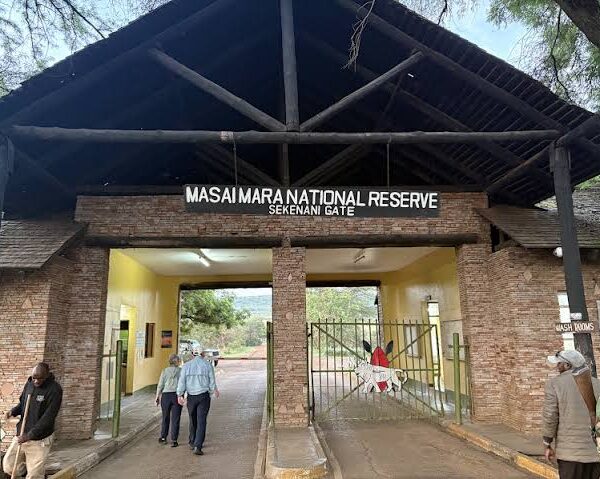
Sekenani Gate
Talek, Musiara and Ololaimutia
Talek Gate sits beside the Talek River and is less crowded than Sekenani, with shorter queues. It is the better choice for camps along the Talek River and central plains, and it is closer to the Mara River than Sekenani. Musiara Gate serves the northern part of the reserve, including the Musiara Marsh, known for big cat sightings, and is the entry for visitors going to Governors’ Camp or arriving by road from northern conservancies.
Ololaimutia Gate is near Sekenani and serves as an alternative road entry. Sources vary in how they describe its position, and it is generally quieter than Sekenani. If you are travelling with a guide, ask which gate they prefer for your camp, since they know the current road conditions and the shortest route through the reserve.
Oloololo and the Mara Triangle
The Mara Triangle is the western third of the reserve, managed separately and known for fewer vehicles and strong river-crossing viewing. Oloololo Gate is its main entrance, in the north-west below the escarpment, and it is the gate for camps such as those near Mara Serena and Kichwa Tembo. Fly-in guests at the Triangle airstrips are ticketed at the airstrip.
Payment at Oloololo is cashless only, which means you need a card or the approved payment method, and cash will not work. The approach from Kilgoris is different from the Narok route, so a driver who knows the Triangle is important. If you plan to move between the Triangle and the eastern reserve, you will pass the Purungat Bridge fee point and may need to pay again, so ask about the rules.
Fees
Fees are per person, per 24-hour or 12-hour period depending on how you buy, and they differ by nationality: Kenyan citizens, East African residents and non-residents pay different rates. Most camps and operators include park fees in their packages, so check what is included before you assume you will pay at the gate.
Payment and Ticketing
Payment at the gates changed in recent years. Narok County gates generally accept cash or card, though card systems can fail, and carrying cash as a backup is sensible. The Mara Triangle gates are cashless only. The fee is the same either way, but the payment method is not.
Tickets are often bought in advance online or through your operator, which saves time at the gate. Keep your ticket and receipt, since you may be asked to show them during your stay. If you plan to exit and re-enter, ask about the rules, because leaving the reserve can end your ticket validity.
Opening Hours and Timing
Gates are typically open from 6am to 6pm, and visitors are expected to be out of the reserve by closing time unless they are staying at a camp inside it. Arrive early to make the most of the day and to avoid queues, and plan your return so that you leave the reserve before dark. Driving at night is not permitted in the reserve.
If you arrive late, you may be asked to pay for an extra day or to wait until morning. Ask your camp about its routine, including the time you should leave for your first morning drive and how to handle the gate formalities efficiently.
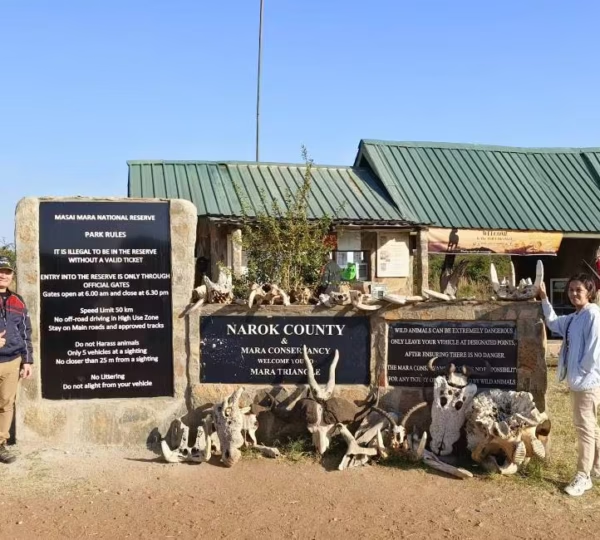
Oloololo Gate
Where to Stay Near Each Gate
Choose accommodation near the gate that serves your area. Around Sekenani, there are lodges and camps along the Sekenani road, with simple and mid-range options. Near Talek, riverside camps give quick access to the central plains. Near Musiara, camps such as Governors’ and others in the northern reserve are close to the marsh and river. In the Triangle, camps such as Mara Serena and Kichwa Tembo are near Oloololo.
Conservancy camps often have their own access arrangements, so check which gate they use and whether conservancy fees apply in addition to reserve fees. If you want a mix, plan a few nights in the reserve and a few in a conservancy, and ask your operator to organise the gate logistics.
Getting There and Best Time to Go
By road, the drive from Nairobi to Sekenani takes about five to six hours, depending on traffic and the condition of the final stretch. Flights from Nairobi’s Wilson Airport to the Mara’s airstrips take about 45 minutes and are the easiest way to reach camps in the Triangle and conservancies. The dry seasons, July to October and January to February, are best for wildlife, with July to October the peak migration period and the busiest time at the gates. The green seasons bring fewer visitors but muddier tracks.