Tourist Activities to Do in Serengeti National Park
October 16, 2026
Top Things to Do in Mombasa
October 21, 2026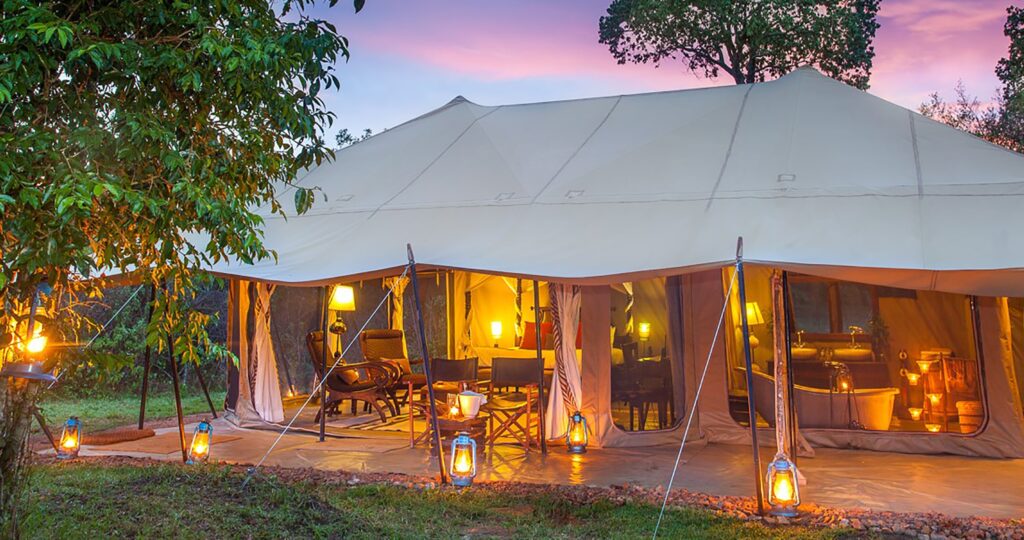
Where to Stay in the Maasai Mara
The Maasai Mara has more lodges and camps than any other safari area in Kenya, and the choice can feel overwhelming. Prices run from about US$50 a night for a basic tent outside the gate to well over US$2,500 for a flagship camp on the Mara River. Names blur together, and many operators describe their own camp as the best.
The most useful way to choose is to start with a single structural decision: do you want to stay inside the national reserve, in the Mara Triangle or in one of the private conservancies that border it?
This guide explains that decision, then goes through the main camps and lodges by area and budget, with price ranges for 2026, the gates they use, how to get there and when to book. It is written to help you narrow the options before you speak to an operator, not to replace a conversation about your own priorities.
The First Decision: Reserve, Triangle or Conservancy
The Maasai Mara ecosystem has three broad types of place to stay. Inside the main reserve, managed by Narok County, lodges and camps tend to be cheaper, but vehicles are not limited; off-road driving and night drives are not allowed and sightings can attract many vehicles.
The Mara Triangle, the western part of the reserve managed separately by the Mara Conservancy, has fewer vehicles and strong access to the Mara River. The private conservancies around the reserve, owned by Maasai landowners and leased to camps, cap vehicle numbers, allow off-road driving, night drives and walking safaris, and generally cost more.
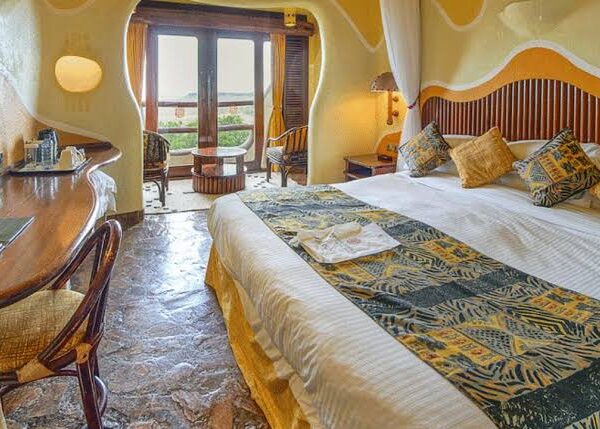
Mara Serena Safari Lodge
A rule of thumb from several 2026 guides is that a mid-range conservancy camp will often outperform a luxury reserve camp at a similar price for activity depth and sighting quality. The conservancy premium buys exclusivity, flexibility and quiet. The reserve offers lower prices and closer access to some of the most famous sites, including the Mara River crossings, which is why many travelers combine both.
What It Costs: Price Ranges
Budget options, typically basic tented camps and community camps, are quoted at roughly US$50 to US$150 per person per night. Mid-range lodges and camps run about US$150 to US$450, and some sources place strong conservancy value camps at US$300 to US$600. Luxury camps are quoted at about US$380 to US$1,000, and ultra-luxury properties at US$1,500 to US$2,600 or more.
Be careful comparing nightly rates. One guide warns that a camp advertised at US$350 per night inside the reserve can cost US$430 to US$550 once park fees and extras are added. Conservancy fees are separate or included, depending on the camp. A three-night package price is a more reliable way to compare options than a headline nightly rate.
| Tier | Approximate Per Person Per Night | Typical Setting |
| Budget | US$50-150 | Basic tented camps, outside gates, community camps |
| Mid-range | US$150-450 (some sources up to US$600) | Reserve lodges, value conservancy camps |
| Luxury | US$380-1,000+ | Classic river camps, conservancy camps |
| Ultra-luxury | US$1,500-2,600+ | Flagship camps, small conservancy properties |
Inside the Main Reserve
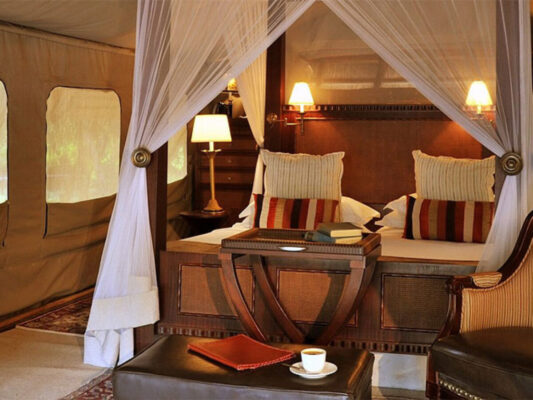
Governors’ Camp, established in 1972 on the Mara River at the Musiara Marsh, is the classic luxury choice. It sits in one of the richest wildlife corridors in the reserve, close to the river crossings in season, and is quoted at roughly US$450 to US$1,000 per person per night depending on the source and the camp variant, with Little Governors’ and Il Moran as related properties. Reserve rules mean no night drives or off-road, but its position and guiding make up for it.
Other reserve options include Keekorok Lodge, one of the oldest in the Mara, opened in 1962; Mara Sopa Lodge; Mara Simba Lodge; and Ashnil Mara Camp for good-value stays; and Fig Tree Camp and Mara Intrepids along the Talek River for mid-range comfort with river views. Sarova Mara Game Camp is a long-established mid-range option, quoted at about US$300 to US$500 per person per night depending on season, with spacious lawns and a family-friendly feel.
The Mara Triangle
The Triangle is the western third of the reserve, managed by the Mara Conservancy, with riverine forest, red oat grasslands, volcanic hills and the 400-meter Oloololo Escarpment. It has fewer vehicles and strong migration viewing, and gate payment is cashless. Two permanent lodges are inside it: Mara Serena Safari Lodge on a hilltop with sweeping views and Little Governors’ Camp, and Kichwa Tembo Tented Camp lies nearby.
Angama Mara, the most famous luxury property in the area, is perched on the Oloololo Escarpment, outside the reserve, with views over the Triangle. Rates are generally in the ultra-luxury band, quoted from about US$1,000 to US$2,750 per person per night depending on the source and season, and it supports the Angama Foundation, which contributes to education, health and wildlife protection. It suits photographers, couples and travellers who value design and views.
Olare Motorogi, Mara North and Naboisho Conservancies
Conservancies are where the quieter, more flexible experience lives. Olare Motorogi, on the northern edge of the reserve, is known for big cats and has some of the strictest vehicle limits. Camps there include Mara Plains Camp, a six-tent Relais and Chateaux property quoted from about US$1,500 to US$1,800, Mahali Mzuri, a luxury camp with a spa and pool, and Kicheche Bush Camp. Kicheche and Porini camps offer more modest options.
Mara North, the largest conservancy, has a wide range of camps. Karen Blixen Camp, on the Mara River with about 20 to 22 elegant tents, is quoted from roughly US$570 and offers direct crossing access in season through a community partnership model.
Saruni Mara and Mara Engai Lodge are boutique options with night drives and walking safaris, and Ngare Serian and Elephant Pepper are other well-known camps. Naboisho, nearby, adds more choices in the mid-range to luxury bands. Conservancy fees are separate or included, so check the quote.
Budget and Outside-the-Gate Options
If you are watching your budget, there are camps just outside the gates, particularly around Sekenani, that offer tented accommodation at US$50 to US$120 per night. Kambu Mara Camp outside Sekenani is one example quoted for budget stays. Staying outside means a short drive to the gate each morning, and you pay reserve entry fees on top.
Community camps are another option, often owned or partly owned by Maasai groups, with simple tents and a direct benefit to local families. Camping inside the reserve is possible at public and special campsites, with extra fees. Budget travelers should ask what is included, particularly game drives and park fees, since cheap rates can add up once everything is charged.
Which Gate Does Your Camp Use?
Choose accommodation near the gate that serves your area, and confirm it with the camp. Sekani is the main gate for road arrivals from Nairobi and eastern camps, Talek serves central camps along the river, Musiara serves the northern marsh area, including Governors’, and Oloololo serves the Triangle. Fly-in guests are ticketed at the airstrip. See the separate guide to Maasai Mara gates for details on gates, fees and payment.
How to Choose by Traveller Type
- First-time visitors on a budget: a reserve lodge or camp with full board and game drives included.
- Photographers and repeat visitors: a conservancy camp with off-road access and night drives.
- Migration-focused trips (July to October): camps on the Mara River, such as Governors’, Karen Blixen or Triangle camps.
- Families: Sarova Mara Game Camp, Kichwa Tembo, JW Marriott or camps with family tents and flexible meal times.
- Honeymooners: Angama Mara, Mara Plains or Mahali Mzuri for privacy and views.
- Travellers who want walking: conservancy camps, since walking is not permitted in the reserve.
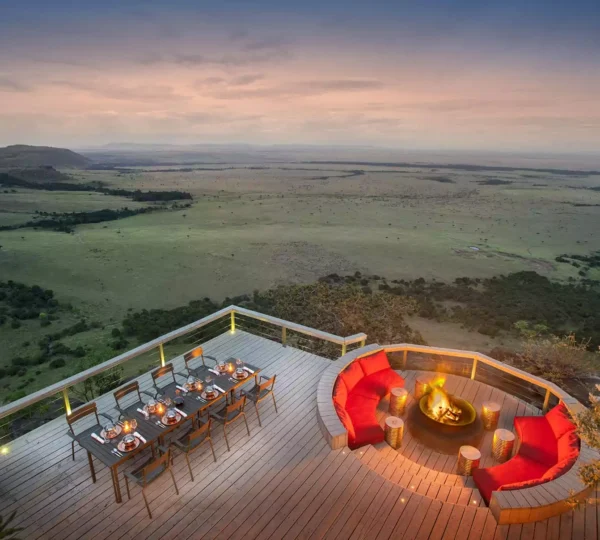
Angama maara
Getting There
Most guests fly from Nairobi’s Wilson Airport to airstrips such as Keekorok, Musiara, Mara Serena, Kichwa Tembo and conservancy strips, a flight of about 45 minutes. By road, the drive from Nairobi to Sekenani takes about five to six hours, with a rough final stretch, and many camps arrange transfers from the gate or airstrip. Flying is easier, particularly for Triangle and conservancy camps, and it saves a day of driving.
Best Time to Go and When to Book
July to October is peak season, with the Great Migration and Mara River crossings, high demand and the highest rates, and camps in the best locations selling out many months ahead. January to March offers good big-cat viewing with fewer visitors, and April to May, the long rains, brings the lowest rates and some camp closures. Book six to twelve months ahead for July to October, and at least three to six months ahead for shoulder periods.
Frequently Asked Questions
Is it better to stay in the reserve or a conservancy?
Conservancies offer night drives, walking and off-road driving with fewer vehicles but cost more. The reserve is cheaper and gives easy access to the river crossings. Many travelers combine both.
How much does it cost to stay in the Mara?
Roughly US$50 to US$150 per person per night for budget, US$150 to US$450 for mid-range, US$380 to US$1,000 for luxury and US$1,500 or more for ultra-luxury.
Which camp is best for the river crossings?
Camps on the Mara River, such as Governors’ Camp, Karen Blixen Camp and Triangle Camps, offer the most direct access in season.
What is the classic Mara camp?
Governors’ Camp, established in 1972 on the Mara River at Musiara Marsh.
When should I book?
Six to twelve months ahead for July to October, and three to six months for shoulder periods.