7 Days Marangu Route Kilimanjaro Climb
September 14, 2026
7 Days Tanzania Wilderness Safari
September 15, 2026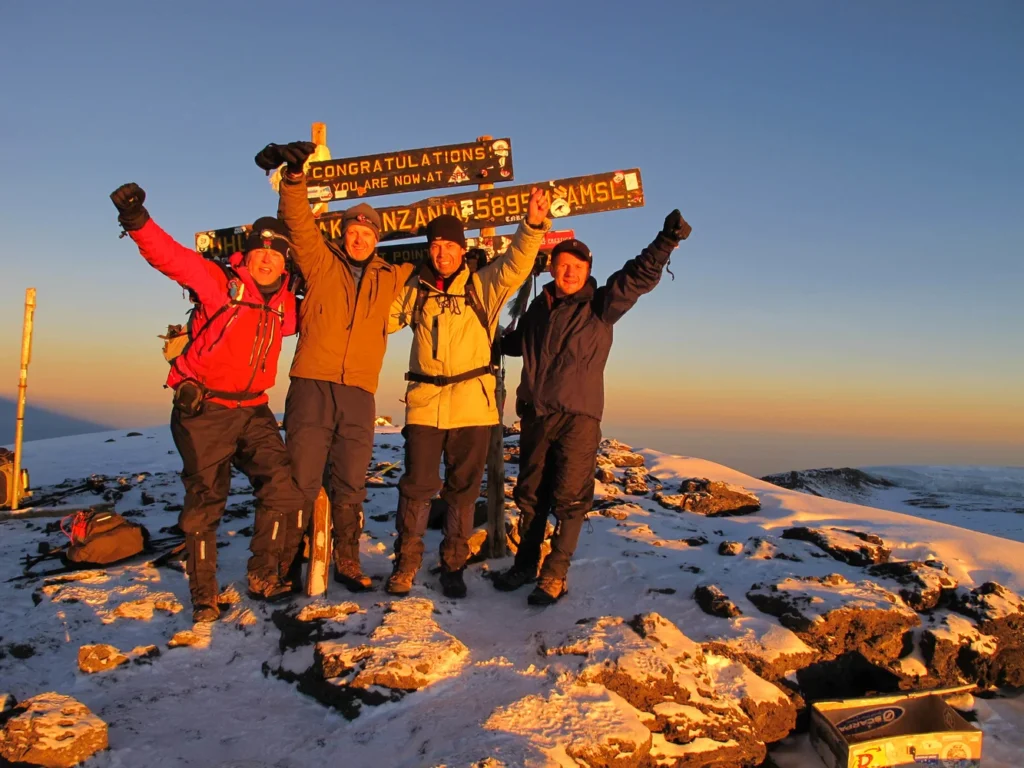
7 Days Rongai Route Kilimanjaro Climb
Most Kilimanjaro routes approach the mountain from the south, which means most of the mountain’s traffic does too. The Rongai Route breaks from that pattern, climbing from the northeastern side along the Tanzania-Kenya border, and it stays noticeably quieter than the popular Machame or Marangu trails, especially in the lower forest sections.
That different approach comes with a genuine trade-off worth understanding before you book: the Rongai Route’s terrain does not allow for the standard “climb high, sleep low” acclimatization pattern used on other routes, and climbers on this side of the mountain report more altitude difficulty on average.
That is why we build a seven-day itinerary with a dedicated acclimatization day at Mawenzi Tarn, rather than the faster six-day version. The route summits via the same scree path to Gillman’s Point used on Marangu, then descends via Marangu’s huts, giving you a hut to sleep in on your final two nights even though you camp in tents on the way up.
This route suits climbers who want a quieter, less-trodden approach to Kilimanjaro and who don’t mind starting the trip camping before finishing it in huts. It’s a strong option if you have already climbed a busier route before, or simply want to avoid the crowds that build up on the southern approaches.
Quick Facts
| Duration | 7 Days / 6 Nights |
| Start / End | Moshi |
| Approach | Northeastern side of Kilimanjaro, near the Kenya border |
| Summit / Descent | Summits via the Marangu scree path to Gillman’s Point; descends via Marangu huts |
| Best For | Climbers wanting a quieter route away from the busier southern trails |
| Note | An acclimatization day at Mawenzi Tarn is included given the route’s steeper altitude gain |
Highlights
- Day 1: Kilimanjaro International Airport to Moshi
- Day 2: Moshi, Rongai start point to Simba Camp
- Day 3: Simba Camp to Kikelewa Camp
- Day 4: Kikelewa Camp to Mawenzi Tarn Camp
- Day 5: Mawenzi Tarn Camp to Kibo Hut
- Day 6: Summit day — Kibo Hut to Uhuru Peak, descend to Horombo Hut
- Day 7: Horombo Hut to Marangu Gate, drive to Moshi
Detailed Itinerary
Day 1: Airport Pick-Up, Drop-Off at Hotel in Moshi
On arrival at Kilimanjaro International Airport (JRO), your driver-guide will meet you and transfer you to your accommodation in Moshi, with a short briefing on the climb ahead and a check of your equipment. Enjoy dinner and an overnight stay.
Accommodation: Moshi Salsalinero Hotel
Meal Plan: Dinner
Day 2: Rongai Start Point (1,996m) to Simba Camp (2,626m)
Hiking Time: 4 hours
Distance: Approximately 6.7 km
Habitat: Montane forest
Depart Moshi town and drive 45 minutes to the Marangu park gate for registration, then continue to the Rongai starting point at 1,996 meters. The hike begins at Nale Moru village, following a narrow path through maize fields before entering pine forest and climbing gently from there.
The trail is not steep, and the surrounding countryside is genuinely beautiful. You will spend the first night at Simba Camp, a tented camp with a public toilet and wooden benches, but no hut.
Accommodation: Simba Camp (tented)
Meal Plan: Breakfast, Lunch and Dinner
Day 3: Simba Camp (2,626m) to Kikelewa Camp (3,679m)
Hiking Time: 6-7 hours
Distance: Approximately 11.8 km
Habitat: Moorland
The day’s trek takes you from Simba Camp toward First Cave (3,482m), roughly 5.8 kilometers away, where you will stop for lunch. From there, continue trekking until you reach Kikelewa Camp at around 3,679 meters, with a fine view of a stream running below a nearby cave.
Accommodation: Kikelewa Camp (tented)
Meal Plan: Breakfast, Lunch and Dinner
Day 4: Kikelewa Camp (3,679m) to Mawenzi Tarn Camp (4,303m)
Hiking Time: 3 hours
Distance: Approximately 3.7 km
Habitat: Moorland
A short but steep climb up grassy slopes rewards you with excellent views of this wilderness area. The vegetation thins out shortly before you reach Mawenzi Tarn, your camp for the night, sitting beneath the towering spires of Mawenzi peak. You will spend the afternoon here acclimatizing and exploring the surrounding area.
Accommodation: Mawenzi Tarn Camp (tented)
Meal Plan: Breakfast, Lunch and Dinner
Day 5: Mawenzi Tarn Camp (4,303m) to Kibo Hut (4,730m)
Hiking Time: 5 hours
Distance: Approximately 9 km
Habitat: Alpine desert
After breakfast, hike west and continue ascending along the eastern side of Kibo before crossing the saddle between Mawenzi and Kibo, a four- to five-hour stretch to Kibo Hut. Spend the rest of the day preparing for the final ascent, which begins around midnight, and settle in for the night at Kibo Hut.
Accommodation: Kibo Hut
Meal Plan: Breakfast, Lunch and Dinner
Day 6: Summit Day — Kibo Hut (4,730m) to Uhuru Peak (5,895m) to Horombo Hut (3,705m)
Hiking Time: 7-8 hours to the summit; 6-8 hours to descend to Horombo
Distance: Approximately 5.4 km ascent, 15 km descent
Habitat: Stone scree and ice-capped summit
This is the most demanding day of the climb, with around 14 hours of walking, so come prepared. Rise around 11:20 p.m. for tea and biscuits before beginning the ascent. The first stretch follows a rocky path to Hans Meyer Cave (5,150m), a good resting point, before the trail zigzags steeply up loose scree to Gillman’s Point (5,681m) on the crater rim — the most physically demanding section of the route.
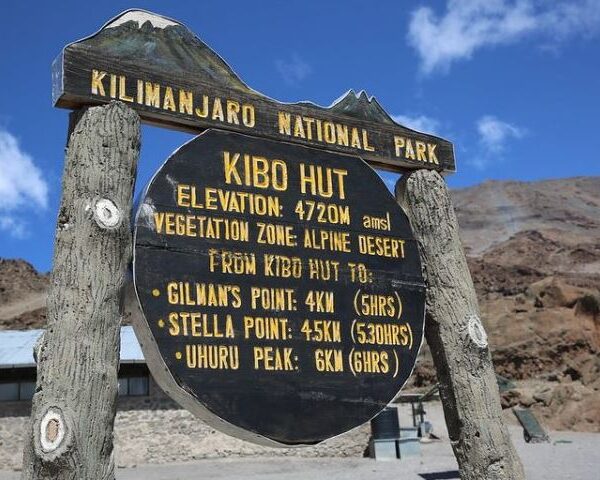
Kibo Hut
From Gillman’s Point, you will cross snow the rest of the way to Uhuru Peak (5,895m), the highest point in Africa. How long you spend at the summit depends on the weather, but take time for photographs before beginning the three-hour descent back to Kibo Hut.
After a short rest and collecting your remaining gear, continue down to Horombo Hut, a further three hours away — the descent will feel surprisingly quick compared to the climb up. Enjoy your last dinner on the mountain before an overnight stay.
Accommodation: Horombo Hut
Meal Plan: Breakfast, Lunch and Dinner
Day 7: Horombo Hut (3,705m) to Marangu Gate (1,860m)
Hiking Time: 6 hours
Distance: Approximately 19.7 km
Habitat: Moorland and montane forest
After breakfast, continue the roughly six-hour descent, passing Mandara Hut on the way down to Marangu Gate. Successful climbers receive summit certificates at the gate, with a gold certificate for those who reached Gillman’s Point or Uhuru Peak. From there, you will be driven back to Moshi town for a well-earned hot shower and celebration.
Accommodation: Moshi Salsalinero Hotel
Meal Plan: Breakfast, Lunch and Dinner
What’s Included
- Park fees
- All activities unless labeled as optional
- All accommodation as stated in the itinerary
- A professional driver-guide
- All transportation unless labeled as optional
- All taxes and VAT
- Round-trip airport transfer
- All meals as specified in the day-by-day itinerary
- Drinking water on all days
- Camping equipment
- Portage
What’s Not Included
- International flights, to and from home
- Additional accommodation before and after the tour
- Tips (guideline: US$20 per person per day)
- Personal items such as souvenirs, travel insurance, and visa fees
- Government-imposed increases in taxes and/or park fees
- Alcoholic drinks
- Rescue fee
- Climbing gear
- Sleeping bag