
Why Visit Kenya?
September 19, 2026
Kenya or Tanzania
September 19, 2026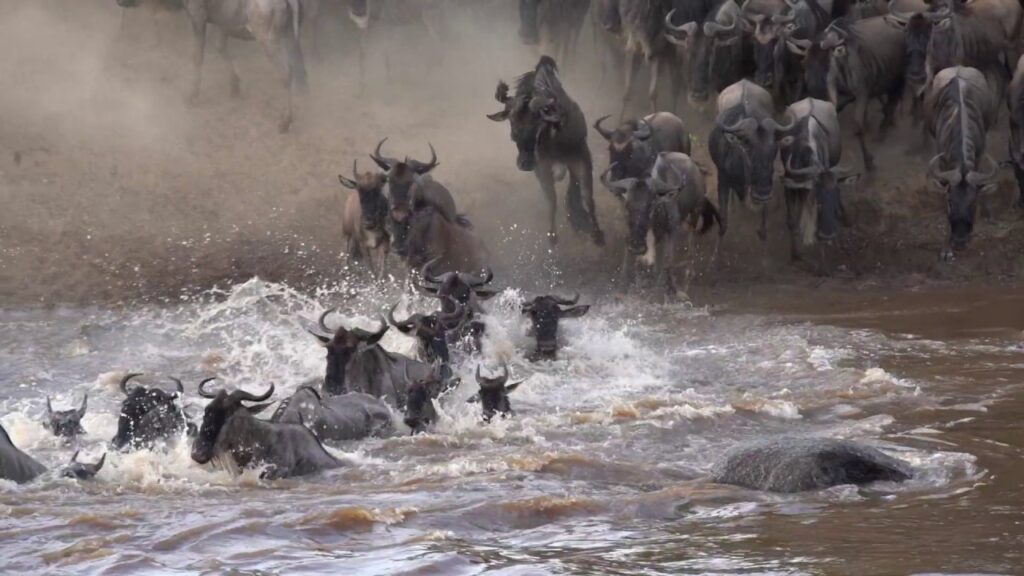
Great Migration Myths
Great Migration Myths; Every year, huge herds of wildebeest, zebra, and gazelle move through the Serengeti-Mara ecosystem in a continuous search for better grazing and water. The route is ancient, but the exact timing shifts from year to year based on rainfall.
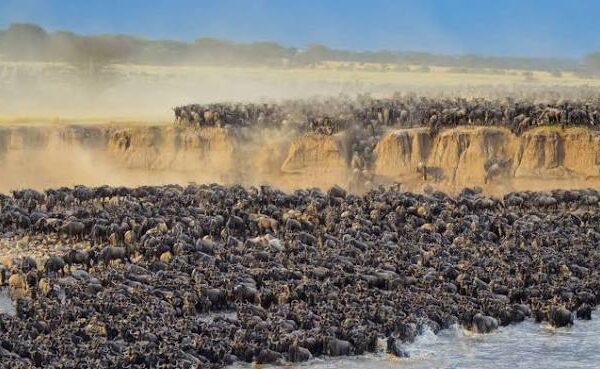
The Great Wildebeest Migration is the second-largest overland migration in the world, with an estimated 1.3 to 2.5 million wildebeest, alongside thousands of zebra and gazelle, covering more than 800 kilometers in each annual cycle.
The herds move through the savannah plains of Tanzania’s Serengeti National Park and Kenya’s Masai Mara National Reserve in a broadly clockwise loop, chasing good grazing wherever it appears.
As with any famous wildlife spectacle, plenty of myths have built up around it. Here, we set the record straight on the most common ones.
- The Great Migration Happens Only Once a Year
Many travelers assume the Great Migration is a single event that happens once annually. In fact, it’s a year-round journey, not a one-time occurrence.
More than a million wildebeest, along with hundreds of thousands of gazelle and zebra, move continuously through the Serengeti-Mara ecosystem, following an ancient route in search of fresh grass and water. What changes is where the herds are at any given time of year, not whether the migration is happening at all.
- River Crossings Are Guaranteed
The myth: visit during peak season and you’re guaranteed a dramatic river crossing. The fact: river crossings are wild and genuinely unpredictable. While July through October offers the best odds of seeing a Mara River crossing, herds may wait hours or days before crossing at an unexpected point — and sometimes turn back multiple times before committing.
A river crossing is never guaranteed, but when it happens, it’s unforgettable. This is exactly why it pays to plan your migration safari with someone who tracks the timing closely.
- The Great Migration Only Happens in Kenya
Many travelers assume the migration is a Masai Mara-only event. In fact, the Great Wildebeest Migration takes place across the entire Serengeti-Mara ecosystem, spanning both Kenya and Tanzania.
This ecosystem — one of the oldest, most unchanged on Earth — is protected jointly by Tanzania’s Serengeti National Park and Kenya’s Masai Mara National Reserve. Calving season (January to March) and the long movement months (April to June, and November to December) all take place primarily on the Tanzanian side, making both countries essential to the full migration story.
- The Great Migration Is Too Crowded to Enjoy
Some travelers worry that too many safari vehicles will ruin the experience. In reality, while the most popular river crossing points can get busy, crowds are easily avoided by choosing private conservancies, exploring alternative crossing points, timing game drives for early morning and late afternoon, and relying on expert route planning.
Our travel consultants design itineraries that maximize sightings while minimizing crowds.
- You Must Visit Between July and September
The migration is a year-round event, so missing the July-to-September window doesn’t mean missing the migration entirely — there are several other stages of this annual journey worth witnessing, each with something different to offer.
| Season | Location | Highlights |
| January – March | Southern Serengeti | Calving season, newborn wildebeest, and heavy predator activity |
| April – June | Central Serengeti | Massive herds and dramatic landscapes |
| July – October | Masai Mara | River crossings |
| November – December | Eastern Serengeti | Fewer crowds and strong photography opportunities |
- The Great Migration Is Only for Luxury Travelers
Many travelers assume witnessing the migration requires a luxury budget — this isn’t true. The Great Wildebeest Migration is accessible to travelers at every budget level. With the right planning, you can enjoy it at a price point that fits your travel style.
- Migration Sightings Are Only About Wildebeest
Some travelers assume wildebeest are the only animal on display — far from it. The Great Wildebeest Migration brings an entire ecosystem to life. Alongside thousands of zebra and gazelle, you’ll find predators such as lions, cheetahs, and leopards following the herds across the plains of the Serengeti and Masai Mara.
Great Migration
At the river crossings themselves, Nile crocodiles wait in the Mara and Grumeti Rivers.
- The Migration Follows the Exact Same Route Every Year
Many travelers picture the migration as a fixed loop, repeating the same path on the same dates annually. In practice, the general circuit is consistent, but the precise route and the exact locations of river crossings shift from year to year based on where the rain has actually fallen.
This is exactly why experienced ground teams matter — an itinerary built purely on “where the herds were last year” can miss them by a significant distance if the rains land differently this season.
FAQs About the Great Migration
Can migration river crossings be predicted?
No — even the wildebeest themselves don’t seem to know when they’ll cross. Some herds arrive at the water and swim across immediately; others linger for days along the banks; some turn back entirely.
This unpredictability is exactly why it helps to build in as much time on safari as possible if seeing a crossing is a priority.
What time of year does the wildebeest migration happen?
Most people assume the Great Migration only happens between July and October, but it’s actually an ever-moving, circular migration with distinct, equally worthwhile events occurring year-round. The popular Mara and Grumeti River crossings coincide with peak safari season (June to October), which is largely why this window gets so much attention.
Where does the Great Migration take place?
The Great Migration is a fluid, year-round movement of roughly two million animals across the Serengeti-Mara ecosystem, with no fixed start or end point.
The migration is triggered by East Africa’s rains, with the herds following an age-old route in search of fresh grazing and water. The journey takes wildebeest across the Masai Mara’s plains in Kenya, south into Serengeti National Park, and to the edge of Ngorongoro Crater in Tanzania, before circling back around in a clockwise direction.
Why do wildebeest migrate?
The migration is believed to be driven primarily by the wildebeest’s response to weather. They move in the wake of rain and new grass growth, following instinct in search of food to survive.
Some researchers believe wildebeest may also respond to distant lightning and thunderstorms, though there’s no confirmed scientific evidence for this.
Do other animals migrate alongside the wildebeest?
Yes — zebra and Thomson’s gazelle travel with the wildebeest for much of the journey, though not for identical reasons. Zebra tend to move slightly ahead of the main herds and favor taller grass, which they eat down before the wildebeest arrive to graze the shorter growth left behind; the two species’ feeding habits are complementary rather than competitive. Gazelle generally trail the wildebeest, benefiting from the shorter, more tender grass exposed once the larger herds have passed through.
How many wildebeest die during the migration each year?
Estimates vary, but a commonly cited figure is around 250,000 wildebeest lost annually to a combination of predation, drowning during river crossings, exhaustion, and disease.
It sounds like a large number, but it’s a small fraction of the total population, and calving season each year comfortably replaces those losses — part of why the migration has remained sustainable over the long term despite its brutal individual moments.
Can the migration be affected by climate change?
Researchers are watching this closely. Because the entire migration is driven by rainfall patterns, any long-term shift in when and where rain falls across the Serengeti-Mara ecosystem has the potential to alter the timing of calving season and river crossings over time.
So far, the broad annual pattern has held reasonably steady, but conservationists monitor rainfall and herd movement data each year partly for this reason, and it’s one more argument for working with ground teams who track conditions in real time rather than relying purely on historical averages.
The Great Migration rewards travelers who understand it’s a year-round, unpredictable event rather than a single guaranteed spectacle. Whatever month you travel, there’s a genuine chapter of the story happening somewhere in the Serengeti-Mara ecosystem.