Tree Climbing Lions
September 19, 2026
Where Is the Best Place to See the Wildebeest Migration?
September 19, 2026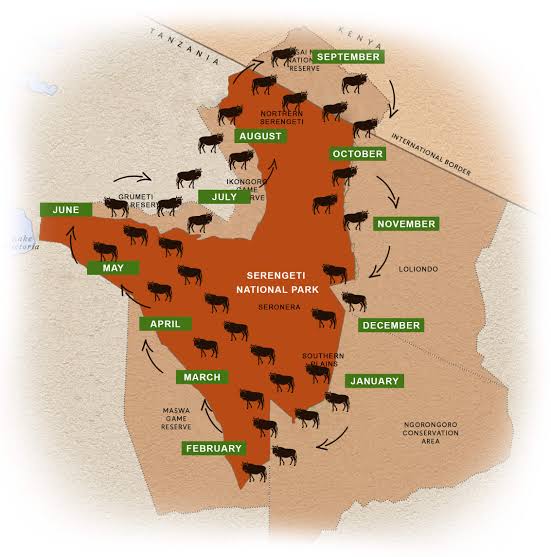
Great Wildebeest Migration Explained | When to Go, Where to Stay, and What to Expect
Great Wildebeest Migration Explained; Every year, more than two million wildebeest, joined by upward of 300,000 zebra and gazelle, embark on an annual, circular journey through the Serengeti-Mara ecosystem spanning Kenya and Tanzania, in search of fresh grazing and water — a route covering roughly 800 to 1,000 kilometers. The journey delivers dramatic river crossings, constant predator-prey action, and wide-open landscapes teeming with life. It’s raw, unpredictable, and genuinely unforgettable, and a favorite subject for photographers of every level.
Our team designs personalized, expert-led safaris that put you in the right location at the right time, aiming for the best possible migration experience while keeping comfort, safety, and planning seamless.
Quick Facts
| What It Is | An annual, circular migration of over 2 million wildebeest and 300,000+ zebra and gazelle |
| Where | The Serengeti-Mara ecosystem, spanning Tanzania and Kenya |
| Distance Covered | Roughly 800-1,000 kilometers per cycle |
| Calving Season | January-March, Southern Serengeti |
| Mara River Crossings | Typically July-October, Northern Serengeti and Masai Mara |
Why the Great Migration Happens
The Great Migration is an extraordinary circular trek driven by the herds’ instinct to survive. The nourishment from fresh green pasture keeps these animals thriving, reproducing, and continuing the cycle. Wildebeest are believed to be able to sense rain from more than 30 miles away, and their movement feels fluid and certain, as though guided by something beyond ordinary instinct.
Wildebeest
While the migration follows a general annual rhythm, exact routes and timing shift each year depending on rainfall. This unpredictability is part of what makes it so compelling — and exactly why expert planning matters if you want the best chance of witnessing a specific stage of the journey.
Though the path isn’t fixed and there’s no certainty about timing, the migration shapes countless African safaris every year. Its raw unpredictability is part of the magic — a genuinely unfiltered experience of nature at work.
Where the Herds Move Throughout the Year
January – March: Calving Season (Southern Serengeti and Ngorongoro)
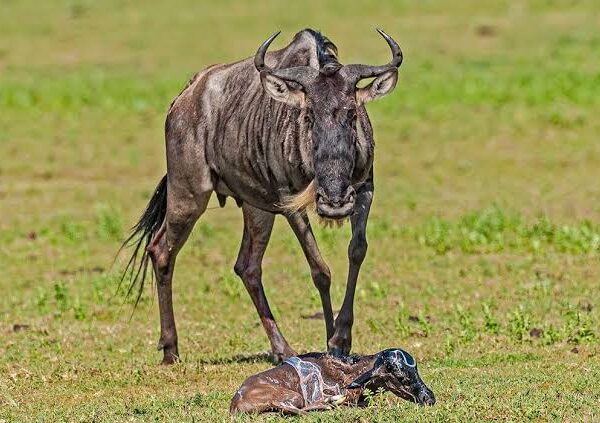
The migration cycle begins with calving season on northern Tanzania’s Ndutu Plains, where thousands of calves are born within a few short weeks. The presence of so many vulnerable newborns draws predators eager to take advantage.
If you want to find the herds in January, head toward Naabi Hill and Lobo, where many pregnant females are moving toward greener grazing. The nutrient-rich grass of the Ndutu Plains makes the area especially attractive during calving season, when herds instinctively seek out the best conditions to support their young.
By February, up to half a million wildebeest have been born on the Serengeti’s plains, with birth rates sometimes reaching 8,000 calves a day at the peak. The abundant new grass around Lake Ndutu and Lake Masek makes this the ideal birthing ground. Herds tend to linger in the southeastern Ndutu area for a while after calving before heading north in a clockwise direction.
Calving season means wobbly newborns taking their first steps — and predators taking full advantage of their vulnerability. If witnessing a wildebeest just hours old is on your list, your best chance is around midday, when births typically occur, giving calves time to gain strength before nightfall.
April – May: Transitional Season and Quieter Safaris
During this transitional stage, herds move north and west toward richer grassland, grazing along the way in preparation for the mating season (the “rut”) in June. Fewer tourists travel during this window, making for more intimate wildlife encounters.
Herds amble from the Ndutu region past the Simba Kopjes toward Moru, splitting into large groups rather than the single massive concentrations seen earlier in the year. May is a strong month for wildlife photographers seeking action shots in the Serengeti, with herds typically found moving north between Moru and Makoma.
June – August: Peak Migration and River Crossings
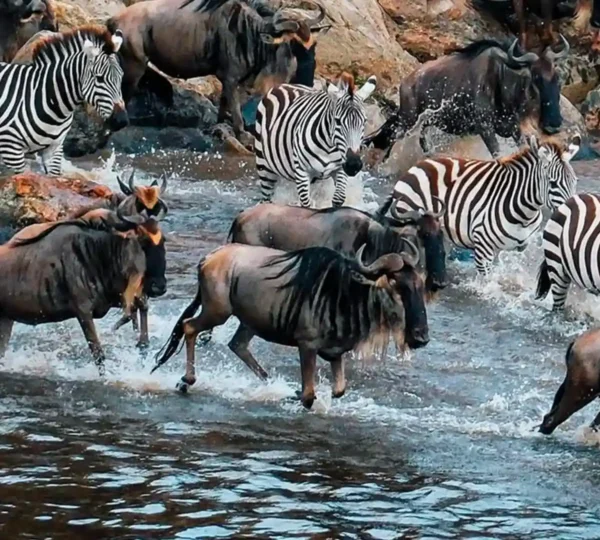
This is the migration’s most dramatic stretch, as herds face the dangerous crossings of the Grumeti and Mara Rivers, both patrolled by waiting crocodiles and predators along the banks. Survival is never guaranteed.
July marks the mating season in the Serengeti, with herds found in the Grumeti Reserve to the west, moving past Fort Ikoma. River crossings at the Grumeti are worth watching for, though the area is vast and less developed, making crossings harder to predict; the Grumeti also carries far less water than the Mara, so its crossings tend to be less dramatic. From here, herds graze their way north toward the Mara River in Kenya — a crossing that plays out across the international border.
By August, herds have reached the northern Serengeti and face their biggest test: the Mara River. The fast-moving water is captivating to watch but is also likely responsible for the highest death toll of the entire migration, claiming thousands of wildebeest each year.
Herds sometimes plunge en masse off steep banks in a desperate rush to cross, or are pushed by lions above; others drown, crushed by the sheer volume of panicking animals trying to scramble up the far bank. Every death, in turn, feeds crocodiles, birds, and fish.
September – October: The Tail End of the Mara River Crossings
This period can still deliver the tail end of Mara River crossings, or you can find the herds spread across the Masai Mara’s vast grassland in genuinely staggering numbers. Expect warm, sunny, dry weather — pack a hat.
Crossings can stretch into October, though by this point the Masai Mara typically settles into a calmer rhythm of grazing. The push is largely over, and fresh grass is the reward — for those that made it.
November – December: The Great Migration’s Homecoming
River crossings become less common during this stretch as herds head back toward the Serengeti’s vibrant, lush landscapes. It’s an ideal window for a more relaxed safari, with fewer visitors and excellent game viewing.
November’s short rains trigger another move, as herds leave Kenya and head south toward western Loliondo and the Lobo area of the Serengeti. By December, herds have returned to the southern Serengeti and the Ngorongoro Conservation Area — the starting point for the entire cycle to begin again.
What If I Miss a River Crossing?
River crossings are unpredictable, but they’re far from the only highlight of the Great Migration. Predator interactions, massive herds, dramatic landscapes, and daily wildlife encounters ensure a rewarding trip regardless of exact timing.
How Expert Planning Maximizes Your Migration Experience
Because the migration’s timing shifts with the rains each year, the single biggest factor in a successful migration safari isn’t luck — it’s positioning. Ground teams that track herd movement in real time, maintain relationships with camps across multiple regions, and can adjust your route on short notice give you a meaningfully better shot at the sightings you’re after than a fixed itinerary booked months in advance without that flexibility.
This is also where mobile camps earn their keep. Several operators run tented camps that physically relocate two or three times a year to stay close to the herds — staying at one of these, timed to the season, removes much of the guesswork involved in finding the migration versus staying at a fixed-location lodge and hoping the herds pass nearby.
Frequently Asked Questions
How many days should I plan for a migration-focused safari?
Five to seven days gives you enough flexibility to reposition if the herds aren’t where expected, particularly during river-crossing season. A shorter three- or four-day trip can still work well outside peak crossing periods, when herd locations are somewhat more predictable.
Great Migration
Is the migration visible from a hot air balloon?
Yes — a sunrise balloon flight over the Serengeti or Masai Mara during migration season is one of the best ways to grasp the sheer scale of the herds, which can be difficult to appreciate fully from ground level. Balloon safaris are weather-dependent and book up quickly during peak months, so reserve this well in advance if it’s a priority.
Do I need to choose between Kenya and Tanzania to see the migration?
Not necessarily. Many travelers combine both countries in one trip, following the migration from the Serengeti into the Masai Mara or vice versa, which also lets you experience Ngorongoro Crater and other Tanzania highlights the Mara alone doesn’t offer.
The Great Migration rewards travelers who understand it as a year-round event rather than a single guaranteed sighting. Whichever month you travel, there’s a genuine, worthwhile chapter of the journey unfolding somewhere in the Serengeti-Mara ecosystem.
Ready to start planning your wildebeest migration safari? Our team can help you find the right package and the right timing for what you want to see.