How Many Days Do You Need in Masai Mara?
September 20, 2026
How Much Does a Tanzania Safari Cost?
September 20, 2026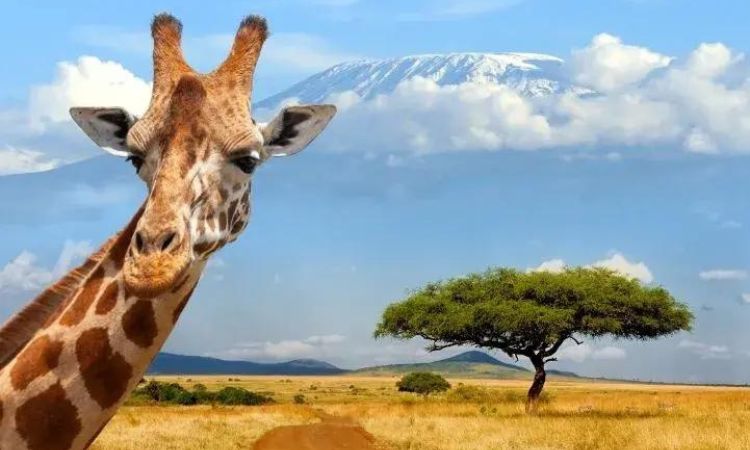
Kenya Attractions
Kenya attractions rank among the best things to see and do on any African safari. As an East African country with a coastline on the Indian Ocean, Kenya offers both a savannah and a beach holiday in one trip, with a wildlife roster that includes the Big Five — lion, elephant, buffalo, leopard, and rhino.
Its most sought-after single attraction is the Great Wildebeest Migration in the Masai Mara, but Kenya’s range extends well beyond that: thrilling wildlife, open savannah, alpine peaks, forest, striking culture, freshwater lakes, and fine white sand beaches.
Kenya has something for nearly every kind of traveler — budget, luxury, honeymoon, adventure, or solo — and a whole lot to explore along the way. Here are the top Kenya attractions worth considering for your trip.
Masai Mara National Reserve
The Masai Mara is the highlight of most Kenya safari itineraries — one of the most sought-after destinations in Africa, known for spectacular wildlife and the Great Wildebeest Migration. It’s the best place for a classic African safari experience, with strong odds of seeing all of the Big Five, especially prides of lion, and witnessing the migration itself, typically visible from July to October.
Beyond the migration, the reserve’s private conservancies — Mara Naboisho, Olare Motorogi, and Mara North among them — offer a quieter, more exclusive alternative to the main reserve, with activities like night drives and guided walks unavailable elsewhere in the Mara ecosystem.
Amboseli National Park
A true postcard destination, Amboseli won’t disappoint. Picture long-tusked elephants grazing freely against the backdrop of Mount Kilimanjaro’s snow-capped peak across the border in Tanzania. Beyond the scenery, Amboseli’s diverse wildlife makes it a highlight of any Kenya safari, any time of year.
The park’s compact size is part of its appeal — most of what makes Amboseli special can be experienced in two days, making it easy to pair with a longer Masai Mara or Tsavo itinerary without adding much extra travel time.
Lake Nakuru National Park
Famous for the flocks of pink flamingos that gather along its shoreline, Lake Nakuru National Park is also an excellent destination for birders, with more than 400 recorded species. Rhinos are an easy spot here too, making it a strong addition to any Kenya safari, year-round.
The park’s relatively small, fenced footprint makes game viewing efficient — a single day inside is often enough to see both black and white rhino, along with Rothschild’s giraffe, buffalo, and leopard, in addition to the birdlife.
Tsavo National Park
Once Kenya’s largest national park, Tsavo was later divided into Tsavo East and Tsavo West due to its sheer size. Both halves deliver strong Kenya safari experiences, with large lion prides and the park’s signature red-dust elephants. Birders will also find plenty here, including vulnerable species such as the Taita falcon, sooty falcon, southern ground-hornbill, imperial eagle, tawny eagle, and scissor-tailed kite, among others.
Tsavo West adds volcanic scenery and the Mzima Springs, where you can watch hippos and crocodiles from an underwater viewing chamber, while Tsavo East is known for its open plains and the Yatta Plateau, one of the world’s longest lava flows.
Samburu National Reserve
Set along the banks of the Ewaso Ng’iro River, Samburu National Reserve blends forest and savannah grassland, hosting four of the Big Five. Other wildlife to look for includes the reticulated giraffe, Beisa oryx, gerenuk, and Grevy’s zebra. The reserve also offers a strong cultural dimension, with genuine, unfiltered tribal experiences for travelers interested in local heritage.
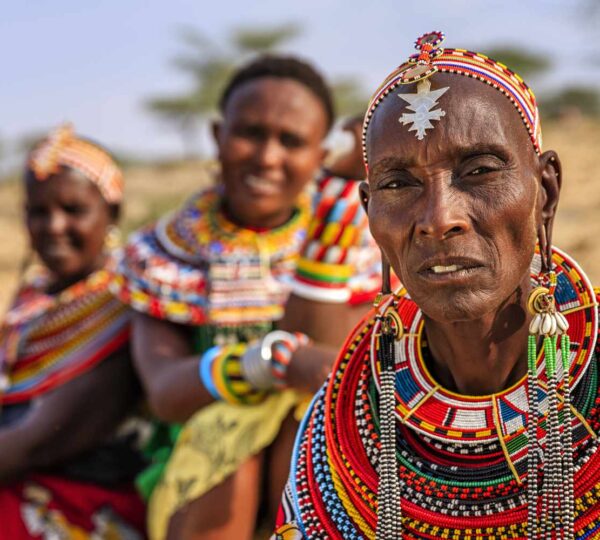
Samburu people
Samburu sees noticeably fewer visitors than the Masai Mara or Amboseli, making it a good choice for travelers who’ve already done a classic Kenya safari and want a quieter, less-visited region on a return trip.
Mount Kenya
A UNESCO World Heritage Site, Mount Kenya is the country’s highest point and Africa’s second-highest peak. It’s a rewarding hiking destination and a strong spot for wildlife and bird sightings along the way.
Unlike Kilimanjaro, most of Mount Kenya’s trekking routes don’t require technical climbing gear to reach Point Lenana, the third-highest summit — making it a genuinely achievable multi-day hike for reasonably fit travelers without mountaineering experience.
Nairobi National Park
You won’t find a national park inside a capital city anywhere else in the world quite like this one. Nairobi National Park sits right in Kenya’s capital, separated from the city only by a fence. Wildebeest, zebra, buffalo, rhino, giraffe, and more can all be seen here, with the city’s skyline rising in the background.
A one-day Nairobi National Park safari is a great option for travelers with limited time — even a four-hour visit is enough for a half-day safari. If you have a long layover in Nairobi, this is a genuinely worthwhile way to use it.
Ol Pejeta Conservancy
Located in Laikipia, between Mount Kenya and the Aberdares, Ol Pejeta is home to the largest black rhino population in Kenya and the last two northern white rhinos left in the world. It’s also one of the few places in East Africa offering chimpanzee sightings, at a dedicated sanctuary for chimps rescued from other parts of Africa.
Beyond game drives, Ol Pejeta offers activities rarely found elsewhere in Kenya, including guided lion tracking with researchers and the chance to go running or cycling alongside armed rangers within designated safe zones.
Lake Naivasha
A freshwater lake in the Rift Valley, roughly two hours from Nairobi, Lake Naivasha is best known for its resident hippo population and a boat cruise that typically stops at Crescent Island, where you can walk among giraffe and zebra without a vehicle in the way.
Its proximity to Nairobi makes it an easy weekend trip on its own or a natural stopover on the way to the Masai Mara or Hell’s Gate National Park.
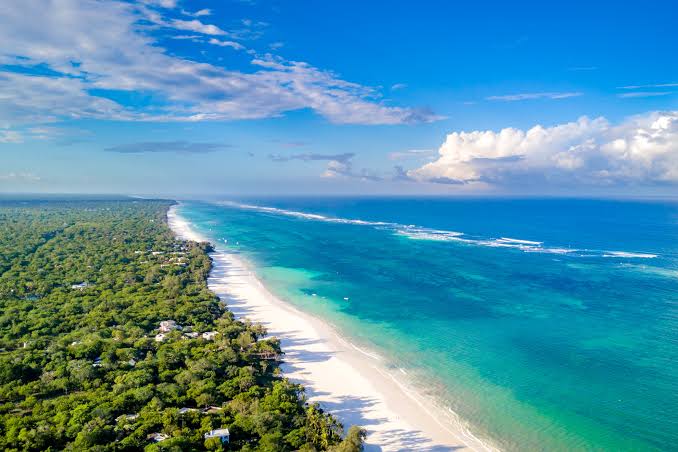
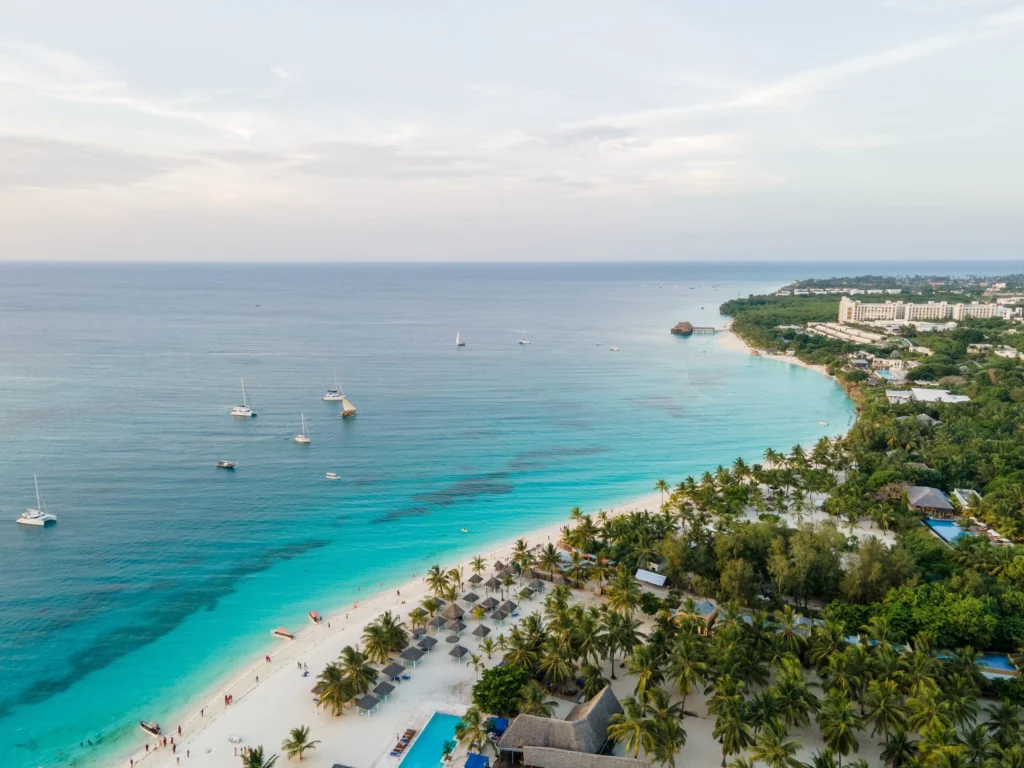
The Kenyan Coast (Diani, Malindi, Lamu, Mombasa)
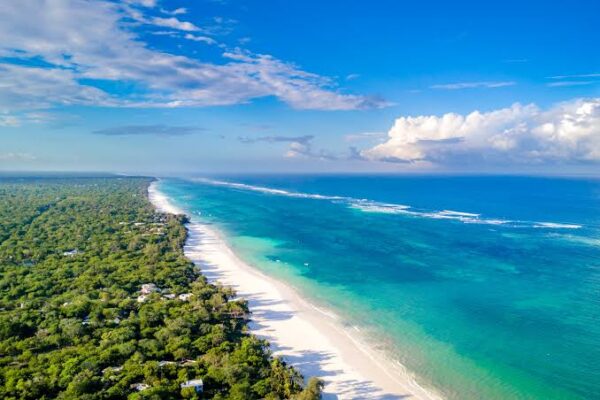
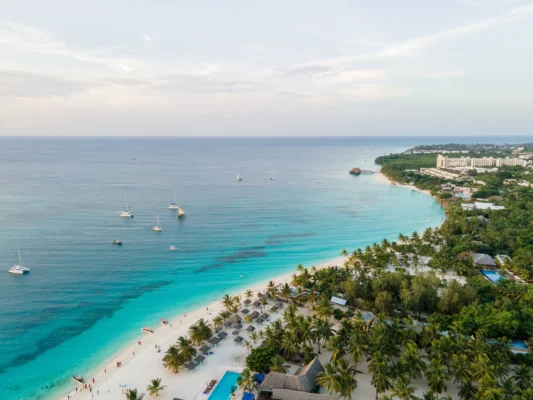
The Kenyan coast is not to be missed on a Kenya safari trip. A few days by the coast is an excellent way to unwind after a Mount Kenya summit attempt or a safari to any of Kenya’s inland destinations.
Diani offers the most developed resort infrastructure and watersports; Malindi and Watamu are known for their marine parks and diving; and Lamu, reachable by small plane, offers a genuinely different pace — a UNESCO-listed old town with no cars, still relying on donkeys and dhows for everyday transport.
David Sheldrick Wildlife Trust
Located on the edge of Nairobi National Park, the David Sheldrick Wildlife Trust rescues and hand-rears orphaned elephant and rhino calves before eventually reintroducing them into the wild in Tsavo.
The public visiting hour, held daily, lets you watch the youngest orphans being bottle-fed and playing in mud wallows, with keepers on hand to explain each animal’s rescue story.
It’s a genuinely moving stop for travelers of any age and one of the easiest additions to a Nairobi stopover, since it sits only a short drive from the city center and pairs naturally with a Nairobi National Park game drive on the same day.
The Laikipia Plateau
North of Mount Kenya, the Laikipia Plateau is a patchwork of private conservancies and working ranches that has become one of Kenya’s most respected conservation models.
Beyond Ol Pejeta, properties across Laikipia offer activities rarely available in the main national parks, including guided walking safaris, horseback safaris, and night game drives.
Laikipia is also one of the best places in Kenya to combine wildlife viewing with genuine, well-established community-based tourism, since many conservancies here are run in direct partnership with local landowners.
The attractions above represent Kenya’s headline sights, but there’s plenty more worth exploring, including Lake Victoria, Nairobi City, Mount Elgon, and Hell’s Gate National Park, among others.