Silverback Gorilla Strength
September 21, 2026
Diani Reef Beach Resort & Spa
October 7, 2026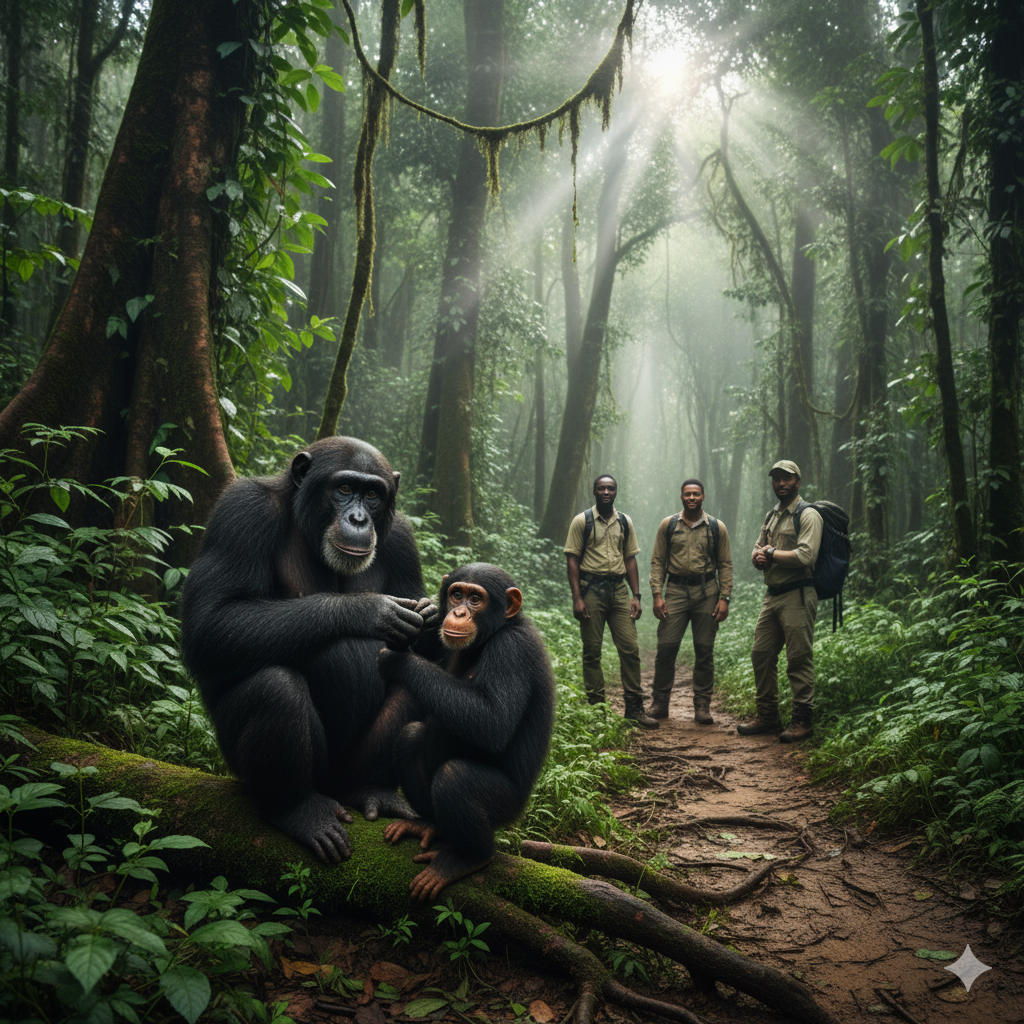
A First Time Guide to Rwanda
This guide to Rwanda is written for the traveller who has never set foot in the country and wants a clear, honest orientation before booking anything. We cover what it costs to get in, how safe it actually is right now, what there is to do beyond gorillas, how many days you realistically need, what a trip costs, and what to pack.
Treat it as the conversation you would have with a consultant who has sent hundreds of travelers through this country and knows where the genuine decision points are.
Should You Visit Rwanda First, or Pair It With Somewhere Else?
Most people reach Rwanda through one question: is this worth a dedicated trip, or should it be combined with Uganda, Kenya, or Tanzania? The honest answer depends on what you want most from the time you have.
If mountain gorilla trekking is the primary goal and you have limited annual leave, Rwanda alone makes an excellent standalone trip because distances are short and logistics are simple. Kigali to Volcanoes National Park is a drive of roughly two and a half hours on a paved road, which is a fraction of the transit time gorilla trekking requires in Uganda’s Bwindi Impenetrable Forest.
If your priority is a broader safari with open plains, large predator sightings, and the classic Big Five checklist, Rwanda should be a component of a longer itinerary rather than the whole trip. Akagera National Park in the east does offer savannah game viewing and has rebuilt healthy lion and rhino populations after a genuine conservation turnaround, but it is a smaller ecosystem than the Serengeti or Maasai Mara.
A common and sensible pattern for first-timers is combining four or five days in Rwanda for gorillas, Kigali, and Lake Kivu with a longer wildlife safari in Kenya or Tanzania either before or after.
Traveler type matters here. Honeymooners and travelers who want maximum reward for limited time gravitate toward Rwanda alone. Families and first-time African safari travellers who want a wider wildlife education tend to prefer Rwanda paired with a second country. Photographers chasing predator action should weight their itinerary toward Kenya or Tanzania and treat Rwanda as the gorilla and rainforest component.
Why Rwanda Earns Its Reputation
Rwanda’s pull rests on three things that are difficult to find together anywhere else on the continent: a dense, well-protected population of mountain gorillas, a capital city that is genuinely pleasant to spend a day or two in, and an infrastructure standard that removes much of the friction travellers associate with African road trips. Roads are tarmacked between the major tourism hubs, the country is small enough that transfer times stay short, and safety on the roads and in public spaces is consistently rated well by travellers and diplomatic missions alike.
The gorilla experience itself deserves its own explanation. Rwanda’s Volcanoes National Park sits inside the Virunga Massif, a chain of volcanic mountains shared with Uganda and the Democratic Republic of Congo that is currently home to roughly 604 mountain gorillas, part of a total wild population across both the Virungas and Bwindi that has climbed past 1,000 individuals after decades of dedicated conservation work.
That recovery from a low of around 240 individuals in the Virungas thirty years ago is one of the genuine good news stories in African conservation, and trekking fees are the mechanism that funds it directly.
Rwanda has also positioned itself as a higher comfort, lower volume gorilla destination compared to Uganda. Permit prices sit well above Uganda’s, trekking groups are capped at eight visitors per gorilla family, and lodges around Volcanoes National Park include some of the most architecturally distinctive properties in East Africa.
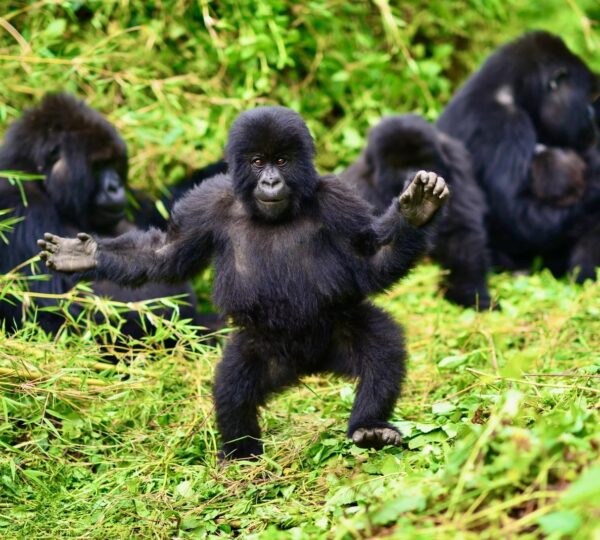
Gorilla trekking in Volcanoes National Park
Uganda remains the better value choice for budget-conscious travelers and offers more permit availability and more habituated gorilla families overall. Rwanda suits travellers who want a shorter, more polished, less physically demanding trip and are willing to pay for that convenience.
Where to Go: Building Your Rwanda Route
A first Rwanda itinerary almost always threads through four places, and understanding what each one offers helps you decide how many nights to allocate where.
Kigali
Kigali is not a city most people plan to linger in, and yet it consistently becomes a trip highlight. It is clean, walkable in parts, and safe to move around after dark in the main districts, which is unusual enough among African capitals that visitors comment on it.
The Kigali Genocide Memorial is the anchor experience here, and while difficult emotionally, it is essential context for understanding modern Rwanda and its remarkable recovery.
Beyond the memorial, Kigali offers art cooperatives, a genuinely good coffee and restaurant scene built on Rwanda’s high-altitude arabica, and the Kimironko and Inema arts markets for those who want to bring something home. Plan one full day here, either at the start of your trip to acclimatize or at the end to decompress before flying out.
Volcanoes National Park
This is the reason most people book Rwanda. Beyond gorilla trekking, the park offers golden monkey trekking, which is shorter and less physically demanding and pairs well as a second-day activity, and hikes up Mount Bisoke or Mount Karisimbi for fitter travellers who want a volcanic crater lake view.
Musanze town, the gateway to the park, has grown into a genuine small hub with cultural village visits and cave systems worth half a day. Two nights here is the practical minimum: one buffer night on arrival in case of flight delays and one night for the trek itself, since permits require an early start.
Lake Kivu
Lake Kivu is where the pace of a Rwanda trip should deliberately slow down. It is one of Africa’s great lakes, bordered by Rwanda and the Democratic Republic of Congo, and towns like Gisenyi, Kibuye, and Rubavu offer lakeside lodges, boat trips to Napoleon Island, and simply the chance to sit still after the early mornings that gorilla trekking demands. It is roughly a two-hour drive from Musanze, which makes it a natural next stop after trekking rather than a separate detour. Two nights here suits most travellers well.
Nyungwe Forest National Park
Nyungwe is Rwanda’s most underrated park and the right addition for travelers who have time beyond the standard gorilla and lake circuit. It protects one of Africa’s oldest rainforests and offers chimpanzee trekking, thirteen other primate species, exceptional birding with over 300 recorded species, and the canopy walkway, a suspended steel and wood bridge that gives a rare treetop perspective over the forest and, on clear days, distant views toward Lake Kivu and the volcanoes.
Nyungwe sits in Rwanda’s southwest, roughly a four- to five-hour drive from Kigali, which makes it better suited to travellers with eight days or more rather than a quick five-day trip.
Entry Requirements and Getting There
Rwanda’s entry process is genuinely one of the easier ones in Africa. Most nationalities, including US, UK, EU, and Australian passport holders, can obtain a visa on arrival at Kigali International Airport for approximately 50 USD, valid for thirty days as a single entry visa.
An electronic visa is also available in advance through the Irembo portal for the same fee and is worth doing if you prefer to arrive with paperwork already approved, since it typically clears in three to five business days.
Travellers combining Rwanda with Kenya and Uganda should look at the East Africa Tourist Visa, priced at approximately 100 USD, which covers all three countries for ninety days with multiple entries as long as Rwanda is the first or last country entered. This is a meaningful saving over buying three separate single-country visas and worth planning around if a multi-country itinerary is on the table.
- Passport validity: at least six months beyond your entry date, with two blank pages
- Yellow fever certificate: required only if arriving from a country with risk of yellow fever transmission, such as Kenya, Uganda, or Tanzania; not required for direct flights from the US or Europe
- Proof of onward travel and accommodation: occasionally requested at immigration, worth having printed or saved offline
- Main airport: Kigali International Airport (KGL), served by direct or connecting flights via Addis Ababa, Nairobi, Doha, Brussels, and Amsterdam
Is Rwanda Safe to Visit Right Now?
This question deserves a direct answer rather than a vague reassurance, because it is the one that stalls bookings. Rwanda itself, meaning Kigali, Volcanoes National Park, Lake Kivu, and Nyungwe, remains one of the more consistently secure and well-policed countries in the region for tourists. Petty crime such as pickpocketing exists in busy urban areas the way it does in any capital city, but serious crime against tourists is rare, and Rwanda’s tourism infrastructure around the parks is tightly managed by rangers and armed patrols.
Where caution is genuinely warranted is the western border with the Democratic Republic of Congo, where armed group activity has continued in the eastern DRC region and prompted some governments to advise against travel within roughly ten kilometers of that specific border.
This does not affect Volcanoes National Park itself, which sits within Rwandan territory and continues operating gorilla treks normally, but it does mean cross border excursions into Congo, including any plan to visit Virunga National Park on the Congolese side, need current, specific guidance rather than assumptions.
Our advice to travellers is to keep any Congo extension separate from your Rwanda booking and confirm its status close to departure rather than months in advance.
Beyond the border zone, general good practice applies: use hotel-arranged transport after dark in Kigali rather than hailing unmarked vehicles, keep valuables out of sight in markets, and travel with comprehensive medical insurance that includes evacuation cover, which is sound practice anywhere in East Africa given the distance to advanced medical facilities from the parks. Registering your trip with your embassy’s traveller program before departure is a sensible extra step, particularly for solo travellers.
When to Go: A Short Answer
Rwanda sits at high altitude across most of its tourism areas, so it stays relatively cool and green year round, and gorilla trekking operates in every month of the year, unlike beach or migration based trips that live and die by season.
The driest and most popular trekking months are June through September, with a shorter dry window in December through February. March, April, and November bring the heaviest rain and the muddiest trails, which some travellers actively avoid and others accept in exchange for lower crowds and lush scenery. We cover this in full detail, month by month, in our companion guide to Rwanda’s weather and seasons, which is worth reading before you lock in dates.
How Many Days Do You Actually Need?
This is one of the most practical questions first timers ask, and the honest answer scales with how much of the country beyond gorillas you want to see.
| Trip Length | What It Covers | Best For |
| 4 to 5 days | Kigali, gorilla trekking, one night at Lake Kivu | Time limited travellers, add on to a Kenya or Tanzania safari |
| 6 to 7 days | Kigali, gorilla trekking, golden monkeys, Lake Kivu | First timers wanting a complete, relaxed Rwanda trip |
| 8 to 10 days | All of the above plus Nyungwe chimpanzee trekking and canopy walk | Travellers who want the full primate and rainforest circuit |
| 10+ days | Full circuit plus Akagera National Park for savannah game viewing | Travellers wanting a complete single country safari |
If your schedule only allows four days, gorilla trekking should still be the fixed point you build around, since permits require confirmed dates well in advance. Everything else, including Kigali and Lake Kivu, can flex around that one non negotiable morning in the forest.
Budget Expectations
Rwanda is not a budget safari destination, and being clear about that early saves disappointment later. The single largest cost on any itinerary is the gorilla trekking permit itself, priced at approximately 1,500 USD per person as of 2026, with an increase to approximately 1,800 USD confirmed from January 2027.
This single fee funds ranger patrols, veterinary monitoring, and community revenue sharing programmes that have made Rwanda’s conservation model one of the most cited successes in Africa, so it is worth understanding as an investment rather than simply a ticket price.
| Budget Level | Approx. Per Person Per Day (excl. permit) | What to Expect |
| Mid range | 250 to 400 USD | Comfortable ensuite lodges, private vehicle transfers, good but not luxury dining |
| Upscale | 450 to 800 USD | Boutique or design led lodges near Volcanoes National Park, higher service ratios |
| Luxury | 900 USD and above | Premier lodges bordering the park boundary, private guiding, top tier dining and spa facilities |
Travellers can meaningfully manage cost by choosing golden monkey trekking or Nyungwe chimpanzee trekking, both priced well under the gorilla permit, as their primary primate activity and treating a single gorilla trek as the trip’s centrepiece rather than booking multiple treks. Group travel also reduces per person vehicle and guiding costs meaningfully compared to solo travel.
Accommodation Styles to Choose Between
Lodges near Volcanoes National Park range from simple, comfortable guesthouses in Musanze town to some of the most striking architecture in East African hospitality, with several properties built directly into the hillside with volcano views from bed.
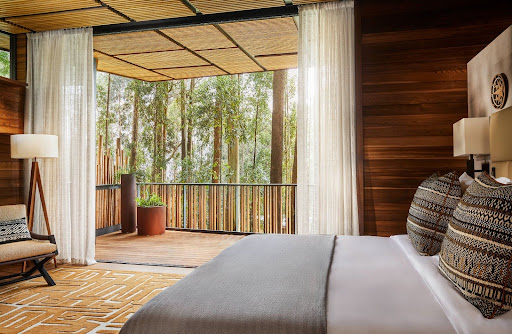
Nyungwe House
Choosing between them comes down to how much of your budget you want concentrated in one or two nights versus spread evenly across the trip.
- Town based lodges near Musanze: best for budget conscious travellers who want a comfortable, well run base without lodge level pricing
- Mid range park adjacent lodges: the sweet spot for most first time visitors, offering good rooms, reliable hot water and heating, and short drives to the park headquarters
- High end and luxury lodges: worth the investment for honeymooners or travellers marking a significant occasion, with the trekking morning itself becoming part of a broader indulgent stay
At Lake Kivu, lodges lean toward relaxed and lakeside rather than formal, and this is a good place to trade some polish for value if your budget is concentrated around the gorilla trek. In Kigali, business hotel standard properties and a growing number of boutique guesthouses both serve travellers well for the one or two nights most itineraries spend there.
Activities Beyond Gorilla Trekking
- Golden monkey trekking: a shorter, gentler trek in Volcanoes National Park to see an endangered and highly active primate species found almost nowhere else, ideal as a second day activity
- Chimpanzee trekking in Nyungwe: a more physically demanding but rewarding forest trek, best for travellers extending beyond the standard circuit
- The Nyungwe canopy walk: a suspended walkway roughly 70 metres above the forest floor, suited to travellers wanting a dramatic view without a strenuous hike
- Lake Kivu boat trips and Napoleon Island: a relaxed half day on the water, good for families or anyone needing recovery time after trekking
- Kigali Genocide Memorial and city tour: essential context for understanding the country, best scheduled with time afterward to process it rather than rushed between other activities
- Akagera National Park game drives: for travellers wanting classic savannah wildlife including lion, rhino, elephant, and giraffe within Rwanda’s borders
What to Pack
Rwanda’s high altitude parks stay cool and frequently damp, which surprises travellers who associate Africa with heat. Layering is the single most useful packing principle here.
- Waterproof, broken in hiking boots: trekking trails are frequently muddy regardless of season
- A warm layer and a waterproof rain jacket: mornings in Volcanoes National Park can sit around 7 to 10 degrees Celsius before sunrise
- Gardening style gloves: stinging nettles are common along trekking trails and gloves make grabbing vegetation for balance far more comfortable
- Long trousers and long sleeved shirts: for both nettle and insect protection during forest walks
- A daypack with a rain cover, and gaiters if you own them
- Cash in small denominations: for tipping guides, porters, and trackers, which is customary and appreciated though not strictly mandatory
Culture and Etiquette Notes
Rwandans are generally reserved and formally polite with strangers, and that formality is worth mirroring rather than reading as coldness. Greetings matter, a simple handshake and a moment of small talk before getting to business goes a long way in shops, lodges, and with your guiding team. Photography of people, particularly in rural areas, should be asked for rather than assumed, and photographing government buildings, military personnel, or the President’s motorcade is prohibited and taken seriously.
The country’s history around the 1994 genocide against the Tutsi remains present in daily life, and visiting the Kigali Genocide Memorial with genuine attentiveness, rather than treating it as a quick stop on a checklist, is both respectful and genuinely informative about how the country has rebuilt itself since. Rwanda also enforces a nationwide ban on single use plastic bags, so pack reusable options and expect bags to be checked at the airport.
Planning Advice Worth Following
- Book gorilla permits early: Rwanda issues a limited number of permits per day across its habituated gorilla families, and popular months, particularly June through September and December, sell out several months in advance
- Build in a buffer day: arriving in Musanze the day before your trek rather than the same morning protects you against flight delays and gives your body a chance to adjust to altitude
- Confirm fitness expectations honestly: gorilla treks can range from a gentle thirty minute walk to a strenuous four hour climb depending entirely on where the gorilla family is that day, and porters are available and worth hiring regardless of fitness level
- Travel with a knowledgeable operator for logistics: permit allocation, vehicle transfers between parks, and lodge selection are easier to get right with local experience behind you than trying to piece together independently
Recommendations by Traveller Type
- First time African safari travellers: six to seven days covering Kigali, gorilla trekking, golden monkeys, and Lake Kivu gives a complete, well paced introduction
- Honeymooners: a shorter, higher comfort trip weighted toward a premier lodge near Volcanoes National Park and relaxed time at Lake Kivu
- Families with older teenagers: Rwanda’s fifteen year minimum age for gorilla trekking makes this a strong fit for families with teens rather than young children, paired with Akagera for broader wildlife exposure
- Budget conscious travellers: consider Uganda for the gorilla trekking component and treat Rwanda as a shorter Kigali and Lake Kivu add on, or prioritise a single Rwanda permit over multiple activities
- Photographers and naturalists: extend into Nyungwe for birding and chimpanzee trekking, and consider pairing with Kenya or Tanzania for wider wildlife photography opportunities
Frequently Asked Questions
Do I need a guide to visit Rwanda, or can I travel independently?
Gorilla and golden monkey trekking are always accompanied by park rangers and guides by law, so independent trekking is not possible. For the rest of the country, independent travel is feasible given Rwanda’s good roads and low crime, but most first time visitors find that working with a local operator for vehicle transfers, permit booking, and lodge selection removes a significant amount of stress from a trip with several moving parts.
Can I see gorillas without a strenuous hike?
Trek difficulty depends on where the assigned gorilla family is located on the day of your trek, which rangers determine each morning based on overnight tracking. Some treks are a comfortable thirty to forty five minute walk, others involve several hours of climbing. Porters can be hired at the park headquarters for a modest fee and are genuinely useful for anyone concerned about fitness, carrying your daypack and offering a steadying hand on steep or muddy sections.
Is one gorilla trek enough, or should I book two?
One trek is enough for the vast majority of travellers and delivers the full experience, an hour in close proximity to a wild gorilla family. A second trek, sometimes done in Uganda as part of a combined itinerary, appeals mainly to dedicated wildlife enthusiasts or photographers who want a different gorilla family or better light and behaviour on a second encounter.
What is the food like, and are there dietary accommodations?
Rwandan cuisine leans on beans, plantain, cassava, and grilled meats, and lodge and hotel kitchens are accustomed to international travellers, offering continental style menus alongside local dishes. Vegetarian and most common dietary requirements are handled comfortably at lodges catering to tourism, though it is worth flagging specific allergies to your operator in advance.
How much should I tip guides and trackers?
Tipping is customary and forms a meaningful part of guide and tracker income. A commonly used guide is around 15 to 20 USD per trekker for the lead guide and a similar combined amount split among trackers and porters, though this is discretionary and should reflect the quality of your experience rather than a fixed obligation.