Diani Reef Beach Resort & Spa
October 7, 2026
The History of Serengeti National Park
October 7, 2026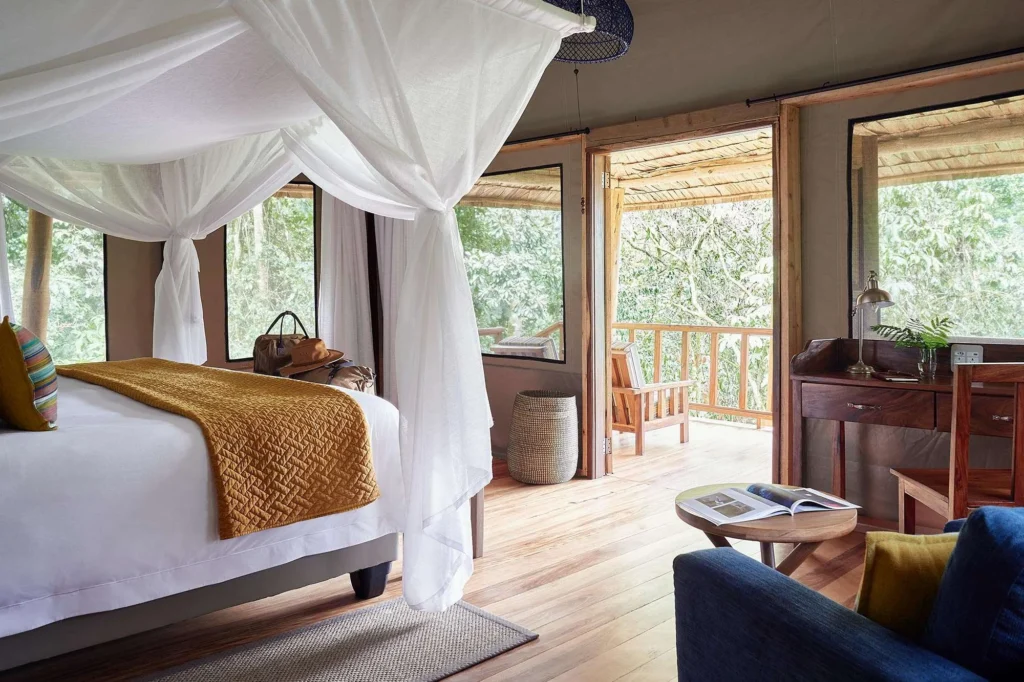
Sanctuary Gorilla Forest Camp | Bwindi National Park
Most Bwindi lodges are located near the forest. Sanctuary Gorilla Forest Camp sits inside it. That distinction matters more than it first appears, because it changes the entire rhythm of a gorilla trekking trip, from the sound you wake up to to how far you walk before your trek even begins.
If you are weighing where to stay for gorilla trekking in the Buhoma sector, this camp is one of the properties that comes up again and again in serious research, and it earns that attention for specific, verifiable reasons rather than marketing polish.
This guide works through what the camp actually is, who it suits, what a stay costs relative to other Buhoma options, and how it compares to its nearest neighbors, so you can decide with confidence rather than guesswork.
What Sanctuary Gorilla Forest Camp Is, and Who It Suits
Sanctuary Gorilla Forest Camp is a small luxury tented camp built on a private concession on a ridge inside Bwindi Impenetrable Forest, in the Buhoma sector on the park’s northern side. It operates under the Sanctuary Retreats brand, part of the Abercrombie and Kent group, a name recognized across East African luxury travel for smaller, design-led properties rather than large hotel-style lodges. The camp holds only eight tented suites, which keeps the guest count low and the atmosphere intimate, a detail worth noting if you are the kind of traveller who finds large lodges impersonal.
Because the camp sits within the forest boundary itself, rather than on a hill overlooking it from outside the park, guests wake up inside gorilla habitat. Birdsong, forest insects and occasionally the distant calls of colobus monkeys are part of the experience before breakfast is served. This suits travellers who want their accommodation to be part of the wildlife encounter, not just a comfortable base for it.
It suits honeymooners and couples seeking a quiet, romantic setting, and it suits experienced safari travellers who have stayed in busier lodges before and now want something smaller and more immersive.
It is a less natural fit for large families or bigger groups, simply because eight suites fill quickly and the camp does not have the room configurations or communal spaces that bigger family lodges offer. Budget-conscious trekkers should also look elsewhere, since this is priced at the luxury end of Buhoma accommodation, a trade-off worth understanding before you fall in love with the setting.
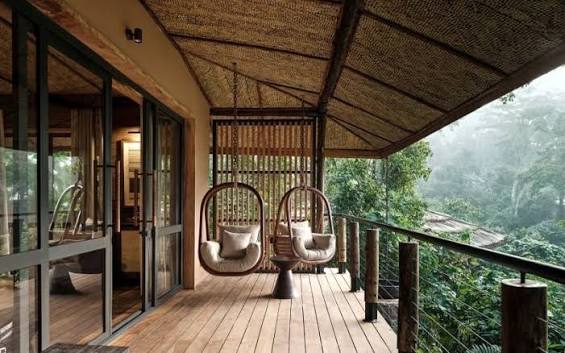
Sanctuary Gorilla Forest Camp
Location and How You Get There
The camp is in Buhoma, the original and most established gorilla trekking sector of Bwindi, on the park’s northern edge. Buhoma has the longest operating history of any Bwindi sector, which means better roads relative to the more remote sectors like Nkuringo or Rushaga, and a shorter, gentler final approach for most travelers coming from Kampala or Entebbe.
Most guests reach Buhoma by road, a drive of roughly eight to nine hours from Kampala, usually broken into two days with an overnight stop near Queen Elizabeth National Park, which also gives you a game drive or two along the way rather than a single long transfer. Travellers short on time can fly into the Kihihi airstrip, the nearest airfield, and complete the final stretch by road transfer, cutting a two-day journey down to a single travel day.
For anyone combining gorilla trekking with Queen Elizabeth National Park or with a Rwanda extension, Buhoma’s position on the northern side of Bwindi makes logistics noticeably simpler than the southern sectors.
Practical implication: if your itinerary already includes Queen Elizabeth National Park, staying in Buhoma at a camp like this one keeps your routing efficient. If your plan centers on Rwanda or the southern Bwindi sectors instead, a Nkuringo or Rushaga-based lodge may suit your route better, even if this camp remains the stronger property on paper.
Rooms, Rates, and What You Are Paying For
The eight tented suites are built on raised wooden platforms under the forest canopy, each with two queen beds, hand-carved local headboards, an en suite bathroom with both a shower and a bathtub, and forest views from the tent itself.
This is canvas and timber luxury rather than concrete luxury, closer in feel to a classic East African tented safari camp than to a conventional hotel room, which is worth knowing if you associate luxury purely with hard-walled suites.
Rates are fully inclusive, covering accommodation, meals and a selection of drinks, and sit in the higher price bracket for Buhoma, broadly in the 800 to 1,300 US dollars per person sharing per night range depending on season and room category.
This does not include the gorilla permit itself, which is a separate government fee, currently around 800 US dollars per person for Uganda permits. *This figure is also subject to change and should be verified when you book.*
Price Tier Comparison: Buhoma Accommodation
| Tier | Typical Nightly Rate (per person) | Best Suited To |
| Budget | Under 150 USD | Backpackers, cost-focused independent travellers |
| Midrange | 150 to 400 USD | First-time trekkers wanting comfort without luxury pricing |
| Luxury (this camp’s tier) | 800 to 1,300 USD | Honeymooners, repeat safari travelers, small group luxury bookings |
The practical question most readers actually want answered is whether the price difference between midrange and this camp is worth it for a two- or three-night stay. The honest answer depends on your priorities.
You are paying for location inside the forest, a small guest count, a higher staff-to-guest ratio, and a design aesthetic that photographs and feels distinctly different from a standard lodge. If those things matter to you, the premium is justified. If your priority is simply completing a successful gorilla trek with solid comfort, a well-run midrange lodge in Buhoma will get you there for considerably less.
Food and Service Style
Dining happens either in the forest view dining room or, weather permitting, on a raised platform under the stars, an option that guests consistently mention as a highlight rather than a gimmick.
Meals lean African-inspired with international influences, prepared by an on-site chef for a small number of guests each night, which allows more flexibility around dietary requirements than a large lodge feeding fifty or more covers at once.
Service is personalized by design. With only eight suites, staff learn names and preferences quickly, and the ratio of staff to guests is high.
This matters practically on trekking mornings, when an early, well-organized breakfast and packed lunch can make a real difference to how your trekking day goes, particularly if your assigned gorilla family requires a longer hike that day.
Activities From The Camp
- Gorilla trekking, arranged through the park headquarters a short distance away, the camp’s central draw
- Guided forest walks and nature hikes through Bwindi’s lower trails, for guests wanting forest time beyond the primary trek
- Birdwatching: Strong, given Bwindi’s status as one of Uganda’s premier birding forests with several Albertine Rift endemics
- Cultural visits to neighboring Batwa communities, offering context on the forest’s original inhabitants and their history
- Village walks around Buhoma for a slower look at daily life outside the park boundary
Because the camp sits so close to the Buhoma Park headquarters and trekking departure point, morning logistics on trek day are simple. You are not facing a long, bumpy pre-dawn transfer before your trek even starts, which is a real advantage over some of the more remote lodges that require forty minutes or more of driving just to reach the briefing point.
Best Time To Stay
Gorilla trekking runs year round in Uganda, since permits are not seasonally restricted, but conditions vary. The two dry seasons, roughly December to February and June to September, bring firmer trails and lower rainfall, making the trek itself more comfortable, particularly for travelers concerned about steep, muddy terrain. These months are also Buhoma’s busiest, so book well ahead if you want this camp specifically.
The wetter months, April to May and October to November, bring lower rates at many properties and thinner crowds at the park headquarters, though trails become genuinely more demanding and rain gear becomes essential rather than optional.
For travellers who prioritise a quieter experience and don’t mind the possibility of a muddy trek, the shoulder and wet months can be a good trade, and Sanctuary Gorilla Forest Camp’s covered walkways and forest setting handle rain better than more exposed properties.
How It Compares To Nearby Alternatives
| Property | Style | Price Tier | Best For |
| Sanctuary Gorilla Forest Camp | Luxury tented, 8 suites, inside forest | Luxury | Couples and small groups wanting immersion and privacy |
| Buhoma Lodge | Midrange to upper midrange cottages, forest edge | Midrange to upper midrange | Travellers wanting comfort with strong value |
| Mahogany Springs | Boutique lodge just outside the park boundary | Upper midrange to luxury | Travellers wanting luxury with more flexible group sizes |
| Buhoma Community Rest Camp | Simple bands and camping | Budget | Backpackers and cost-focused independent travellers |
The clearest way to eliminate options is by group size and priority. If you are two people wanting the most immersive forest setting Buhoma offers and price is not the deciding factor, this camp is hard to beat. If you are a family of five or a group of eight friends, its eight-suite capacity works against you, and a larger lodge will serve you better regardless of price bracket.
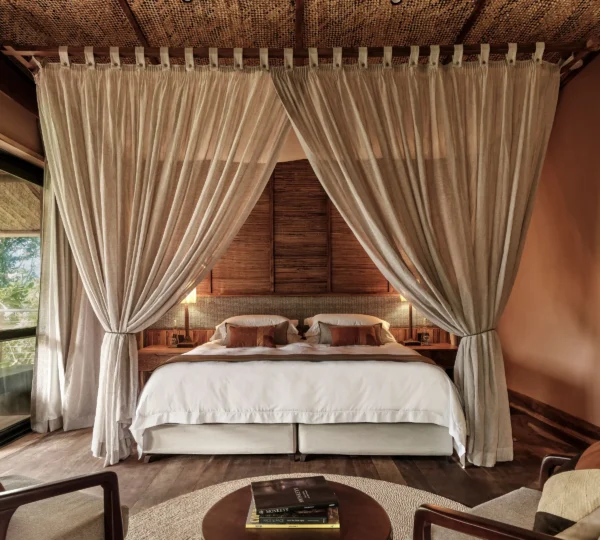
Sanctuary Gorilla Forest Camp
Planning Advice
- Book gorilla permits and accommodation together, months ahead for July, August and December stays, since both permits and this camp’s eight suites sell out early in peak season
- Pack layered clothing and a proper rain jacket regardless of season, since forest weather changes quickly even in the dry months
- Confirm your gorilla family assignment expectations with our team in advance, since trek difficulty varies by which family you are allocated on the day
- Budget separately for permits, park entry fees and staff tips, none of which are included in the camp’s fully inclusive rate
- If combining with Queen Elizabeth National Park or Rwanda, sequence Buhoma early or late in the itinerary to avoid backtracking across the country
Frequently Asked Questions
Is Sanctuary Gorilla Forest Camp inside the national park?
Yes. It sits on a private concession within the Bwindi forest boundary in the Buhoma sector, which is part of what sets it apart from lodges built just outside the park on neighbouring farmland or community land.
How far is the camp from the gorilla trekking briefing point?
It is within easy reach of the Buhoma park headquarters, generally described as walking distance or a very short drive, which keeps early morning trek logistics simple compared with lodges thirty minutes or more away.
Does the camp suit families with children?
It can, but its eight suite capacity and adult focused, romantic atmosphere make it a better fit for couples or small groups than for larger family bookings. Families should also confirm the minimum age for gorilla trekking permits, which is currently fifteen years old, before planning a family trip around this activity.
What is not included in the room rate?
Gorilla trekking permits, park entry fees, and staff gratuities are separate from the camp’s fully inclusive rate, so budget for these in addition to your nightly accommodation cost.
Is Buhoma a better base than the southern Bwindi sectors?
For most first time visitors, yes, largely because of easier road access and a longer operating history. Southern sectors like Rushaga offer their own advantages, including a wider choice of gorilla families and sometimes shorter treks, so the right choice depends on your overall itinerary rather than Buhoma being universally superior.