
Guide to Kenya Family Safari Activities
October 30, 2026
5 Interesting Facts About Kenyan Cultures
October 30, 2026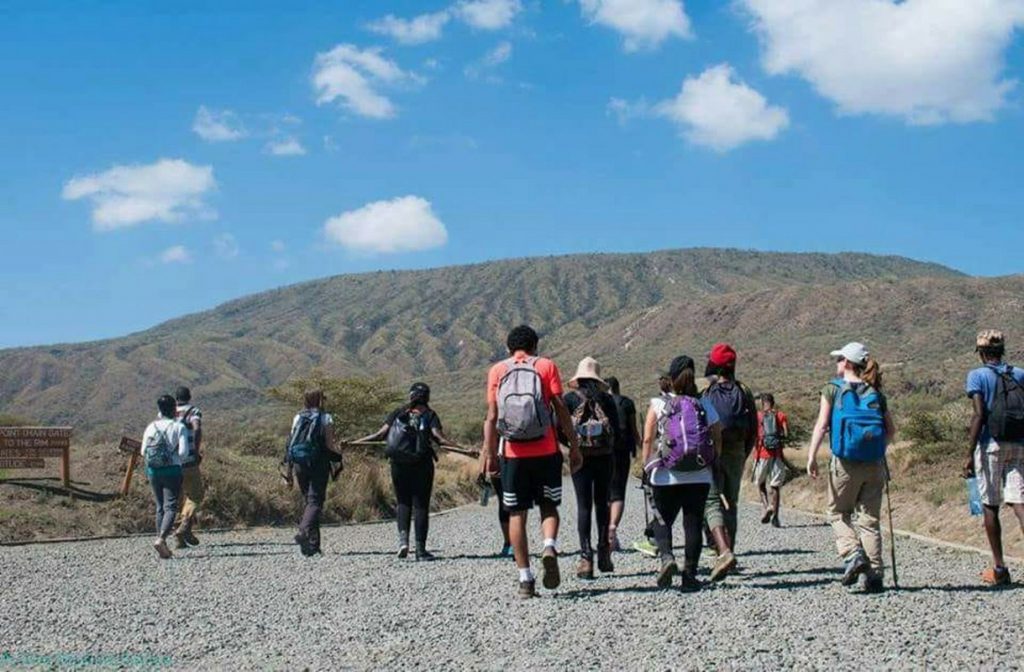
10 Best Hiking Trails in Kenya
Kenya is known for wildlife, and most visitors see it from a vehicle. But the country also has some of the best hiking in East Africa, with trails that range from a gentle loop through a forest in Nairobi to a multi-day traverse of Mount Kenya. Many are within a few hours of the capital, which means a hike can fit easily into a trip that is otherwise built around safari or the coast.
This guide ranks ten of the best trails by experience rather than by difficulty alone, describing what each offers, how hard it is, how long it takes, what it costs and what to know before you go. It also covers getting there, where to stay and when to hike, so you can pick the right route for your fitness and time.
How to Choose a Trail
Start with how much time you have and how fit you are. For a half-day close to Nairobi, Karura Forest, Oloolua and the Ngong Hills are good starting points. For a full day with a clear challenge, Mount Longonot and the Aberdare peaks reward effort. For multi-day treks, Mount Kenya and Mount Elgon offer a true mountain experience, with altitude as the main constraint.
Altitude matters more than distance on the high routes. Mount Kenya’s Point Lenana is nearly 5,000 metres, and altitude sickness can affect fit hikers, so give yourself time to acclimatise. For most day hikes, the main preparations are good shoes, water, sun protection and a plan to start early.
At a Glance
| Trail | Region | Difficulty | Typical Time |
| 1. Mount Kenya (Sirimon-Chogoria) | Central Kenya | Challenging | 4-7 days |
| 2. Mount Longonot crater rim | Rift Valley | Moderate to hard | 5-6.5 hours |
| 3. Ngong Hills | Near Nairobi | Moderate to hard | 3-7 hours |
| 4. Hell’s Gate National Park | Near Naivasha | Easy to moderate | Half to full day |
| 5. Mount Satima (Dragon’s Teeth) | Aberdares | Hard | 5.5-6 hours |
| 6. Elephant Hill | Aberdares | Hard | 7.5-8.5 hours |
| 7. Rurimeria Trail | Aberdares | Hard | 7-7.5 hours |
| 8. Mount Elgon | Western Kenya | Moderate to hard | 4-5 days |
| 9. Karura Forest and Oloolua | Nairobi | Easy | 1-3 hours |
| 10. Kakamega Forest trails | Western Kenya | Easy | Half day |
1. Mount Kenya: Sirimon and Chogoria Routes
Mount Kenya is the crown jewel of Kenyan hiking and the second-highest mountain in Africa, at about 5,199 metres. Most trekkers aim for Point Lenana, at about 4,985 metres, the highest point reachable without technical climbing. The three main routes are Sirimon, Chogoria and Naro Moru, and each has its own character.
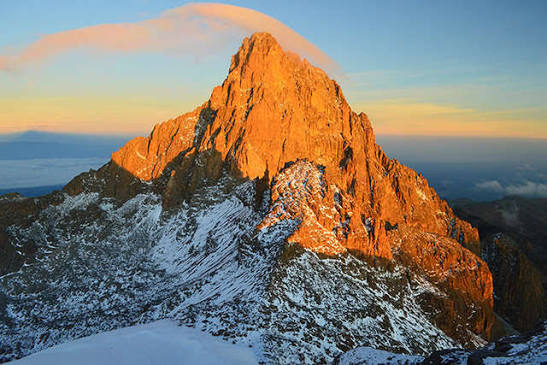
Mount Kenya
Sirimon is a gradual ascent that suits acclimatisation, while Chogoria is the most scenic, with alpine lakes, waterfalls and deep valleys. Many trekkers combine Sirimon on the way up with Chogoria on the way down, which takes four to seven days and covers roughly 45 to 51 kilometres. It is a serious trek that requires acclimatisation, guides and appropriate gear, and it is best arranged through a licensed operator.
2. Mount Longonot
Mount Longonot is a dormant volcano on the floor of the Rift Valley, and its crater rim hike is the most popular day hike near Nairobi. The climb to the rim is steep and the full loop around the crater adds further distance, with a total of about 12 kilometres and five to six and a half hours depending on pace. It is rated moderate to hard, and views over the crater and the Rift Valley are the reward.
You may see buffalo, giraffes, zebras and baboons on the lower slopes, and the park is managed by KWS, with fees paid online. Start early, carry plenty of water and take care on the loose scree near the rim. The hike is achievable for people with moderate fitness, but the heat and the climb catch out many first-timers.
3. Ngong Hills
The Ngong Hills, about 20 to 30 kilometres from Nairobi, are the best day hike near the city. The ridge walk follows a series of peaks with views over the Rift Valley on one side and Nairobi on the other, and the full traverse covers about 11 kilometres in three to seven hours depending on pace and route. A 2026 guide gives the Ngong Hills Forest Recreational Park entry as about KES 232 for adults and KES 58 for children.
The hills are also used for cycling, zip-lining, archery and picnics. Because the ridge is exposed, hikers are often advised to go with a group or a ranger and to avoid walking alone, so ask the park office or a local guide about current arrangements before you set out.
4. Hell’s Gate National Park
Hell’s Gate, near Lake Naivasha, is one of the few parks in Africa where you can walk or cycle among wildlife. Zebras, giraffes, buffalo and antelope roam the gorge, and the cliffs support raptors. Popular routes include the hike through the gorge and the climb up to Fischer’s Tower, a volcanic plug.
It is one of the most accessible hikes in Kenya, suitable for families and beginners, and combines well with a boat ride on Lake Naivasha. Go early, carry water and sun protection and follow your guide’s advice on keeping a safe distance from animals.
5. Mount Satima via the Dragon’s Teeth
Mount Satima is the highest peak in the Aberdares, and the hike via the Dragon’s Teeth is a scenic and demanding route of about 9.5 miles, taking roughly 5.5 to 6 hours. It starts about 12 kilometres beyond the Rhino Gate, where park entry is paid, and during the drive up you may see zebras, waterbuck and warthogs.
The Aberdares are cold, wet and often misty, and weather can change quickly, so this is best for experienced hikers. The trail rewards effort with views across the highlands, and it is far less crowded than Mount Kenya.
6. Elephant Hill
Elephant Hill, in the Aberdares, starts from the Njabini Forest Station, about four kilometres from Njabini town, and is a long day hike of about 11.7 miles taking seven and a half to eight and a half hours. It is a steep climb through forest and moorland with big views, and it is considered one of the best day treks in Kenya for those who want a challenge.
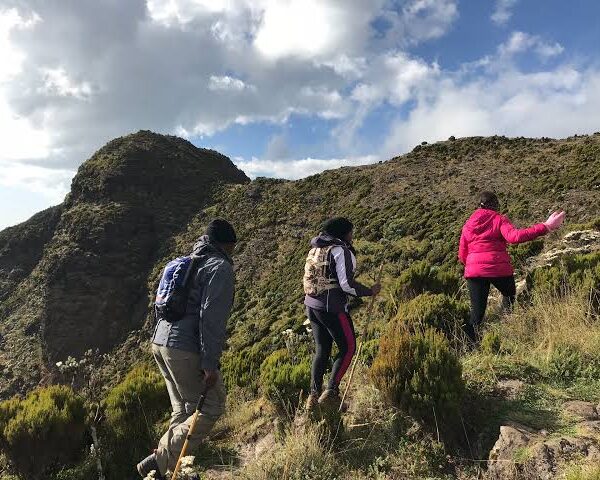
Elephant Hill
Because it is long and strenuous, start at first light, carry plenty of food and water and go with a guide who knows the route. Check forest-station arrangements and weather before you set out.
7. Rurimeria Trail
The Rurimeria Trail in the Aberdares is often described as the hardest day hike in Kenya. It begins with an easy four-kilometre section, then becomes steep for the rest of the climb, with three false summits before the high point. The round trip is about 9 miles and takes seven to seven and a half hours.
It is not a trail for beginners, but it is one of the most picturesque in the country, with forest, moorland and sweeping views. Prepare for cold, wet weather, wear sturdy boots and go with experienced companions or a guide.
8. Mount Elgon
Mount Elgon straddles the Kenya-Uganda border and is an extinct shield volcano with a large crater, caves, hot springs, waterfalls and two deep gorges, Suam and Simu. The Kenyan side lies within Mount Elgon National Park. It is rated moderate to hard and is typically hiked over four to five days.
It is one of East Africa’s most underrated trekking destinations, with far fewer visitors than Mount Kenya and a quieter, more varied landscape. If you are visiting Sipi Falls in Uganda, you can see the same mountain from the other side.
9. Karura Forest and the Oloolua Nature Trail
For an easy hike in or near Nairobi, Karura Forest is a large urban forest with trails, a waterfall, caves said to have been used by Mau Mau fighters and monkeys along the route. The Sykes’ monkey loops range from 1 to 1.5 hours to 2.5 to 3 hours. Oloolua Nature Trail in Karen is a roughly 5-kilometre loop with caves and a waterfall, with a modest entry fee quoted at KES 200 to KES 600 in one source.
Both are good for families, jet-lagged visitors and anyone who wants a short walk before or after a safari. They are also good for birding and a gentle introduction to Kenya’s forests.
10. Kakamega Forest
Kakamega Forest in western Kenya is the country’s remnant of tropical rainforest, with trails that are easy to moderate and a rich variety of birds, monkeys and butterflies. Short forest paths give a different kind of hike from the mountains, cool, shaded and full of sound, and guides help you find primates and specialist birds.
It makes a good add-on for travellers in western Kenya, and it pairs naturally with Lake Victoria and Mount Elgon. Plan a half day with a guide, and bring insect repellent and rain gear.
Getting There and Where to Stay
Most trails are reached by road from Nairobi. Ngong Hills and Karura are within an hour, Mount Longonot and Hell’s Gate are about 90 kilometres away, the Aberdares and Mount Kenya are two to four hours north and Mount Elgon and Kakamega are in the west, best reached by a day of travel or a flight to Kisumu or Eldoret. A car with a driver or a licensed operator makes logistics easier, particularly for multi-day treks.
Accommodation near the trailheads ranges from campsites and lodges to hotels in Naivasha, Nanyuki, Nyeri and Kitale. For Mount Kenya, many trekkers stay in Nanyuki or Naro Moru before and after the trek. For Longonot and Hell’s Gate, Naivasha is the natural base.
Best Time to Hike
The dry seasons, January to February and June to September, are best, with clearer views and firmer trails. The rainy seasons, March to May and November, make trails slippery and mountain weather harsher, and some routes become difficult. Start early in any season, since mornings are clearer, and be ready for rapid weather changes at altitude.
Frequently Asked Questions
What is the best hiking trail in Kenya?
Mount Kenya’s Sirimon-Chogoria route is widely regarded as the best, with Mount Longonot the most popular day hike.
How high is Point Lenana?
About 4,985 metres, the highest point on Mount Kenya reachable without technical climbing.
What is the best day hike near Nairobi?
The Ngong Hills, with Mount Longonot and Karura Forest also popular.
Can you hike among wildlife in Kenya?
Yes, at Hell’s Gate National Park, where you can walk or cycle among zebras, giraffes and antelope.
When is the best time to hike?
January to February and June to September, when conditions are drier.