Best Activities in Volcanoes National Park Rwanda
November 14, 2026
Best Places to See the Shoebill Stork in Uganda
November 14, 2026
Best Birding Destinations in Uganda
Best Birding Destinations in Uganda; Uganda has about 1,070 to 1,080 or more recorded bird species, which is among the longest lists in Africa for a country of its size.
The reason is geography: eastern savannah, western rainforest, northern semi-desert and the Albertine Rift meet here, and large lakes and wetlands add water birds. That mixture means a birder can move from papyrus swamp to montane forest to dry thorn scrub in a few days.
Uganda holds nearly half of Africa’s bird species, or that a particular park has the highest bird density in the continent. Those statements are marketing. The solid fact is that Uganda has a very long list and an unusual concentration of range-restricted species in a small area.
This guide ranks the main sites three ways: by size of bird list, by the quality of the special birds and by ease of access. It then profiles the sites by habitat, gives each one’s signature species, builds a ten-day route and covers costs, getting there, where to stay and when to go. It flags where counts and claims differ, since species totals vary widely between sources.
Three Rankings
No site wins all three. The sensible plan is to choose one for each kind of bird you want and to build a route that links them.
| Site | By List Size | By Special Birds | By Ease of Access |
| Queen Elizabeth NP | 1st, about 600 to 615 | Good: African skimmer, wetland and savannah birds | Easy to moderate |
| Bwindi Impenetrable NP | Mid, about 350 | 1st: Albertine Rift endemics, African green broadbill | Hard, long travel and steep trails |
| Semuliki NP | Mid-high, about 400 to 441 | 2nd: Guinea-Congo species found nowhere else in Uganda | Hard, remote |
| Murchison Falls NP | High, about 450 | Good: shoebill, raptors | Moderate |
| Mabamba Swamp | Lower, about 260 to 300 | Exceptional for one bird: the shoebill | Very easy, near Entebbe |
| Kidepo Valley NP | High, about 470 | Good: dry-country birds, Karamoja apalis | Hard, remote |
| Kibale NP and Bigodi | Mid, about 375 | Good: green-breasted pitta | Moderate |
| Lake Mburo NP | Mid, about 350 | Good: African finfoot, acacia specialists | Easy |
Wetland Birding: Mabamba, Murchison Delta and Lake Mburo
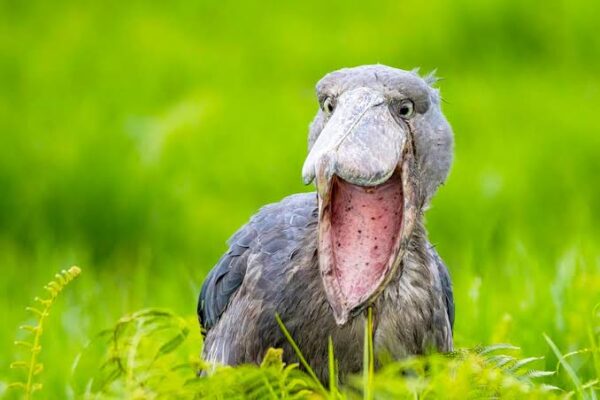
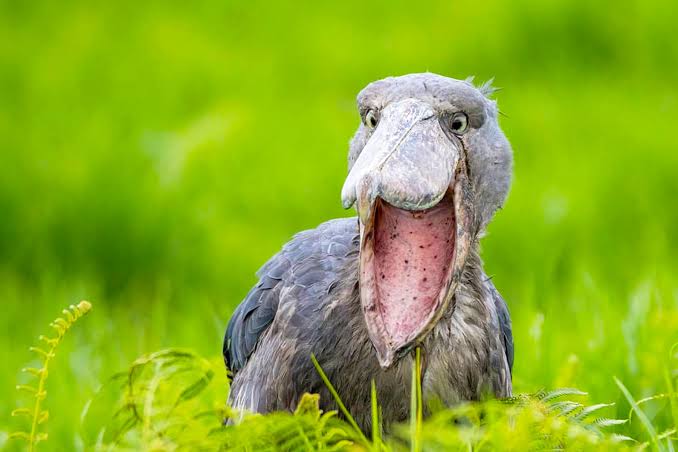
Mabamba Swamp near Entebbe is the quickest way to a strong first morning. It is an Important Bird Area where the shoebill, papyrus gonolek and other swamp specialists are the stars, and a dawn canoe trip fits around a flight. The Nile Delta in Murchison Falls adds shoebills in a wilder setting, with raptors, kingfishers and waders.
Lake Mburo, on the road to the south-west, is a savannah and papyrus park where the African finfoot, red-faced barbet and acacia specialists give a different kind of day, and a boat trip on the lake is productive. Bigodi Wetland Sanctuary near Kibale adds a community-run swamp walk with well over 100 species recorded.
Forest Birding: Bwindi, Kibale, Semuliki and Budongo
Bwindi is the great montane forest site, with 347 to 360 species recorded, most of the Albertine Rift endemics regularly seen in Uganda and about 76 of the 144 Guinea-Congo forest biome species found in the country. The African green broadbill is the prize, and Ruhija is the best sector for the hardest targets. Kibale offers the green-breasted pitta, yellow-spotted barbet and great blue turaco alongside the chimpanzees.
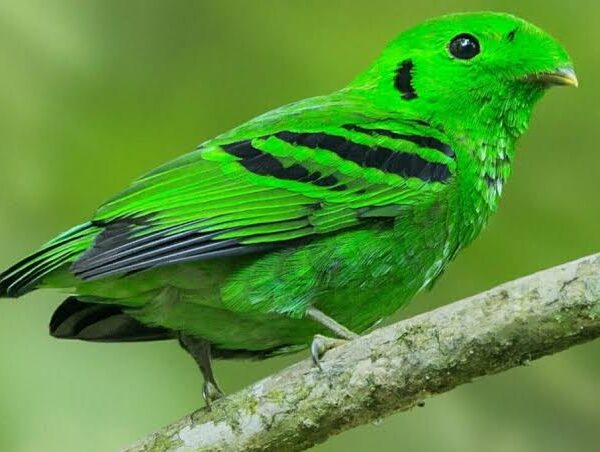
African green broadbil
Semuliki is the lowland rainforest site, with 441 or more species recorded, nine hornbill species and more than 30 birds found nowhere else in Uganda, linking it to the Congo basin. Budongo’s Royal Mile is a classic forest trail, with more than 250 species and specialities such as Nahan’s francolin and the chocolate-backed kingfisher. Echuya and the Rwenzori, with 177 species including 19 Albertine Rift endemics in the latter, add montane and swamp specials.
Savannah and Dry-Country Birding: Queen Elizabeth, Kidepo and Mburo
Queen Elizabeth National Park has the longest park list in Uganda, about 600 to 615 species, thanks to its variety of habitats: savannah, wetlands, crater lakes, forests and the Kazinga Channel. Boat cruises produce African skimmers, kingfishers and waders, and the park holds raptors and savannah specialities such as martial eagle, black-bellied bustard and white-tailed lark.
Kidepo Valley, with 470 to 475 species, of which about 100 are residents of northern Uganda and Kenya, is the place for ostrich, secretary bird, Abyssinian roller, red-throated bee-eater and the Karamoja apalis. Apoka and the edges of the Narus and Namamukweny valleys are the best areas, and the park’s remoteness keeps visitor numbers low.
Signature Birds by Site
| Site | Five Birds to Build a Day Around |
| Mabamba | Shoebill, papyrus gonolek, blue swallow, African jacana, kingfishers |
| Bwindi (Ruhija and Buhoma) | African green broadbill, Rwenzori turaco, handsome francolin, Shelley’s crimsonwing, regal sunbird |
| Semuliki | Hornbills, Congo-basin forest species, lowland forest barbets, turacos, sunbirds |
| Queen Elizabeth | African skimmer, martial eagle, black-bellied bustard, kingfishers, wetland waders |
| Kibale and Bigodi | Green-breasted pitta, great blue turaco, yellow-spotted barbet, swamp specials, hornbills |
| Kidepo | Ostrich, secretary bird, Abyssinian roller, red-throated bee-eater, Karamoja apalis |
| Lake Mburo | African finfoot, red-faced barbet, Tabora cisticola, papyrus species, raptors |
A Ten-Day Birder’s Route
To add Semuliki, allow two extra days from Fort Portal. For Kidepo, add a separate flight-based extension of four days. If your time is short, cut Murchison and keep Mabamba, Queen Elizabeth and Bwindi, which cover wetland, savannah and montane forest.
- Days 1 to 2: Entebbe, the Botanical Gardens and Mabamba for shoebills and a first list.
- Day 3: Drive to Budongo for the Royal Mile and forest specials, then Murchison Falls for the delta.
- Day 4: Murchison Falls savannah and river birding.
- Days 5 to 6: Kibale for the pitta and Bigodi Wetland.
- Days 7 to 8: Queen Elizabeth with a Kazinga Channel cruise.
- Days 9 to 10: Bwindi, with two mornings on the trails for endemics.
Costs and Planning
Costs depend on the route. Park entry applies at each park, activities such as boat cruises and canoe trips are charged separately and a specialist guide adds to the total. Specialist tours with international leaders cost thousands of dollars, while locally run private birding safaris cost less. If you want gorillas or chimpanzees as well, add permits of about US$800 and US$250 to US$300 respectively for foreign non-residents under the 2026 and 2027 tariffs.
To keep costs down, travel with a friend to share a vehicle, choose mid-range lodges, and focus on three or four high-value sites rather than the full list.
Getting There and Where to Stay
Entebbe International Airport is the entry point, and Mabamba is about an hour away. The western and southern sites are a day or more by road, and domestic flights to Kihihi, Kisoro, Kasese and Pakuba shorten the longest legs. Kidepo is best reached by air.
Stay close to the trails. Papyrus Guesthouse in Entebbe is a popular birding base, lodges around Paraa and Masindi serve Murchison and Budongo, Mweya and Kyambura serve Queen Elizabeth national park and Buhoma and Ruhija serve Bwindi. Book early for peak months, and ask lodges about early breakfasts and birding guides.
Best Time to Go
Resident birds can be seen all year. The drier months, June to September and December to February, make trails and travel easier, and the period from November to April adds migrants from Europe and Asia to the list. In Bwindi and Mgahinga, the main nesting season is May and June, and mid-April to mid-May may be too wet for comfortable birding. Early morning is the best time of day everywhere.
Choosing Between Two Sites When You Cannot Do Both
| If You Must Choose Between | Choose | Because |
| Queen Elizabeth and Murchison Falls | Queen Elizabeth for a longer list; Murchison for the shoebill and raptors | Different strengths |
| Bwindi and Semuliki | Bwindi for endemics; Semuliki for Congo-basin rarities | Both are hard, but Bwindi is easier to reach |
| Kibale and Budongo | Kibale for the pitta; Budongo for Nahan’s francolin and a classic forest trail | Match your target birds |
| Mabamba and Lake Mburo | Mabamba for the shoebill; Mburo for the finfoot and an easy stop | One is a dedicated morning, the other a road-side break |
Birding With a Non-Birder
If your companion is not a birder, give them reasons to enjoy the trip: big mammals, beautiful scenery and short, comfortable activities. Agree on mornings for birds and afternoons for something else, and choose lodges with good views and terraces. Early starts are the hardest part, so be generous with breaks and coffee.
Birding can also be shared. Point out the colours and shapes, let your companion use the binoculars and celebrate the first bird they spot. Many non-birders end up asking for a field guide by the end of the week.
Keeping a Trip List That You Will Enjoy Reading
A list is more fun with notes. Record the site, the time and what the bird was doing, not only the name. Photographs help, but a few lines in a notebook capture details that a camera misses. Review the list each evening with your guide, and ask about birds you saw but could not name.
At the end of the trip, you will have a record of what you saw and where, and a better sense of how Uganda’s habitats fit together.
Frequently Asked Questions
Which park has the longest bird list in Uganda?
Queen Elizabeth National Park, with about 600 to 615 species recorded.
Where is the best place for Albertine Rift endemics?
Bwindi Impenetrable National Park, with Mgahinga and Echuya as add-ons.
Where can I see the shoebill?
Mabamba Swamp near Entebbe, the Murchison Falls Nile Delta and Ziwa Rhino Sanctuary.
What is Semuliki famous for?
Lowland rainforest birds linked to the Congo basin, with more than 30 species found nowhere else in Uganda.
When is the best time to go birding?
Year-round, with June to September and December to February easiest and November to April adding migrants.