Best Birding Destinations in Uganda
November 14, 2026
White Water Rafting in Jinja
November 14, 2026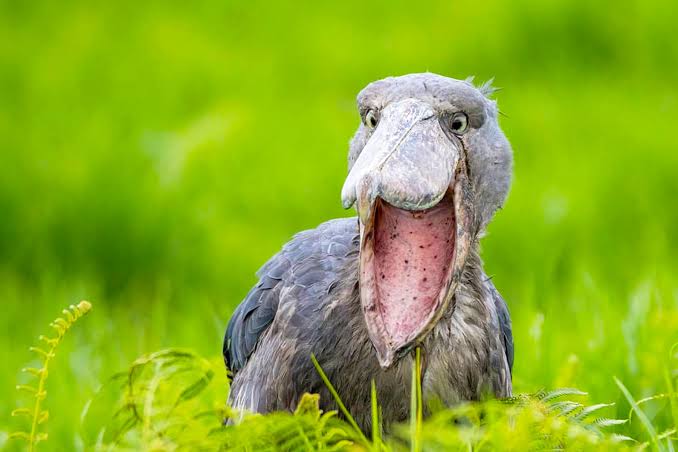
Best Places to See the Shoebill Stork in Uganda
This guide scores the main sites against the criteria that matter, explains the success rates you will see quoted and why some of them should be taken with caution, and then helps you choose by itinerary.
It covers Mabamba, the Murchison Falls Nile Delta, the Lugogo wetland at Ziwa Rhino Sanctuary, Lake Mburo, the Semliki area and the southern end of Lake Edward, and finishes with getting there, where to stay and the best time to go.
The Shoebill in Brief:
The shoebill is a large, grey, long-legged wetland bird, standing up to about 1.5 metres tall, with a bill that can grow to about 24 centimetres long and 20 centimetres wide. It is classified as vulnerable, can live for 35 to 50 years, and Uganda is described as holding between about 500 and 1,500 birds, with an estimate near 1,000 in some pages. Uganda has the best chance of seeing one of any country in Africa.
One feature explains why sightings are consistent at established sites: shoebills are resident birds tied to specific swamp territories. They do not wander widely, so if a guide knows where a pair feeds or nests, the bird is likely to be there again. That makes local knowledge, not luck, the key ingredient, and it is why a good guide matters more than the choice of swamp.
The Scorecard
Other sites mentioned in various guides include Lake Opeta in the east, Makanaga and Lwera swamps near Lake Victoria and Murchison Bay and Lutembe Bay on Lake Victoria near Kampala. They are worth knowing about but are rarely the first choice for visitors.
| Site | Access | Typical Success (as quoted) | Approximate Cost | What Else You Get |
| Mabamba Swamp, near Entebbe | About 1 to 1.5 hours from Entebbe or Kampala | About 80 to 90 percent on early canoe trips | About US$20 to US$45 for the canoe, or about US$80 with a guide and entrance in other pages | Over 300 species, papyrus gonolek, easy on layovers |
| Murchison Falls Nile Delta | Paraa area, about 5 hours from Kampala | Above 80 percent on guided boat trips | About US$30 to US$55 per person | Big wildlife, falls, a full safari |
| Ziwa Rhino Sanctuary, Lugogo (Rugogo) wetland | About 176 km from Kampala on the road north | Reported as very high at 6am to 8am | Included in the sanctuary’s activity pricing | Walking with rhinos on the same stop |
| Lake Mburo National Park | About 3 to 4 hours from Kampala | Lower and less reliable | Boat cruise fee | Zebra, impala, African finfoot, pelicans |
| Semliki area and Toro-Semliki | Remote, western Uganda | Variable | Arrange locally | Forest birds, hot springs |
| Southern Lake Edward, Queen Elizabeth NP | Remote part of the park | Variable | Arrange with UWA | Big park wildlife |
Mabamba:
Mabamba Bay Wetland on the northern shore of Lake Victoria is described in several guides as the most reliable site in the world, and it is certainly the most convenient. It lies roughly 1.5 hours from Kampala and close to Entebbe, so you can reach it before breakfast. Local guides pole traditional canoes quietly through winding channels of papyrus, watching for a grey silhouette above the line of the papyrus.
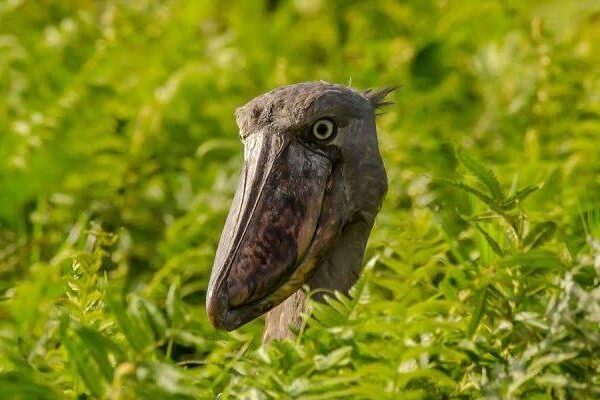
Shoebill
A trip lasts two to three hours in the swamp, with some operators offering longer excursions of up to seven hours. Success rates of 80 to 90 percent are the most credible figures, since claims of 95 or 99 percent depend on perfect conditions and an experienced guide. You will also see hundreds of other species, and the swamp is a rewarding birding site in its own right.
The Murchison Falls Delta:
The delta where the Victoria Nile enters Lake Albert is the largest concentration of papyrus in the area, and boat trips of two to four hours take you through channels where shoebills hunt. Operators quote sighting rates above 80 percent, and early morning and late afternoon cruises are best. The best season is the dry months of January to March and June to September.
The delta suits travellers who are already visiting Murchison Falls and who want the bird as part of a bigger safari. The experience feels wilder than Mabamba, with hippos, crocodiles and elephants on the banks, and you may see other special birds such as the goliath heron and the Abyssinian ground hornbill on land. The delta trip costs about US$30 to US$55 per person on top of park fees.
Ziwa and the Lugogo Wetland:
Ziwa Rhino Sanctuary lies about 176 kilometres north of Kampala on the road to Murchison Falls, and its Lugogo wetland, sometimes spelled Rugogo, holds a small shoebill population. Boat trips on the sanctuary waterways combine shoebill viewing with the chance to track white rhinos on foot, which makes Ziwa the most activity-dense single stop on the Kampala to Murchison corridor.
Success rates are reported as high, particularly between 6am and 8am, and shoebill excursions are included in the sanctuary’s activity pricing. If you are driving north anyway, an overnight at Ziwa gives you a dawn shoebill trip and a rhino walk before continuing to Murchison Falls.
Lake Mburo, Semliki and Lake Edward:
Lake Mburo’s eastern swampy shores support shoebills, and a boat cruise on the lake gives you a chance of seeing one among the papyrus, with pelicans, herons and the African finfoot as consolation. The southern end of Lake Edward, in a remote part of Queen Elizabeth National Park, and the Semliki area near Lake Albert are also mentioned as sites, though they require more effort and local arrangements.
None of these should be your main shoebill plan. They are good bonuses when you are in the area for other reasons, and a good guide will tell you honestly whether a sighting is likely on the day.
Choose by Itinerary
If shoebill is your number one target, do two sites rather than one, and allow a backup morning. Sightings depend on the day, and a second attempt in a different place greatly increases your overall chance.
| Your Situation | Best Choice | Why |
| Entebbe layover or first or last day | Mabamba | Closest, highest success, easy half day |
| Driving to Murchison Falls | Ziwa, then the Nile Delta | Rhinos and shoebills on the way, a second chance in the delta |
| Already at Paraa | Nile Delta cruise | No extra travel, combined with big game |
| Birding-focused 10-day trip | Mabamba plus the delta | Two different habitats, two chances |
| Lake Mburo stop | Lake Mburo boat cruise | A bonus on a southern route, not a main plan |
Tips for a Better Sighting
- Choose a local guide who works the swamp daily, and book the earliest slot.
- Move quietly, keep your voice low and let the guide position the canoe or boat.
- Bring binoculars, a long lens, a hat, sunscreen and a rain jacket.
- Do not insist on getting close, since shoebills are shy and easily disturbed.
- Keep a flexible schedule in case you need a second attempt.
Getting There and Where to Stay
For Mabamba, stay in Entebbe, where Papyrus Guesthouse is a popular base for shoebill tours, or in Kampala. The swamp is about an hour from the airport by road, and some operators run a speedboat or motorised canoe from the Nakiwogo landing. For Ziwa, the sanctuary has its own accommodation, and Masindi is the nearest town. For the delta, stay near Paraa on the north or south bank, where lodges such as Paraa Safari Lodge, Pakuba Safari Lodge and Red Chilli Rest Camp cover the range.
Book guides and boats a day or two ahead, and confirm start times, since early departures are the norm.
Best Time to Go
Shoebills can be seen year-round at established sites. The dry months, December to February and June to September, are the most comfortable, and the Murchison delta is best in January to March and June to September. Early morning is the best time of day everywhere, between about 6am and 10am, when the birds hunt for lungfish before the heat builds.
Frequently Asked Questions
What is the single best place to see a shoebill in Uganda?
Mabamba Swamp near Entebbe, with success rates of about 80 to 90 percent on early canoe trips.
Can I see shoebills at Murchison Falls?
Yes, in the Nile Delta, on boat trips of two to four hours that cost about US$30 to US$55.
Are shoebills guaranteed?
No. Even the best sites are not guaranteed, though success rates are high with experienced guides.
Where can I combine shoebills with rhinos?
At Ziwa Rhino Sanctuary, where the Lugogo wetland holds shoebills and you can track white rhinos on foot.
How many shoebills are there in Uganda?
Estimates range from about 500 to 1,500, with around 1,000 quoted in some pages.