How to Plan a Uganda Safari?
July 21, 2026
Ultimate Guide of Where to Go For Uganda Wildlife Safaris
July 21, 2026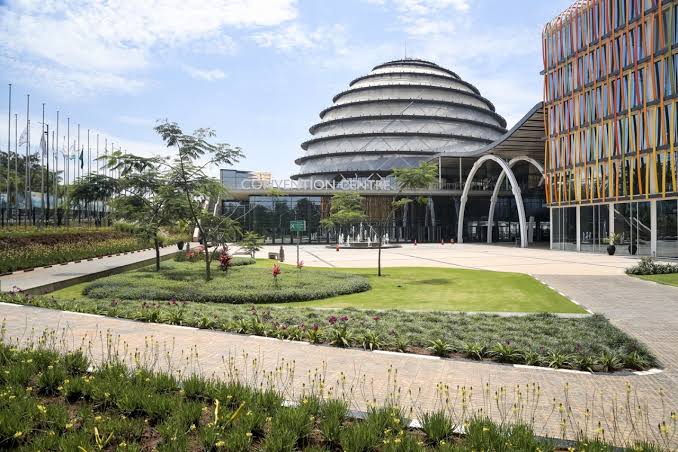
Guide to Visiting Rwanda
Most visitors come to Rwanda for the gorillas. Volcanoes National Park in the northwest holds a portion of the world’s remaining mountain gorilla population and offers some of the most accessible gorilla trekking in the world, with the briefing point at Kinigi just two and a half hours from Kigali International Airport.
But Rwanda has been actively and successfully positioning itself as a destination with more to offer than one morning in the Virunga forest.
Nyungwe Forest National Park in the southwest is one of Africa’s largest intact montane rainforests and holds chimpanzees, colobus monkeys, and a canopy walk fifty metres above the forest floor.
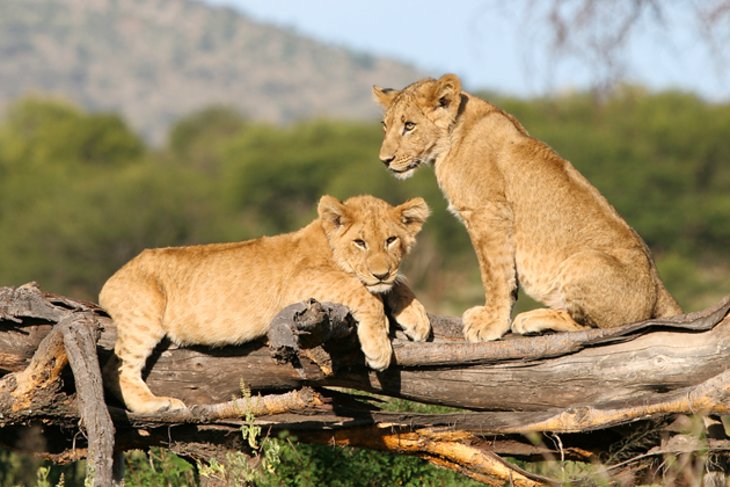
Akagera National Park in the east has been transformed over the past fifteen years from a depleted reserve into a functioning Big Five ecosystem with lions, black rhino, and elephants.
Lake Kivu on the western border is one of Africa’s most beautiful lakes, lined with fishing communities and volcanic hillsides and suitable for kayaking and swimming in a way that most East African lakes are not.
Kigali
Most visitors treat Kigali as a transit point between the airport and the gorillas. They arrive, spend one night, and leave before dawn the following morning for the two and a half-hour drive to Volcanoes National Park.
This is a reasonable schedule if the trip is very short and the gorilla trek is the only purpose. But Kigali is a city worth spending time in, and visitors who give it at least a full day come away with a significantly different understanding of Rwanda than those who see only the airport and a hotel lobby.
Kigali Genocide Memorial
The Kigali Genocide Memorial at Gisozi is the most important single site for understanding the context of modern Rwanda. Around 250,000 genocide victims are buried in the memorial gardens.
The museum inside covers the history of the 1994 genocide: its origins in the colonial period’s construction of ethnic division, the escalation through the early 1990s, the one hundred days of killings, and the international community’s failure to intervene.
It is not a comfortable two hours. It is a necessary one. Rwandans who visit the memorial are often visibly affected, and the same consideration for their experience that applies at any memorial site applies here. The memorial is free to enter.
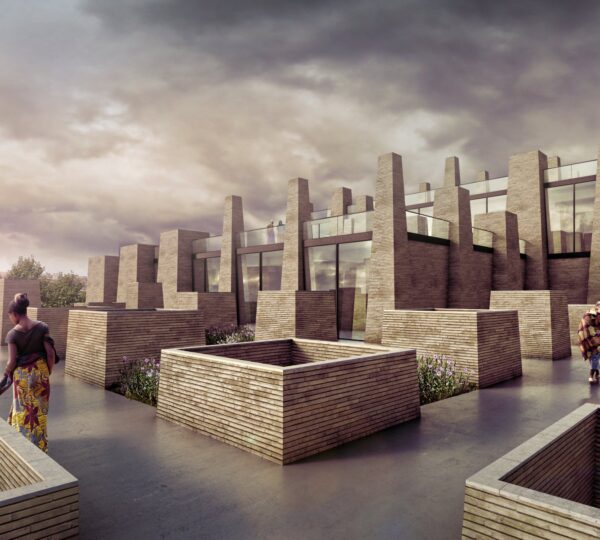
Kigali Genocide Memorial
Nyamirambo and Kimironko
Nyamirambo is Kigali’s oldest neighborhood and its most lived-in. The Nyamirambo Women’s Centre, a community organisation that runs walking tours of the neighborhood with local women guides, is one of the best ways to see the city at street level: the mosques and markets of the Arab Quarter, the informal restaurants where local food is served on plastic tables outside, and the rooftop views over the surrounding hills.
Kimironko Market, in the northeastern part of the city, is Kigali’s most comprehensive market for craft goods, fabric, and everyday produce. Inzozi Nziza, one of the city’s most well-known cafes, is near Kimironko and serves good coffee and homemade ice cream from locally sourced ingredients.
Volcanoes National Park
Volcanoes National Park in Rwanda’s northwest covers the Rwandan portion of the Virunga Mountains, a chain of volcanoes that extends into Uganda and the DRC.
The park covers 160 square kilometres of bamboo forest, hagenia woodland, and afro alpine grassland on the slopes of five volcanoes: Karisimbi, Bisoke, Sabyinyo, Gahinga, and Muhabura.
Three of these volcanoes mark the point where Rwanda, Uganda, and the DRC meet at a single ridge. The park holds 12 habituated mountain gorilla families, and a maximum of 96 gorilla trekking permits are issued each day, with each family limited to eight visitors.
Gorilla Trekking in Rwanda
A gorilla trekking permit in Rwanda costs USD 1,500 per person for international visitors, USD 200 for East African Community nationals, and USD 500 for other African nationals and foreign residents.
This is the most expensive gorilla permit in the world, but it is also among the most accessible: the drive from Kigali to the Kinigi briefing point takes two and a half hours on a good tarmac road, which means same-day arrival from Kigali and an afternoon gorilla trek is possible in theory, though most visitors stay the night near the park for the 7:00 AM briefing.
The permit includes access to the briefing and the trek; transport to the trailhead, porters, and tips are additional.
Gorilla trekking treks are assigned at the briefing based on fitness levels declared by visitors. Rwanda’s terrain in the Virungas is generally less steep and dense than Bwindi in Uganda at the lower altitudes where most families range, and some treks to the lower-altitude families are genuinely short, taking as little as one to two hours.
Higher-altitude families can take four to six hours on difficult terrain. After the trek, visitors are allowed one hour with the gorilla family. No flash photography, minimum seven-metre distance, no eating near the animals.
The same rules that apply in Uganda apply in Rwanda. Bring a porter. The fee goes to the local community, the support on steep sections is real, and the person who hired a porter on their Volcanoes trek virtually never regrets it.
Golden Monkey Trekking
Volcanoes National Park is also one of only two places in the world where golden monkey trekking is available, the other being Mgahinga Gorilla National Park across the border in Uganda.
The golden monkey is an Albertine Rift endemic with vivid orange-gold flanks and a black back, and it lives in the bamboo forest sections of the Virunga slopes.
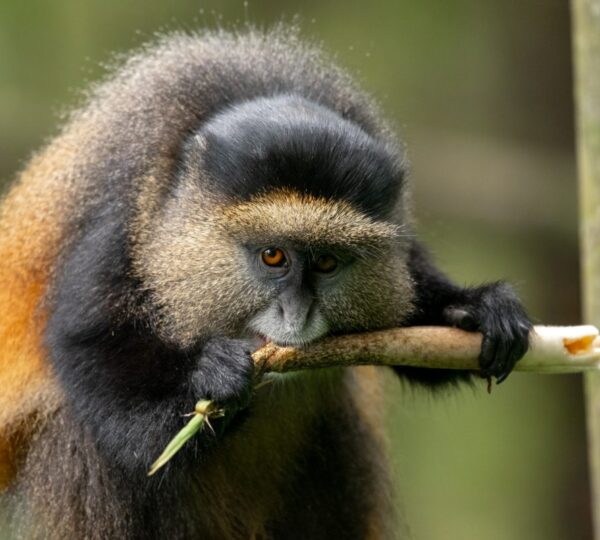
Golden Monkey
A golden monkey trekking permit costs USD 100 per person. Trekking groups are larger than gorilla groups and the animals are lively and often visible in large numbers within the bamboo.
For visitors who want a primate experience but cannot justify the USD 1,500 gorilla permit on a budget trip, golden monkey trekking is a genuine and worthwhile alternative.
Nyungwe Forest National Park
Nyungwe Forest National Park in southwest Rwanda covers 1,019 square kilometres of montane rainforest that has existed in essentially its current form for millions of years. It is one of the oldest and most biodiverse forests in Africa, and it is consistently undervisited relative to its quality as a wildlife destination.
Most Rwanda visitors who have a week in the country spend five days at Volcanoes and one or two nights at Nyungwe, which is enough to cover the main activities but not enough to fully appreciate what the forest holds.
The primary activity at Nyungwe is chimpanzee trekking. The forest holds over 500 chimpanzees and a chimpanzee trekking permit costs USD 90 per person, considerably less than the USD 1,500 gorilla permit.
Success rates at Nyungwe are lower than at Kibale in Uganda, which reflects the size and density of the forest rather than the quality of the habituated community. A dedicated early morning trek with an experienced Nyungwe ranger gives a reasonable probability of a good encounter.
The canopy walkway at Nyungwe is one of the longest suspended walkways in Africa at 160 metres, hanging fifty metres above the forest floor.
Walking it in the early morning when the mist is still in the canopy and the birds are active in the trees around and below you is a different kind of primate experience from the trekking: quieter, slower, and entirely focused on the forest itself rather than a specific animal encounter.
The walkway also gives a clear view of the Rwenzori colobus, which moves through the canopy in large troops and is very visible from an elevated position.
Akagera National Park
Akagera National Park in eastern Rwanda, on the border with Tanzania, covers approximately 1,122 square kilometres of savannah, wetland, and papyrus swamp. It is Rwanda’s oldest national park, established in 1934, and it has had a complicated history.
In the years following the 1994 genocide, returning refugees settled on large sections of the park’s land, reducing it from 2,500 square kilometres to its current size and eliminating its large predator population in the process.
In 2010, the Rwandan government partnered with African Parks, a conservation management organisation, to rehabilitate the park. The transformation since then has been significant and sustained.
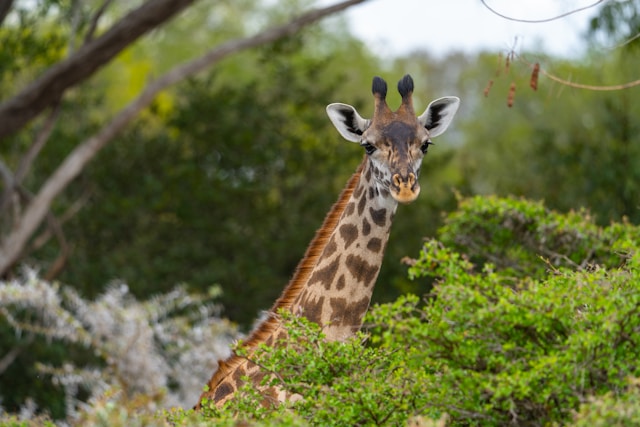
Lions were reintroduced to Akagera in 2015, black rhinos in 2017, and thirty southern white rhinos were translocated from South Africa in 2021. The Big Five are now resident in the park for the first time in decades, and game drive circuits on the rolling hills and lake margins produce reliable sightings of elephant, buffalo, giraffe, zebra, and various antelope species alongside the predators.
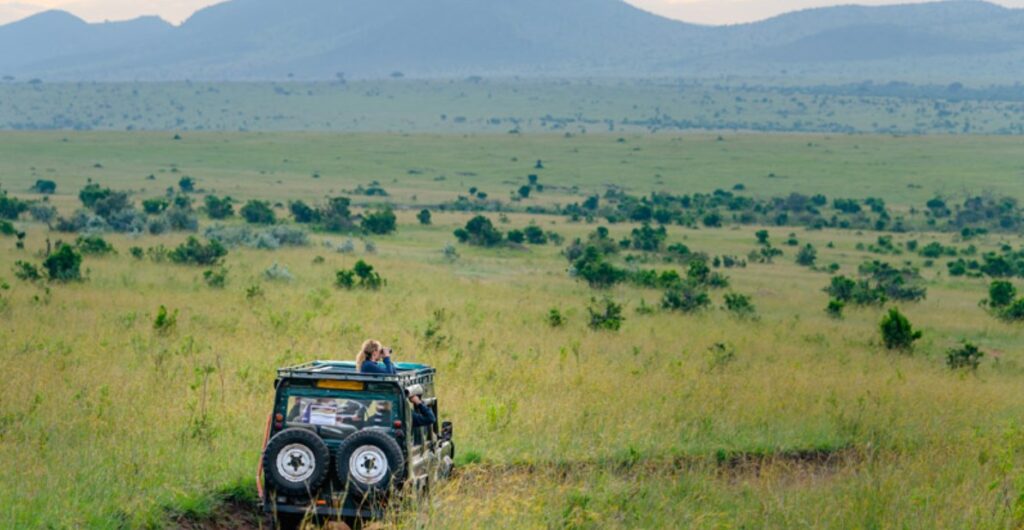
Akagera is now the easiest place in Rwanda to see large savannah mammals, and for visitors coming from western Europe or North America who associate the word safari with open grassland and large animals rather than dense forest, Akagera delivers the experience more directly than Volcanoes or Nyungwe.
Lake Kivu
Lake Kivu stretches 90 kilometres from the town of Rubavu in the north to Rusizi in the south along Rwanda’s western border with the DRC.
At 1,460 metres above sea level, it is one of Africa’s Great Rift Lakes, sitting in the same system as Lakes Tanganyika and Malawi to the south and Lakes Edward and Albert to the north.
What makes Lake Kivu specifically attractive for visitors is what it does not have: no hippos, no crocodiles, and water that is considered safe for swimming, which is genuinely unusual for a Great Rift Lake and gives it a relaxed, resort-like atmosphere that the wildlife parks cannot provide.
Rubavu, formerly called Gisenyi, is the northern lakeside town with the most developed tourism infrastructure: beach bars, restaurants on the water, guesthouses overlooking the lake, and a morning fish market where the previous night’s catch is sold directly off the boats.
The view across the lake to the DRC hills is permanent and dramatic, and at night the orange glow of Mount Nyiragongo’s lava lake is sometimes visible across the border on active nights. The lake’s hot springs, accessible by short boat ride from Rubavu, are a popular half-day excursion.
Gishwati-Mukura National Park
Gishwati-Mukura National Park was formally gazetted in 2016 and represents one of the most significant active forest restoration projects in East Africa.
The Gishwati and Mukura forest patches, once part of a larger contiguous highland forest, were heavily degraded by agricultural encroachment in the decades following independence.
The reconnection of the two patches and the active replanting program that has been underway since the early 2000s have already produced measurable results: the forest now covers over 34,000 hectares and holds populations of chimpanzees, golden monkeys, Rwenzori colobus, and over 232 bird species.
The park is smaller and less developed than Nyungwe and Akagera, and the tourism infrastructure is still building. Chimpanzee trekking is available and is described by those who have done it as offering a more intimate encounter than the larger, more visited Nyungwe site, partly because the smaller forest means the chimps are more reliably found and the group sizes are smaller.
The park is located in northwest Rwanda above Lake Kivu, which makes it a practical addition to a Lake Kivu and Volcanoes circuit rather than a destination requiring a separate visit.