Luxury Gorilla Trekking in Uganda
July 21, 2026
Best 5 Gorilla Safari Lodges in Uganda
July 21, 2026
Uganda Gorilla Trekking vs Rwanda Gorilla Trekking
This guide compares Uganda and Rwanda gorilla trekking across every factor that matters, from permit cost and accessibility to trek difficulty, scenery, accommodation, and the broader safari experience each country offers, before helping you decide which is the better fit for your priorities.
Both countries offer the same fundamental magic, an hour spent in the presence of a wild gorilla family deep in misty African forest, yet the two experiences differ in meaningful ways, from cost and accessibility to scenery, trek difficulty, and the wider safari experience each country offers. Choosing between them can feel like a genuinely difficult decision, and it is one worth taking the time to consider carefully.
The good news is that there is no wrong choice, because both Uganda and Rwanda offer world class gorilla trekking, home to the same critically important mountain gorilla population that ranges across the shared Virunga volcanic massif and, in Uganda’s case, the separate and equally magnificent Bwindi Impenetrable Forest.
The right destination for you depends on your budget, your appetite for adventure, how much time you have, whether you want to combine the trek with a wider safari, and what kind of overall experience appeals to you, whether that is Rwanda’s polished convenience or Uganda’s rugged, immersive variety. Understanding the real differences between the two is the key to making the choice that is right for you.
The Quick Comparison
For those wanting an overview before the detail, here is the short version. Uganda generally offers better value, more gorilla families and permits, greater variety of wildlife and activities, and a wilder, more rugged trekking experience, at the cost of longer road journeys and, in places, more physically demanding treks.
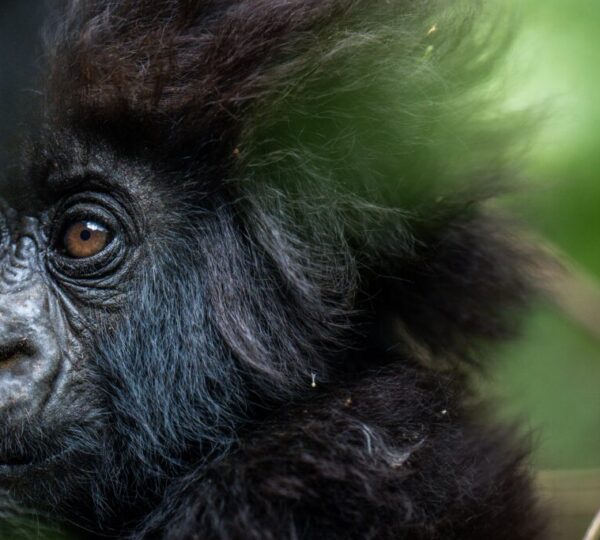
Gorilla
Rwanda offers a significantly higher permit price in exchange for exceptional convenience, a short drive from the airport, polished infrastructure, and some of the most luxurious lodges in Africa, with generally somewhat gentler terrain. Both guarantee the same profound hour with wild mountain gorillas, and the choice ultimately comes down to your priorities and budget.
| Factor | Uganda | Rwanda |
| Permit price | USD 800 | USD 1,500 |
| Main park | Bwindi and Mgahinga | Volcanoes National Park |
| Access from airport | 4 to 10 hours by road | 2 to 3 hours by road |
| Gorilla families | More families, wider permit availability | Fewer families, higher demand |
| Terrain | Dense, tangled, often steeper forest | Volcanic slopes, farmland approach |
| Other attractions | Extensive: Big Five, chimps, varied parks | Golden monkeys, Nyungwe, Akagera, Lake Kivu |
| Accommodation style | Wide range, rustic to luxury | Polished, several ultra-luxury options |
Permit Cost
Perhaps the single biggest and most practical difference between the two destinations is the price of the gorilla trekking permit itself, and here Uganda holds a clear and substantial advantage.
A Uganda gorilla permit costs USD 800 per person for foreign non-residents, while the equivalent Rwanda permit costs USD 1,500, very nearly double, for the same fundamental experience of one hour with a habituated gorilla family. Uganda also offers a discounted low-season permit of USD 600 during April, May, and November, further widening the value gap for flexible travellers.
This difference in permit price alone can make a meaningful impact on the overall cost of a trip, particularly for families or groups, where the savings multiply across each trekker.
Rwanda justifies its premium price through the exceptional convenience of its location and the polish of its overall tourism infrastructure, and for travellers who value time and luxury over cost, this premium may well be worth paying.
For budget conscious travellers, however, or those wanting to allocate more of their budget towards a longer or broader trip, Uganda’s considerably lower permit price makes it the clear value choice.
Accessibility
Accessibility is another major point of difference, and here Rwanda has a clear and significant advantage. Rwanda’s Volcanoes National Park lies just two to three hours by road from Kigali International Airport, meaning trekkers can arrive in the country and be at their lodge, ready to trek the following morning, with minimal travel fatigue, making Rwanda an excellent choice for travellers with limited time or those who simply prefer to minimise time spent in transit.
Uganda’s gorilla parks, by contrast, are considerably further from the country’s main international airport at Entebbe, with Bwindi Impenetrable National Park typically requiring an eight to ten hour road journey, or a shorter but pricier fly-in option to an airstrip near the park.
This longer journey is a genuine consideration for travellers with limited time, though many find the drive itself rewarding, passing through beautiful Ugandan countryside, terraced hills, and rural villages.
A popular and clever solution, used by many travellers, is to fly into Kigali and then cross the border by road to trek in Uganda, combining Rwanda’s superior airport access with Uganda’s lower permit price, taking around four to five hours from Kigali to Bwindi, a notably shorter journey than from Entebbe.
Trek Difficulty and Terrain
The physical experience of the trek itself differs somewhat between the two countries, largely due to the different terrain each offers, though it is worth stressing that both can be demanding and that difficulty varies enormously from day to day and family to family within each destination.
Uganda’s Bwindi Impenetrable Forest lives up to its formidable name, a dense, ancient rainforest of tangled vegetation, steep ravines, and often muddy, root-strewn ground, particularly in sectors such as Nkuringo in the south, which is renowned for being especially steep and demanding.
Rwanda’s Volcanoes National Park treks typically begin by walking through open farmland at the base of the volcanoes before entering the forest and climbing the volcanic slopes themselves, a different but still physically demanding experience, with some gorilla families being relatively more accessible than others.
Broadly speaking, some travellers and guides consider certain Rwandan treks to be marginally more manageable due to the more open initial approach, though Uganda’s Buhoma sector is also considered relatively accessible, and ultimately the difficulty in both countries depends heavily on which specific gorilla family you are assigned and where they happen to be on the day. Neither destination should be assumed to be simply easy, and both call for reasonable fitness and good preparation.
Gorilla Families and Availability
Uganda holds a meaningful advantage when it comes to the sheer number of habituated gorilla families and, consequently, the number of permits available each day, spread across the four Bwindi sectors of Buhoma, Ruhija, Rushaga, and Nkuringo, plus Mgahinga Gorilla National Park.
This greater availability generally makes it somewhat easier to secure a Uganda permit, even at relatively short notice in some periods, compared with Rwanda’s more limited daily allocation in the single Volcanoes National Park.
Rwanda’s Volcanoes National Park, while offering a wonderful and comparably concentrated gorilla population, has fewer habituated families and consequently fewer daily permits, and combined with its strong popularity and premium positioning, permits here can sell out further in advance, particularly during peak season.
For travellers planning well ahead, this difference may matter less, but for those booking closer to their travel dates, Uganda’s greater availability can be a genuine practical advantage worth considering.
Scenery and the Wider Safari Experience
Beyond the gorillas themselves, both countries offer beautiful and rewarding wider experiences, though the character and breadth differ considerably.
Uganda, sometimes called the Pearl of Africa, offers extraordinary diversity beyond gorilla trekking, including chimpanzee trekking in Kibale, the Big Five and boat safaris in Queen Elizabeth and Murchison Falls National Parks, the source of the Nile at Jinja, and a wide range of landscapes from savannah to crater lakes, making it possible to build a rich, varied, multi-destination safari around the gorilla trek.
Rwanda, though a smaller country, punches well above its weight with a wonderfully compact and easily combined set of experiences, including golden monkey tracking and chimpanzee trekking in Volcanoes and Nyungwe National Parks, a genuine Big Five safari in the beautifully restored Akagera National Park, and relaxation on the shores of Lake Kivu, all reachable without the long transfers that a broader Ugandan itinerary can involve.
For travellers wanting maximum variety and willing to accept longer journeys, Uganda offers more breadth; for those wanting a compact, easily combined set of experiences within a small and highly accessible country, Rwanda offers remarkable efficiency.
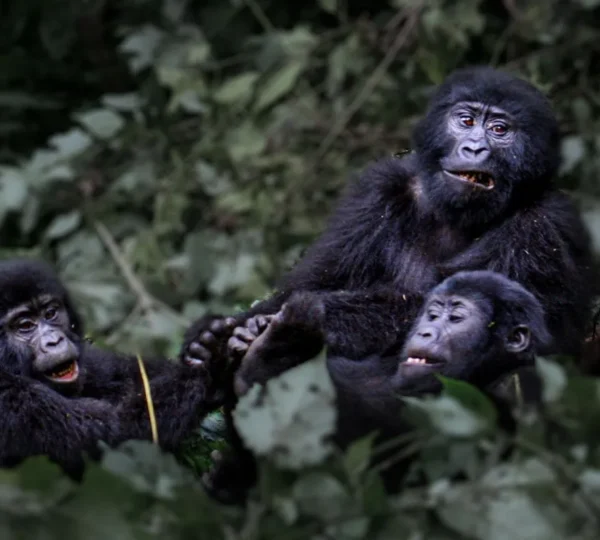
Gorillas
Accommodation and Style
Both countries offer accommodation across a wide range of styles and budgets, but there are some general differences in character worth noting. Uganda offers an especially wide spread, from simple, affordable guesthouses and campsites to excellent mid-range lodges and several outstanding luxury properties such as Sanctuary Gorilla Forest Lodge and Clouds Mountain Gorilla Lodge, giving budget-conscious and luxury travellers alike plenty of choice around Bwindi.
Rwanda has invested heavily in tourism infrastructure and is particularly well known for its collection of world-class, ultra-luxury lodges around Volcanoes National Park, some of the finest and most exclusive properties anywhere on the African continent, reflecting the country’s premium positioning.
Rwanda also offers comfortable mid-range and more modest options, but its reputation and strength lie particularly at the very top end of the luxury market. Travellers seeking the finest possible lodges and willing to pay for them may find Rwanda especially appealing, while those wanting more range and flexibility across budgets may find Uganda’s spread more accommodating.
Which Should You Choose?
Bringing all these factors together, the right choice between Uganda and Rwanda depends on your own priorities, budget, and travel style, and there is genuinely no universally correct answer. Considering the following guidance can help you decide which destination best matches what matters most to you for this once-in-a-lifetime experience.
Choose Uganda If
- Value and affordability matter to you, and you want to save significantly on the permit cost.
- You want to combine gorilla trekking with a wider, more varied safari, including chimpanzees and the Big Five.
- You do not mind a longer road journey, or plan to fly into Kigali and cross the border for the best of both.
- You want the widest possible choice of gorilla families and greater flexibility on permit availability.
- You enjoy a rugged, immersive, wilder style of travel.
Choose Rwanda If
- Time is limited, and you want to minimise travel and be trekking as quickly as possible after arrival.
- You are drawn to the very finest, most luxurious lodges and a highly polished travel experience.
- You are happy to pay a premium for convenience and are less focused on cost.
- You want to easily combine gorillas with golden monkeys, chimpanzees, Akagera, and Lake Kivu in one compact itinerary.
- You prefer a slightly gentler initial approach to the trek through farmland before the forest.
Can You Combine Both Countries?
For those with sufficient time and budget, it is entirely possible, and increasingly popular, to combine gorilla trekking in both Uganda and Rwanda within a single trip, or indeed to trek in Uganda while flying conveniently through Kigali, taking advantage of the strengths of each country.
Because the two countries share a border near the gorilla parks, with a manageable four to five hour drive between Kigali and Bwindi, combining destinations is logistically straightforward with the help of a good operator.
A combined itinerary might see you fly into Kigali, spend a day or two enjoying Rwanda’s attractions or even trekking gorillas there, then cross the border to trek a second time in Uganda at a lower permit cost, before continuing on to explore Uganda’s wider parks, or vice versa.
This approach allows dedicated primate enthusiasts and repeat gorilla trekkers to experience both destinations, comparing directly the polish of Rwanda with the rugged variety of Uganda, and it can be a wonderful option for a special, once-in-a-lifetime trip where budget allows for the extra time and permits involved.