How to Get to Zanzibar
October 7, 2026
5 Best Places in Tanzania for Family Safari Adventure
October 15, 2026
What to Pack for a Photo Safari in Tanzania?
The light on the Serengeti in the first hour after sunrise is the reason many photographers come to Tanzania. It falls low and golden across the short grass plains, catches the dust kicked up by a herd of wildebeest and turns a lioness on a kopje into a silhouette worth framing. Then the sun climbs, the light hardens and the moment passes. Whether you capture it depends heavily on what you packed weeks earlier.
Packing for a photo safari is not the same as packing for a standard holiday or even a regular safari. Light aircraft weight limits restrict what you can bring, dust gets into everything, power is limited in remote camps, and the right lens often matters more than the camera body. Overpacking is as common a mistake as underpacking.
This guide explains exactly what to pack for a photo Tanzania safari, based on what works in the field across the Serengeti, Ngorongoro, Tarangire and the southern parks. It covers camera gear by experience level, support and protection, power and storage, clothing and the practical rules that shape every decision.
Start With the Constraints
Before choosing any equipment, understand the limits that apply to most Tanzania safaris.
Luggage Weight on Light Aircraft
Scheduled light aircraft that connect the Serengeti, Ruaha, Nyerere and Zanzibar usually limit luggage to about 15 kilograms per person, including hand luggage and camera bags, in soft sided bags. Some operators allow up to 20 kilograms on specific routes. Camera equipment counts toward this total.
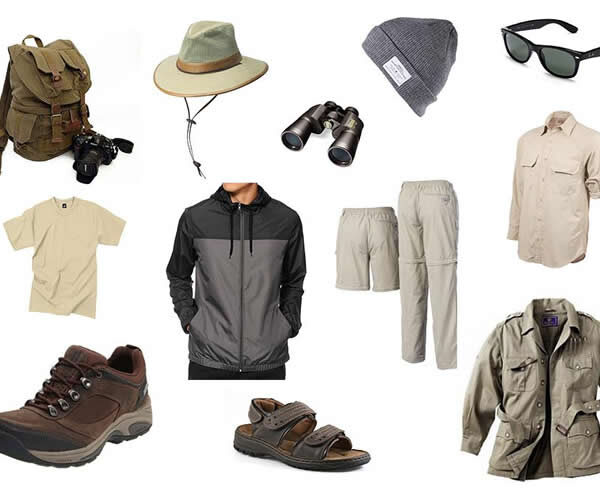
Photography Packing List
Serious photographers sometimes book an extra seat on the aircraft to carry additional weight. This costs extra but removes the stress of leaving lenses behind. If you are driving between parks rather than flying, limits are far more generous.
Dust and Vibration
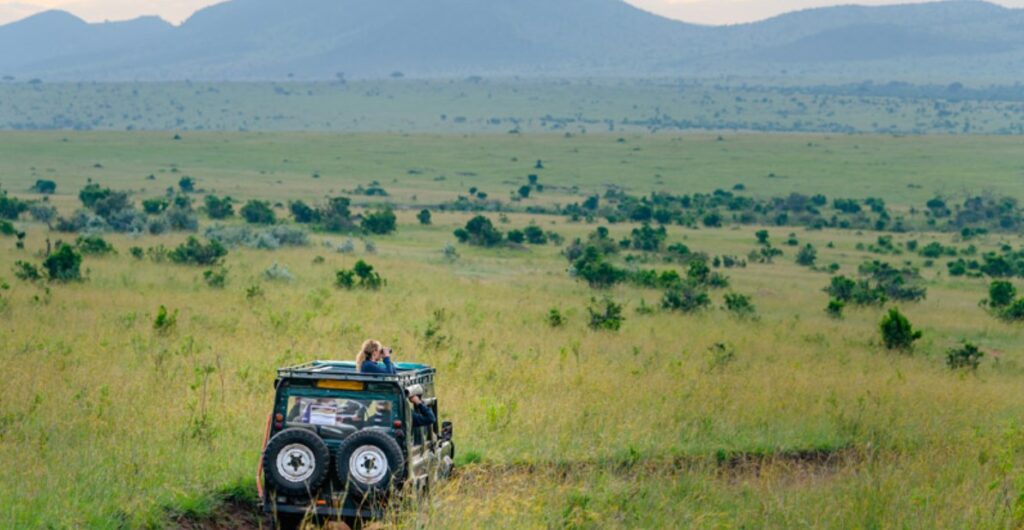
Tanzanian roads are dusty, especially in the dry season from June to October. Fine volcanic dust around Ngorongoro and the southern Serengeti gets into lens mounts and zoom mechanisms. Vehicles also vibrate constantly, which affects how you store and support equipment.
Power Availability
Most lodges and tented camps charge batteries in rooms or a central area, but some remote camps run solar systems with limited capacity. Many safari vehicles have charging points through an inverter, though not all. Plan to be self-sufficient for a full day.
Camera Bodies: What You Actually Need
One Body or Two?
Two bodies are ideal for serious photographers. One carries a long telephoto lens for distant subjects, while the second holds a medium zoom for closer action and landscapes. Changing lenses in a dusty vehicle risks sensor contamination and, more importantly, missed moments.
If you only bring one body, choose a versatile zoom lens and accept a few compromises.
Recommended Features
- Fast autofocus with animal eye tracking, now common on modern mirrorless cameras
- Good high ISO performance for low light at dawn and dusk
- A burst rate of at least 10 frames per second for action such as cheetah hunts
- Weather sealing for dust and occasional rain
Matching Gear to Experience
| Photographer Level | Camera Setup | Lenses |
| Beginner or casual | Bridge camera or one mirrorless body | Superzoom bridge lens or 100 to 400mm |
| Enthusiast | One or two mirrorless or DSLR bodies | 100 to 400mm or 150 to 600mm, plus 24 to 105mm |
| Advanced or professional | Two pro bodies | 500mm or 600mm prime or 200 to 600mm, 70 to 200mm, wide angle |
| Video focused | Mirrorless body with good stabilization | 100 to 400mm, 24 to 70mm, gimbal for walks |
Lenses: The Most Important Decision
Telephoto Zoom
A telephoto zoom in the 100 to 400mm or 150 to 600mm range is the workhorse lens of most Tanzania photo safaris. It covers distant leopards in sausage trees, lions on kopjes and birds in flight, while still zooming back for groups of elephants.
In the Serengeti and Ngorongoro, vehicles must stay on designated tracks in most areas, so animals are often 30 to 100 metres away. A focal length of at least 400mm is strongly recommended. Birders and those who want tight portraits may prefer 600mm or a teleconverter.
Medium Zoom
A 24 to 105mm or 70 to 200mm lens is essential for closer subjects and environmental images. Elephants in Tarangire often walk right past vehicles, and a long lens will be too tight. Medium zooms also capture scenes such as wildebeest herds stretching to the horizon.
Wide Angle
A wide angle lens of 16 to 35mm is useful for landscapes, the Ngorongoro Crater from the rim, starry skies over camp and close encounters in places like Ndutu where animals approach vehicles. It is not essential for everyone but adds variety.
Prime Lenses
Large prime lenses of 500mm or 600mm offer superb image quality and fast apertures, but their size and weight make them difficult on light aircraft. They suit photographers on dedicated photographic safaris with private vehicles and road transfers.
Support: Stabilising Your Shots
Tripods are almost useless in a safari vehicle. The right support makes a significant difference to sharpness.
Beanbag
A beanbag is the most useful support on safari. It rests on the vehicle window frame or roof edge and cradles a long lens. Bring it empty and fill it with rice or beans in Arusha, or ask your safari company to provide one. Many specialist photographic vehicles already carry them.
Monopod and Clamps
A monopod can work inside a vehicle if the space allows, and window clamps with a gimbal head suit heavy lenses. These are helpful but secondary to a good beanbag.
Image Stabilisation
Use lens or body stabilisation, but turn off the vehicle engine when shooting. Ask your guide to switch off at sightings; experienced photographic guides do this automatically.
Protection From Dust and Weather
- Camera bag with a rain cover, ideally a backpack that fits under a vehicle seat
- Dust covers or pillowcases to wrap cameras during drives between sightings
- Rocket air blower for removing dust without touching the sensor
- Microfibre cloths and lens cleaning fluid
- Sensor cleaning kit if you know how to use one
- Large zip lock bags for storing lenses at night and protecting gear in sudden rain
- UV or protective filters on front elements, optional but reassuring in dusty conditions
Change lenses inside the vehicle with the engine off and windows partly closed, or better still, avoid changing lenses during drives by using two bodies.
Power, Storage and Backup
Batteries
Bring at least three batteries per body. Cold mornings on the Ngorongoro rim drain batteries faster, and continuous shooting during a predator sighting uses power quickly.
Charging
- Universal travel adapter. Tanzania mainly uses the British style Type G three pin socket, with some Type D sockets.
- Multi port USB charger to charge several devices from one socket
- Car charger or USB C cable for vehicle charging points
- Power bank for phones and small devices
Memory Cards
Pack more memory cards than seems sensible. During the migration, it is common to shoot thousands of frames per day. Use several medium capacity cards rather than one huge card, so a single failure does not lose an entire trip.
Backup
A laptop or portable storage device allows nightly backups. Many photographers back up to two separate drives and keep them in different bags. Do not rely on lodge Wi Fi for cloud uploads, as connections can be slow or limited.
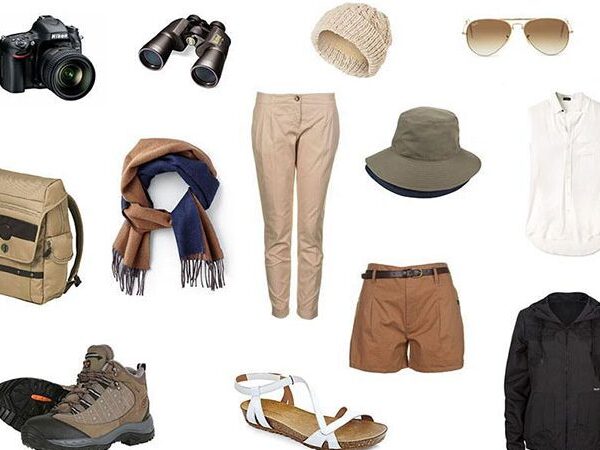
Packing List
Camera Settings Worth Preparing Before You Go
Packing the right equipment is only half the job. Setting it up properly before leaving home means you spend less time adjusting menus and more time photographing when a cheetah starts to run.
Suggested Starting Points
| Situation | Shutter Speed | Aperture | Autofocus Mode |
| Resting animals in good light | 1/500 second | f/5.6 to f/8 | Single point or animal eye detection |
| Running predators or birds in flight | 1/2000 second or faster | Widest available | Continuous tracking, wide area |
| Dawn and dusk portraits | 1/250 to 1/500 second | Widest available | Animal eye detection, higher ISO |
| Panning shots of moving herds | 1/30 to 1/60 second | f/8 to f/11 | Continuous, smooth panning |
| Landscapes from the crater rim | Tripod or beanbag dependent | f/8 to f/11 | Single point |
Use auto ISO with a sensible upper limit so exposure adapts as light changes. Set up custom buttons for switching quickly between action and portrait settings, and turn on back button focus if you are comfortable with it. Shoot in RAW to retain detail in highlights and shadows, which matters under the harsh midday sun.
Practice Before the Trip
Spend time at a local park, zoo or bird reserve photographing moving subjects with the exact setup you plan to bring. Learning how you autofocus behaves, how heavy your lens feels after an hour and where every button sits will make a noticeable difference once you are in Tanzania.
Packing Strategy for the Camera Bag
The way you pack is as important as what you pack. A well organized bag makes changing batteries or cards quick and protects equipment on bumpy roads.
- Choose a backpack style camera bag that fits under a seat or in a vehicle footwell
- Carry the bag as hand luggage on every flight; never check expensive lenses
- Pack the heaviest lens close to your back for comfort when carrying
- Keep one small pouch for daily essentials: spare battery, two cards, blower and cloth
- Wrap the camera in a soft cloth or dust cover during drives between sightings
Clothes and personal items go in a soft duffel bag, which fits the luggage pods of light aircraft. Hard suitcases are rarely accepted on internal flights, so leave them at home or store them with your safari company in Arusha.
Drones: Leave Them at Home
Flying drones in Tanzania’s national parks and conservation areas is effectively prohibited for tourists without special permits from several authorities, which are rarely granted for recreational use. Bringing a drone can lead to confiscation at the airport. Leave it at home unless you have arranged permits well in advance for a professional project.
Clothing for Photographers
Colours
Wear neutral colours such as khaki, olive, tan and grey. Avoid bright colours that can disturb wildlife on walking safaris, and avoid dark blue and black in areas with tsetse flies, as these attract them. Camouflage clothing is reserved for the military in Tanzania and should not be worn.
Layers
| Item | Why It Matters |
| Lightweight long sleeve shirts | Sun and insect protection |
| Fleece or light down jacket | Cold mornings, especially in open vehicles and on the crater rim |
| Windproof jacket | Open roof hatches create strong wind chill |
| Convertible or comfortable trousers | Easy movement in the vehicle |
| Wide brimmed hat that does not blow off | Sun protection when standing in a pop up roof |
| Buff or scarf | Dust protection for face and neck |
| Fingerless gloves | Camera operation on cold mornings |
| Comfortable closed shoes | Climbing in and out of vehicles |