
Top 5 Local Dishes to Try on a Uganda Safari
September 1, 2026
Top Reasons to Visit and Explore Uganda
September 1, 2026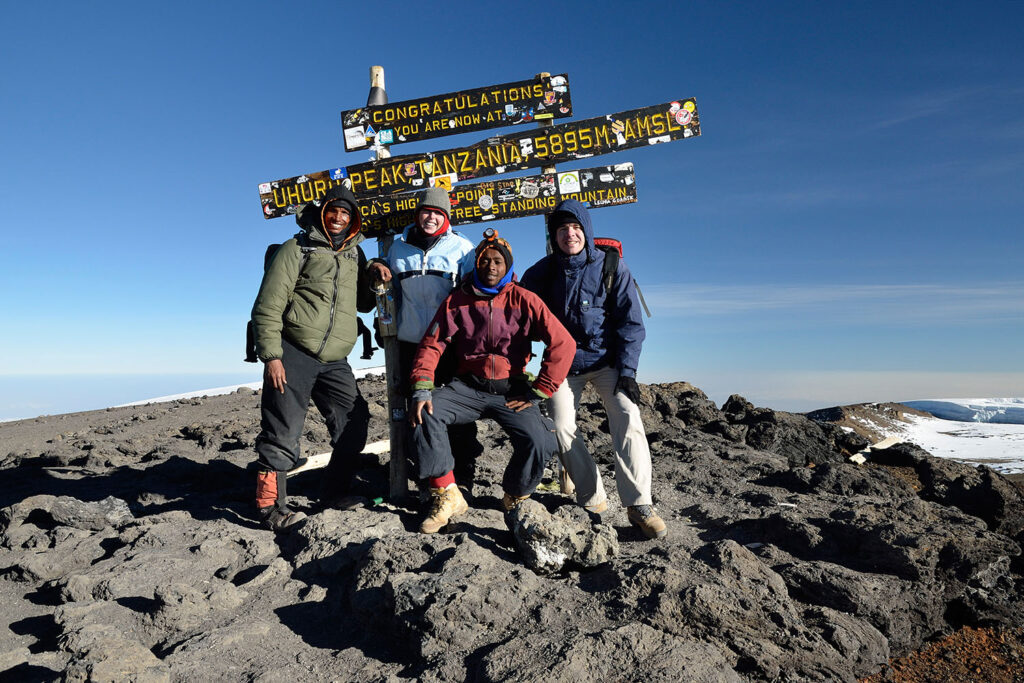
Where to Hike Mountains in East Africa: East Africa holds four genuinely distinctive high-altitude trekking destinations, Mount Kilimanjaro in Tanzania, Mount Kenya, the Rwenzori Mountains straddling the Uganda-DRC border, and Mount Elgon on the Uganda-Kenya border, and each offers a fundamentally different kind of mountain experience despite the tendency for travel marketing to lump them together as interchangeable “bucket-list climbs.” Understanding the real differences between them, in altitude physiology, terrain, technical demand, and overall character, matters enormously when choosing which mountain actually suits your goals and experience level.
As a travel consultant, the question I hear most often isn’t “which mountain is tallest” but “which mountain is right for me,” and the honest answer depends entirely on what kind of challenge you’re actually looking for. This guide breaks down each of East Africa’s four major trekking mountains in turn, then compares them directly against one another.
Mount Kilimanjaro, Tanzania
At 5,895 metres, Kilimanjaro is Africa’s highest peak and the world’s tallest freestanding mountain, meaning it rises independently rather than as part of a connected mountain range. It sits in northern Tanzania, within its own dedicated national park, and is reachable from Kilimanjaro International Airport near Arusha in under two hours.
Kilimanjaro’s dormant volcanic cone, technically three connected volcanic cones with the tallest at the center, makes it a non-technical trek requiring no ropes or climbing experience on any of its standard routes, which is precisely why it draws such a broad range of climbers, from complete beginners to seasoned mountaineers using it as an acclimatization warm-up.
That accessibility comes with a genuine catch: Kilimanjaro’s routes compress nearly six vertical kilometers of ascent into as little as five to seven days, with some itineraries pushing climbers from around 3,000 meters to over 4,500 meters in just two days.
This rapid ascent profile makes Kilimanjaro consistently report the highest incidence of acute mountain sickness among Africa’s major peaks, despite presenting no technical difficulty whatsoever, and overall summit success rates hover around 65 to 70 percent, driven almost entirely by altitude-related issues rather than physical fitness or terrain difficulty. Longer routes with more built-in acclimatization days, Lemosho and Machame in particular, meaningfully improve success rates compared with the shorter, faster Marangu route.
Mount Kenya, Kenya
Africa’s second-highest peak at 5,199 metres, Mount Kenya, sits in central Kenya, roughly three hours by road from Nairobi’s Jomo Kenyatta International Airport, and offers something Kilimanjaro doesn’t: a genuine choice in how technical your climb becomes.
Point Lenana, Mount Kenya’s trekking summit at 4,985 metres, is generally considered slightly easier than Kilimanjaro’s summit push, with lower sleeping altitudes and more gradual elevation gain reducing the altitude sickness risk that dominates the Kilimanjaro conversation.
Reaching the mountain’s true summits, Batian at 5,199 metres and Nelion at 5,188 metres, is an entirely different matter, requiring genuine rock climbing and technical mountaineering skill well beyond what any standard Kilimanjaro route demands.
This makes Mount Kenya a mountain that genuinely lets you choose your level of exposure: a non-technical trek to Point Lenana for climbers wanting the high-altitude experience without technical risk, or a serious, roped ascent to Batian for experienced mountaineers seeking Africa’s second-highest true summit.
Mount Kenya’s varied terrain, rugged, jagged peaks and pristine alpine lakes also offer scenic diversity that many climbers find more visually striking than Kilimanjaro’s more uniform ascent through vegetation zones, and the mountain sees considerably fewer climbers overall, giving it a genuinely quieter, wilder trekking experience.
The Rwenzori Mountains, Uganda/DRC Border
The Rwenzori range, nicknamed the “Mountains of the Moon,” is the only major non-volcanic high mountain range in East Africa, formed instead from uplifted Precambrian-era rock, and its highest point, Margherita Peak at 5,109 meters, is Africa’s third-highest summit. Where Kilimanjaro and Mount Kenya present relatively straightforward, if sometimes technical, mountaineering challenges, the Rwenzori presents something genuinely different: notoriously difficult terrain involving extensive, technically demanding bog crossing that no amount of prior Kilimanjaro or Mount Kenya experience actually prepares a climber for, alongside a glacier crossing that forms an unavoidable part of any genuine summit attempt on Margherita Peak itself.
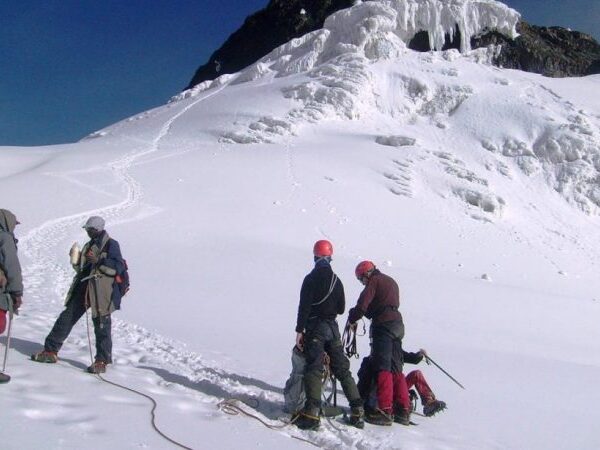
Hiking Mount Rwenzori
The Rwenzori’s altitude profile also behaves differently from Kilimanjaro’s relentless single-direction ascent: climbers here experience genuine climbs and descents between camps, sleeping at 4,000 metres one night and dropping to 3,500 metres the next, a pattern that actually aids acclimatization compared with Kilimanjaro’s steady upward push, even though the overall trek is widely and accurately considered harder on a day-to-day basis given the technical bog and glacier sections.
This combination of genuine technical demand and unpredictable, difficult underfoot conditions gives the Rwenzori a reputation as the most physically demanding of East Africa’s major treks, better suited to climbers with real trekking or mountaineering experience than to complete beginners.
Mount Elgon, Uganda/Kenya Border
Mount Elgon, an extinct volcano straddling the Uganda-Kenya border, offers the most accessible and beginner-friendly of East Africa’s four major mountain treks. Its trails are considerably easier and its ascent more gradual than Kilimanjaro, Mount Kenya, or the Rwenzori, making it a genuinely strong choice for first-time high-altitude trekkers or families with capable teenagers wanting a real mountain achievement without the altitude risk that Kilimanjaro carries or the technical demand the Rwenzori requires.
Most Elgon treks take five to nine days depending on the specific route chosen, and the mountain’s slopes support elephant, buffalo, and leopard, giving it a genuine wildlife dimension that the higher, more barren summit zones of the other three mountains largely lack.
Elgon is also home to one of the world’s largest intact calderas, and its lower slopes hold caves historically used by local communities and elephants alike for salt mining, adding a genuinely distinctive geological and cultural dimension to what is otherwise a comparatively gentle trekking experience.
How the Four Mountains Compare
| Mountain | Height | Technical Difficulty | Best Suited To |
| Kilimanjaro | 5,895 m | Low (non-technical routes) | Beginners well-prepared for altitude: the classic bucket-list climb |
| Mount Kenya (Point Lenana) | 4,985 m | Low to moderate | Trekkers wanting high altitude without Kilimanjaro’s AMS risk |
| Mount Kenya (Batian/Nelion) | 5,199 m/5,188 m | High (technical climbing) | Experienced mountaineers |
| Rwenzori (Margherita Peak) | 5,109 m | High (bog crossing, glacier) | Experienced trekkers seeking genuine mountaineering challenge |
| Mount Elgon | 4,321m | Low | Beginners, families with older teens, wildlife-focused trekkers |
Choosing the Right Mountain for You
If your primary goal is simply reaching Africa’s highest point and you’re prepared to manage genuine altitude risk through a well-paced itinerary, Kilimanjaro remains the obvious, iconic choice, and its non-technical routes make it achievable for a genuinely wide range of fitness levels provided you choose a longer route with adequate acclimatization days.
If you want a comparably high-altitude trekking experience with somewhat lower altitude sickness risk, more scenic variety, and considerably fewer other climbers on the trail, Mount Kenya’s Point Lenana route deserves serious consideration.
For climbers with genuine mountaineering ambition, wanting either a technical rock climb or the most physically demanding trekking challenge East Africa offers, Mount Kenya’s Batian summit or the full Rwenzori traverse represent the region’s most serious objectives, and neither should be attempted without real prior experience or a highly qualified guide.
And for beginners, families, or anyone wanting a genuine mountain achievement without Kilimanjaro’s altitude risk or the Rwenzori’s technical demand, Mount Elgon offers a rewarding, considerably gentler introduction to East African high-altitude trekking.
Preparing for Any East African Mountain Trek
Regardless of which mountain you choose, sensible acclimatization principles apply across the board: ascend no more than 300 meters per day above 3,000 meters wherever your itinerary allows, drink three to four liters of water daily, and build genuine acclimatization days into your schedule rather than choosing the shortest, cheapest itinerary available.
Costs across these mountains generally range from roughly $2,000 to $5,000 depending on the specific route, operator, and trip length, and choosing a longer route with better-paced acclimatization is almost always worth the additional cost given how directly it affects your actual chances of a safe, successful summit.
A good guide matters enormously on all four mountains, but particularly on the Rwenzori, where genuine local knowledge of current bog and glacier conditions can meaningfully affect both safety and the overall experience, and on Mount Kenya’s technical routes, where a qualified mountaineering guide is genuinely non-negotiable rather than optional.
Best Time of Year to Climb
All four mountains are climbed most comfortably during East Africa’s dry seasons, roughly December through February and June through September, when trails are firmer and visibility clearer. The Rwenzori in particular rewards careful season selection given its notorious bog sections, which become considerably more difficult and, in places, genuinely hazardous during the heaviest rains, making dry-season timing more consequential here than on Kilimanjaro or Mount Kenya, where well-maintained trails handle wetter conditions somewhat better.
Climbing during the shoulder months just before or after peak season can offer a worthwhile trade-off across all four mountains: meaningfully fewer other trekkers on the trail and, in some cases, better rates from operators, in exchange for a slightly higher chance of encountering rain or cloud cover that could obscure summit views.
What to Pack
Layered clothing capable of handling everything from warm, humid rainforest at the base of any of these mountains to genuinely sub-zero conditions near the summit is essential regardless of which peak you choose.
A four-season sleeping bag, sturdy, well-broken-in hiking boots, trekking poles, and a headlamp for early summit-morning starts round out the core equipment list, and gaiters are particularly worth packing for the Rwenzori specifically, given its extensive, unavoidable bog sections.
Given the genuine variation in gear requirements between a straightforward Kilimanjaro trek and a technical Mount Kenya or Rwenzori climb, working through your specific packing list with an experienced operator, rather than relying on a single generic checklist, will save you from either under-preparing for a technical section or over-packing for a straightforward trekking route.
Frequently Asked Questions
Which East African mountain is easiest for a first-time trekker?
Mount Elgon offers the most gradual, accessible trails of the four, making it the strongest choice for beginners. Mount Kenya’s Point Lenana route is a reasonable second option for those wanting a higher-altitude experience.
Is Kilimanjaro or Mount Kenya harder?
It depends on what you’re measuring. Kilimanjaro is harder in terms of altitude sickness risk, given its higher summit and rapid ascent profile. Mount Kenya is harder in terms of technical difficulty if you’re aiming for the true summits, Batian or Nelion, rather than the trekking summit, Point Lenana.
Do I need technical climbing experience for any of these mountains?
Not for Kilimanjaro’s standard routes, Mount Kenya’s Point Lenana, or Mount Elgon, all of which are non-technical treks. Genuine technical climbing skill is required for Mount Kenya’s true summits (Batian and Nelion) and for a full Rwenzori summit attempt on Margherita Peak, given its glacier crossing.
How long does it take to climb each of these mountains?
Kilimanjaro typically takes five to nine days depending on the route; Mount Kenya’s Point Lenana route is around four to five days; the Rwenzori Mountains take seven to nine days or more for a full traverse; and Mount Elgon takes five to nine days depending on the chosen route.
Which mountain has the best success rate?
Mount Kenya’s Point Lenana and Mount Elgon generally see higher success rates than Kilimanjaro, given their lower risk of altitude sickness. Kilimanjaro’s success rate runs around 65 to 70 percent, driven primarily by altitude-related issues rather than terrain difficulty.