Guide to Visiting Rwanda
July 21, 2026
Guide to Where to Go for Walking Safaris in Uganda
July 21, 2026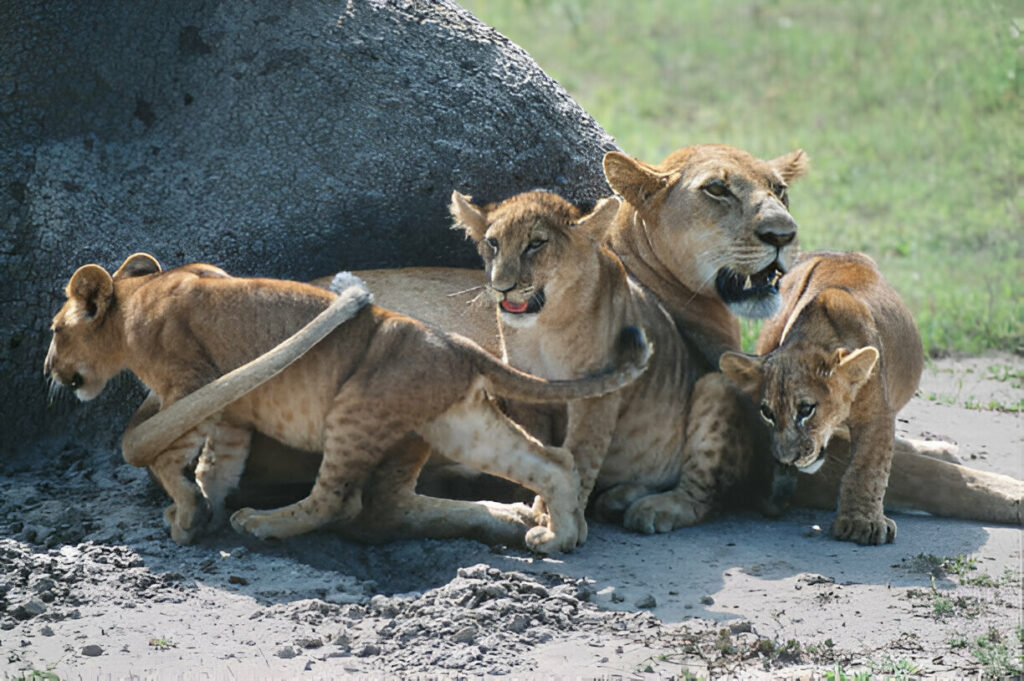
Ultimate Guide of Where to Go For Uganda Wildlife Safaris
Ultimate Guide of Where to Go For Uganda wildlife safaris, Uganda earns its title as the Pearl of Africa not through marketing but through the specific combination of things it has that almost nowhere else in the world has together: more than half of the world’s remaining mountain gorillas, the highest chimpanzee density of any forest in East Africa; tree-climbing lions that rest in fig trees above the open savannah; a waterfall where the entire Victoria Nile forces itself through a seven metre gap in the rock, 1,080 bird species in a country the size of the United Kingdom, and game drives where you may be the only vehicle at your sighting for the entire morning.
The standard East Africa safari circuit runs through Kenya and Tanzania, and those countries justify their popularity. The Masai Mara and the Serengeti are genuinely extraordinary. But they have become so popular that the best wildlife sightings are often attended by large numbers of vehicles, and many visitors feel the density of tourism competing for the same animals at the same time reduces the experience.
Uganda has neither of those problems. The parks are less crowded, the permit system limits access to the most sensitive wildlife, and the encounters, particularly the primate treks, are deliberately intimate in a way that the open plains safari model cannot replicate.
The specific reasons to choose Uganda over or alongside the Kenya and Tanzania circuit: Uganda is the only place in the world where the Gorilla Habituation Experience is available. Uganda’s gorilla trekking permits cost USD 800 compared to Rwanda’s USD 1,500. Uganda holds thirteen primate species in Kibale Forest alone.
Uganda’s lion population at Murchison Falls exceeds 250 individuals. The Ishasha tree-climbing lions are documented at only two sites globally. And the Nile boat cruise at Murchison Falls, where hippos surface alongside the vessel for seventeen kilometres of river, is a wildlife experience that the plains safari circuit cannot provide.
Uganda’s National Parks — Where to Go and What Each One Offers
Bwindi Impenetrable National Park
Bwindi is Uganda’s most famous park and one of the most significant conservation sites in the world. It covers 331 square kilometres of ancient montane rainforest in the southwest of the country and holds approximately half of the world’s remaining mountain gorillas, currently estimated at just over 500 individuals in the park’s four sectors.
Gorilla trekking at Bwindi is the primary activity, with permits costing USD 800 per person and a maximum of eight visitors per habituated gorilla family per day.
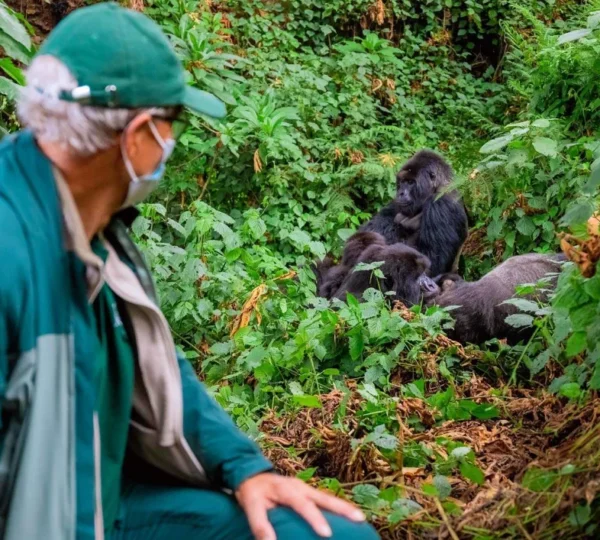
Gorilla Trekking
The park has four trekking sectors: Buhoma in the north, the most established and most accessible; Rushaga in the south, with the most habituated families and the Gorilla Habituation Experience; Ruhija in the east, the highest altitude and least visited; and Nkuringo in the southwest, the most demanding terrain and the most dramatic landscape, overlooking the Virunga volcanoes.
The gorilla permit date determines which sector you will visit, and the lodge you choose must be in the same sector as the permit. This is the most important planning detail for Bwindi and the one most frequently overlooked by first-time visitors.
Murchison Falls National Park
Murchison Falls National Park is Uganda’s largest protected area, covering 3,840 square kilometres of savannah, woodland, and Nile riverine habitat in the northwest of the country.
The park takes its name from the waterfall at its centre: the entire volume of the Victoria Nile, which drains Lake Victoria and is the world’s longest river in its upper reaches, forces through a seven-metre gap in the rock and drops forty-three metres into the pool below. The view from the boat anchored at the base of the falls and the view from the top road looking down into the gorge are both visually extraordinary.
The Nile boat cruise from Paraa upstream to the base of the falls is widely considered the single best activity in the park and one of the finest wildlife experiences in Uganda. The river between Paraa and the falls is lined with hippos surfacing alongside the vessel, Nile crocodiles on every exposed bank, elephants and buffaloes at the water’s edge, and African fish eagles calling from the riverine trees.
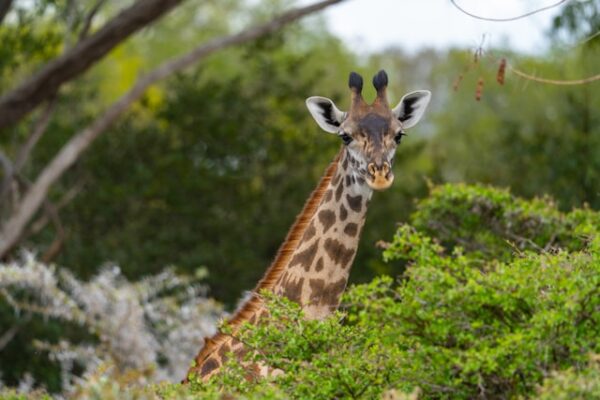
The Buligi game drive circuit on the north bank covers open savannah where Uganda’s largest lion population hunts, and where giraffes, elephants, and large herds of Uganda kob move through the Borassus palm landscape.
Murchison also holds the Budongo Forest at Kaniyo Pabidi on the park’s southern boundary, where chimpanzee trekking is available as an add-on to the northern circuit. Ziwa Rhino Sanctuary, a natural two-hour stop on the drive north from Kampala, gives white rhino tracking on foot and completes a northern Uganda circuit that covers four of the Big Five.
Queen Elizabeth National Park
Queen Elizabeth National Park covers nearly 2,000 square kilometres in western Uganda and is the country’s most visited park. Its value as a safari destination comes from the variety of habitats and activities compressed into a single protected area: the Kasenyi Plains game drive circuit in the north, the Kazinga Channel boat cruise through the wetland connecting Lake George to Lake Edward, the Kyambura Gorge for chimpanzee trekking, and the Ishasha sector in the south for tree-climbing lions. No other park in Uganda offers this range of distinct wildlife experiences within its own boundaries.
The Kazinga Channel holds one of the highest hippo concentrations in Africa, and the boat cruise along its thirty-two kilometres offers wildlife on both banks at close range: elephants and buffaloes drinking, hippos in pods numbering in the hundreds, Nile crocodiles on the mud banks, and a waterbird community of over 600 species that includes African skimmers, Goliath herons, and pied kingfishers.
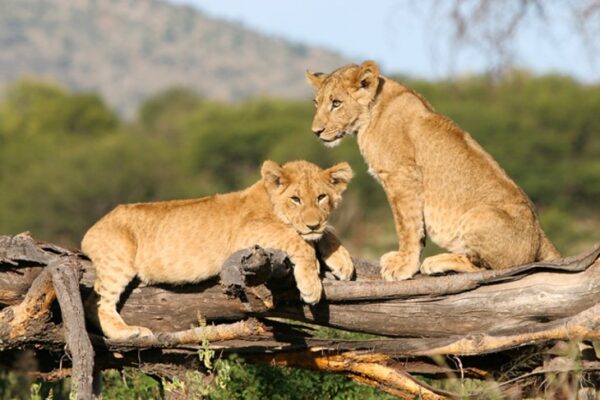
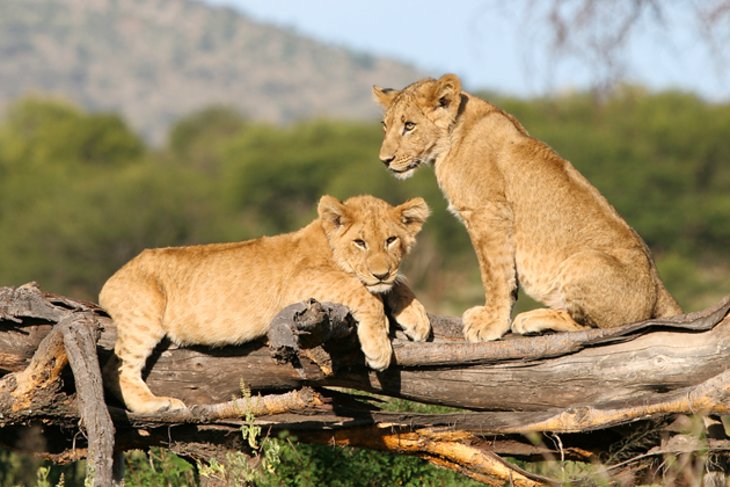
The Ishasha tree-climbing lions are found in the park’s southern sector, where prides rest in the branches of large sycamore fig trees in a behaviour documented in only two locations globally.
Kibale Forest National Park
Kibale Forest National Park near Fort Portal holds the highest density of chimpanzees of any forest in East Africa, with over 1,500 individuals across its 795 square kilometres of tropical rainforest and grassland. It is also home to twelve other primate species, over 375 bird species including several Albertine Rift endemics, forest elephants, and buffaloes.
The chimpanzee trekking permit at Kibale costs USD 250 and includes the park entry fee for the day. Treks depart from the Kanyanchu Visitor Centre at 8:00 AM and 2:00 PM, with a success rate consistently above 90 percent.
The Chimpanzee Habituation Experience at Kibale gives a full day with a semi-habituated community alongside researchers and rangers. The Bigodi Wetland Sanctuary adjacent to the park, managed by the local community, holds 138 bird species in a two to three-hour guided walk and costs approximately USD 10 as a community entry fee. Kibale is the first choice for visitors who have one opportunity for a chimpanzee encounter and want the highest probability of a quality experience.
Kidepo Valley National Park
Kidepo Valley National Park is Uganda’s most remote national park and its wildest. Located in the far northeast on the borders with South Sudan and Kenya, it covers 1,442 square kilometres of semi-arid savannah and rocky hills in the Karamoja region. The Narus Valley, the park’s primary game viewing area, is a sweeping open plain ringed by mountains and dramatic escarpments, with a permanent water source that concentrates wildlife during the dry season.
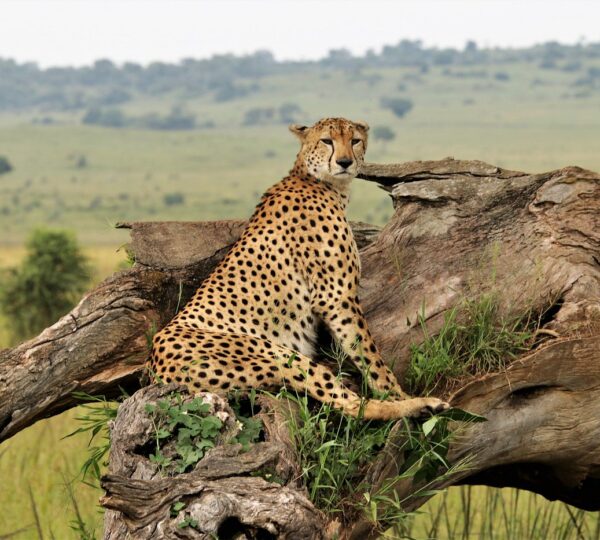
Kidepo Valley National Park
The park holds approximately 130 lions and Uganda’s only cheetah population, along with elephants, buffaloes, zebras, giraffes, ostriches, elands, and a range of antelope species uncommon in Uganda’s western parks.
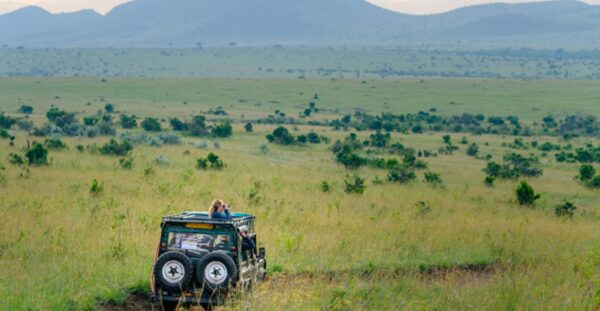
The game drives at Kidepo are unmatched for the combination of wildlife and landscape: no other park in Uganda produces game drive compositions with mountains behind the animals and no other vehicles in sight.
The journey to Kidepo takes six to eight hours by road from Kampala or under two hours by domestic flight to Kidepo Airstrip. For visitors with time and budget, it is the most rewarding detour on the Uganda safari circuit.
Lake Mburo National Park
Lake Mburo National Park is the closest national park to Kampala, three and a half hours southwest on the Masaka to Mbarara highway. It covers 370 square kilometres and holds Uganda’s largest impala population, Rothschild’s giraffes, Burchell’s zebras, eland, topi, waterbuck, hippos, and over 350 bird species.
Unlike Uganda’s larger parks, Lake Mburo has no significant large predator population, which makes walking safaris and horseback safaris inside the park safe and available.
The horseback safari, operated by Mihingo Lodge under a Uganda Wildlife Authority concession since 2009, is the most distinctive activity in the park: riding through the acacia savannah among zebras and impalas that respond to horses differently from vehicles gives an encounter quality that no other Uganda park can offer. Lake Mburo sits naturally on the road between Kampala and the western parks, making one to two nights here a practical and enriching addition to any Bwindi or Queen Elizabeth circuit.
Mgahinga Gorilla National Park
Mgahinga Gorilla National Park sits on the slopes of the Ugandan Virunga volcanoes in the far southwest, bordering Rwanda and the DRC. It has one habituated gorilla family, the Nyakagezi group, which moves between Uganda, Rwanda, and the DRC and is not always in Uganda.
The park also offers golden monkey trekking, a hike in the bamboo and Virunga forest that produces one of Africa’s most colourful primates, and volcano hikes on Mount Gahinga and Mount Sabyinyo. For visitors combining Uganda and Rwanda in a single trip, Mgahinga provides a connecting point between the Bwindi gorilla experience and the Rwandan circuit at Volcanoes National Park.
Key Wildlife Species to Spot on Uganda Safari
Mountain Gorillas
Uganda holds just over 500 of the world’s estimated 1,000 mountain gorillas, with the population almost entirely resident in Bwindi Impenetrable National Park and Mgahinga Gorilla National Park.
The population has grown from under 700 globally in the early 2000s to over 1,000 today, and Uganda’s regulated, permit-based trekking programme is a significant part of why. The trek to a habituated gorilla family takes between forty minutes and seven hours depending on where the family has ranged overnight. The encounter lasts one hour. The hour passes fast.
Chimpanzees
Uganda has Africa’s highest density of wild chimpanzees, with over 5,000 individuals spread across several protected forests. The main trekking sites are Kibale Forest (most reliable), Budongo Forest at Kaniyo Pabidi in Murchison Falls, Kyambura Gorge in Queen Elizabeth, and Kalinzu Forest Reserve.
Chimpanzees share 98 to 99 percent of human DNA and are the most behaviourally complex animals most visitors will ever encounter in the wild. They are also loud, fast, and unpredictable in ways that make the encounter fundamentally different from a gorilla family observation.
The Big Five
Uganda is one of the few countries in Africa where visitors can see four of the Big Five within a single national park safari circuit, with the fifth available at a dedicated sanctuary. Lions are in Queen Elizabeth, Murchison Falls, and Kidepo Valley. Elephants are widespread across multiple parks. Buffaloes are common in Queen Elizabeth and Murchison.
Leopards are resident in all three savannah parks but rarely seen, as they are everywhere. White rhinos were poached to extinction in Uganda in the 1970s and are now being restocked through Ziwa Rhino Sanctuary, where they can be tracked on foot. Adding a Ziwa stop to a Murchison Falls itinerary completes the Big Five in a single northern circuit.
Birds — 1,080 Species
Uganda has more bird species per square kilometre than any other country in Africa. Over 1,080 species have been recorded, spanning Albertine Rift endemics, forest specialists, savannah and wetland birds, and migratory species that pass through between November and April.
The Shoebill Stork is the most sought-after species and is most reliably found at Mabamba Swamp near Entebbe and in the papyrus delta at the Nile-Lake Albert junction in Murchison Falls. The grey crowned crane, Uganda’s national bird, is visible in farmland and grassland throughout the country. For dedicated birders, Uganda is one of the top five birding destinations in the world.