
10 Best Hiking Trails in Kenya
October 30, 2026
10 Interesting Facts About the Maasai Tribe
October 30, 2026
5 Interesting Facts About Kenyan Cultures
Most visitors meet Kenya’s cultures in fragments: a Maasai guide at a lodge, a plate of ugali and grilled meat, a conversation in Swahili with a driver, a rack of beadwork at a roadside stall. Each of those moments is a small window onto a much larger picture.
Kenya is a country of more than 40 ethnic groups, each with its own language, customs and history, and the way they overlap shapes everyday life far more than a single stereotype can capture.
This guide picks five facts that help make sense of that picture, from the number of communities to the national motto, and then explains how to experience Kenyan culture respectfully on a trip. It also covers where to go, getting there, where to stay and when to travel, so that learning about culture becomes part of your itinerary rather than an afterthought.
Why Culture Belongs on a Kenya Itinerary
Safari is the headline, but culture is what makes a trip feel like a visit to a country rather than a tour of parks. Conversations with guides, meals in local restaurants and visits to coastal towns or highland farms give you context for the landscapes you see.
They also give you a better sense of how people and wildlife share the same land, which is one of the most important stories in Kenya.
A little preparation helps. Knowing a few facts about who lives where, what languages are spoken and what customs matter makes it easier to ask good questions and to avoid mistakes. The five facts below are a starting point, not a full account, and they come with a reminder that any summary of a diverse country will simplify.
Kenya Has More Than 40 Ethnic Groups, and None Is a Majority
The most common estimate is about 42 distinct groups, though some sources count more than 70 when sub-groups are included. No single group has a majority. According to the 2019 census, the Kikuyu are the largest, at about 17 percent of the population, followed by the Luhya at about 14 percent, the Kalenjin at about 13 percent, the Luo at about 11 percent and the Kamba at about 10 percent, with Somali, Kisii, Mijikenda and Meru communities making up much of the rest.
Kenya’s groups are often described in three broad language families: Bantu speakers such as the Kikuyu, Luhya, Kamba, Meru and Mijikenda, Nilotic speakers such as the Maasai, Samburu, Turkana, Luo and Kalenjin, and Cushitic speakers in the north and east.
The Maasai are internationally famous, yet they make up only a small share of the national population, which is why it is worth looking beyond them when you travel.
Swahili Holds the Country Together, and Sheng Keeps It Moving
Swahili and English are Kenya’s official languages, and Swahili is also the national language. It developed on the coast as a blend of Bantu grammar and many Arabic words, shaped by centuries of trade across the Indian Ocean, and it is now spoken across East and Central Africa.
For many Kenyans, it is the common language that lets people from different groups talk to each other, while they also keep their own mother tongues at home.
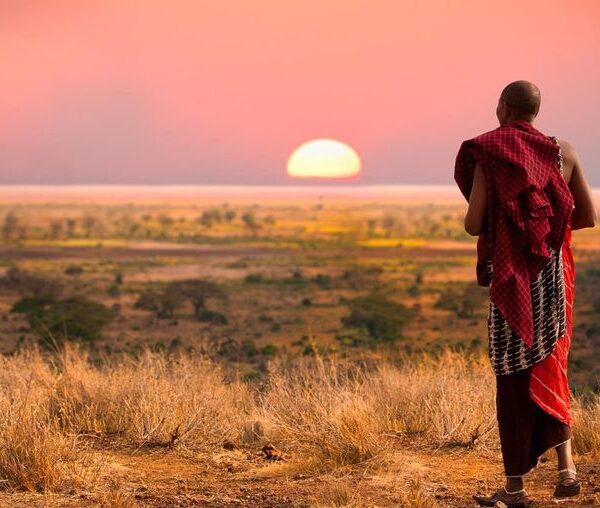
Maasai People
In towns and cities, a youth slang called Sheng mixes Swahili, English and words from other languages. It changes quickly, carries humour and local references and is a sign of how culture is evolving.
As a visitor, a few Swahili phrases, such as jambo for hello, asante for thank you and karibu for welcome, are appreciated and often open a conversation.
Harambee Is the National Motto and a Way of Life
Kenya’s motto, Harambee, means pull together. It is more than a slogan. Harambee describes the tradition of communities pooling money, labour and time to achieve something they could not do alone, from building a school to paying for a wedding or hospital bills.
Fundraising events called harambees are a familiar part of public life, and the spirit shows up in small ways, such as neighbours helping each other and communities organizing to solve shared problems.
For travellers, the idea helps explain how community conservancies and local projects work, since many are built on shared ownership and collective benefit. It also explains why hospitality is so important: guests are welcomed into a social web rather than treated as customers alone. The national football team is even called the Harambee Stars.
Food Is Shared, and Every Region Has Its Own Twist
Ugali, a firm maize-flour porridge eaten with vegetables, stew or meat, is the staple across much of the country, and nyama choma, or roasted meat, usually goat or beef, is the social centrepiece of any gathering. Eating is communal, and meals are often shared from common dishes.
Along the coast, Swahili cuisine brings coconut, spices and rice, with dishes such as pilau and biryani reflecting Indian Ocean influences.
Regional variations are part of the pleasure. The Luhya in the west are known for chicken and ugali, the Kalenjin in the Rift Valley for ugali with vegetables and mursik, a fermented milk, the Kikuyu in the highlands for mukimo and githeri, and the Luo around Lake Victoria for tilapia or Nile perch with ugali.
Sukuma wiki, a dish of greens, is common everywhere. Trying local food in a small restaurant is one of the easiest ways to meet Kenya.
Dress, Beadwork and Rites of Passage Carry Meaning
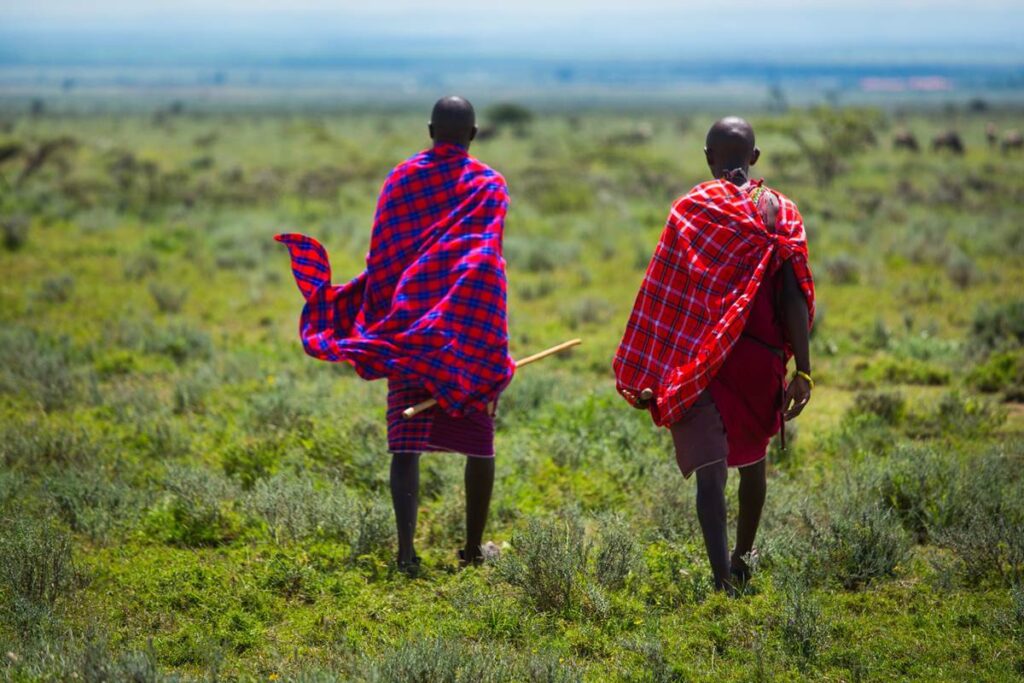
What people wear and make often tells a story. Maasai and Samburu communities are known for red and blue shukas, wraps and intricate beadwork, where colours and patterns carry meaning related to age, status and community.
Coastal Swahili women often wear kangas, brightly printed wraps, and buibui robes, reflecting Islamic traditions. Crafts such as basketry, pottery, wood carving and beadwork are widely practised, and buying directly from makers supports families.
Many communities also mark life stages with rites of passage. Male initiation, including circumcision, is a defining coming-of-age ceremony in several communities, including the Kikuyu, Kamba, Kalenjin, Maasai and Luhya, though practices differ and are changing.
Visitors may encounter these traditions through guides and cultural centres, and the respectful approach is to listen, ask politely and accept that some things are private.
Places to Experience Kenyan Culture
Cultural experiences work best when they are organised with the community’s agreement. In the south, community visits near the Maasai Mara and Amboseli give an introduction to Maasai life, and in the north, Samburu cultural visits near Samburu and Buffalo Springs show a related but distinct tradition. On the coast, Mombasa’s Old Town and Fort Jesus reveal Swahili history, and Lamu is known as one of the best-preserved Swahili towns.
In Nairobi, the Bomas of Kenya presents traditional dances and housing from different groups, and the National Museum places Kenya’s history in context. In the highlands, farm visits and tea and coffee tours show another side of rural life, and in the west, markets and music events reveal Luhya and Luo traditions.
A good guide makes the difference between a brief show and a real conversation.
Visiting Respectfully: Etiquette Basics
- Greet people properly before asking questions, and take time to exchange pleasantries.
- Ask permission before photographing individuals, homes and ceremonies, and accept a refusal.
- Dress modestly in towns, villages and on the coast, particularly around mosques.
- Choose visits that are arranged with the community and that share income fairly.
- Buy crafts directly from makers at fair prices and avoid aggressive bargaining.
- Do not hand out sweets or money to children, since it can create expectations.
Getting There and Where to Stay
Most cultural experiences are linked to places you will visit anyway. Nairobi is the entry point, with Jomo Kenyatta International Airport serving international flights.
Safari areas such as the Maasai Mara, Amboseli and Samburu are reached by road or short flights, and the coast is reached by flight or the Standard Gauge Railway from Nairobi to Mombasa.
Choose accommodation that supports local communities, such as lodges that employ local staff, buy local produce and support community projects. In Mombasa’s Old Town and on Lamu, small guesthouses give a more immersive stay, while in the safari regions, community-owned conservancies and camps often include cultural visits in their packages.
Best Time to Go
Kenya can be visited year-round for culture, and local festivals and events vary through the year. The dry seasons, January to February and June to October, are comfortable for travel and village visits, while the rains, March to May and November, can make roads muddy.
Coastal culture is best enjoyed in the cooler, drier months, and city experiences work in any season. If you want to time a visit around a festival or event, ask your operator for current dates.
Maji Moto Safari Kenya
Questions Worth Asking Your Guide
The best way to learn is to ask. Ask which community your guide belongs to, what language they speak at home and what foods they grew up eating. Ask about local ceremonies, what the colours of beadwork mean and how the community benefits from tourism.
Ask how traditions are changing, since young people often balance old and new in interesting ways.
Listen to the answers, and accept that different people will give different views. Kenya’s cultures are lived, not performed, and a curious, respectful visitor is likely to be welcomed.
Frequently Asked Questions
How many ethnic groups are there in Kenya?
About 42 is the most common estimate, and more than 70 if sub-groups are counted. No group is a majority.
What languages do Kenyans speak?
Swahili and English are the official languages, Swahili is the national language and many people also speak their own mother tongue, with Sheng common in cities.
What does Harambee mean?
Pull together, Kenya’s national motto and a tradition of community fundraising and cooperation.
What is Kenya’s national dish?
Ugali with nyama choma, or roasted meat, is widely seen as the most iconic combination.
How can I visit a cultural village respectfully?
Book through a lodge or community group, ask before taking photos, dress modestly and buy crafts directly from makers.