Birding in Amboseli National Park
November 14, 2026
Maasai Tribe of Kenya
November 14, 2026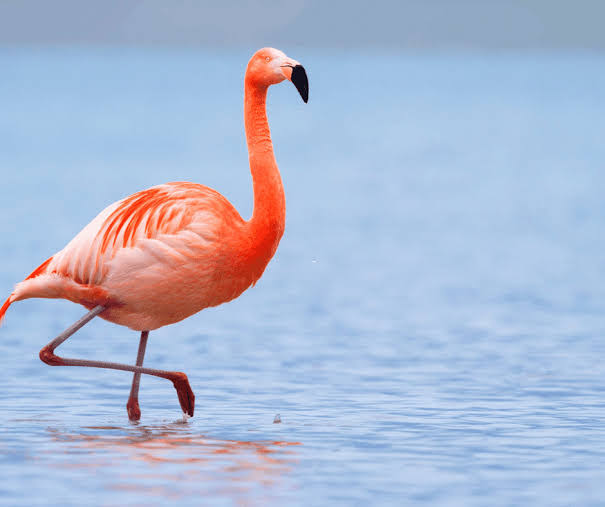
Birding in Lake Nakuru National Park
Birding in Lake Nakuru National Park; Lake Nakuru was set up to protect flamingos. The park was created in 1961 around a shallow, alkaline soda lake in the Rift Valley, and for decades the picture of a pink shoreline of hundreds of thousands of birds made it one of the most famous wildlife images in Africa.
Flamingos move between Rift Valley lakes depending on water levels and algae, and in recent years Nakuru’s numbers have often been far lower than in the past.
That does not make the park a poor choice for birders. More than 450 species have been recorded in about 188 square kilometres, the lake still draws pelicans, fish eagles and waterbirds in numbers, and woodland, grassland and cliffs add a long list of land birds.
This guide explains what to expect, where to look, when to go, what it costs, how to get there and where to stay, so you can plan for the park as it is now.
Is Lake Nakuru Still Worth It for Birders?
Yes, with the right expectations. The park is recognised as an Important Bird Area, and one guide rates it second only to Arabuko Sokoke among Kenya’s birding sites.
It offers waterbirds, raptors, woodland birds and grassland species in a compact area, and it adds one of Kenya’s best rhino sanctuaries, so it works for mixed groups as well as dedicated birders.
If your heart is set on a pink lake of a million flamingos, check conditions before you go and be ready to be disappointed. If you want a rich bird list, good viewpoints and reliable rhino sightings, Lake Nakuru National Park delivers. It is also easy to reach, around 2.5 hours from Nairobi, which makes it a natural first or last stop on a Kenya circuit.
The Flamingo Question
Flamingos feed on algae in the alkaline water, and their presence depends on salinity and food. Lake Nakuru has no outflow, so its level and chemistry change with rainfall.
Since 2011, water levels have risen, with another large increase in 2013, and a further sharp rise since 2021 submerged parts of the park, including the main entrance gate and some infrastructure, and displaced animals.
Deeper, fresher water reduces the specialized algae that lesser flamingos eat, while encouraging fish and fish-eating birds. As a result, flamingos have moved between Nakuru, Lake Bogoria and Lake Elementaita, and the historic million-bird flocks are no longer predictable. There are still flamingos at times, both lesser and greater, but numbers vary widely, so treat them as a bonus.
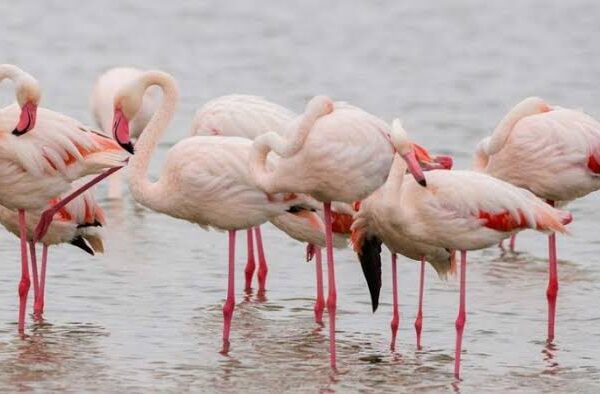
Birding in Lake Nakuru
What You Are Likely to See
The great white pelican is one of the most reliable large birds, with flocks often seen near the lake edge and roosting close to Rhino Point on the southeast shore, alongside storks and cormorants.
African fish eagles, goliath herons, hamerkop, pied kingfishers, egrets and grebes are common, and the wetter conditions have made fish-eating species a highlight.
On land, look for Verreaux’s eagle on the cliffs, secretary bird on the grassland and a long list of woodland birds. Specials include the near-endemic grey-crested helmet-shrike, Speke’s weaver, Rüppell’s robin-chat, Rüppell’s vulture, white-headed vulture, red-capped lark, rufous-necked wryneck, Schalow’s wheatear, shining sunbird, slender-billed greenbul, sooty falcon, western reef heron and white-fronted bee-eater. Migrants from Europe and Asia swell the list from November to April.
Best Birding Spots in the Park
Baboon Cliff, on the western ridge, is the best viewpoint, with a panoramic outlook over the lake basin and a good place to scan for flamingos and waterbirds.
The lake shore drives allow close views of pelicans and other waterbirds, and Rhino Point is a roosting area where pelicans and storks gather. Out of Africa Lookout gives another vantage point, and the Makalia Falls area adds a quieter setting with forest and stream birds.
The woodland and grassland sections of the park are good for raptors and land birds, particularly in the early morning, and the cliffs and escarpments suit Verreaux’s eagle and other raptors.
Because the park is small and has a good road network, you can cover several habitats in a day. A guide who knows where recent sightings have been will save time.
Best Time for Birding
Birding is possible year-round, since many species are resident, and the park’s list is rewarding in any season. November to April is the main window for migrants, which adds species and activity.
The dry months, June to October and January to February, give firmer roads and clearer views, while the wetter months, March to May and November, bring lush vegetation and sometimes dramatic skies but muddier tracks.
Time of day matters more than month. Early morning and late afternoon give the best light and the most activity, and midday is better for a break. If flamingos are a priority, ask your lodge or operator about the current situation, and consider Lake Bogoria or Elementaita as alternatives if Nakuru is not holding flocks.
Costs and Park Fees
In 2026, non-resident adults pay US$90 and children US$45 per day, according to recent guides, with no seasonal pricing, and payment is made online through KWSpay.
Lake Nakuru is classified as a premium KWS park, and the fee supports the rhino sanctuary and habitat protection. Vehicle fees and camping fees apply separately, and most packages include park entry.
A specialist birding guide adds to the cost but improves results. If you are on a standard safari, ask your driver to stop at water and cliffs and to slow down in woodland, and bring binoculars and a field guide.
Getting There
Lake Nakuru National Park is about 2.5 hours from Nairobi by road, via the Rift Valley and Nakuru town, with the main gate close to the town. It is often combined with Lake Naivasha, Hell’s Gate, the Aberdares and the Maasai Mara in a Nairobi circuit.
Because water levels have affected infrastructure, check which gates and roads are open when you plan.
Where to Stay
Accommodation inside the park includes lodges such as Sarova Lion Hill, and options on the edge include Lake Nakuru Lodge and a range of hotels and campsites in Nakuru town and along the road. Choose a lodge that offers early starts and packed breakfasts, and ask whether park fees are included in the rate. Book ahead in July to October and December.
Combining Nakuru With Bogoria and Elementaita
Because flamingos move between Rift Valley lakes, a good plan treats Nakuru as one stop in a chain. Lake Elementaita and Lake Bogoria are nearby soda lakes where flocks sometimes gather when conditions change, and each has its own character, with Bogoria known for geysers and hot springs. Visiting more than one lake raises your chance of seeing flamingos and adds species to your list.
Check recent reports before you go, and ask your lodge or guide which lake currently holds the most birds. A flexible itinerary lets you adjust, spending a morning at Nakuru for pelicans and woodland birds and an afternoon at another lake if the flamingos have moved.
Rhinos and the Rest of the Park
Lake Nakuru is also one of Kenya’s most important rhino sanctuaries, with both black and white rhinos in a fenced area, and sightings are far more reliable than flamingos. Leopards, buffalo, giraffes, zebras and waterbuck are common, and the park’s small size makes it easy to combine birding with a full wildlife drive.
For mixed groups, this is a real advantage. Birders get the lake and the cliffs, while others enjoy the rhinos and the views. Agree a plan with your guide so that everyone gets what they want from the day.
Frequently Asked Questions
How many bird species are in Lake Nakuru National Park?
More than 450 species are recorded, and some sources cite up to 500.
Are there still flamingos at Lake Nakuru?
Sometimes, but numbers vary with water level and algae, and flocks move between Nakuru, Bogoria and Elementaita.
What is the best viewpoint?
Baboon Cliff on the western ridge, with a panoramic view over the lake basin.
How much is park entry in 2026?
US$90 for non-resident adults and US$45 for children per day, paid online through KWSpay, according to 2026 sources.
When is the best time for birding?
Year-round, with November to April adding migrants, and early morning best in every season.