Best Time to Visit Uganda
July 21, 2026
How to Choose the Best African Safari Tours
July 21, 2026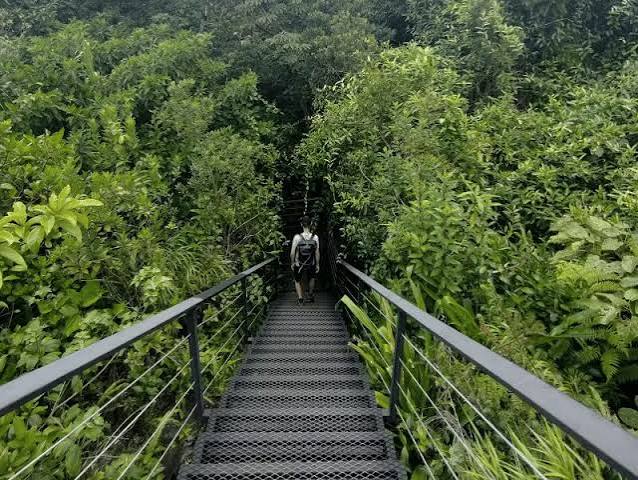
Best Time to Visit Rwanda
Best Time to Visit Rwanda; Rwanda covers approximately 26,338 square kilometres, making it one of the smallest countries in Africa. Despite its size, it has enormous topographic variety. The country sits on a plateau that averages around 1,500 metres above sea level, which gives Kigali a pleasantly temperate climate that rarely becomes oppressively hot.
The western edge of the country follows the Albertine Rift, where the landscape drops toward Lake Kivu and then rises again into the Virunga volcanoes that form the natural border with the DRC.
The name Land of a Thousand Hills is not a marketing phrase; the terrain between almost any two points in Rwanda involves a series of ridges and valleys that makes the country look, from any elevated position, like a green ocean that has been frozen mid-swell.
Rwanda borders Uganda to the north, Tanzania to the east, Burundi to the south, and the Democratic Republic of Congo to the west. Kigali, the capital, sits roughly in the centre of the country.
The currency is the Rwandan Franc (RWF), though USD is widely accepted at tourist facilities and for permit payments. French and English are both official languages alongside Kinyarwanda, the national language. Rwanda switched from a predominantly French-language system to English-medium education in 2009, and the shift is visible in how differently the younger and older generations communicate with visitors.
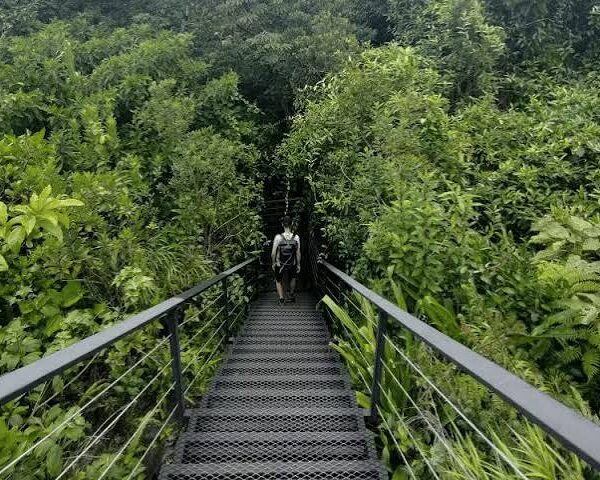
Best Time to Visit Rwanda
Rwanda has two dry seasons and two wet seasons, and the country is genuinely worth visiting year-round, with the choice of timing depending on what the priority activities are.
Dry Season — June to September
The long dry season from June to September is Rwanda’s peak tourist period and the most popular time for gorilla trekking and Akagera game drives. The forest trails are firmer, the savannah grass is shorter, and the general conditions for outdoor activity are most comfortable.
July and August are the busiest months and the ones for which gorilla permits and lodge accommodation at Volcanoes require the most advance planning. June and September offer similar conditions with slightly less competition for bookings.
Short Dry Season — December to February
December to February is Rwanda’s short dry season and the second peak period for tourism. Conditions are good for gorilla trekking and Akagera game drives. December’s festive period and the January school holiday period produce a bump in booking demand, particularly for Volcanoes permits.
Wet Seasons — March to May and October to November
The two wet seasons bring heavier rainfall that makes some hiking trails and park tracks more challenging, particularly the higher-altitude sections of Volcanoes and the Nyungwe forest paths. However, the landscape is at its most intensely green, the birdwatching is exceptional with migratory species present from November through April, and the parks are considerably quieter.
Wet season accommodation prices are lower across the country. For visitors who prioritise the landscape and the birds over optimal trail conditions, October and November are particularly good months: the grass in Akagera is shorter than it will be in the heart of the wet season, the birds are active and displaying, and the lodge prices have dropped from the June to September peak.
How to plan a Rwanda Safari
Getting There
Kigali International Airport has direct flights from Brussels, London Heathrow, Amsterdam, Nairobi, Addis Ababa, Johannesburg, Dubai, and several other hubs. RwandAir, the national carrier, operates an increasingly extensive regional and international network. The airport is clean, efficient, and well-organised.
Visas for most nationalities are available on arrival or can be obtained in advance through the Rwanda e-Visa system. Most African Union member country nationals receive a visa-free landing, making Rwanda one of the most open-visa destinations on the continent. The East African Tourist Visa covers Rwanda, Uganda, and Kenya on a single entry and is available online.
Moving Around Rwanda
Rwanda’s roads are among the best maintained in East Africa. The main highways connecting Kigali to Musanze in the northwest, Kigali to Huye in the south, and Kigali to the eastern province are all sealed tarmac in reasonable condition.
Driving is on the right-hand side. The speed limit is 80 km/h on national highways, dropping to 50 km/h through towns, and speed cameras are active on the main routes.
The national maximum of 80 km/h on a road network full of mountain bends means that Google Maps and similar navigation apps consistently underestimate driving times: add one third to any estimate.
Car hire is available in Kigali from several companies at the airport and in the city. For most standard Rwanda road trips, a Toyota RAV4 or equivalent compact SUV is adequate in the dry season. For the wet season or for any itinerary including Nyungwe in the rain, a proper 4WD with ground clearance is the more reliable choice.
Many visitors hire a driver-guide rather than self-driving, which removes the navigational stress and adds the value of a knowledgeable local presence throughout the trip. Motorcycle taxis (motos) are the standard short-distance transport in Kigali and most other towns; the helmet is now required by law for both driver and passenger.
Booking Gorilla Permits
Rwanda’s gorilla trekking permits are issued by the Rwanda Development Board and can be booked directly through the RDB online portal or through a licensed tour operator. The permits cost USD 1,500 per person. With only 96 permits issued per day across 12 families, availability during peak season from June through September and December through January requires booking four to six months in advance.
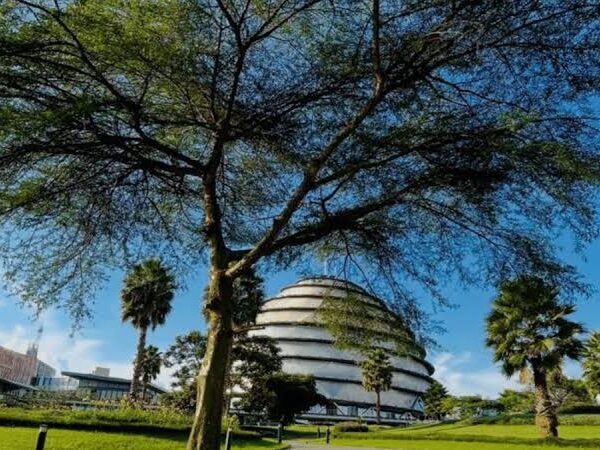
Kigali Covention Centre
Some operators and peak dates require booking up to twelve months ahead. Book the permit before flights and accommodation: the permit date is the fixed point around which everything else in the itinerary is arranged.
Health and Vaccinations
Yellow fever vaccination is required for entry to Rwanda for travellers arriving from or transiting through yellow fever-endemic countries. Proof of vaccination may be checked at the airport. Malaria is present in Rwanda, with lower risk at the higher altitudes of Kigali and Volcanoes National Park than in the eastern lowlands around Akagera.
Anti-malarial medication is recommended for all Rwanda travel. Standard travel health precautions: drink bottled or purified water, use insect repellent in the evenings, and carry a basic medical kit. Medical facilities in Kigali are functional for standard treatment; serious medical emergencies may require evacuation and medical evacuation insurance is strongly recommended.
Money and Payments
The Rwandan Franc (RWF) is the national currency. USD is accepted at tourist facilities, for permit payments, and at most lodges and camps. EUR is also exchangeable at Kigali banks and currency exchange offices. ATMs are available in Kigali, Musanze, Huye, and the main provincial towns.
Credit and debit cards (Visa and MasterCard) are accepted at most Kigali hotels and restaurants and at the larger lodges near the parks. In rural areas and at smaller guesthouses, cash in Rwandan Francs is the practical standard. Bring a mix of USD bills in small denominations for tipping and local payments: USD 5 and USD 10 notes are the most useful.
Where to Stay in Rwanda
Near Volcanoes National Park
The range of accommodation near Volcanoes is wider than most first-time visitors expect, from budget guesthouses in Musanze town to some of the most highly regarded luxury lodges in all of East Africa. At the luxury end, Bisate Lodge is a Wilderness Safaris property on the slopes of the park with individual pod rooms overlooking the Virunga peaks and a forest restoration programme integrated into the lodge operation.
Singita Kwitonda Lodge is in the same tier. For mid-range visitors, Five Volcanoes Boutique Hotel in Musanze offers comfortable rooms, excellent food, and personal service at considerably lower prices than the hilltop lodges. Budget travellers have several reliable guesthouse options in Musanze town itself.
In Kigali
Kigali’s hotel market has developed significantly and covers the full range from budget hostels in Kimironko to business hotels in the CBD to the Kigali Marriott and the Mille Collines, which carries its own particular history as the Hotel des Mille Collines that sheltered refugees during the genocide and was the subject of the film Hotel Rwanda.
The Hôtel des Mille Collines sits on one of Kigali’s central hills with city views. For budget travellers, Discover Rwanda Youth Hostel and several guesthouses in the Nyamirambo and Remera areas offer clean, affordable rooms within easy reach of the city’s main attractions.
Lake Kivu
The Lake Kivu Serena Hotel in Rubavu is the established mid-range to upper option on the northern shore with conference facilities and a pool on the lake. The Cleo Hotel and several boutique properties offer a quieter, smaller-scale alternative on the Rubavu shoreline. In Karongi, Mantis Kivu Queen is the best-regarded option with lake views and boat trip access.
A growing number of community-managed guesthouses along the Congo Nile Trail route offer basic accommodation for hikers and cyclists doing sections of the trail.
Nyungwe Forest
One and Only Nyungwe House is the premier luxury property near Nyungwe, sitting inside a working tea plantation on the park boundary with views across the forest and the tea rows. It is expensive but one of the most distinctive lodge settings in Rwanda.
Nyungwe Top View Hill Hotel and Gisakura Guest House are more affordable alternatives near the park entrance that serve visitors focused on activities rather than accommodation comfort.
Akagera National Park
Magashi Camp is the luxury tented option at Akagera, sitting on a remote peninsula on Lake Rwanyakazinga inside the park. Akagera Game Lodge is the main mid-range property on Lake Ihema’s shore and is well-positioned for both game drives and the lake boat cruise. Both are inside the park and give early morning game drive access without a gate crossing.
Ultimate Rwanda Safari Packages
5-Day Rwanda Highlights
- Day 1: Arrive Kigali, genocide memorial and Nyamirambo neighbourhood walk
- Day 2: Drive to Musanze, afternoon golden monkey trekking at Volcanoes
- Day 3: Morning gorilla trekking in Volcanoes National Park
- Day 4: Drive south to Lake Kivu, afternoon on the water
- Day 5: Drive east to Kigali via Nyungwe road, depart
8-Day Rwanda Complete
- Day 1: Arrive Kigali, city exploration and genocide memorial
- Day 2: Drive to Musanze, afternoon Iby’Iwacu Cultural Village visit
- Day 3: Gorilla trekking in Volcanoes National Park
- Day 4: Golden monkey trekking or Bisoke volcano hike
- Day 5: Drive south to Lake Kivu, afternoon kayaking or boat cruise
- Day 6: Lake Kivu to Nyungwe Forest, afternoon forest walk
- Day 7: Chimpanzee trekking and canopy walk at Nyungwe
- Day 8: Drive to Kigali via Huye and Nyanza, depart
10-Day Rwanda and Akagera
- Day 1: Arrive Kigali, city exploration
- Day 2: Kigali to Akagera, afternoon game drive
- Day 3: Morning game drive and Lake Ihema boat cruise
- Day 4: Akagera to Kigali, afternoon markets and Inema Arts Centre
- Day 5: Drive to Musanze, afternoon gorilla briefing visit
- Day 6: Gorilla trekking in Volcanoes National Park
- Day 7: Golden monkey trekking or volcano hike
- Day 8: Drive to Lake Kivu, afternoon on the water
- Day 9: Lake Kivu to Nyungwe Forest, chimpanzee trekking
- Day 10: Canopy walk, drive to Kigali, depart