Why Visit Volcanoes National Park in Rwanda in 2027
September 1, 2026
7 Days Rwanda Primates & Wildlife Safari
September 14, 2026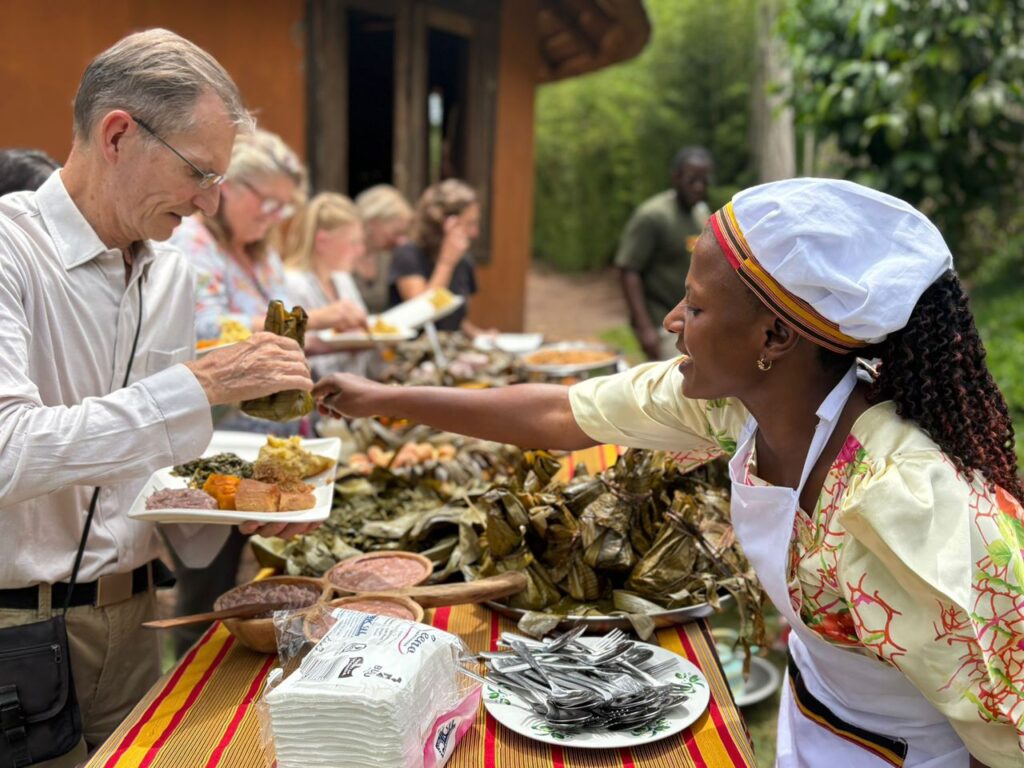
A Ugandan Culture: Ewaffe Cultural Village, most visitors leave Uganda with vivid memories of gorillas, savanna game drives, and sweeping landscapes, but remarkably little sense of everyday Ugandan life: how food is actually prepared, how values get passed down between generations, or how a traditional homestead genuinely functions day to day. Ewaffe Cultural Village, founded in 2023 by Aisha Nabwanika Mayanja, was built specifically to close that gap, and it has quickly become one of the most talked-about cultural experiences in the country.
As a travel consultant, I now recommend Ewaffe to almost every client spending time in or around Kampala or Entebbe, whether at the start or end of a wider Uganda safari, because it delivers something a wildlife-focused itinerary genuinely can’t: a full day spent inside Buganda culture rather than simply observing it from a vehicle window.
The Story Behind Ewaffe
Ewaffe, a Luganda phrase meaning “Our Home,” was founded by Aisha Nabwanika Mayanja, who grew up in the Naggalama community in Mukono District and later worked within Uganda’s broader tourism sector. Over years in the industry, she noticed a consistent gap in how international visitors experienced the country: they returned home with memories of wildlife and scenery but almost no genuine insight into daily Ugandan life, storytelling, traditional food practices, or indigenous skills that were gradually fading from everyday use even within Uganda itself.
That observation became the foundation for Ewaffe, a space where these traditions could be preserved, actively practiced, and passed on to visitors and younger generations of Ugandans alike, while creating genuine economic opportunity for local artisans, farmers, and community members through cultural tourism.
The village sits in Naggalama, Mukono District, roughly one hour from Kampala along the Kayunga Road, with a smaller, more compact branch also operating near Entebbe for visitors with less time to spare.
How a Visit to Ewaffe Actually Unfolds
A typical full-day program at the main Naggalama site runs from around nine in the morning until six in the evening, and it begins the moment you arrive: visitors are welcomed with melodious singing and a participatory cultural dance, accompanied by drums and traditional songs, immediately setting an energetic, genuinely warm tone for the day ahead.
A calabash of olwendo lw’amazzi, a gentle water-welcome ritual drink, is offered as hosts explain what to expect, and visitors are also treated to freshly roasted coffee beans and banana juice, locally known as omubisi, as a first taste of Buganda hospitality before the day’s activities properly begin.
What follows is a genuinely full, hands-on day rather than a passive tour. Guests take part in a farm tour exploring local plants, herbs, and spices and their traditional uses; a medicinal trail exploring indigenous healing knowledge; a fishing experience using traditional methods; and, for female visitors specifically, an opportunity to fetch water from the well using traditional clay pots, exactly as women in Buganda culture have done for generations, a practice locally known as okutunga amazzi. The pace is unhurried and genuinely participatory throughout, and nothing about the experience feels staged or performed purely for tourists.
Senga and Kojja: A Genuinely Distinctive Cultural Institution
Among Ewaffe’s most talked-about offerings are its Senga and Kojja sessions, a distinctly Buganda cultural institution in which a paternal aunt (senga) or paternal uncle (kojja) traditionally provided guidance on relationships, marriage, and family life to younger relatives. At Ewaffe, visitors can sit in on these sessions and hear directly from community elders about customs and values that have shaped Buganda family life for generations, an experience past visitors consistently describe as one of the most memorable and genuinely educational parts of their day.
This particular offering illustrates what sets Ewaffe apart from more generic cultural tourism experiences elsewhere: rather than a superficial dance performance followed by a craft market, Ewaffe gives visitors direct access to the actual social structures and knowledge systems that continue to shape everyday Buganda life today.
Food, Craft, and Storytelling
Food tourism sits at the genuine heart of an Ewaffe visit, and the day builds toward a traditional Luwombo lunch, a signature Buganda dish of meat, groundnut sauce, and vegetables steamed slowly inside banana leaves, a preparation method that infuses the dish with a genuinely distinctive flavor unavailable through any other cooking technique. Visitors can join hands-on cooking courses learning to prepare Luwombo and other local delicacies themselves, alongside seasonal fruit tastings drawing on the farm’s own produce.
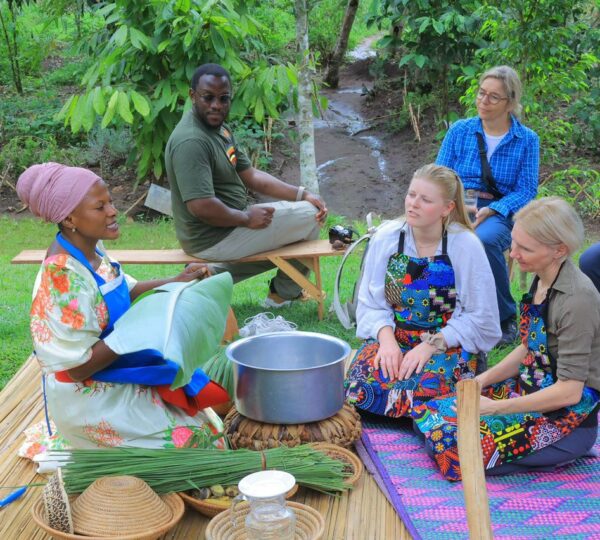
Ewaffe Cultural Village
Craft workshops round out the experience, including basket weaving, pottery, and barkcloth making, a traditional Buganda textile craft recognized by UNESCO as an Intangible Cultural Heritage of Humanity, giving visitors a hands-on understanding of skills passed down through generations of local artisans. Storytelling sessions throughout the day share the history and cultural significance of the Buganda Kingdom, Uganda’s largest traditional kingdom and the country’s largest Bantu ethnic group, and knowledgeable local guides bring insight to these sessions that simply can’t be replicated by an outside guide reading from a script.
Games, Community, and Giving Back
Later in the day, visitors join in traditional games, including skipping accompanied by traditional songs, hide and seek, and various board games that generations of Ugandan children grew up playing, offering a genuinely playful, joyful close to what has otherwise been an information-dense day. Ewaffe also builds community and environmental giving-back directly into the visitor experience, with community tree planting and socialization sessions, alongside goat roasting and tasting of local traditional brew, rounding out the day for visitors wanting to extend their stay into the evening.
This community dimension matters beyond the visitor experience itself: Ewaffe was built specifically to create economic opportunity for local artisans and farmers through cultural tourism, meaning a visit here contributes directly to the same community whose traditions and knowledge make the experience possible in the first place.
The Entebbe Branch: A Shorter Alternative
For travelers with less time, particularly those arriving or departing via Entebbe International Airport, Ewaffe’s smaller Entebbe branch in Katabi offers a more compact, roughly two-hour cultural session covering barkcloth making, indigenous foods, traditional dress, and locally roasted coffee, located just fifteen minutes from the airport. This makes it a genuinely practical way to build a meaningful cultural touchpoint into even a tight layover or transit day, without needing to commit to the full Naggalama experience.
Why This Belongs on a Uganda Safari Itinerary
Wildlife encounters, gorilla trekking, and savanna game drives understandably dominate most Uganda itineraries, and rightly so, but a purely wildlife-focused trip leaves out an entire dimension of what makes Uganda genuinely distinctive as a destination. Ewaffe offers a rare, unhurried opportunity to understand the country through its people, food, and living traditions rather than only its landscapes and animals, and it pairs naturally with either end of a longer safari itinerary given its proximity to both Kampala and Entebbe.
I generally recommend building a full day at Ewaffe into either the arrival or departure portion of a Uganda trip, since it requires minimal additional travel time relative to what it adds to a client’s overall understanding and appreciation of the country. For travelers with a specific interest in food, craft, or cultural history, it can easily become one of the most memorable single days of an entire Uganda safari, gorillas included.
What Makes Ewaffe Different From Other Cultural Tourism
Uganda, like many popular safari destinations, has its share of cultural tourism offerings that lean heavily on staged dance performances and souvenir stalls positioned primarily to extract a quick purchase from passing tour groups. Ewaffe was deliberately built to avoid that model. Because the village grew directly out of founder Aisha Nabwanika Mayanja’s own community and lived experience, activities here are framed as genuine participation in ongoing community life rather than a performance staged specifically for visitors passing through.
This distinction shows up in small but telling details throughout a visit: local guides speak from lived experience rather than a memorized script, the Senga and Kojja sessions involve real community elders rather than paid actors, and the cooking, farming, and craft activities use techniques still genuinely practiced within the surrounding community rather than a simplified tourist version. Reviews of the experience consistently note this authenticity as the single biggest differentiator from other Uganda cultural tours, and it’s the primary reason I steer clients toward Ewaffe specifically rather than a generic cultural village stop tacked onto a standard itinerary.
Practical Details for Planning a Visit
Ewaffe operates specifically for foreign tourists on its full cultural quest itinerary, and visits are typically arranged in advance through a tour operator or directly with the village, including pick-up and drop-off transport from Kampala. Meals throughout the day are included as part of the standard itinerary, culminating in the Luwombo lunch, and the day’s structure means comfortable, practical clothing and closed shoes are worth packing given the farm tour, fishing activity, and general walking involved across the site.
Given the roughly hour-long drive each way from Kampala and the genuinely full nine-to-six program once you arrive, I’d recommend building an Ewaffe visit into a day with no other major activity planned either side of it, rather than trying to combine it with additional sightseeing on the same day. The experience rewards being given its own unhurried space in your itinerary rather than being rushed alongside other commitments.
Frequently Asked Questions
How far is Ewaffe Cultural Village from Kampala?
The main site in Naggalama, Mukono District, is roughly one hour’s drive from Kampala along the Kayunga Road. A smaller branch also operates in Katabi, just fifteen minutes from Entebbe International Airport.
What does a typical visit to Ewaffe include?
A full-day program typically runs from around 9am to 6pm and includes traditional welcome rituals, a farm tour, a medicinal trail, fishing, Senga and Kojja cultural sessions, craft workshops including pottery and barkcloth making, storytelling, traditional games, and a Luwombo lunch.
Is Ewaffe suitable for a shorter visit if I don’t have a full day?
Yes. The Entebbe branch offers a shorter, roughly two-hour session covering barkcloth making, indigenous foods, traditional dress, and coffee, making it a practical option for travelers with limited time near the airport.
What is Luwombo?
Luwombo is a traditional Buganda dish of meat, groundnut sauce, and vegetables slow-steamed inside banana leaves, a preparation method that gives the dish its distinctive flavor. It’s served as the signature meal at the end of a full-day Ewaffe visit.
Can I combine a visit to Ewaffe with a wider Uganda safari?
Yes, and it’s genuinely worth doing. Ewaffe pairs naturally with either the start or end of a Uganda itinerary, given its proximity to Kampala and Entebbe, adding a cultural dimension to complement the wildlife-focused parts of a typical safari.