Tips for Women Travelers in Uganda
September 1, 2026
Ewaffe Cultural Village
September 1, 2026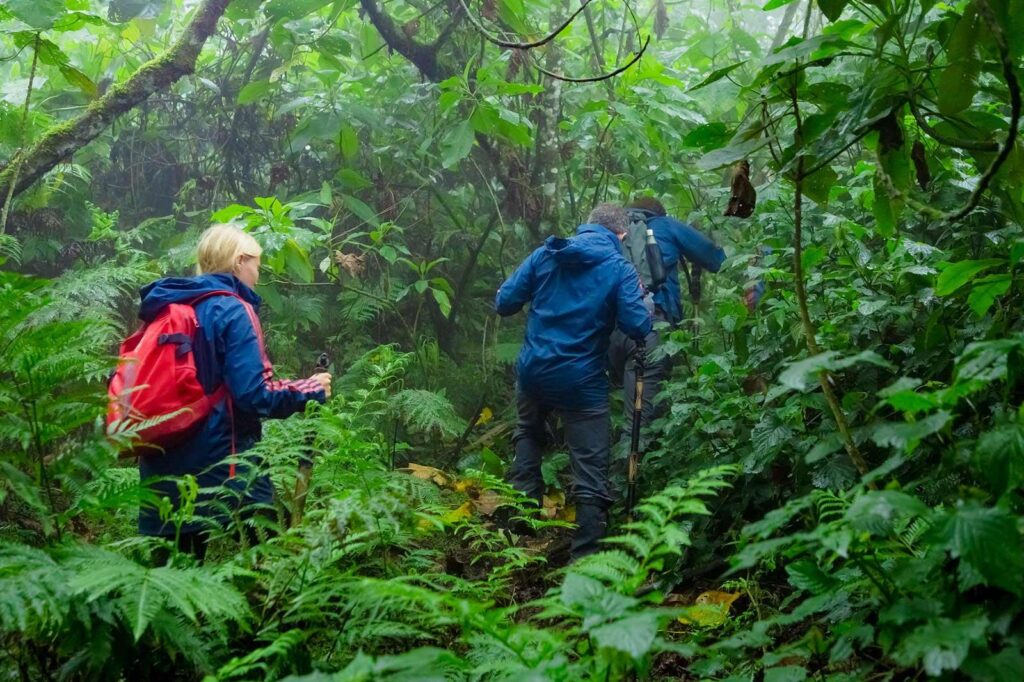
Why Visit Volcanoes National Park in Rwanda in 2027? Volcanoes National Park holds a genuine claim few other African parks can make: It was Africa’s first national park, gazetted in 1925 under Belgian colonial administration as part of the larger Albert National Park, specifically to protect the region’s mountain gorillas from hunting and poaching. A century later, that founding purpose remains the park’s defining identity, and Volcanoes continues to offer what many consider the world’s premier mountain gorilla trekking experience.
As a travel consultant planning 2027 Rwanda itineraries, I find Volcanoes National Park earns its reputation on genuine substance rather than marketing alone: the highest primate trekking density per square kilometer anywhere in Africa, a profound conservation history tied directly to one of the twentieth century’s most influential primatologists, and a level of organization and accessibility that consistently exceeds first-time visitors’ expectations.
A Century of Conservation History
Following its 1925 founding, the park was split in the 1960s, after Rwanda and the Democratic Republic of Congo gained independence, into Congo’s Virunga National Park and Rwanda’s own Volcanoes National Park, with the Rwandan portion shrinking by nearly half its original size by the end of that decade under mounting agricultural and political pressure. The park’s most consequential chapter began in 1967, when American primatologist Dian Fossey, fleeing instability in the Congo, established the Karisoke Research Centre between Mount Karisimbi and Mount Bisoke to study the mountain gorillas at close range.
Fossey’s eighteen years of research fundamentally transformed global understanding of mountain gorilla behavior and brought the species’ critical conservation plight to worldwide attention, work later portrayed in the film Gorillas in the Mist, based on her own autobiography of the same name.
Fossey was murdered at her research camp in 1985, in a crime widely attributed to the poachers she had spent nearly two decades fighting, and she is buried within the park itself, in the gorilla cemetery beside Digit, her favorite silverback, whom poachers had killed years earlier. Visiting her grave and the former Karisoke Research Centre site remains one of the park’s most moving, historically significant activities, adding genuine emotional depth to a Volcanoes National Park visit well beyond the gorilla trekking itself.
The Highest Primate Density in Africa
Volcanoes National Park offers something genuinely rare: mountain gorillas, golden monkeys, black-and-white colobus monkeys, and blue monkeys, all within a single, compact protected ecosystem covering just 160 square kilometers of bamboo and rainforest across five of the eight Virunga volcanoes, Karisimbi, Bisoke, Muhabura, Gahinga, and Sabyinyo. Few destinations anywhere in Africa allow visitors to combine gorilla trekking and golden monkey tracking as efficiently within a single trip as Volcanoes does.
Habituated gorilla families here, including the well-known Susa, Kwitonda, Agashya, Amahoro, and Igisha groups, among others, offer travelers a genuine hour of face-to-face observation, and golden monkey trekking, with no strict minimum age requirement unlike gorilla trekking, opens the primate experience to younger family members who wouldn’t otherwise qualify for the main event.
Kwita Izina: Rwanda’s Celebration of Conservation Success
Each year, typically in September, Rwanda hosts Kwita Izina, a genuinely unique national ceremony in which newborn mountain gorillas are formally named in a celebration modelled on traditional Rwandan baby-naming customs. The event doubles as a public celebration of the country’s conservation achievements, and travelers planning a 2027 trip specifically around this period should book accommodation well in advance, since demand around Kwita Izina consistently outpaces the park’s already limited capacity.
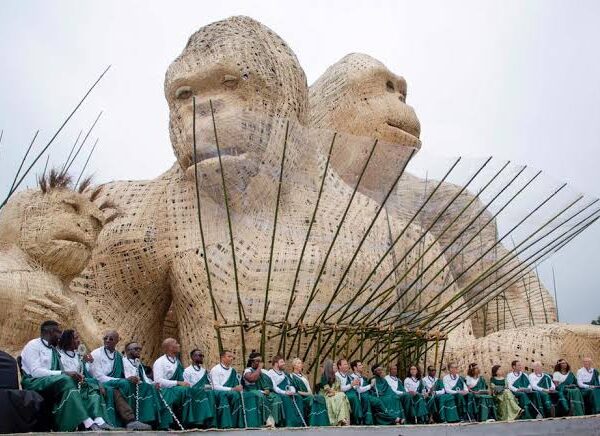
Kwita Izina
A Genuine Model for Conservation Success
Volcanoes National Park operates as a widely cited global model for community-integrated conservation, combining active anti-poaching patrols, a formal revenue-sharing arrangement that channels a share of tourism income directly to surrounding communities, and ongoing research initiatives building on Fossey’s original foundation. This model has helped grow Rwanda’s share of the world’s mountain gorilla population steadily over recent decades, and current gorilla permits, priced at $1,500 per person, fund conservation, community projects, and ranger protection directly.
The park also survived a genuinely difficult chapter of its own history, serving as a battlefield during periods of conflict in the early 1990s, with its headquarters attacked and damaged before being fully revamped in the years since. Understanding this history adds real context to what visitors experience today: a park that has been deliberately, painstakingly rebuilt into one of the best-organized and most secure protected areas anywhere on the continent.
Beyond Gorilla and Golden Monkey Trekking
Volcanoes National Park offers genuine activity variety beyond its primate trekking. Hiking Mount Karisimbi and Mount Bisoke, two of the park’s five volcanoes, rewards climbers with sweeping views over the Twin Lakes of Burera and Ruhondo, Lake Kivu, and neighboring Virunga peaks, alongside the option to combine the hike with a visit to Dian Fossey’s grave along the way. Bird enthusiasts can pursue roughly 178 recorded species, some of them migratory, across the park’s varied bamboo and rainforest habitat, and cultural visits to nearby communities, including the well-known Iby’iwacu Cultural Village, add further depth to a Volcanoes-based stay.
Rwanda vs. Uganda for Gorilla Trekking
Travelers weighing Rwanda’s Volcanoes National Park against Uganda’s Bwindi Impenetrable National Park should understand the genuine, honest trade-off: Volcanoes offers considerably easier access, roughly two and a half to three hours from Kigali International Airport on well-paved roads, and premium organization, while Bwindi offers a more budget-friendly permit ($700 versus Rwanda’s $1,500) and a genuinely wilder, more forest-immersive trekking experience. Neither is objectively superior; the right choice depends on your budget, time constraints, and preference for polish versus wilderness immersion.
Planning Your 2027 Visit
A typical Volcanoes National Park stay runs two to three nights, allowing time for one gorilla trek, one golden monkey trek or hike, and a visit to the Dian Fossey memorial sites, though travelers with more time can extend their stay to include additional hiking or a Kwita Izina visit if their dates align. Given the park’s limited daily permit numbers and consistently high demand, particularly around September’s Kwita Izina ceremony and the peak dry-season months, booking permits and accommodation six to twelve months ahead is genuinely advisable for 2027 travel.
Frequently Asked Questions
Why is Volcanoes National Park historically significant?
It was Africa’s first national park, gazetted in 1925, and later became the base for primatologist Dian Fossey’s groundbreaking mountain gorilla research from 1967 until her death in 1985, work that fundamentally shaped global mountain gorilla conservation.
Can I visit Dian Fossey’s grave?
Yes. A hike to the former Karisoke Research Centre site and Dian Fossey’s grave, where she is buried alongside her favorite gorilla, Digit, is one of the park’s most popular and emotionally significant activities.
What is Kwita Izina?
Kwita Izina is Rwanda’s annual mountain gorilla naming ceremony, typically held in September, celebrating newborn gorillas and the country’s broader conservation achievements. It draws significant visitor demand, so book well in advance if timing your trip around it.
Is golden monkey trekking easier than gorilla trekking?
Generally yes, and it carries no strict minimum age requirement, unlike gorilla trekking’s 15-year minimum, making it accessible to younger family members.
How does Volcanoes National Park compare to Uganda’s Bwindi for gorilla trekking?
Volcanoes offers easier access from Kigali and more premium organization at a higher permit cost ($1,500 versus Uganda’s $700). Bwindi offers a more budget-friendly, wilderness-immersive alternative. Neither is objectively better; it depends on your priorities.