How to Choose the Best African Safari Tours
July 21, 2026
Kenya vs Tanzania
July 21, 2026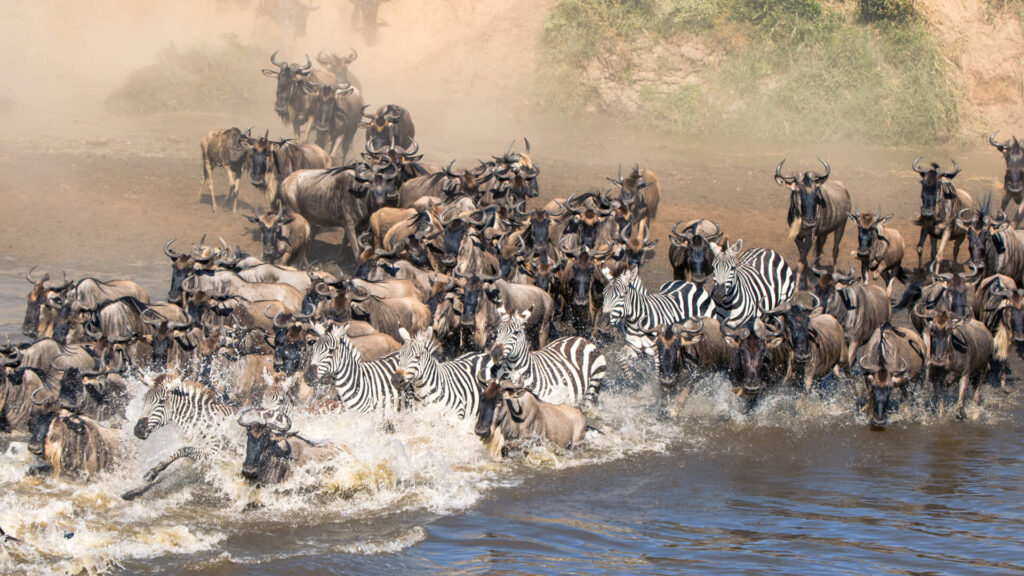
Gorilla Trekking vs the Great Migration: What to Choose
This guide compares gorilla trekking vs the Great Migration honestly and in detail, looking at what each experience actually involves, where and when they happen, what they cost, how physically demanding they are, who each one suits best, and, crucially, whether you really have to choose at all or can combine both into a single ambitious East African journey.
By the end you should know clearly which of these two bucket-list experiences belongs at the centre of your safari.
The Two Experiences at a Glance
Before getting into the detail, here is a direct side-by-side comparison of the two experiences across the factors that matter most when deciding between them.
| Factor | Gorilla Trekking | The Great Migration |
| Where | Uganda, Rwanda, DR Congo | Tanzania (Serengeti) and Kenya (Masai Mara) |
| What you see | One habituated gorilla family, up close on foot | Up to 2 million wildebeest, zebra and gazelle on the move |
| Duration of encounter | One hour with the gorillas | Days of game drives following the herds |
| Cost of the headline activity | USD 800 (Uganda) to USD 1,500 (Rwanda) permit | Park and conservancy fees, no single permit |
| Physical demand | High: steep, muddy forest hiking | Low to moderate: mostly vehicle-based |
| Best time | Year-round; dry seasons easier | River crossings roughly July to October |
| Style of experience | Intimate, quiet, emotional | Vast, dramatic, action-driven |
| Minimum age | 15 years | No minimum (family-friendly) |
Gorilla Trekking:
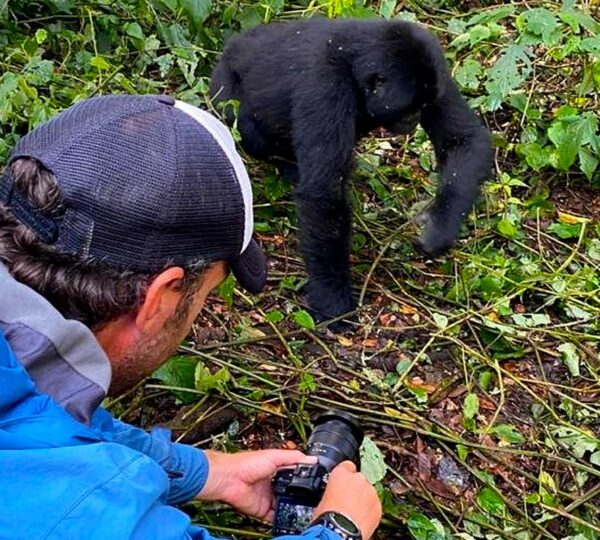
Gorilla trekking is the experience of hiking through dense mountain rainforest to spend one hour with a habituated family of wild mountain gorillas. It takes place in just a handful of protected forests in the world: Bwindi Impenetrable National Park and Mgahinga Gorilla National Park in Uganda, Volcanoes National Park in Rwanda, and Virunga National Park in the Democratic Republic of Congo. Just over 1,000 mountain gorillas remain on earth, and this is the only way to see them in the wild.
The experience begins with an early morning briefing, after which you set off on foot with a guide and trackers into the forest. The hike to reach the gorillas can take anywhere from thirty minutes to seven hours, because the gorillas move freely and are found wherever they spent the night.
Rwanda Gorilla Trekking Tour
The terrain is steep, thick, and often muddy, which is why gorilla trekking is physically demanding. When you finally reach the family, the world goes quiet. You spend one hour, no more, watching them feed, groom, rest, and play. Infants tumble over each other. The silverback sits in massive stillness, occasionally glancing at you. It is consistently described as one of the most emotional wildlife encounters a person can have, precisely because gorillas are so close to us: they share roughly 98 percent of human DNA, and the recognition in their eyes is unmistakable.
What Makes Gorilla Trekking Special
- Extraordinary intimacy: you are on foot, metres from a wild great ape family, not watching from a vehicle.
- Emotional intensity: the human-like behaviour and gaze of gorillas create a profound sense of connection.
- Exclusivity: only eight visitors per gorilla family per day, so the encounter is quiet and uncrowded.
- Conservation impact: permit fees directly fund the protection that has grown the mountain gorilla population from around 620 in 1989 to over 1,000 today.
- Reliability: success rates are around 98 to 99 percent, so you are almost guaranteed to see gorillas.
The Great Migration:
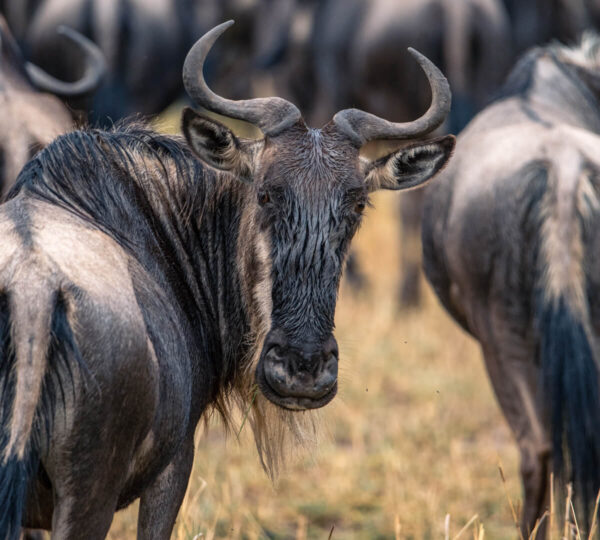
The Great Migration is the year-round movement of approximately two million wildebeest, together with hundreds of thousands of zebra and Thomson’s gazelle, in a vast circular route around the Serengeti ecosystem in Tanzania and the Masai Mara in Kenya. Driven by the search for fresh grazing and water, the herds follow the seasonal rains in a clockwise loop that never truly stops. It is the largest overland movement of animals anywhere on the planet, and watching it is a completely different order of wildlife experience from gorilla trekking.
The most famous and dramatic moments of the migration are the river crossings, when the herds must cross the Grumeti and Mara rivers, plunging down steep banks into water where enormous Nile crocodiles wait. The crossings are chaotic, dangerous, and mesmerising: thousands of animals surge across at once, some are taken by crocodiles, some are trampled, and the survivors scramble up the far bank and carry on.
These crossings happen most reliably in the northern Serengeti and the Masai Mara between roughly July and October. But the migration is more than the crossings. The calving season in the southern Serengeti between December and March, when around 400,000 wildebeest calves are born in a few weeks, is an equally extraordinary spectacle, drawing intense predator action from lions, cheetahs, and hyenas.
What Makes the Great Migration Special
- Sheer scale: up to two million animals on the move, a spectacle of a magnitude nothing else in nature matches.
- Dramatic action: river crossings and predator hunts deliver some of the most intense wildlife moments on earth.
- Classic safari setting: open savannah game drives in the Serengeti and Masai Mara, with the full supporting cast of big cats, elephants, and more.
- Comfort: the experience is largely vehicle-based, making it accessible to all ages and fitness levels.
- Big Five potential: migration safaris routinely deliver lion, leopard, elephant, buffalo, and rhino alongside the herds.
Cost:
Cost is often the deciding factor, and the two experiences are priced very differently. Gorilla trekking has a single dominant cost: the permit. In Uganda a gorilla trekking permit is USD 800 per person for foreign non-residents; in Rwanda it is USD 1,500; in the DRC it is around USD 400. That permit buys you one hour with the gorillas. On top of the permit you pay for accommodation, transport, and often a broader safari, so a gorilla-focused trip typically runs from around USD 2,000 to USD 5,000 or more per person depending on the country and comfort level.
The Great Migration has no single permit. Instead you pay park entry fees and, in Kenya, conservancy fees, along with accommodation and game drives, usually bundled into a multi-day safari package. Because you need several days in the parks to reliably catch the migration, and because peak-season lodges near the crossings are expensive, a migration safari is rarely cheap. A quality migration trip generally starts around USD 3,000 to USD 5,000 per person and rises steeply into five figures for luxury camps positioned right at the crossing points during peak season. Broadly, the headline gorilla permit makes gorilla trekking feel front-loaded and expensive per hour, while the migration spreads its cost across several days of game viewing.
Timing: When Each Experience Is Best
Gorilla trekking is available year-round because the gorillas do not migrate and are always present. The main seasonal variable is the weather: the dry seasons, roughly June to September and December to February, make the forest trails firmer and the trek easier, while the wet seasons bring mud and slippery slopes but also fewer crowds and easier permit availability. Crucially, there is no wrong time to trek gorillas; you will see them in any month.
The Great Migration is far more time-sensitive, and this is central to planning. The herds move continuously, so what you see depends entirely on when and where you go. The dramatic Mara River crossings happen roughly from July to October in the northern Serengeti and Masai Mara. The calving season is December to March in the southern Serengeti. If you travel to the wrong part of the ecosystem at the wrong time, you can miss the herds almost entirely. This means a migration safari must be planned around the calendar with real care, whereas a gorilla trek can be slotted into almost any travel dates. If your travel dates are fixed and fall outside the crossing window, gorilla trekking may simply be the more reliable choice.
Wildebeests
Which One Should You Choose?
The honest answer is that it depends on what kind of traveller you are and what kind of memory you want to bring home. Here is a clear guide to which experience suits which person.
Choose Gorilla Trekking If…
- You want an intensely intimate, emotional, once-in-a-lifetime encounter over sheer spectacle.
- You are reasonably fit and physically able to handle a steep, muddy forest hike.
- You are drawn to primates, forests, and the profound sense of connection that gorillas create.
- Your travel dates are fixed and may not align with the migration’s seasonal movements.
- You want a shorter, more focused trip; gorilla trekking can be done as a two to four-day add-on.
Choose the Great Migration If…
- You want scale, drama, and classic open-plains safari action with big cats and huge herds.
- You are travelling with young children or anyone who cannot manage a demanding hike.
- You prefer comfortable, vehicle-based game viewing over strenuous trekking.
- You can plan your travel dates around the migration calendar, especially the July-to-October crossings.
- You want a broader classic safari with the chance of seeing the Big Five alongside the herds.